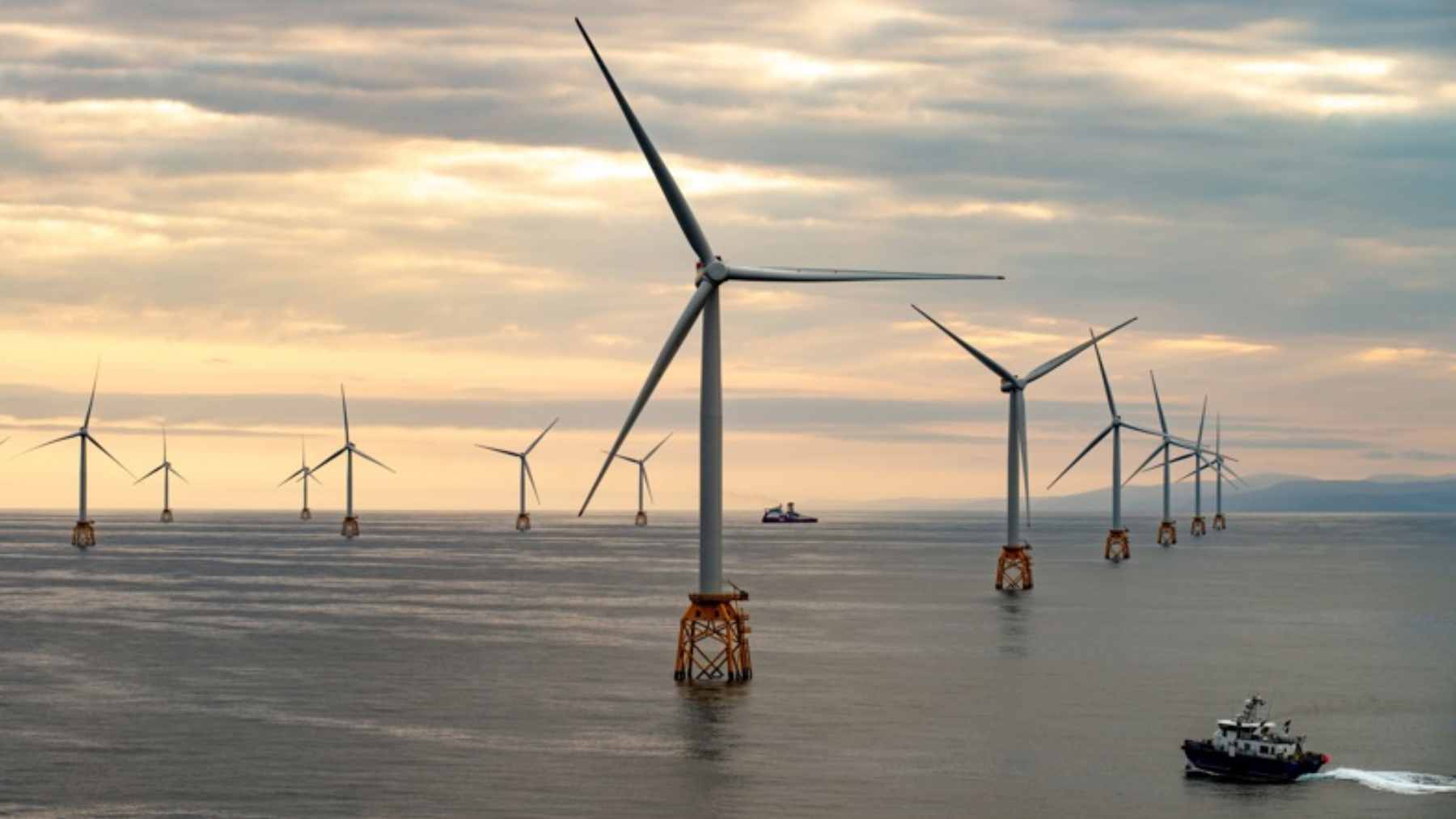
SSE Renewables has trimmed the proposed turbine count for Arklow Bank Wind Park 2, one of Ireland’s most advanced offshore wind projects, reducing the plan from 56 turbines to 53 while keeping the project’s headline capacity at 800 megawatts.
The revised filing is now before An Coimisiún Pleanála, Ireland’s planning body, and it comes with updated environmental documents meant to answer concerns raised during the review process.
At first glance, three fewer turbines may sound like a small tweak. But for coastal communities, seabirds, marine surveys, grid planners, and Ireland’s clean energy ambitions, the redesign matters because it shows how offshore wind projects are being forced to prove they can deliver power without brushing aside environmental questions.
A smaller layout, same big target
Arklow Bank 2 is planned for the Irish Sea, off the coasts of Wicklow and North Wexford. SSE says the updated submission includes a reduced turbine number and refinements to the offshore infrastructure layout, while the project remains a proposed 800-megawatt wind farm.
The project site sits on and around Arklow Bank, roughly 4 to 9 miles from shore. That is close enough for local residents to care deeply about the view, the construction work, and the long-term impact on the sea they know.
The update follows a Request for Further Information issued in April 2025. In plain English, planners wanted more detail, and SSE has now come back with updated reports, extra data, and a revised design.
The environmental test
This is where clean energy stops being a slogan and becomes paperwork. SSE submitted an updated Environmental Impact Assessment Report and an updated Natura Impact Statement, drawing on more aerial, marine, and geotechnical surveys.
According to the company’s filing, the updated research and modeling found that the proposed project’s effects on coastal erosion and seabird populations would not be significant under the environmental assessment standard. That does not mean there is no impact at all, and it does not end the public debate.
For the most part, it means SSE believes it has enough evidence to show the project can move forward without causing the level of harm that would trigger a more serious environmental finding. Coastal residents may still ask a simpler question: what will this look and feel like in everyday life?
Public comment is still open
The public still has a role to play. Observations can be submitted to An Coimisiún Pleanála during an eight-week window running from June 3, 2026, through July 29, 2026.
That window matters because offshore wind is not just about turbines out at sea. It affects ports, fishing interests, marine wildlife, local jobs, coastal identity, and the way electricity reaches homes and businesses.
SSE says the updated documents can be viewed online through the project’s planning website, along with supporting material for the application. An Coimisiún Pleanála’s case page also lists the project as a marine development application with EIAR and NIS documents included.
Jobs, ports, and power
Arklow Bank 2 is not starting from zero. SSE says the project has already secured planning consent for an operations and maintenance base at Arklow Harbour’s South Dock, where around 80 full-time employees would be based.
Separate consent has also been secured for onshore cabling and a substation connection to Ireland’s national electricity grid. Essentially, that means some of the land-side pieces of the project have already moved ahead, while the offshore consent remains the big missing piece.
If the remaining consent is secured and the project is approved for delivery, construction could begin toward the end of the decade. SSE says power exports to Ireland’s national grid could begin in the early 2030s.
The business case
The numbers are large, even after the turbine cut. SSE estimates Arklow Bank 2 could support around 2,300 direct and indirect jobs across its delivery and operational lifetime.
The company also estimates the project could deliver up to about $928 million in national economic benefit, with about $464 million (according to recent exchange rates) of that local to Wicklow and Wexford.
That is why the planning decision is not only an environmental story. It is also a business story, a jobs story, and a test of whether big renewable energy projects can keep investors, regulators, and local communities moving in the same direction.
Why it matters for Ireland
Ireland has set a target of 5 gigawatts of offshore wind by 2030. A single 800-megawatt project is equal to about 16% of that benchmark, although Arklow Bank 2’s current timeline points to energy exports in the early 2030s rather than before the end of this decade.
That timing is the uncomfortable part. The country needs more clean, homegrown power, but the projects meant to supply it must pass environmental checks, secure grid connections, and win enough public trust to actually get built.
James O’Hara, head of offshore wind in Ireland at SSE Renewables, described the submission as “another important step forward” and said the design changes are intended to help the project be delivered “sensitively.”
The road ahead
For now, Arklow Bank 2 remains a proposal, not a finished wind farm. The reduced turbine count may help answer some concerns, but the final decision still depends on the planning process, the project’s commercial route to market, and a final investment decision by SSE.
At the end of the day, this is the balancing act facing offshore wind everywhere. Countries want cleaner electricity, companies want certainty, and communities want proof that the sea is not being treated like an empty construction zone.
Arklow Bank 2 has now moved one step further through that test. The next question is whether fewer turbines, more data, and a revised layout will be enough to carry it across the line.
The official statement was published on SSE Renewables.