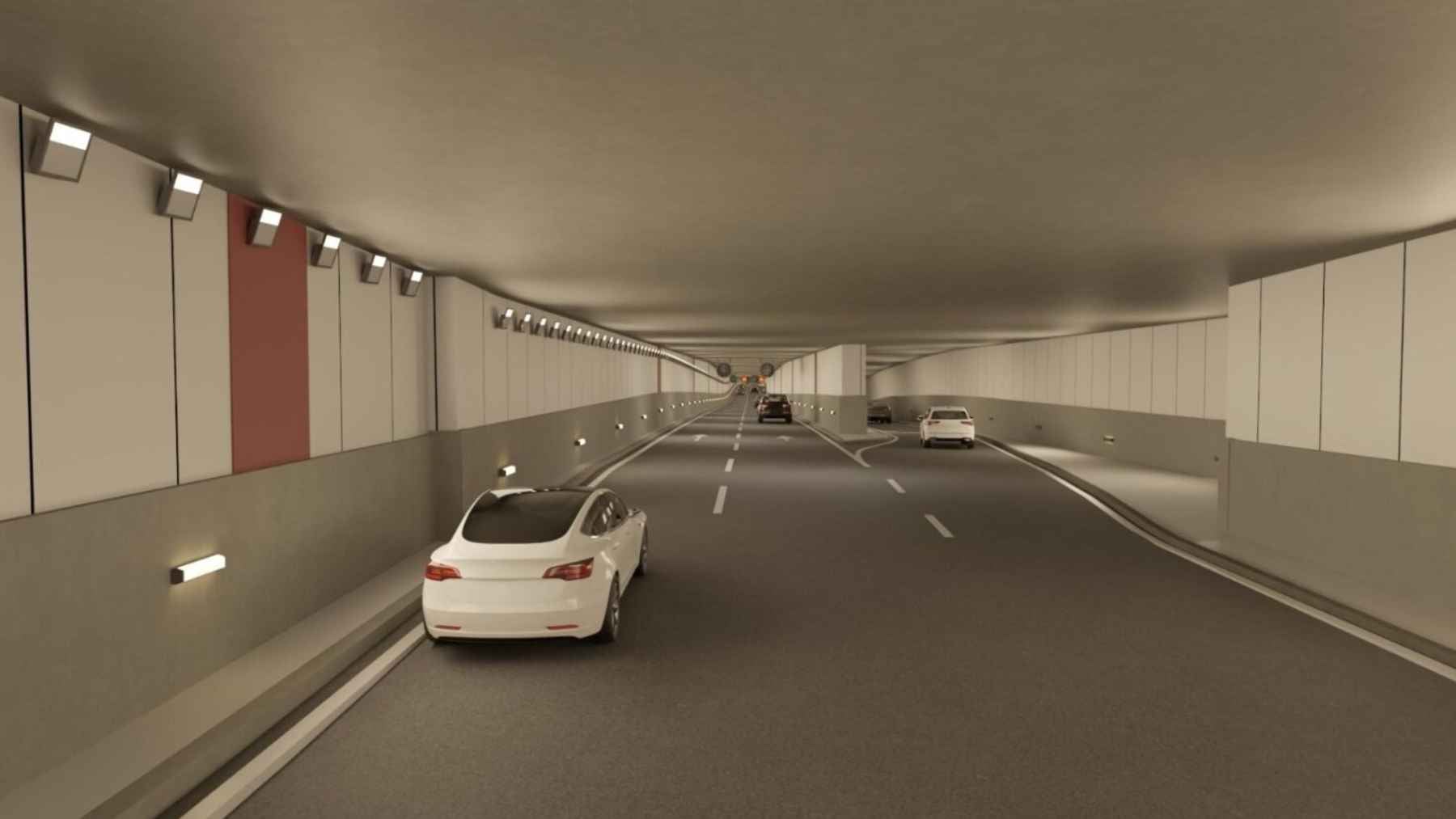
Madrid has completed the main excavation of a 0.42-mile road tunnel beneath the northern end of Paseo de la Castellana, one of the Spanish capital’s busiest and most recognizable corridors. The city plans to open the underground roadway in December 2026, even as landscaping and public-space work continues above it.
This is more than a traffic story. The tunnel will use AI-assisted safety and pollution controls, while the reclaimed surface is being turned into a park with trees, bike access, solar power, and places where people can sit instead of watching six lanes of traffic pass by.
The breakthrough is complete
The key moment came when the two excavation fronts finally met, marking the end of the main dig roughly one year after construction began. Crews reached that milestone during punishing summer heat above 104°F, while work continued both underground and on the future park at street level.
The 2,215-foot tunnel will carry three lanes in each direction and connect the Castellana corridor directly with Madrid’s northern highway junction. Mayor José Luis Martínez-Almeida said the work remains “on schedule” so drivers can begin using it in December while crews continue building the park overhead.
AI will watch the road
The tunnel is expected to be the most technologically advanced road tunnel yet built by Madrid’s municipal government. Municipal public works sources say its systems will use AI to spot incidents, identify vehicles, monitor speeds, measure pollutants, and automatically adjust ventilation.
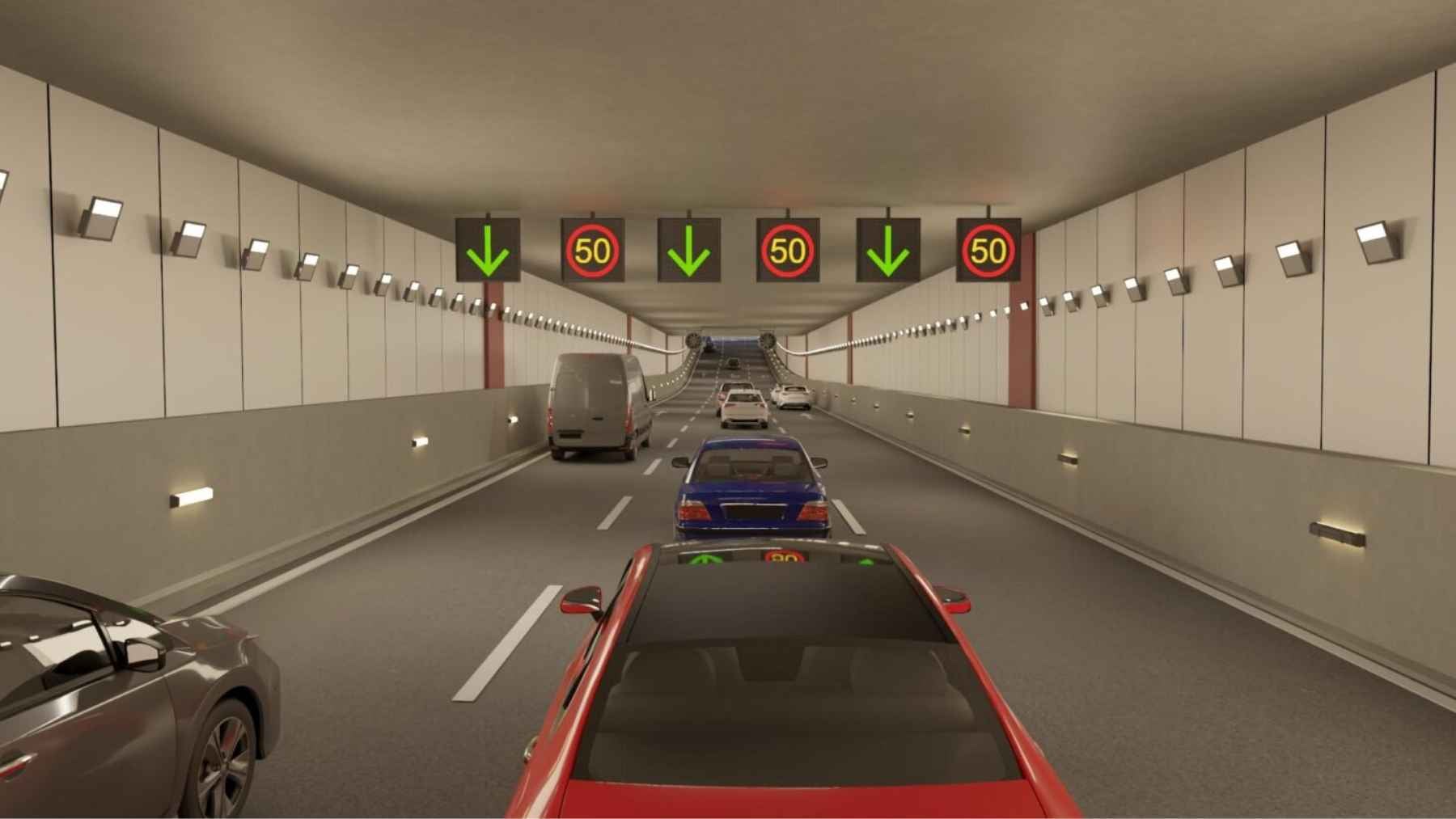
The tunnel can respond to changing conditions instead of treating every hour like rush hour. A stalled car, rising pollution reading, or sudden traffic slowdown could trigger a faster response, although the real test will come after opening when operating data shows how well the system performs.
Traffic moves below ground
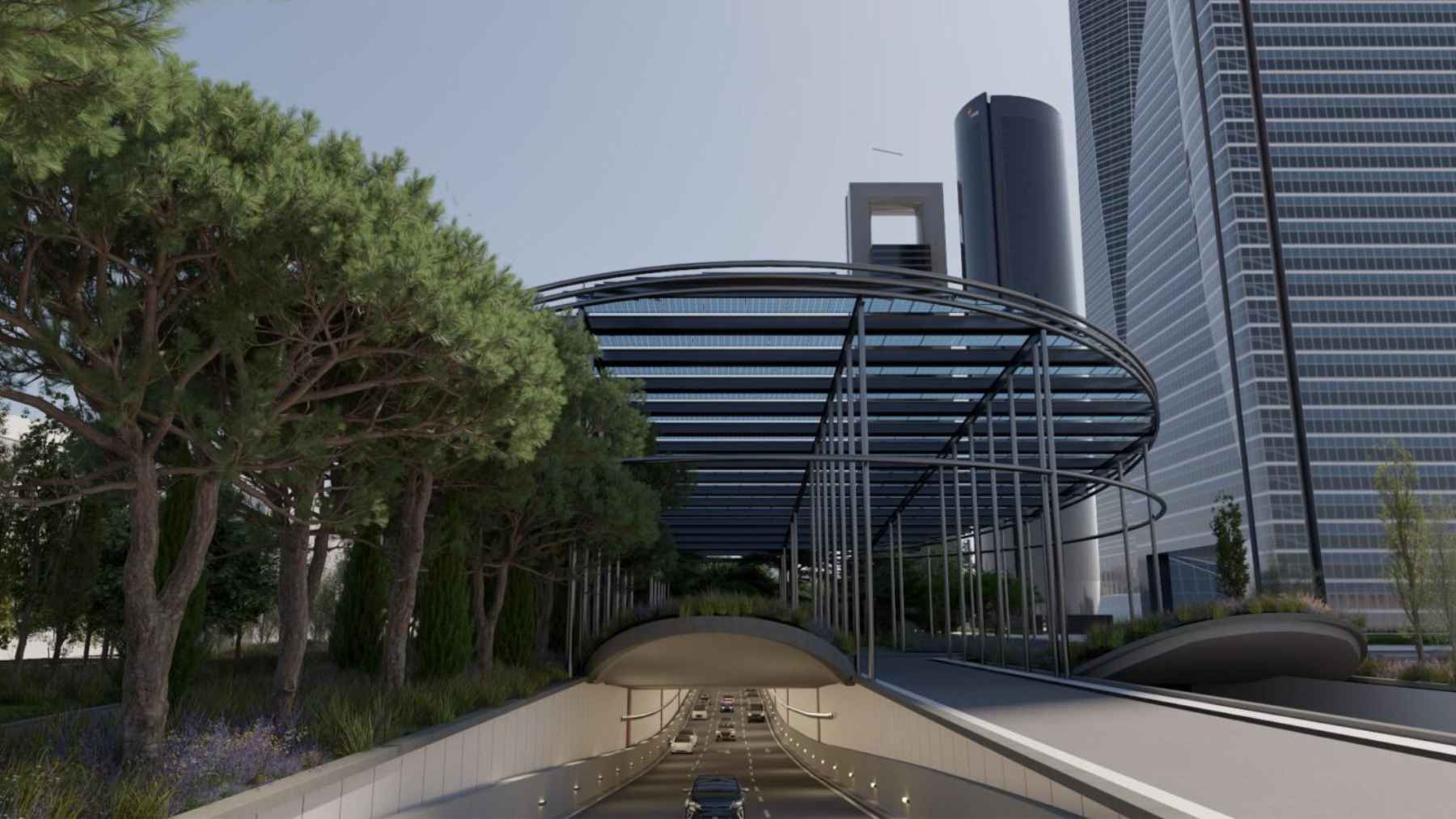
What changes for someone walking past Madrid’s five towers? Quite a lot. Once the tunnel is operating, regular through traffic will move below the surface, while public transportation and local access traffic remain above.
That creates room for about 17 acres of connected public space, including nearly 5 acres of new green areas. Plans call for 772 new trees and more than 38,800 shrubs, taking the total number of trees in the area above 1,000.
A protected two-way bike lane, playgrounds, outdoor exercise areas, shade structures, a splash fountain, and a small outdoor theater are also part of the design.
The tunnel is the hidden machinery. The park is the part residents will live with, whether they are cycling to work, taking a child to play, or looking for shade on a hot afternoon.
Solar power joins the structure
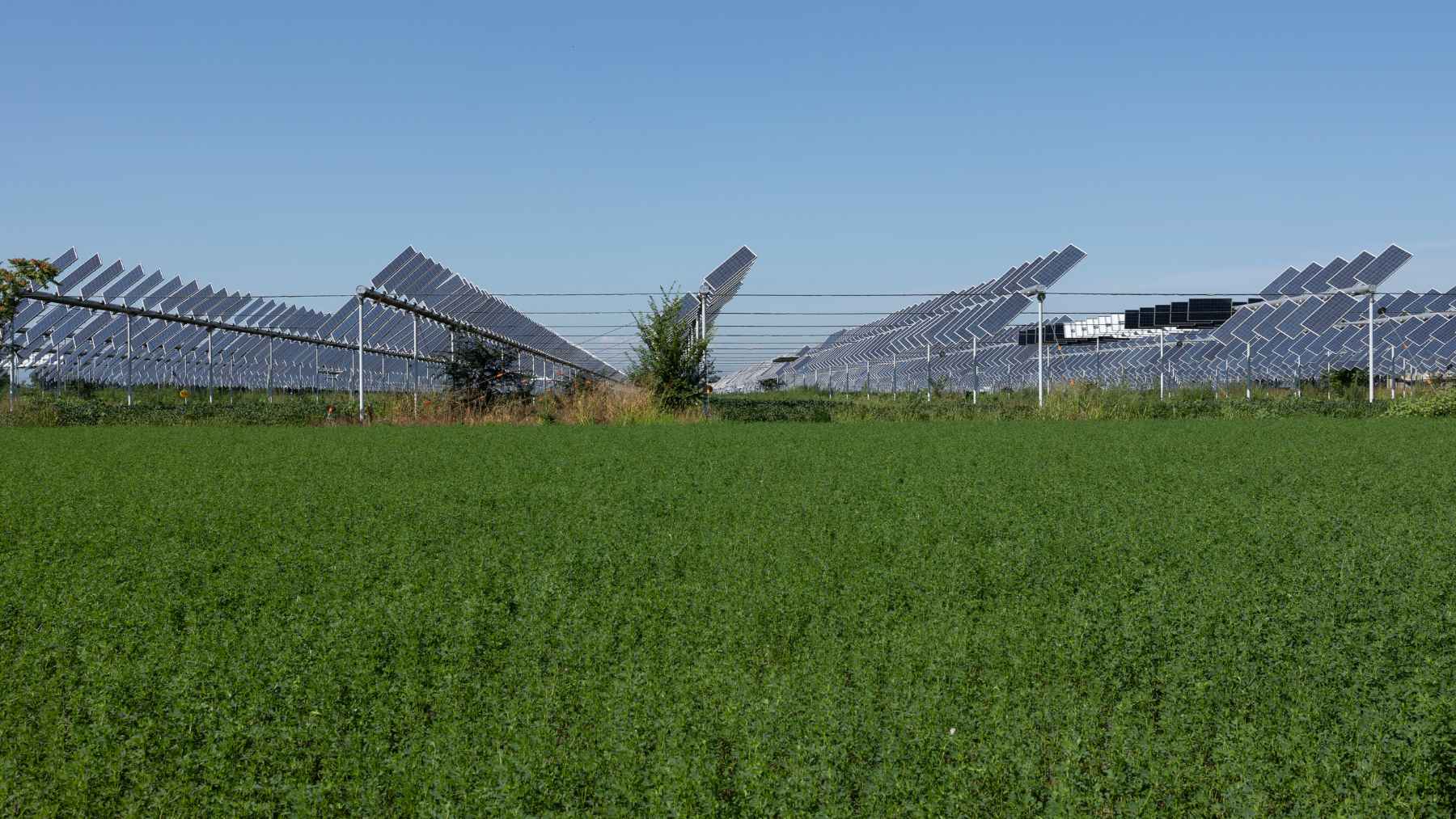
At the northern end, a monumental solar pergola is beginning to rise above the work zone. It will stand about 115 feet tall and carry roughly 26,900 square feet of photovoltaic panels with 340 kilowatts of peak capacity, helping supply electricity to the tunnel.
The panels do not make the roadway carbon-free. Still, on-site generation gives the structure a practical job beyond serving as a landmark and should help cover part of the tunnel’s electricity demand.
Excavated soil gets a second use
Digging a tunnel produces a less glamorous problem. Where does all that dirt go? Earlier city estimates indicated that about 272,000 cubic yards of soil would need to be removed during construction.
Madrid’s public works team has tried to keep as much of that material as possible within the site, using it to shape future planting beds. Other excess soil is being sent to municipal projects, with only the remainder headed to landfill, a strategy intended to cut truck traffic, dust, waste, and disruption around nearby neighborhoods.
This part is easy to overlook, but it matters. Reusing soil close to where it was excavated avoids turning one construction project into a convoy of trucks moving through the city all day.
A second level looks ahead
Work is also moving toward a lower tunnel level that will not open with the main roadway. It is being prepared for a future connection to the Begoña neighborhood and the Madrid Nuevo Norte development, so the city does not have to tear the corridor apart again when that expansion moves forward.
The two-level design was also chosen to preserve more of the existing trees, especially larger conifers along the eastern side of the site. That is a quieter environmental decision, but an important one. Mature trees cannot be replaced overnight by a planting plan.
The environmental result is not automatic
Putting traffic underground can reduce surface noise, physical barriers, and direct exposure to vehicle exhaust where people walk and gather. But it does not eliminate the vehicles or their emissions, and a six-lane tunnel can still support heavy car use.
That is why the park, bike lane, public transportation access, solar generation, soil reuse, and smart ventilation should be judged together. The real measure will be whether the area becomes cooler, safer, easier to cross, and less dominated by traffic once the full park is completed.
The statement was published on Diario de Madrid.