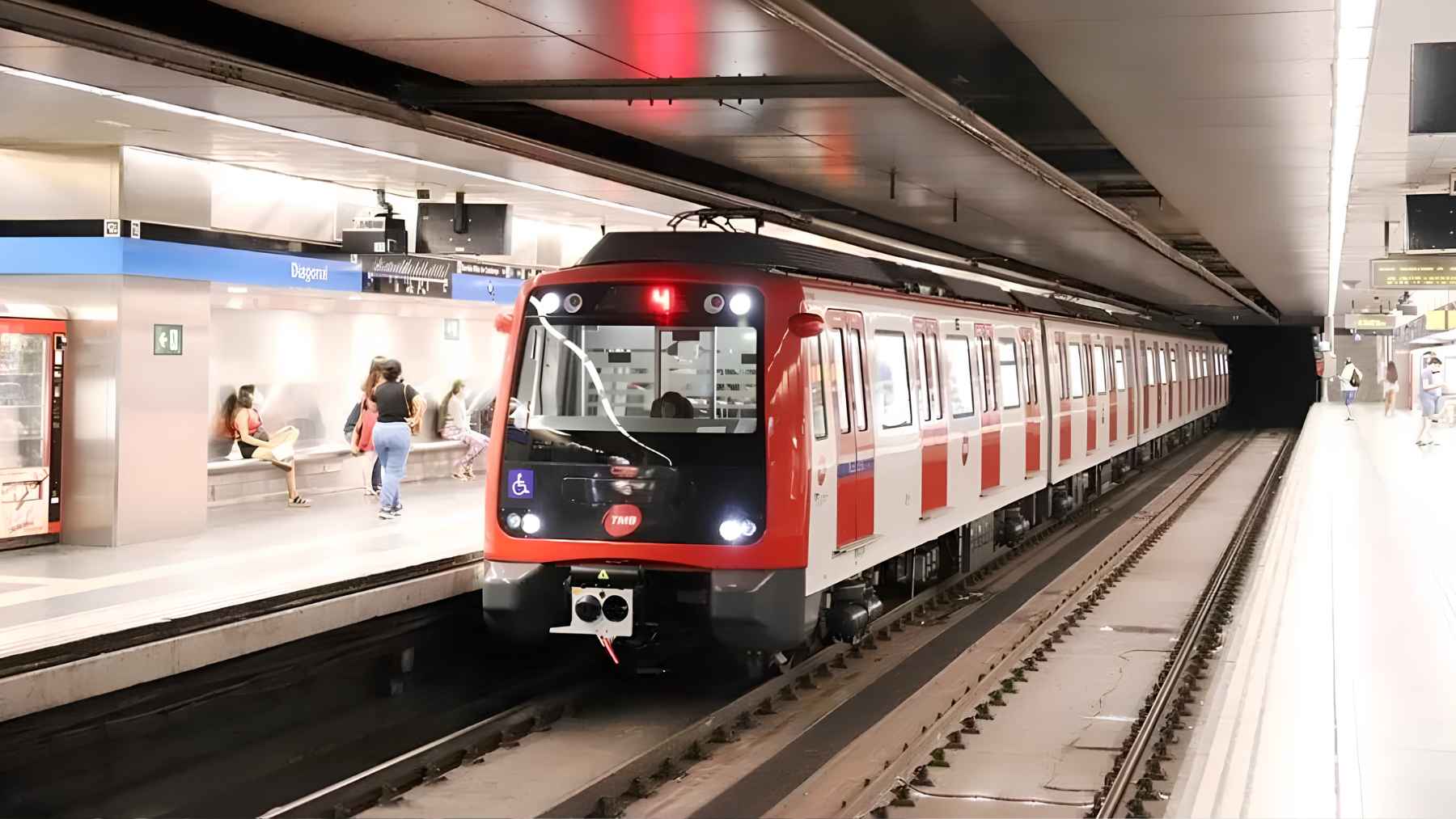
What happens when a station designed for the Barcelona of the 1920s becomes the front door to a modern transit boom? At Plaça de Catalunya, century-old tunnels now carry commuters, shoppers, tourists, and regional rail passengers through one of the city’s most important transportation hubs.
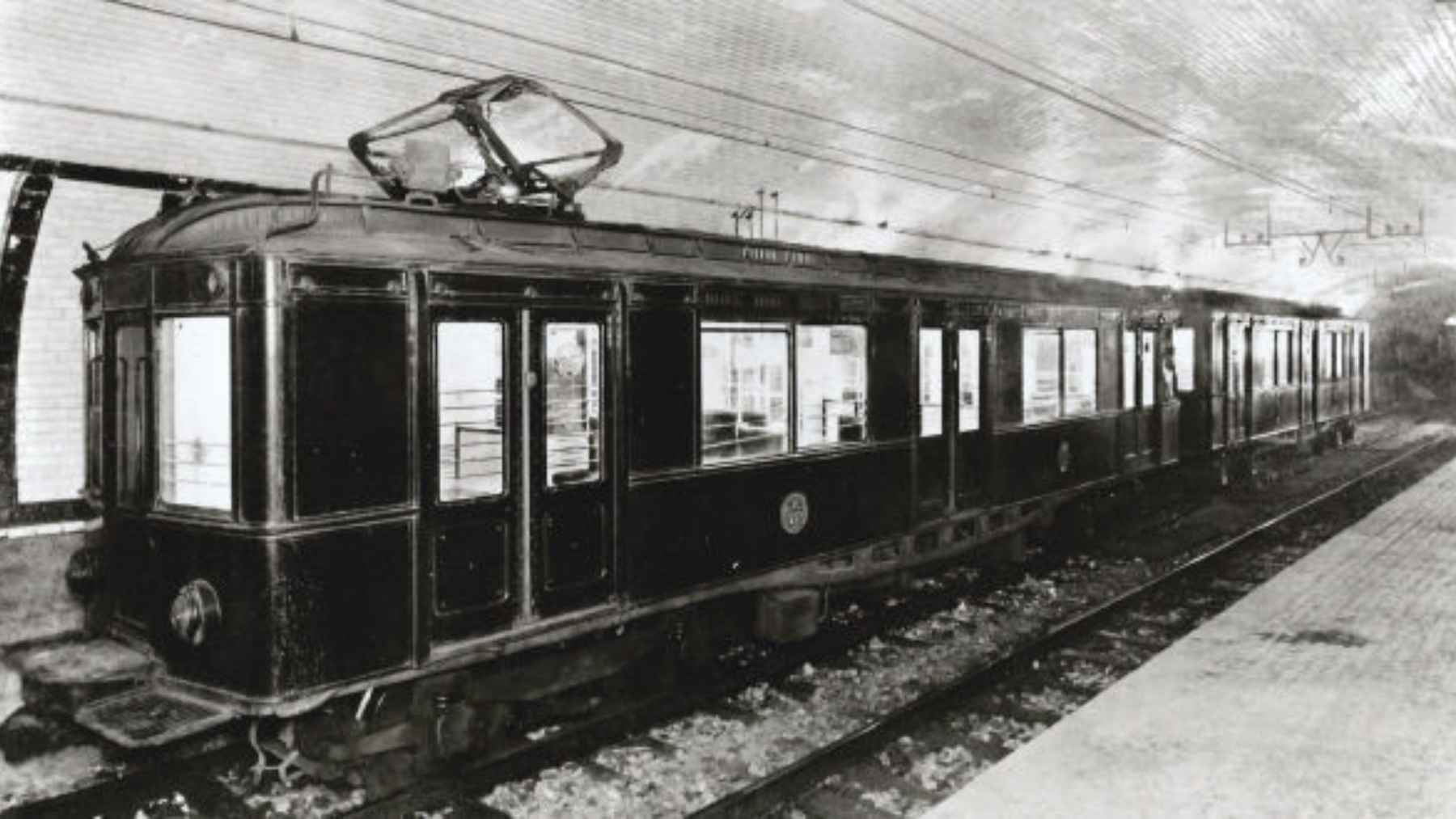
The original Gran Metro service between Catalunya and Lesseps opened on Dec. 30, 1924.
More than a century later, Barcelona’s Metro recorded 479.9 million fare validations in 2025, up 2.4% from the previous year. The network now stretches about 77.9 miles across eight lines and 165 stations. Catalunya’s story is no longer just about history. It is also about how old infrastructure can support a growing, lower-carbon city.
A record year underground
The Metro’s 2025 result surpassed the 468.7 million validations recorded in 2024. Together, TMB’s Metro and bus networks reached 700.5 million validations for the first time, showing that the appetite for public transportation extends well beyond the morning commute.
In fact, TMB said the strongest relative growth came outside peak hours, especially during afternoons, Sundays, and holidays. That matters because a rail system used throughout the day can make better use of trains, stations, and energy that are already in place.
In a translated statement, TMB President Laia Bonet said the figures “show public confidence in public transport and encourage us to keep improving the service.” She added that the challenge is to maintain quality while increasing capacity for rising demand. The record is impressive, but it also raises the pressure.
The number behind the headline
One figure needs careful handling. The report’s headline says Catalunya exceeded 29 million validations, but its body does not explain that calculation. Official TMB station data lists 17,501,208 Metro validations at Catalunya in 2024, making it the network’s busiest station that year.
One plausible explanation is that the higher number was meant to describe the wider rail complex, which also serves FGC and Rodalies trains, but the material does not document a comparable combined total for a single year.
It also calls the surrounding area Barcelona’s richest neighborhood without providing income data. For a fact-led account, the verified Metro figure is the safer benchmark.
Even 17.5 million is a huge flow. Averaged across the year, it works out to nearly 48,000 Metro validations every day, before counting passengers using the other rail operators beneath the square. Anyone who has crossed the concourse at rush hour can feel what that number means.
Built for another Barcelona
Catalunya was included in the original project drawn up by engineers Müller and Zaragoza. The station sat beneath the lower part of the square along the Rambla and Passeig de Gràcia axis, with platforms roughly 246 feet long and a broad vaulted space about 46 feet wide.
That vault was built only about 23 feet below street level. Decorative ceramic panels carried plant motifs, while hexagonal tiles covered the floor and four skylights brought natural light into the entrance hall. It was infrastructure, but it was also part of the city’s public face.
The design feels almost intimate compared with today’s giant transportation terminals. Yet the basic idea was forward-looking. Put a high-capacity station under a central meeting point, then connect it to the streets where people already need to go.
A station that kept changing
The original station had three entrances named A, B, and C. Entrance A disappeared in 1926 during a major reconstruction of Plaça de Catalunya, proving early on that the station would have to evolve with the square above it.
In 1929, entrance B was remodeled for shared use with the Sarrià railway, while entrances D and E were added near sculptures representing “Work” and “Wisdom.” Ticket offices were moved closer to the platforms to improve passenger flow. The station was already being redesigned around transfers and crowd movement.
Another major step came in October 1932, when a connecting corridor opened to the Metropolitano Transversal station. New galleries allowed free underground movement between the station’s entrances, as the city government had required. The hub was becoming a system rather than a single stop.
Why the interchange wins
Today, Catalunya connects Metro lines L1 and L3 with five Rodalies commuter rail routes and four FGC lines. That combination helps explain why it attracts more Metro passengers than any other station. People are not only arriving in the center. Many are switching networks and continuing elsewhere.
TMB’s 2024 ranking shows how powerful that effect can be. Twelve of the 15 busiest Metro stations were interchanges where multiple lines or modes meet. Connectivity, more than architecture or neighborhood prestige, is the real engine of foot traffic.
For riders, the value is simple. A useful interchange can turn a long trip with awkward street-level changes into one connected journey beneath the city. That convenience is also what makes public transportation more competitive with private cars.
The environmental payoff
By TMB’s own methodology, Metro travel avoided about 427,400 U.S. short tons of carbon dioxide emissions in 2025. The calculation estimates the vehicle travel that would otherwise have been required to move an equivalent number of passengers. It is not a direct measurement of every rider’s personal choices, but it gives a sense of the scale involved.
Not every Metro trip replaces a car journey, of course. Still, moving hundreds of millions of passengers on a shared rail network can reduce the road traffic and pollution associated with a more car-dependent city. Catalunya is one of the valves that keeps that system moving.
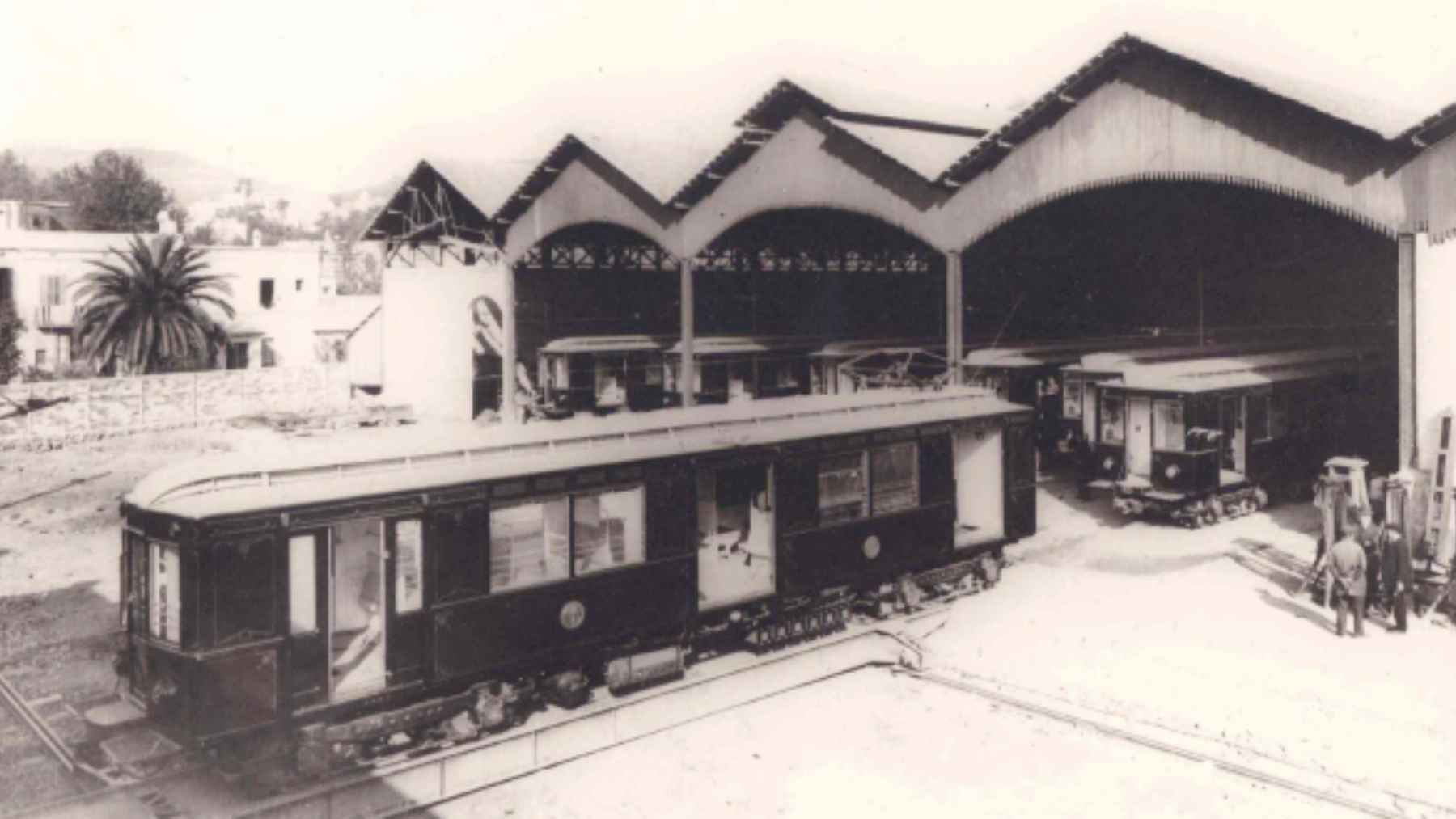
There is another lesson here. Reusing and adapting a station built in 1924 does not automatically make every part of it sustainable, but it allows Barcelona to keep drawing value from infrastructure already embedded in the city. Old bones, new purpose.
The next test
The trouble is that successful transit systems can become victims of their own popularity. More riders mean more pressure on platforms, corridors, elevators, signaling, ventilation, and service frequency. A station planned for another era must now handle travel patterns its original designers could never have measured.
That is why the 2025 record should be read as both a celebration and a warning. Barcelona has a century-old asset that still works at the heart of daily life, but continued growth will depend on maintenance, capacity, accessibility, and clear passenger information. History can carry a city only when investment keeps it moving.
Catalunya’s endurance is remarkable. Opened with Barcelona’s first Metro line, repeatedly rebuilt, and now linked to multiple urban and regional rail services, it remains the network’s busiest verified Metro station.
The ridership statement was published on TMB News.