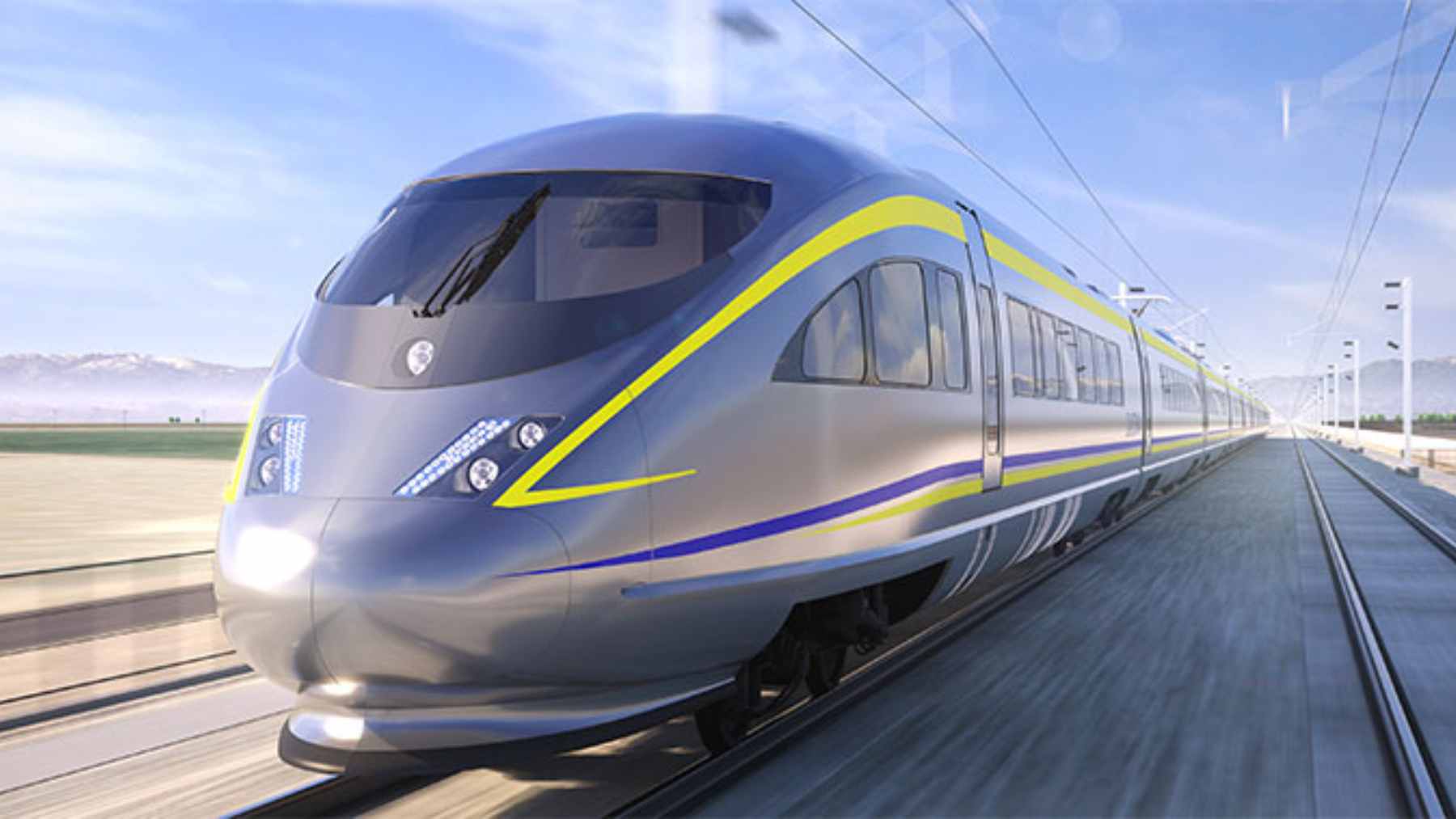
California’s high-speed rail project is still officially meant to deliver electric trains linking San Francisco with Los Angeles and Anaheim.
But nearly 18 years after voters approved the first bond money, the project now looks less like the single statewide buildout Californians saw in 2008 and more like a phased business strategy built around the Central Valley, commercial revenue and private investment.
The Authority says the long-term vision remains intact, but the path has clearly changed.
That matters for climate, not just budgets. The system is still being promoted as a zero-emission alternative to cars and short flights, but those benefits only arrive if the tracks, stations, power systems and riders all show up at the same time. And that’s where the new private-investment push comes in.
The promise voters approved
Back in 2008, Proposition 1A authorized $9.95 billion in state general obligation bonds for high-speed rail and related passenger rail improvements. Of that amount, $9 billion was intended to help build a system connecting San Francisco, Los Angeles, Anaheim and other major regions, while the remaining $950 million went toward local and commuter rail connections.
The official estimate at the time was about $45 billion for the statewide system. Voters were also told that bond money could cover only up to half the construction cost of each corridor or segment, meaning federal, local and private funds were always part of the picture.
Still, the public image was simple. A fast electric train would stitch the state together, cutting travel times and giving Californians a cleaner way to move between major cities. Who wouldn’t want that?
The price of waiting
The latest official business plan puts the full San Francisco-to-Los Angeles and Anaheim Phase 1 buildout at $126.08 billion. That is not just a bigger number on a spreadsheet. It is nearly three times the 2008-era estimate, and it changes what can realistically be built first.
The Merced-to-Bakersfield segment alone is now estimated at $35.7 billion, with revenue service targeted for 2033. The Authority says that segment has identified funding through 2045, but it also acknowledges a cash flow timing issue that still has to be solved.
Federal critics have taken the opposite view, arguing that the project has suffered from missed deadlines, budget gaps and weak delivery. In 2025, the U.S. Department of Transportation said the Federal Railroad Administration terminated roughly $4 billion in unspent federal funding tied to the project.
A Central Valley first strategy
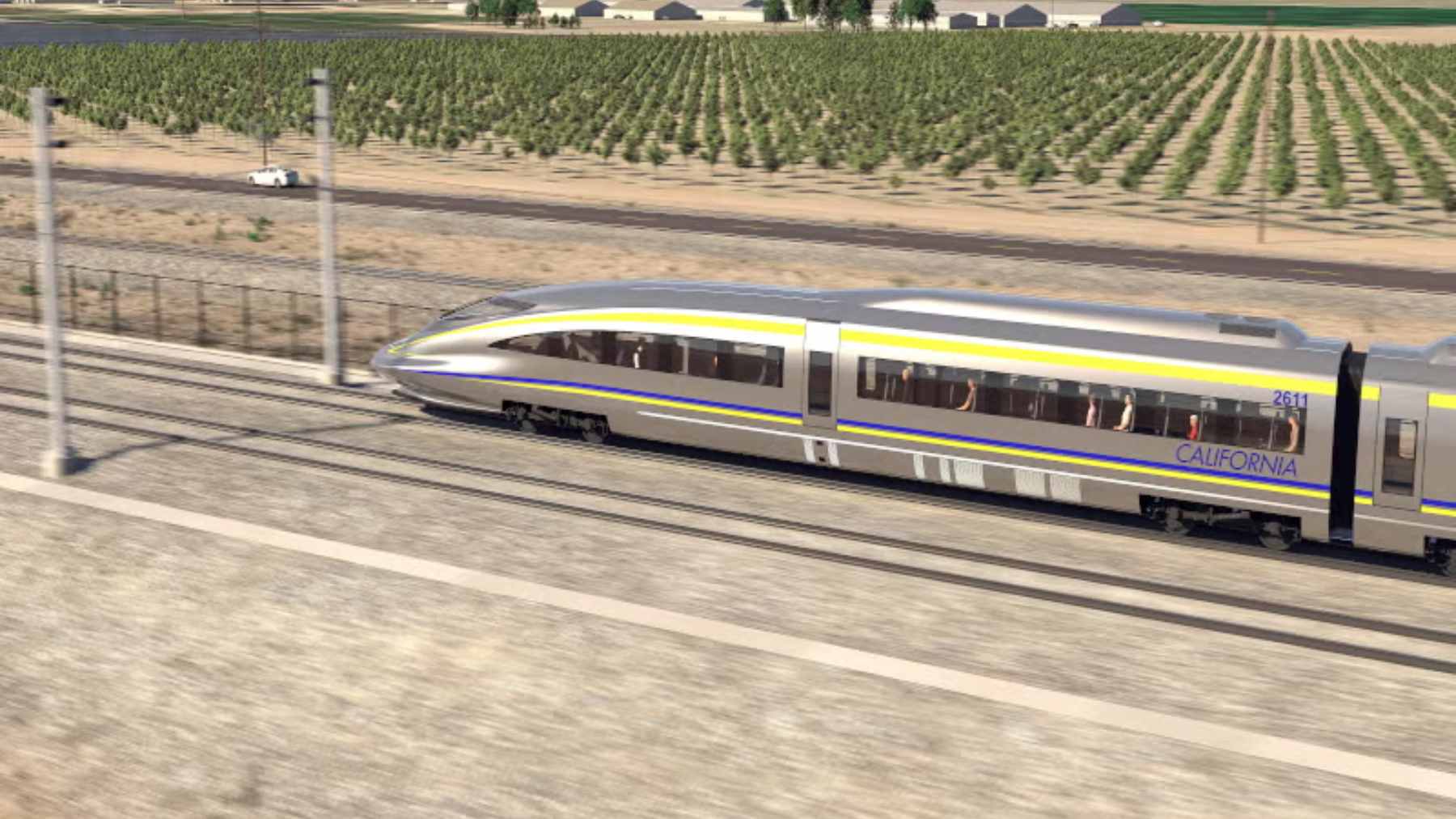
The biggest practical shift is where the project starts. The 2026 Business Plan says the Authority is no longer trying to open with a full buildout, and is instead “right-sizing” initial delivery to control costs and start service sooner.
That means the Central Valley is now the first real test. Work continues along 171 miles from Merced to Bakersfield, with the Authority reporting more than 80 miles of guideway complete and dozens of major structures finished or underway.
For a family in Fresno or a student trying to reach Merced, that could still matter. But for the original San Francisco-to-Los Angeles promise, it is only the first piece of the puzzle.
Private money comes down the tracks
In December 2025, the Authority launched a process to attract private investors and developers, saying the goal was to deliver high-speed rail “faster, smarter and more economically.” By June 2026, that effort had turned into a co-development agreement with Momentum Alliance Partners, a global group of rail, infrastructure and investment firms.
The consortium includes names such as Plenary Americas, CDPQ Infra, Keolis, SNCF Voyageurs, Jacobs, Sener, SYSTRA, Setec, Arup and Steer. Its job is not just to look at trains, but also financing, operating concepts, public-private partnerships and long-term commercialization.
In practical terms, that means the rail corridor is being treated as more than tracks. Station development, fiber networks, power corridors, data infrastructure and land-use partnerships are now part of the business conversation.
The environmental bet
By the Authority’s own estimates, the high-speed rail system would run on 100 percent renewable energy and reduce greenhouse gas emissions by 0.6 million to 3 million metric tons of carbon dioxide equivalent each year. Converted to U.S. tons, that is about 661,000 to 3.3 million tons annually, roughly equal to taking 142,000 to 700,000 cars off the road.
There are construction impacts too, and the Authority knows it. It says the program has diverted 95 percent of non-hazardous waste from landfills, protected 3,190 acres of farmland through conservation easements and preserved or restored more than 4,400 acres of open land, including 151 acres of wetlands.
The cleanest train, though, is the one people actually use. If early service is too limited, too disconnected or too inconvenient, the climate math gets harder.
The station question
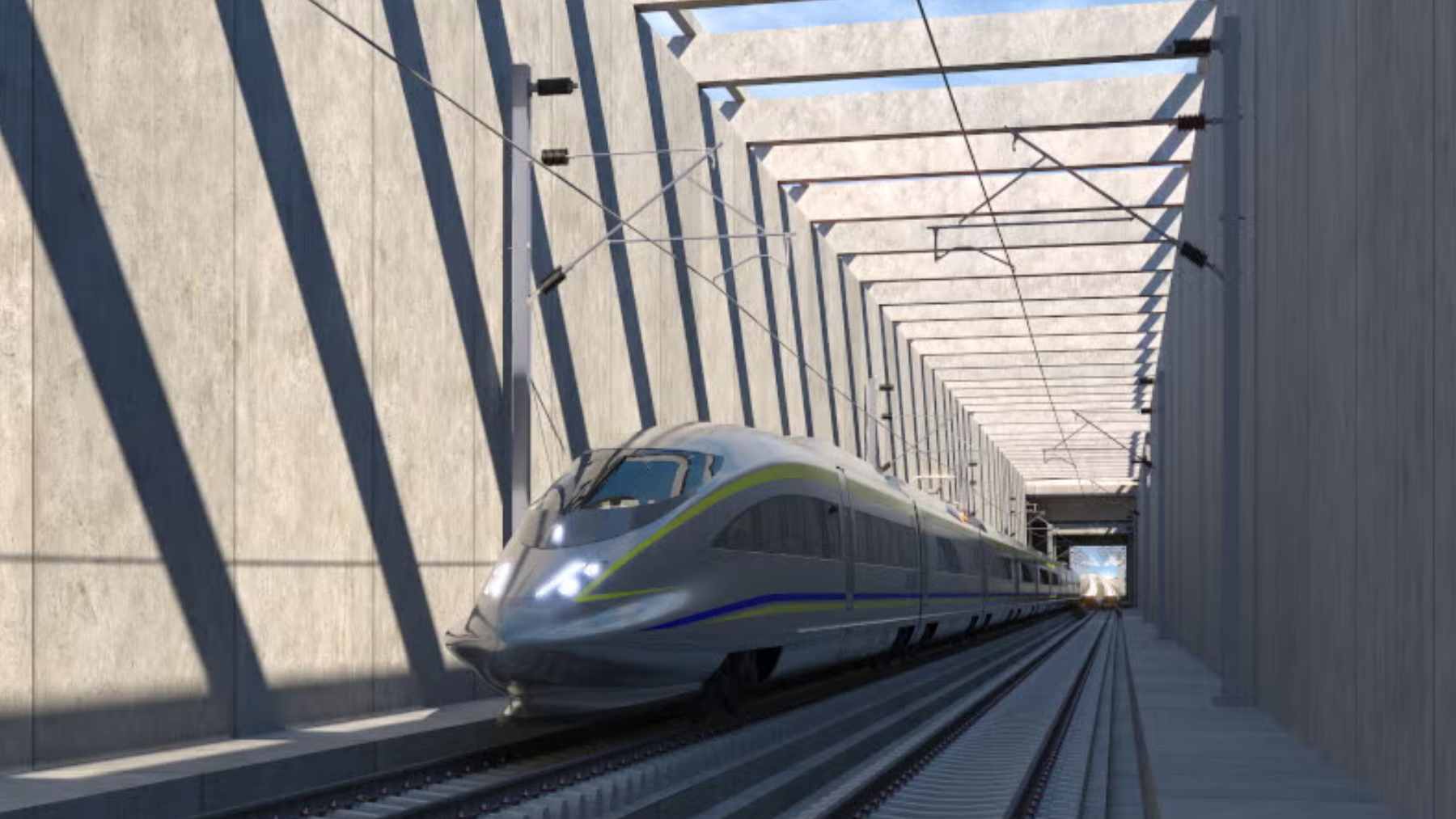
This is where big infrastructure becomes everyday life. Recent Fresno Bee reporting said the latest plan points to a temporary Bakersfield station north of 7th Standard Road, at least five miles from the planned downtown site near F Street and Golden State Avenue.
Authority CEO Ian Choudri told the paper, “The funding is the constraint.” That short sentence says a lot about where the project stands now. The dream is still statewide, but the build is being shaped by what can be financed next.
For passengers, station placement is not a technical footnote. It can mean the difference between stepping off near work, school or a bus connection, and needing another ride just to finish the trip.
What Californians should watch
The next milestones are straightforward, even if the politics are not. Track and systems installation is expected to move the Central Valley work from heavy civil construction toward an actual electrified railway, with the Authority saying the 119 miles of completed guideway will be transformed into a system capable of speeds up to 220 mph.
The harder question is whether private partners can help expand the system without making public costs harder to understand. That is the tension at the heart of the new model, and it will matter to taxpayers as much as environmental advocates.
At the end of the day, California’s bullet train is not dead. It is becoming something different, a climate project wrapped inside a business plan and forced to move one fundable segment at a time.
The official press release was published on California High-Speed Rail Authority.