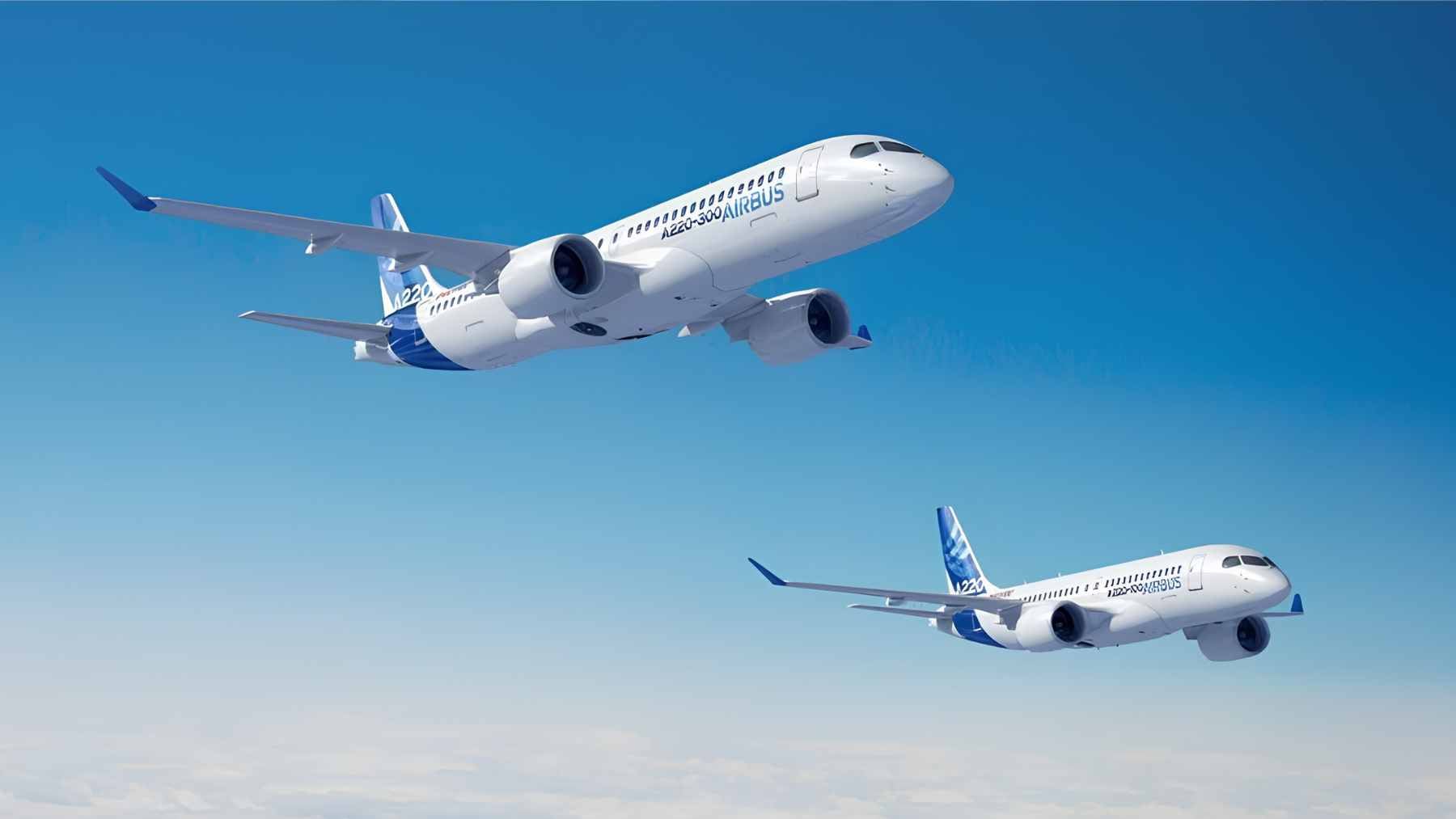
Airbus is preparing the most important practical update yet for its smallest commercial jet. The A220 is gaining a new Airspace cabin with larger, lighter overhead bins, while industry reporting says the A220-300 is being readied for a high-density 160-seat configuration targeted for certification in 2027.
The headline is ten extra seats. So is the denser A220 actually greener? It can lower emissions per passenger, but not automatically if lower costs trigger more flights or if the extra seats fly empty.
More seats without a new jet
AirAsia is now the launch customer for the 160-seat layout after placing a firm order for 150 A220-300s. Airbus says the extra capacity comes from ten additional seats and an extra overwing exit on each side, rather than a stretched fuselage or a new aircraft type. By the end of May 2026, the A220 had recorded 1,109 historical orders and 517 deliveries.
The timing needs a little care. Industry reporting says Airbus has aimed for certification in 2027, while the company’s June 2026 fact sheet still lists the 160-seat version as “certification to come.” AirAsia’s first deliveries are expected in 2028, so 2027 is better understood as a certification target than a guaranteed first passenger flight.
The environmental case
Airbus says the A220 uses 25 percent less fuel and produces 25 percent less carbon dioxide per seat than previous-generation small single-aisle jets. It also reports about 40 percent fewer nitrogen oxide emissions than the CAEP/8 regulatory benchmark, while the A220-300 can fly about 3,913 miles.
There is a simple reason airlines like the denser cabin. If a flight used exactly the same amount of fuel, dividing that trip across 160 seats instead of 150 would reduce fuel per available seat by about 6 percent. Real flights will carry more passenger and baggage weight, so the actual gain will be smaller, but the direction is clear.
Still, efficiency per seat is not the same as lower total emissions. ICCT research warns that traffic growth can overwhelm gains from more efficient aircraft and sustainable aviation fuel. A greener plane can help, but it is not a free pass for unlimited growth.
A cabin passengers will notice
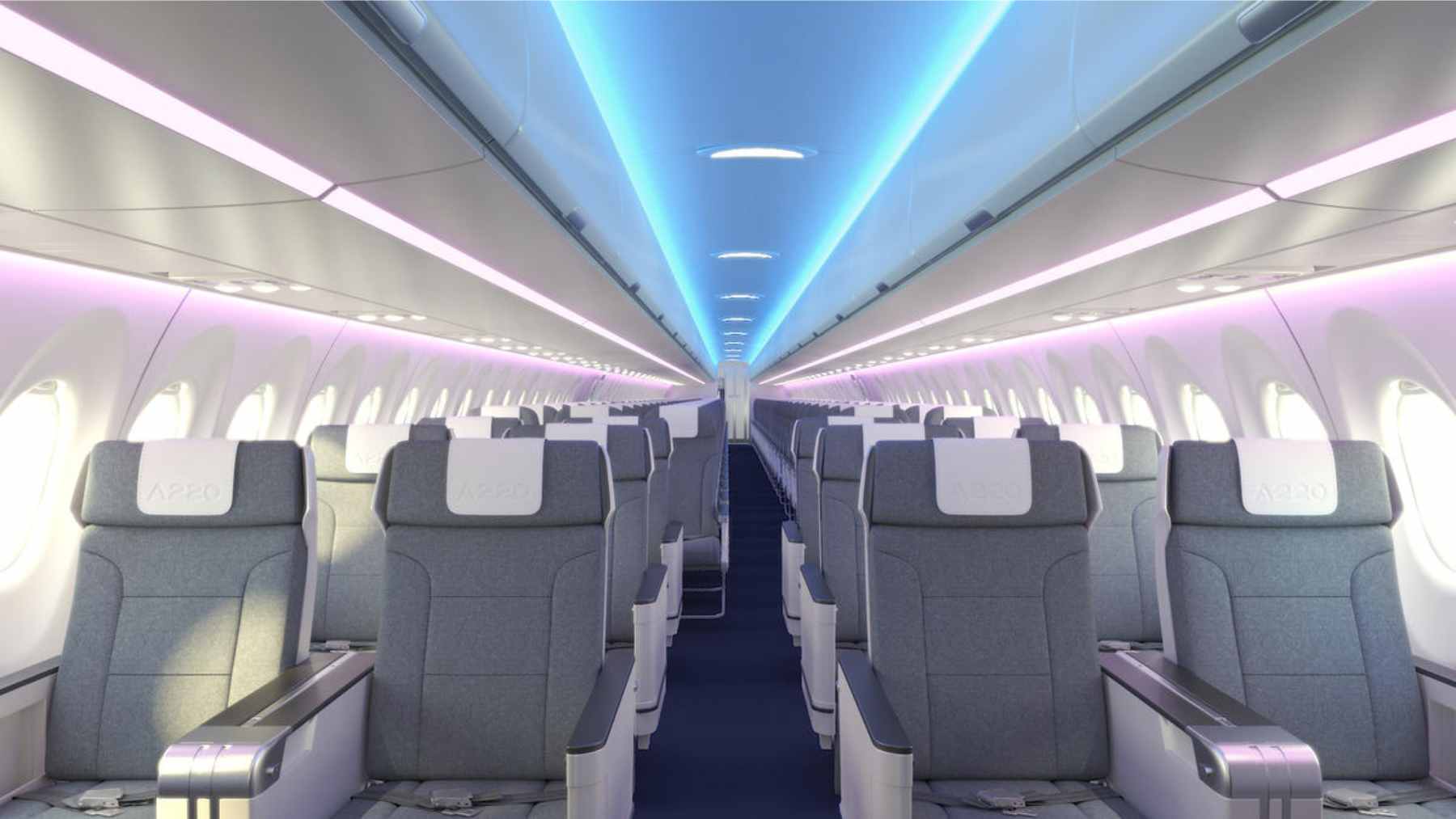
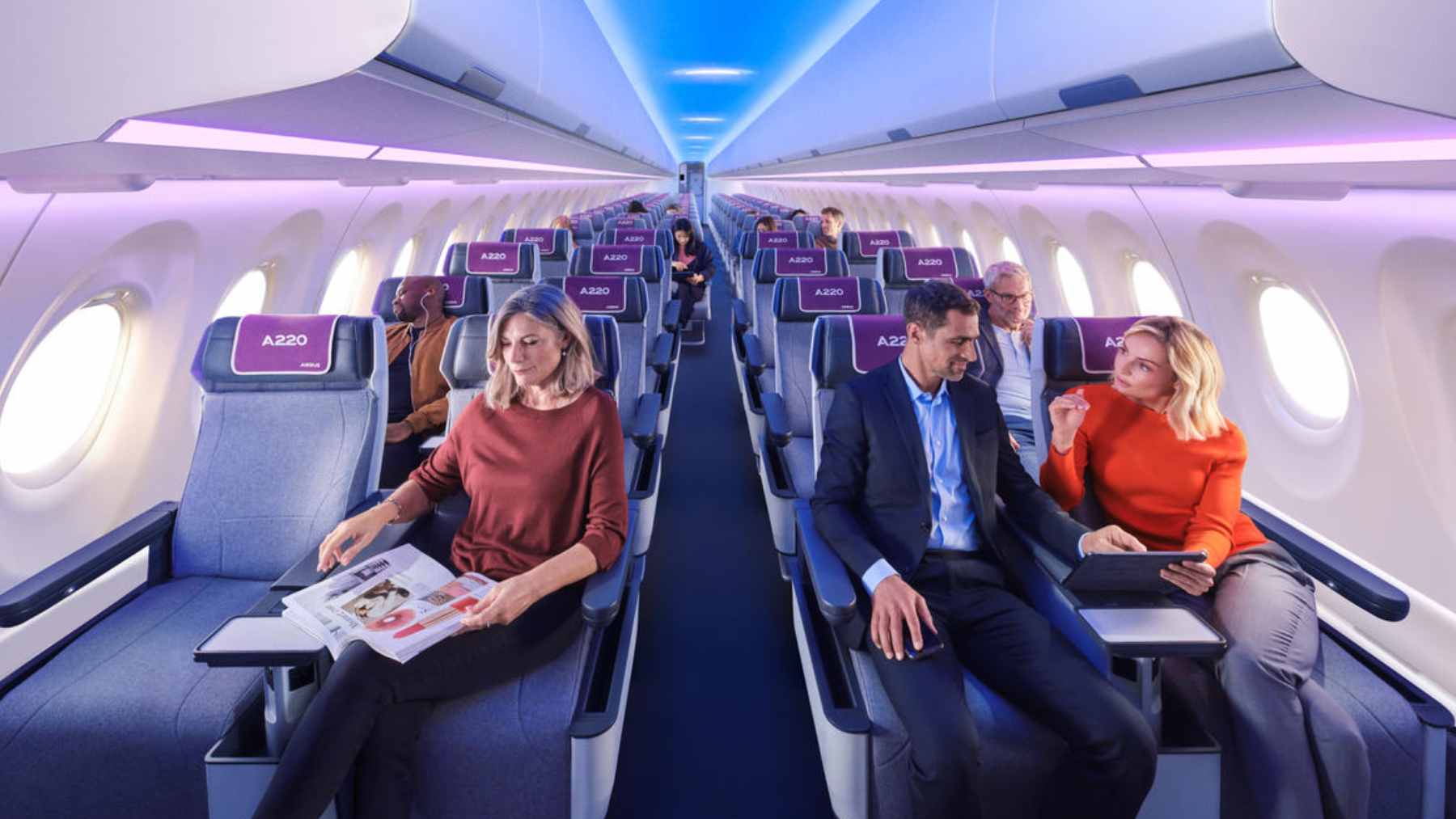
The Airspace update is more visible than the engineering work behind the new seating limit. Airbus says the overhead bins offer 20 percent more volume, hold up to 15 percent more bags on the A220-300, and are 10 percent lighter. The redesigned cabin structure is about 300 pounds lighter overall.
That sounds minor until boarding starts and the last carry-on has nowhere to go. More bin space can reduce gate checking and speed up the scramble to find room, while lighter components save a small amount of fuel on every trip. Air Canada is the launch customer for the upgraded cabin.
The lighting also changes the mood. The system offers more than 16 million LED colors that airlines can match to their branding or different phases of flight, and Airbus plans to make the cabin available as a retrofit in the coming years.
Why airlines want it
For carriers, the attraction is straightforward. Ten more seats can spread crew, airport, maintenance, and ownership costs across a larger number of tickets, especially at airports where takeoff and landing slots are scarce. Airbus says the A220 can deliver up to a 14 percent lower operating cost per seat, depending on the comparison and configuration.
AirAsia also sees the smaller jet as a way to open thinner routes and free larger aircraft for longer services. Lars Wagner, chief executive of Airbus Commercial Aircraft, said the A220 combines “low operating costs” with the range needed to open new markets. In practical terms, that means an airline can test a route without sending a bigger A320 family jet half full.
There is another business layer. Airbus is still working to increase A220 production and improve the economics of a program that has struggled to reach profitability. A higher-capacity cabin is a relatively low-risk way to make the existing jet more valuable before the company commits to a longer and costlier derivative.
What passengers may give up
The A220’s basic five-across cabin does not change, and Airbus still promotes economy seats wider than 18 inches. Airbus has not detailed a single standard 160-seat floor plan, which means the final balance of seat pitch and service space will be airline-specific.
That is where the trade-off becomes personal. Passengers may get better bins and modern lighting, yet a high-density layout can leave less cabin floor per traveler. The plane may feel brighter and smarter while also feeling busier.
The A220-500 question
For years, airlines and lessors have asked whether Airbus will stretch the aircraft into an A220-500 with capacity closer to the A320. No launch decision has been announced, although Quebec said in July 2026 that discussions are underway and that it could support the project with Canada if Airbus proceeds.
For now, the 160-seat A220-300 is the bridge. It can lower cost and emissions per occupied seat while giving Airbus more time to strengthen production, but it does not guarantee lower total emissions.
The official press release was published on Airbus.