A leaked account of a nearly four-hour investor meeting attributed to DeepSeek founder Liang Wenfeng has put an unusually blunt number on China’s AI hardware problem.
According to the transcript, Liang said that “four Huawei chips match one Nvidia chip” and described computing resources, rather than talent, as the biggest gap with U.S. laboratories. DeepSeek has not confirmed the transcript, and the comparison arrived without a defined benchmark.
Even so, the claim raises a question that reaches beyond the U.S.-China chip rivalry. What happens to AI’s environmental footprint when a company must deploy several processors, plus extra networking and cooling, to deliver the work of one rival accelerator? Chip efficiency is becoming energy policy.
A number with missing labels
The four-to-one figure sounds precise, but it is not yet a usable technical measurement. The transcript does not identify the exact workload, calculation format, model configuration, or whether Liang was discussing raw computing power, training throughput, inference speed, or an entire rack-scale system.
The supplied report also attributes a larger estimate to Liang, saying a model with 800 billion active parameters could require 50,000 Nvidia GB300 chips or 200,000 Huawei 950 chips. Yet Huawei’s own roadmap says the full Atlas 950 SuperPoD, built around Ascend 950DT processors, is scheduled to become available in the fourth quarter of 2026.
That makes the comparison partly forward-looking, not a public apples-to-apples test that independent researchers can reproduce today.
The power math is different
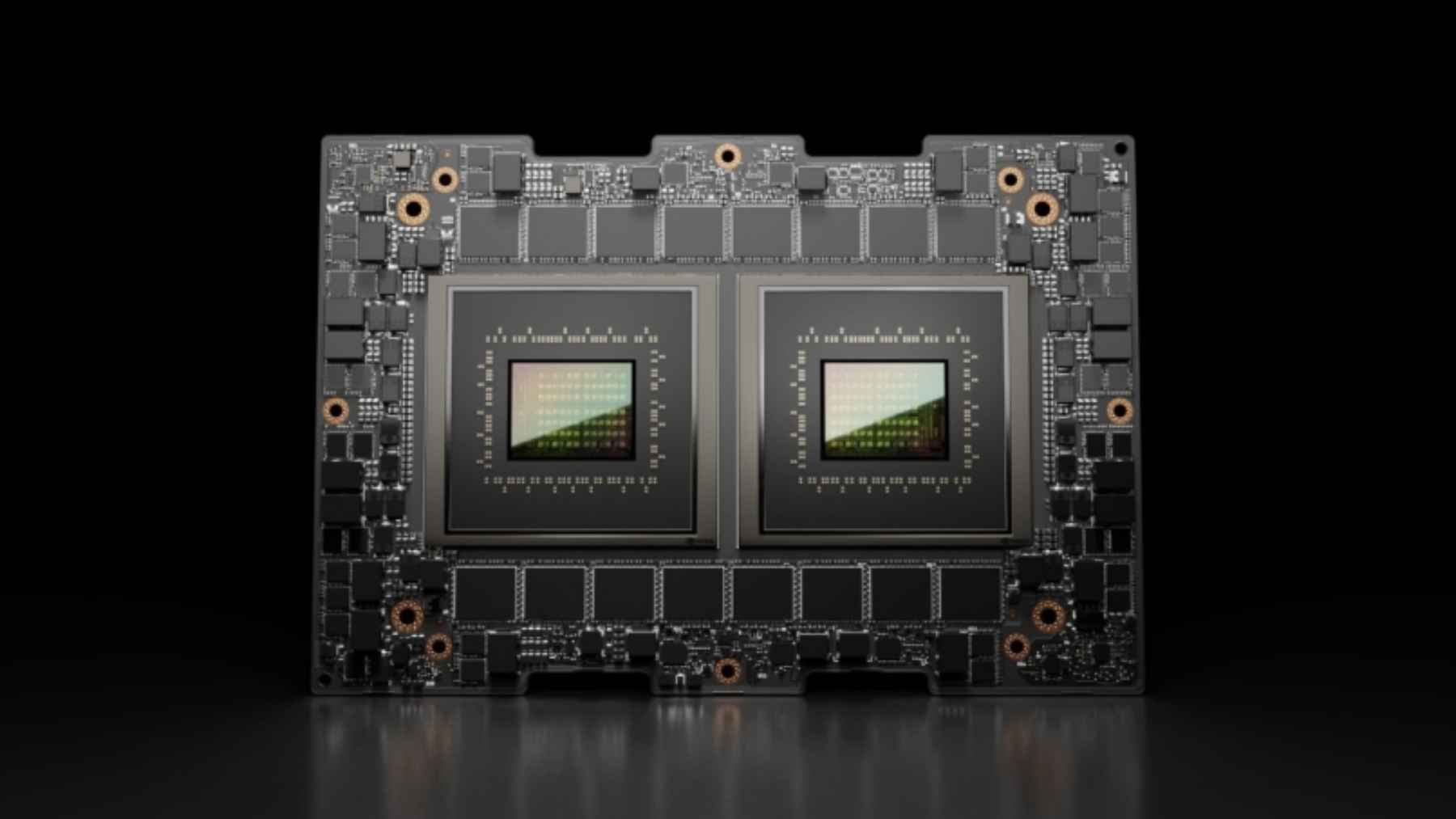
Chip count does not translate directly into electricity use. Nvidia says one liquid-cooled GB300 NVL72 rack contains 72 Blackwell Ultra graphics processing units, or GPUs, and can require up to 142 kilowatts.
If 50,000 GPUs were arranged in those full racks and operated at maximum draw, the result would be roughly 695 racks and 99 megawatts of IT equipment capacity before broader facility overhead is added.
That calculation is only an illustration, not a verified DeepSeek installation. Huawei says a full Atlas 950 SuperPoD will connect 8,192 neural processing units, or NPUs, across 160 cabinets and occupy about 10,800 square feet, but its official announcement does not state a directly comparable total power figure.
Four accelerators could use less, similar, or more electricity than one GB300 once utilization, memory, interconnects, cooling, and software efficiency enter the picture.
More chips also mean more than a larger electric bill. They can require additional circuit boards, optical links, power equipment, cooling hardware, replacement parts, and physical space. The environmental cost may not rise in a neat four-to-one line, but it rarely stops at the processor package.
AI’s electricity curve is steep
The International Energy Agency estimates that data centers consumed around 415 terawatt-hours of electricity worldwide in 2024. Its base case projects that total to reach about 945 terawatt-hours by 2030, while electricity used by accelerated servers grows around 30% each year. AI is not the only cause, but it is the most important new driver.
China and the United States are expected to account for nearly 80% of global data center electricity-demand growth through 2030. That concentration matters because massive computing campuses connect to local grids, where generation and transmission projects move much more slowly than chip product cycles.
A more efficient hardware and software path could cut data center demand by more than 15% in the IEA’s high-efficiency scenario.
Scarcity shaped DeepSeek
DeepSeek’s reputation was built on doing more with constrained hardware. Its official DeepSeek-V3 technical report describes a mixture-of-experts model with 671 billion total parameters and 37 billion activated for each token, trained with 2.788 million H800 GPU-hours.
The company estimated the direct rental cost at about $5.58 million, while explicitly excluding earlier research and experimental work.
That record helps explain why the leaked comments matter. DeepSeek’s efficiency was not simply a green initiative or a clever marketing line. It was an engineering response to limited access to advanced chips, and the alleged transcript suggests Liang still sees raw computing power as the main constraint.
There is a catch. Lower energy use per training run or generated token does not guarantee lower total consumption if cheaper AI leads to many more models, users, and queries. Efficiency can slow the growth curve, but it can also make demand easier to expand.
China is building around the bottleneck
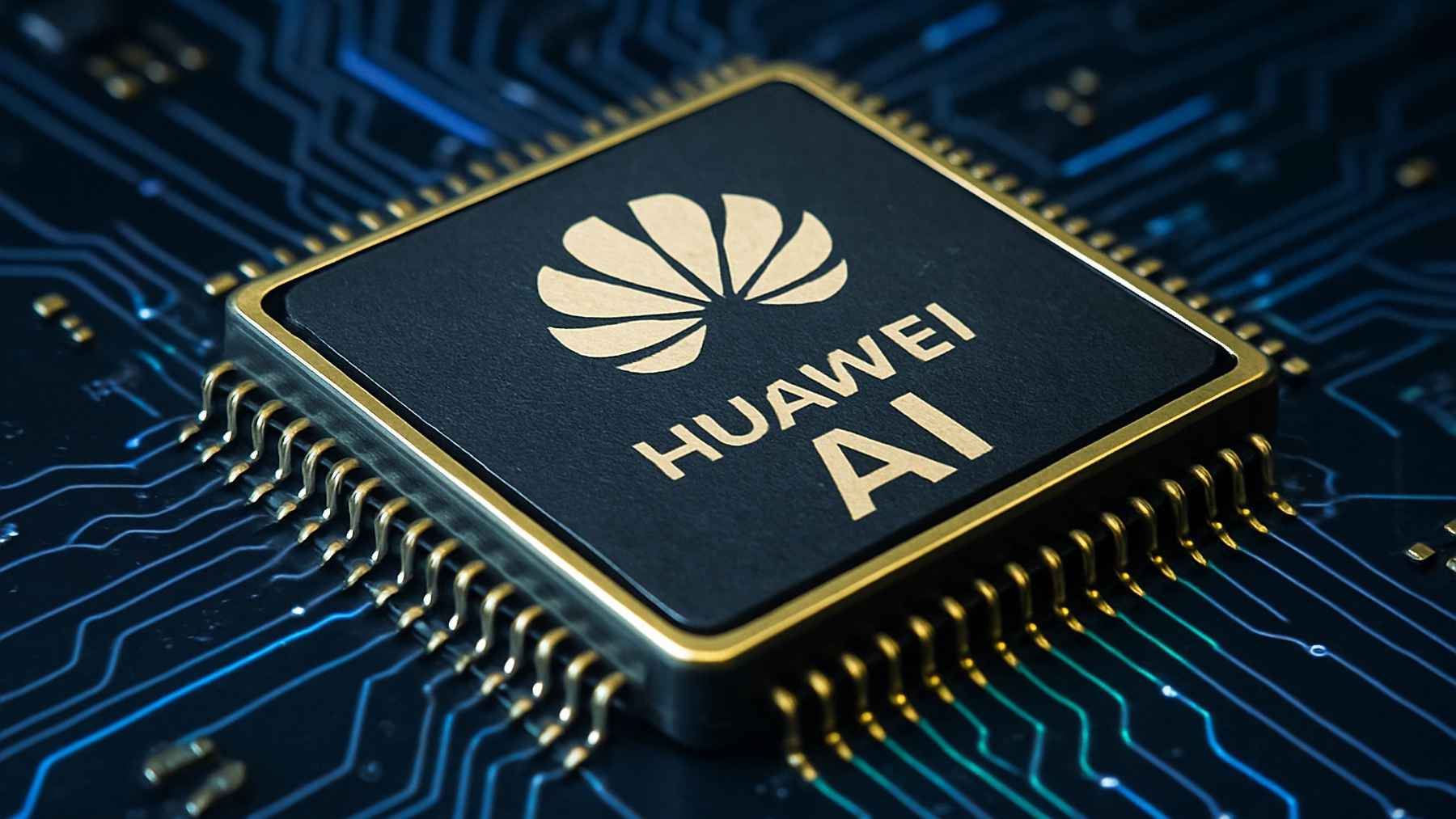
Huawei’s answer is to make thousands of processors behave like one large machine through high-speed interconnects.
DeepSeek, meanwhile, has leaned more heavily on Huawei hardware and is developing an inference chip of its own, according to Reuters, as it seeks more control over the infrastructure behind its models. The project is still at an early stage and faces manufacturing and memory constraints.
This strategy can narrow the usable-computing gap even when individual Chinese accelerators remain behind Nvidia’s best chips. But it also shifts the contest toward larger systems, more complex networking, and potentially heavier energy and material demands.
The likely result is that export controls change where and how the resources are spent rather than stopping the computing race.
Performance per watt wins
The meaningful environmental benchmark is not the number of chips in a press release. It is useful model output per watt, measured with the same workload and including model quality, speed, utilization, networking, cooling, and the carbon intensity of the electricity supply. Without that information, “four for one” is a strategic talking point, not an ecological scorecard.
The headline number is not four chips versus one. It is how much electricity, cooling, material, and carbon are required for one useful unit of AI.
The latest official statement on the Atlas 950 SuperPoD was published on Huawei’s website.