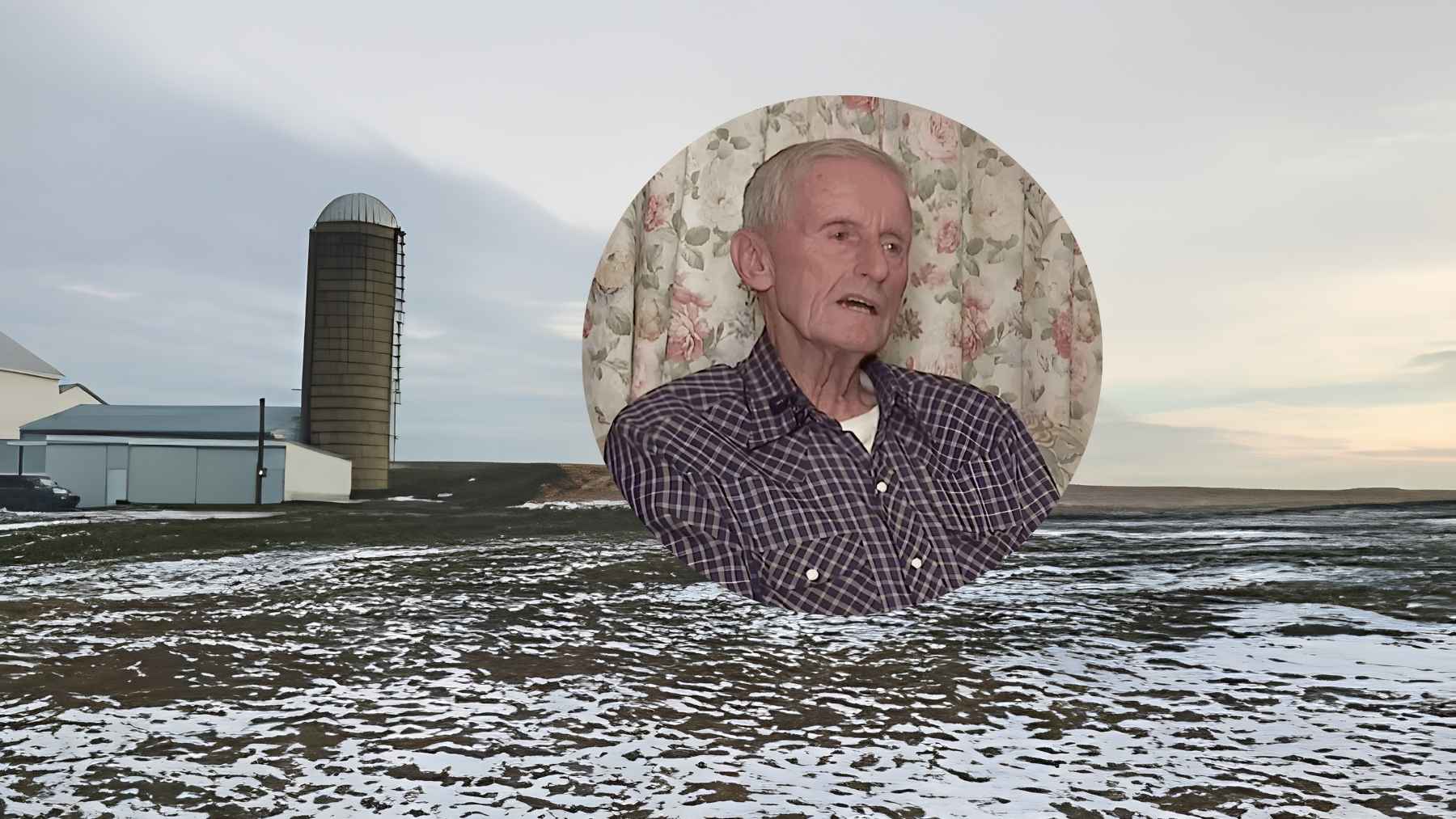
At 86, Pennsylvania farmer Mervin Raudabaugh faced the kind of offer that can change a family’s finances overnight. Data center developers proposed more than $15 million for his two neighboring farms in Silver Spring Township, but he turned them down because he did not want the land converted from agriculture.
Instead, Raudabaugh accepted just under $1.9 million for the farms’ development rights, roughly one-eighth of the reported technology offer. The decision permanently protects about 261 acres while allowing him to remain the owner and continue farming, which is the detail that makes this more than a story about walking away from money.
A choice wider than the check
Raudabaugh’s connection to the property runs through most of his life. He milked cows for 51 years, later raised beef cattle, and has continued growing corn and soybeans on land tied to deeply personal family memories.
“My mother died in my arms up there,” he said of the barn where the family once milked cows. No data center company has been publicly identified, so the verified story is about repeated offers from unnamed developers rather than a confirmed project by a specific technology giant.
What he actually sold
Raudabaugh did not sell the farms to a conservation organization. He sold the right to develop them, placing permanent conservation easements on the properties while keeping the land in private ownership.
That distinction matters. The farms may still be sold or passed to another owner, but the easements remain attached to the title and prevent future nonagricultural development, so the next owner inherits farmland rather than a blank slate for warehouses or server buildings.
A local tax made it possible
The financial bridge came from Silver Spring Township’s Land Preservation Fund. Voters approved a referendum in 2013 that dedicates part of the local earned income tax to conserving farmland, forests, and open space, with the average household contributing about $120 a year.
The program now generates about $1 million annually and can cover easement, legal, survey, administrative, and long-term stewardship costs. Lancaster Farmland Trust holds and enforces the easements, giving the township a way to turn many small public contributions into permanent protection for large properties.
Why these 261 acres matter
The protected land includes farms listed at about 102 and 160 acres, with both visible from Interstate 81. Lancaster Farmland Trust says they are the largest properties it has preserved in Cumberland County, and one includes 1,189 feet of stream frontage.
Keeping the acreage open protects more than a familiar rural view. The trust says the land supports groundwater recharge, water conservation, habitat, and local ecosystems, while one of the farms sits beside an Appalachian Trail parcel owned by the U.S. Department of the Interior.
The AI boom is changing land values
Raudabaugh was reportedly offered about $60,000 per acre, compared with roughly $7,200 per acre through the preservation deal. That gap shows why conservation programs struggle when developers seeking large, well-connected sites enter a rural real estate market.
The pressure is unlikely to fade soon. A June 2026 Lawrence Berkeley National Laboratory update estimated that data centers could consume 11.8% of total U.S. electricity in 2030, with modeled scenarios ranging from 9.5% to 15.3%, reflecting the fast growth of computing and AI infrastructure.
Pennsylvania is adding guardrails
Pennsylvania is actively competing for data center investment, but state leaders are also responding to concerns about power bills, environmental effects, transparency, and community control. In May 2026, the Shapiro administration released GRID standards for developers seeking state support, tax incentives, and coordinated permitting assistance.
Those standards call for commitments involving energy affordability, clean energy, workforce development, environmental protection, and local engagement. They do not settle every zoning fight, but they show that data centers are no longer treated as ordinary commercial buildings with ordinary infrastructure needs.
The farm stays in private hands
The preservation agreement became official on Dec. 30, 2025, yet Raudabaugh reportedly continued receiving calls from real estate agents afterward. “These people have hounded the living daylights out of me,” he said while describing the pressure surrounding the property.
For the most part, the easement lets daily farm life continue as before. The difference will appear years from now, when a future buyer can purchase the property for agriculture but cannot erase that purpose through a new industrial development plan.
A model other towns can use
This is not a simple argument that technology investment is bad and farmland is good. Data centers can bring major capital investment and skilled jobs, but Raudabaugh’s case shows why siting decisions should also account for productive soil, water, open space, and the wishes of the people who live there.
The sharper lesson is that personal resolve works best when public policy gives it somewhere to go. Without the township fund and a land trust able to hold the easement permanently, saying no to $15 million might have protected the farms only until the next owner faced the same offer.
Raudabaugh chose a smaller payment, but he also chose certainty.
The full report was published on Silver Spring Township’s official website.