Wally Funk, the aviation pioneer who became the oldest woman ever to travel to space, died on July 8, 2026, at age 87. Her story began in 1961, when she completed privately organized astronaut fitness tests similar to those used for NASA’s first male candidates, only to spend another 60 years waiting for a flight.
Her career turned that rejection into a question the aerospace industry still has to answer. How much talent gets lost when a supposedly neutral requirement is built around opportunities one group was never allowed to access? Funk became a federal aviation trailblazer, trained more than 3,000 pilots, and finally flew aboard Blue Origin’s New Shepard at 82.
She proved the tests were not the problem
Born in 1939, Funk was fascinated by flight from childhood and earned her pilot’s license as a teenager. She studied at Stephens College and Oklahoma State University, building experience in aircraft ranging from gliders and seaplanes to conventional light planes.
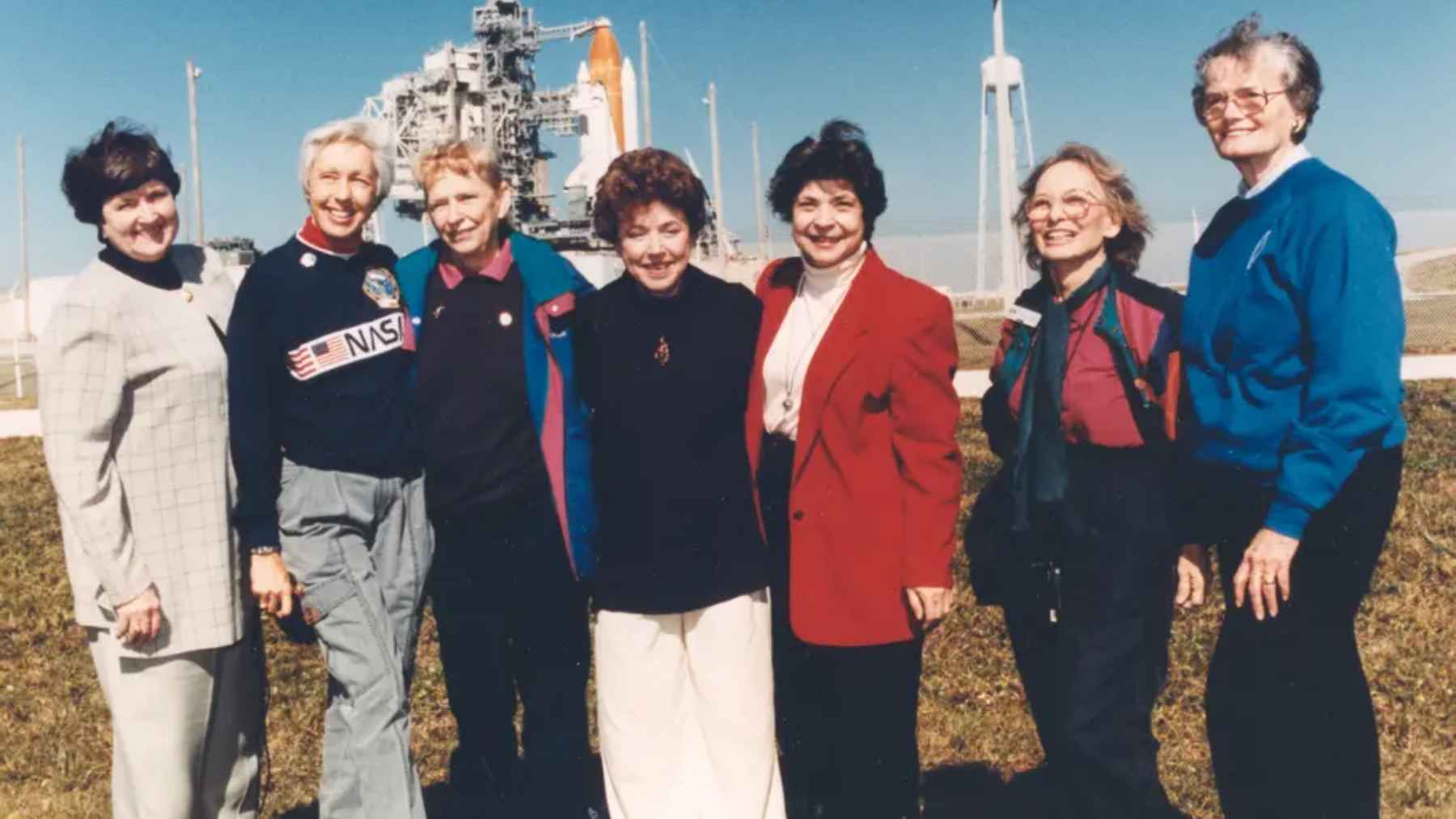
In the early 1960s, physician William Randolph Lovelace II invited experienced women pilots to undergo the medical screening developed for NASA’s Project Mercury candidates. The effort was privately financed and was never an official NASA program, although the 13 women who passed later became widely known as the “Mercury 13.”
The examinations were punishing. They included lengthy eye tests, exercise to exhaustion, vertigo tests using ice water, X-rays, psychological evaluations, and, for Funk and a small number of others, an isolation tank test. Funk’s results showed that the physical demands of astronaut selection were not beyond women.
The rules still locked women out
Passing the tests did not solve the deeper problem. NASA’s early astronaut requirements favored military jet test pilots, but women were barred from the military jobs that could provide that experience. On paper, the rule looked uniform. In practice, it eliminated every woman before formal selection even began.
Plans for further aeromedical testing at a Navy facility were canceled because the project lacked an official NASA request. Congressional hearings followed in 1962, but the resistance remained strong. Astronaut John Glenn described the absence of women from the field as “a fact of our social order.”
The Soviet Union sent Valentina Tereshkova into orbit in 1963. The United States did not launch its first female astronaut, Sally Ride, until 1983. Twenty years is a long gap in any industry. In the space race, it was an entire era.
Aviation became her long route forward
Funk did not leave the cockpit. She became the first female civilian flight instructor at a U.S. military base, the first female inspector at the Federal Aviation Administration, and the first female air safety investigator at the National Transportation Safety Board.
Later profiles credited her with about 19,600 flight hours and more than 3,000 students. Those figures are not just resume lines. They represent decades spent teaching, inspecting aircraft, studying accidents, and proving her expertise in a field that had once told her she did not belong.
She also kept applying to NASA and was rejected four times. Even in later life, she stayed ready for a different route, placing a $200,000 deposit for a future Virgin Galactic flight. “I will get up there somehow,” she said years before her opportunity finally arrived.
Blue Origin finally opened the hatch
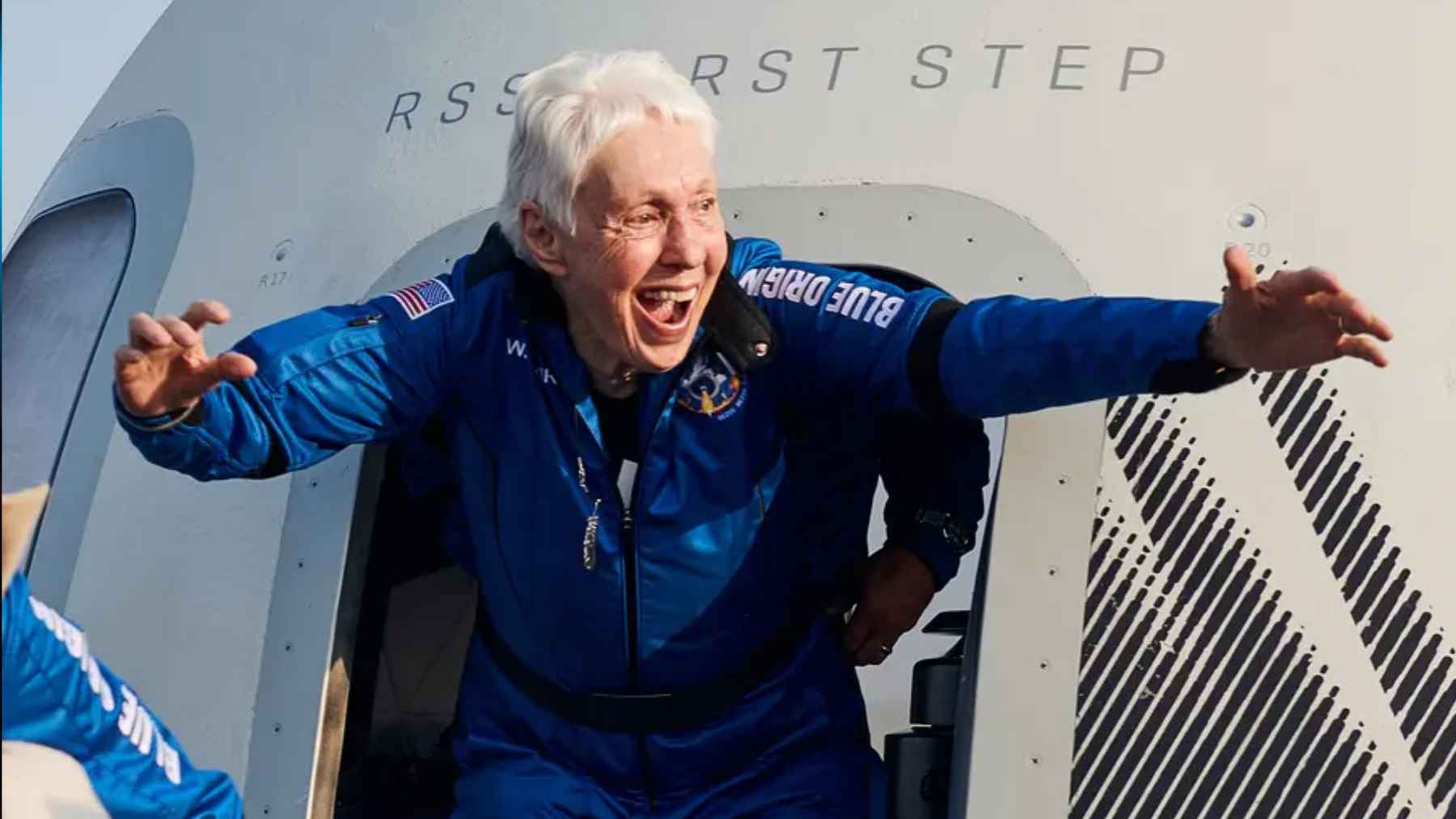
In 2021, Blue Origin founder Jeff Bezos invited Funk to join the company’s first crewed New Shepard mission as an honored guest. On July 20, she launched from West Texas with Bezos, Mark Bezos, and Oliver Daemen aboard the reusable suborbital system.
The roughly 10-minute flight crossed the Kármán line about 62 miles above Earth, giving the crew several minutes of weightlessness before the capsule returned by parachute. At 82 years and 169 days old, Funk became the oldest person to reach space at the time and set the record she still holds as the oldest woman in space.
After landing, she did not sound like someone ready to slow down. “I want to go again. Fast,” Funk told the crowd. The flight could not erase the exclusion of the 1960s, but it made one point impossible to ignore. Ability had never been the problem.
Her record was only part of the legacy
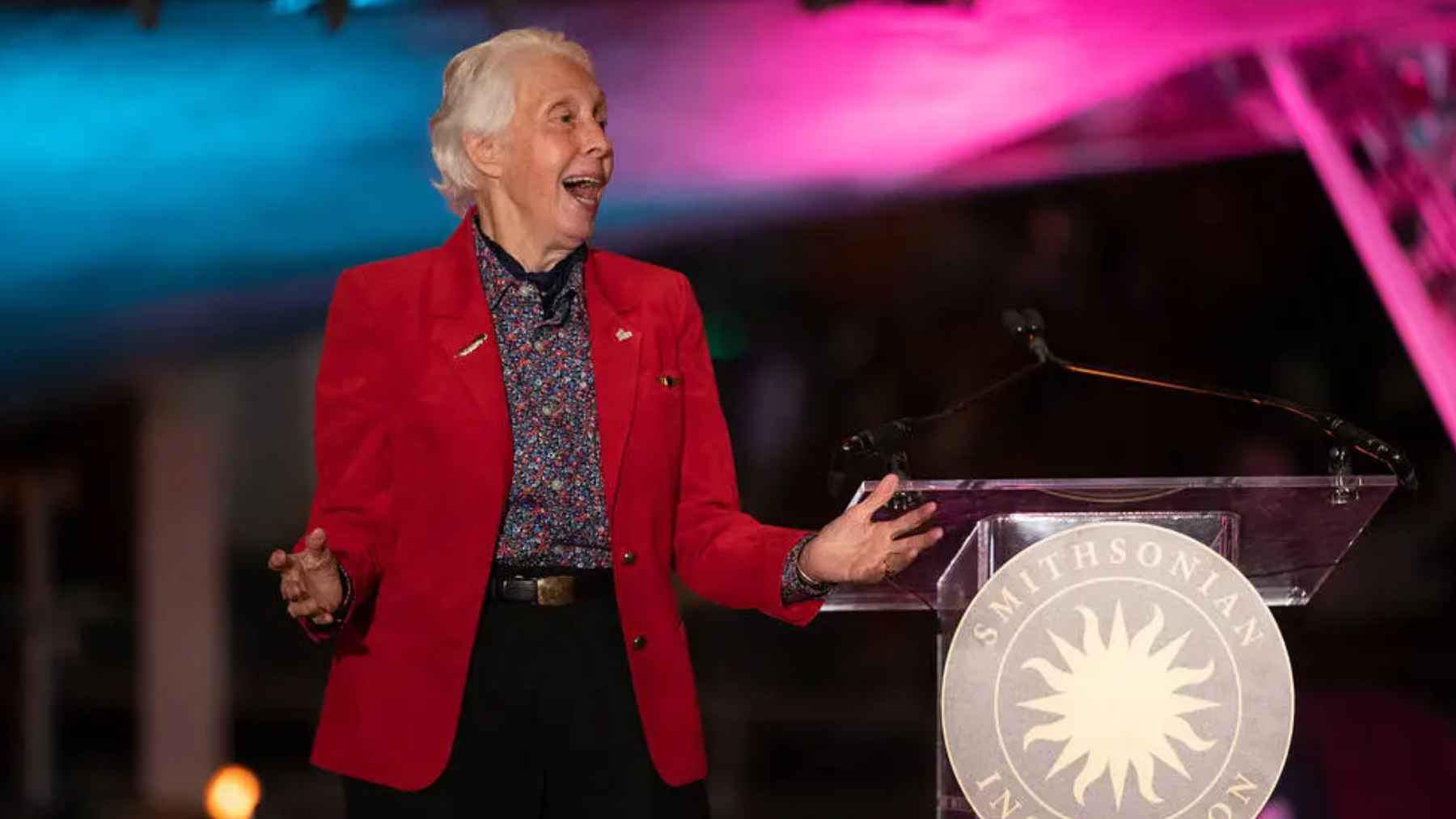
Congress formally honored the Mercury 13 in 2007, recognizing the women as pathfinders for later NASA astronauts and encouraging girls to pursue aviation, engineering, science, and space careers. In 2022, the Smithsonian National Air and Space Museum awarded Funk its Michael Collins Trophy for Lifetime Achievement.
Her death brought new tributes from organizations tied to her journey. Blue Origin called her a “pioneer in every sense of the word,” while the Smithsonian National Air and Space Museum published a memorial tracing her path from childhood aviation dreams to commercial spaceflight.
Funk’s story is often presented as a lesson in personal perseverance, and it certainly is. But the larger lesson belongs to institutions. Technology changed enough to carry her into space at 82, while selection systems changed far too slowly to recognize what she had already proved in her early 20s.
The official memorial was published on the “Smithsonian National Air and Space Museum” website.