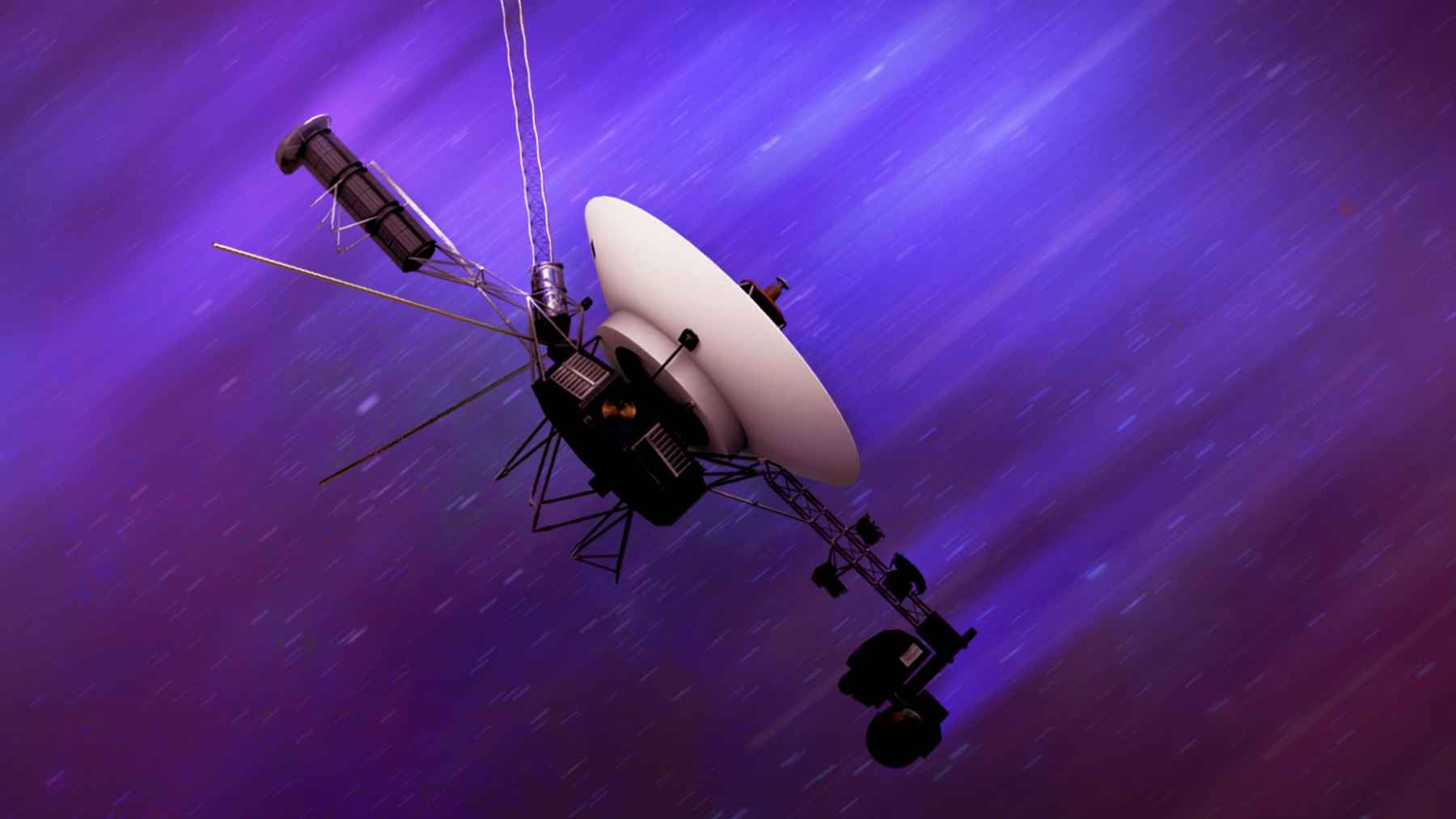
The smartphone in your pocket has vastly more computing power than NASA’s Voyager 1. Yet the phone was never expected to survive nearly half a century without repair while traveling more than 15 billion miles from Earth, receiving commands across interstellar space, and returning measurements from a place no other operating spacecraft has reached.
That contrast is what makes Voyager’s computers remarkable, but the familiar “8,000 instructions per second versus 14 billion” comparison tells only part of the story.
The phone figure comes from an older comparison, while Voyager does not have one general-purpose processor. Its real achievement is a carefully divided system built around redundancy, compact software, fault protection, and the ability to accept new instructions long after launch.
Six computers with three jobs
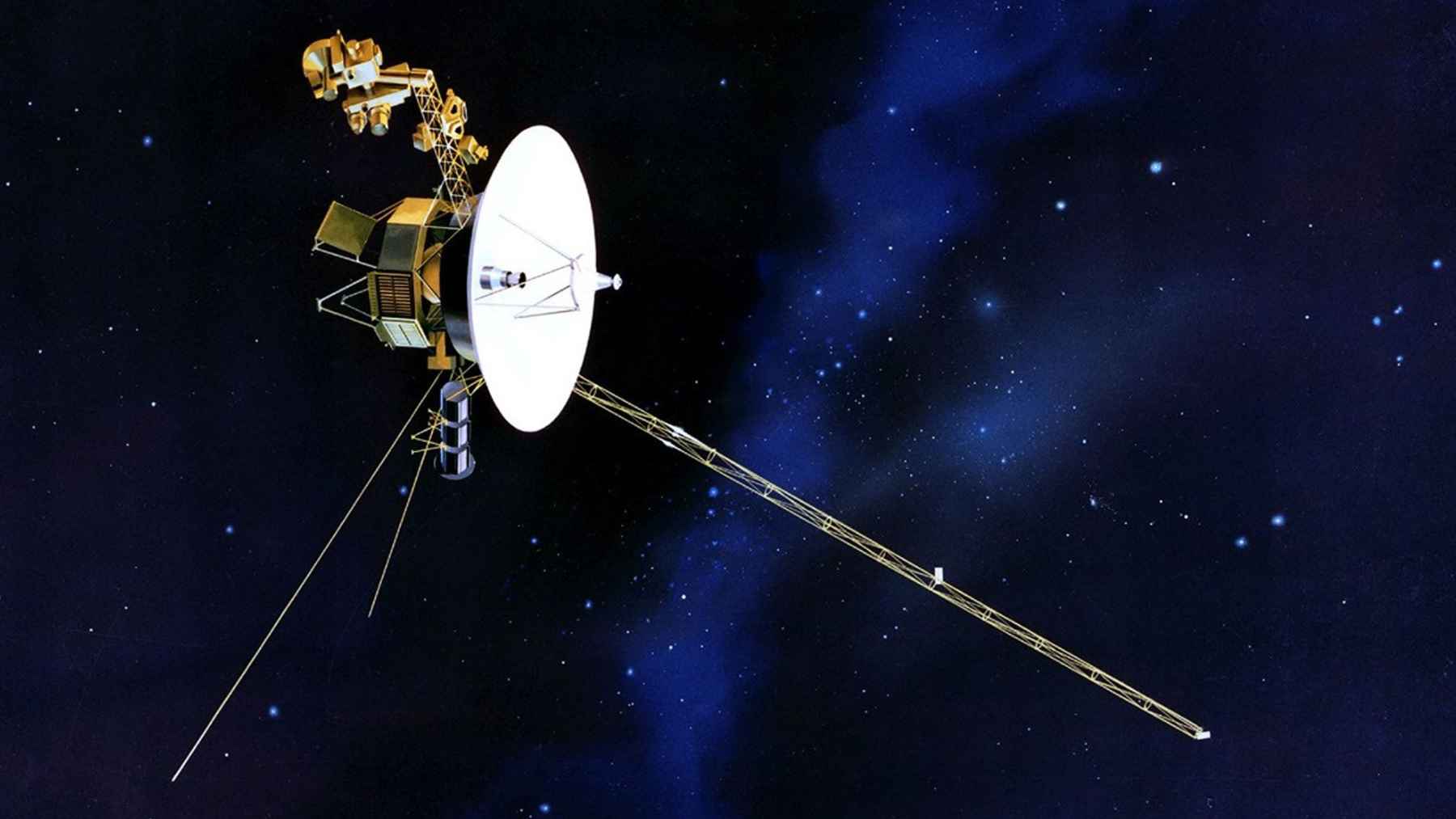
Voyager 1 carries three types of onboard computer, with two units of each type for redundancy. The Computer Command System interprets instructions from Earth and handles stored sequences and fault responses, while the Attitude and Articulation Control System keeps the high-gain antenna pointed toward our planet.
The third type, the Flight Data System, collects information from the scientific instruments and engineering sensors, then formats it for storage or transmission. These are purpose-built controllers working together, not a tiny 1970s version of a laptop.
NASA lists 4,096 words of memory for each 18-bit command and attitude computer, plus 8,198 words for each 16-bit flight data computer. Across all six units, that works out to roughly 68KB when expressed as familiar 8-bit bytes. A single photo on a modern phone can take up many times that amount.
The 8,000 figure needs context
The often-repeated estimate of about 8,000 instructions per second describes the scale of Voyager’s slower command and control processors. It should not be treated as one speed rating for the entire spacecraft, because the three computer systems were designed for different workloads.
The Flight Data System was faster and could execute about 80,000 instructions per second, according to the historical material cited in the mission background. During the planetary encounters, Voyager could handle science data rates as high as 115,200 bits per second near Jupiter.
Those numbers are tiny today, but they reveal a smart division of labor rather than one weak machine somehow doing everything.
Comparing those figures directly with a smartphone is also messy. Different machines use different instruction sets, word sizes, and levels of parallel processing, so one “instruction” does not represent the same amount of work on every device. Still, the broad conclusion is obvious because a phone wins the speed test by an enormous margin.
Simple software made Voyager adaptable
Voyager does not stream video, load social media, or react to an unpredictable person tapping a screen. Its computers execute stored sequences, monitor sensors, manage faults, point the antenna, and package data, while larger systems on Earth handle navigation analysis and mission planning.
The software is interrupt-driven, which means a processor can wait until a command, scheduled event, or fault requires attention. That matters when a one-way radio signal takes around 23 hours to reach the spacecraft. Voyager must be able to protect itself before engineers on Earth can even learn that something went wrong.
Reprogrammability has been just as important as simplicity. In 2024, engineers traced months of unreadable data to a failed memory chip in the Flight Data System, then divided the affected software code and moved it into other available locations. The repair was performed from more than 15 billion miles away, one carefully tested command sequence at a time.
Power is now the real limit
Voyager 1’s processors are slow, but processor speed is not what threatens the mission. The spacecraft relies on radioisotope thermoelectric generators that convert heat from decaying plutonium into electricity, and NASA says the two Voyager probes lose about 4 watts of power each year.
On April 17, 2026, engineers switched off Voyager 1’s Low-Energy Charged Particles experiment to conserve electricity. Two science instruments remain active, one measuring magnetic fields and another listening to plasma waves. Mission manager Kareem Badaruddin said they are “still working great” while returning data from territory no other human-made craft has explored.
This is graceful degradation in action. Instead of demanding that every original capability remain available forever, the mission team shuts down selected loads, preserves essential functions, and keeps the most valuable science flowing for as long as the power budget allows.
Longevity beats benchmark performance
Voyager 1 launched on Sept. 5, 1977, flew past Jupiter and Saturn, and crossed the heliopause into interstellar space in August 2012. It remains the most distant human-made object, and NASA says it will become the first to reach a distance of one light-day from Earth on Nov. 18, 2026, at just over 16 billion miles away.
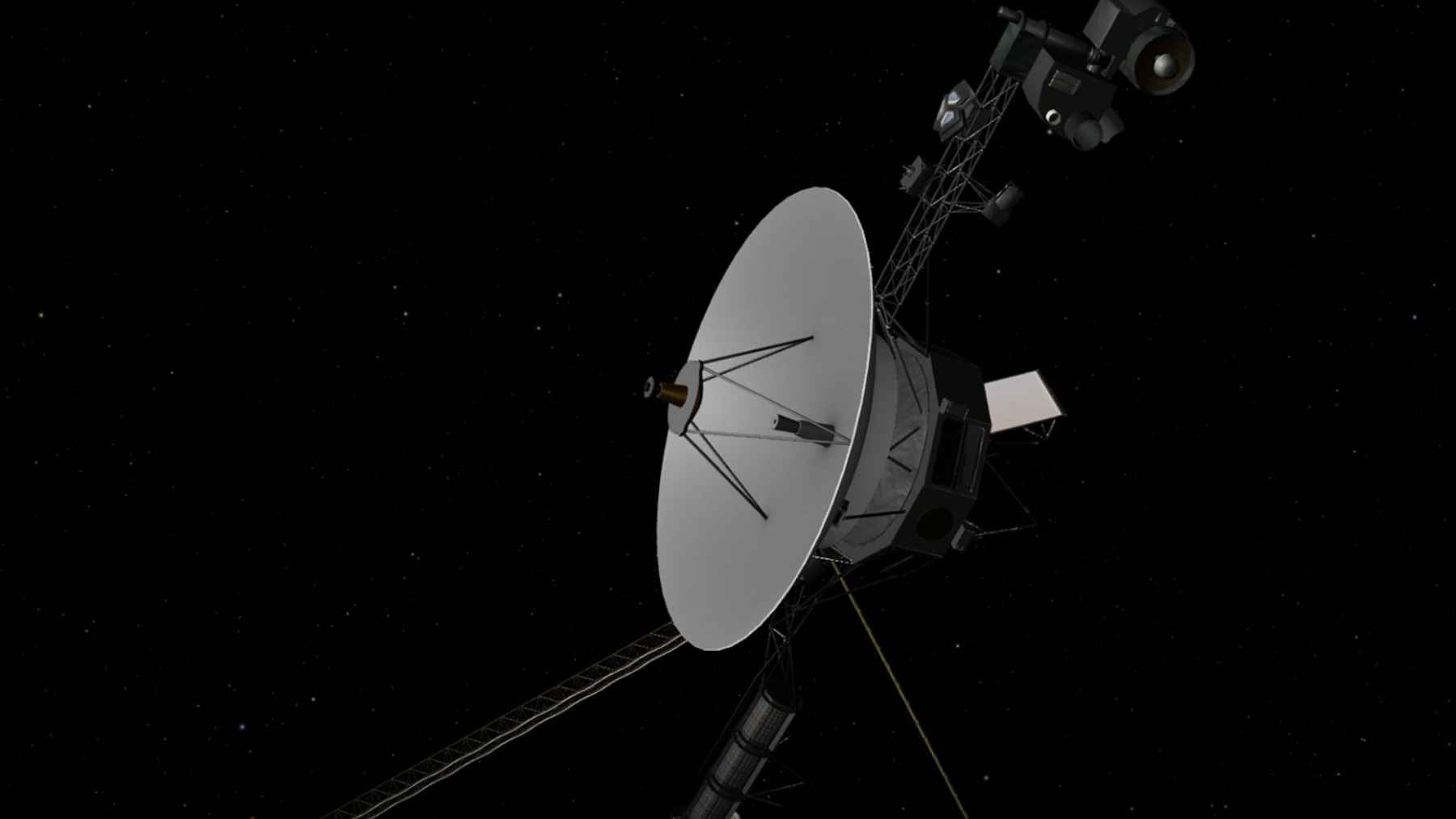
So what is the real comparison with a smartphone? A modern handset can perform far more calculations, but an ordinary consumer phone would not meet Voyager’s demands for radiation tolerance, autonomous fault response, strict power management, and decades without physical maintenance.
Voyager’s computers were not built to win a benchmark, but to keep doing a short list of essential jobs.
That design philosophy matters beyond spaceflight. The Global E-waste Monitor reports that the world produced about 68 million U.S. tons of electronic waste in 2022 and projects roughly 90 million U.S. tons by 2030, while limited repair options and shorter product life cycles are among the factors worsening the problem.
Voyager is not a blueprint for consumer electronics, but its long service life shows why repairability, modest energy use, and graceful degradation can matter more than headline performance.
The official mission update was published on NASA.