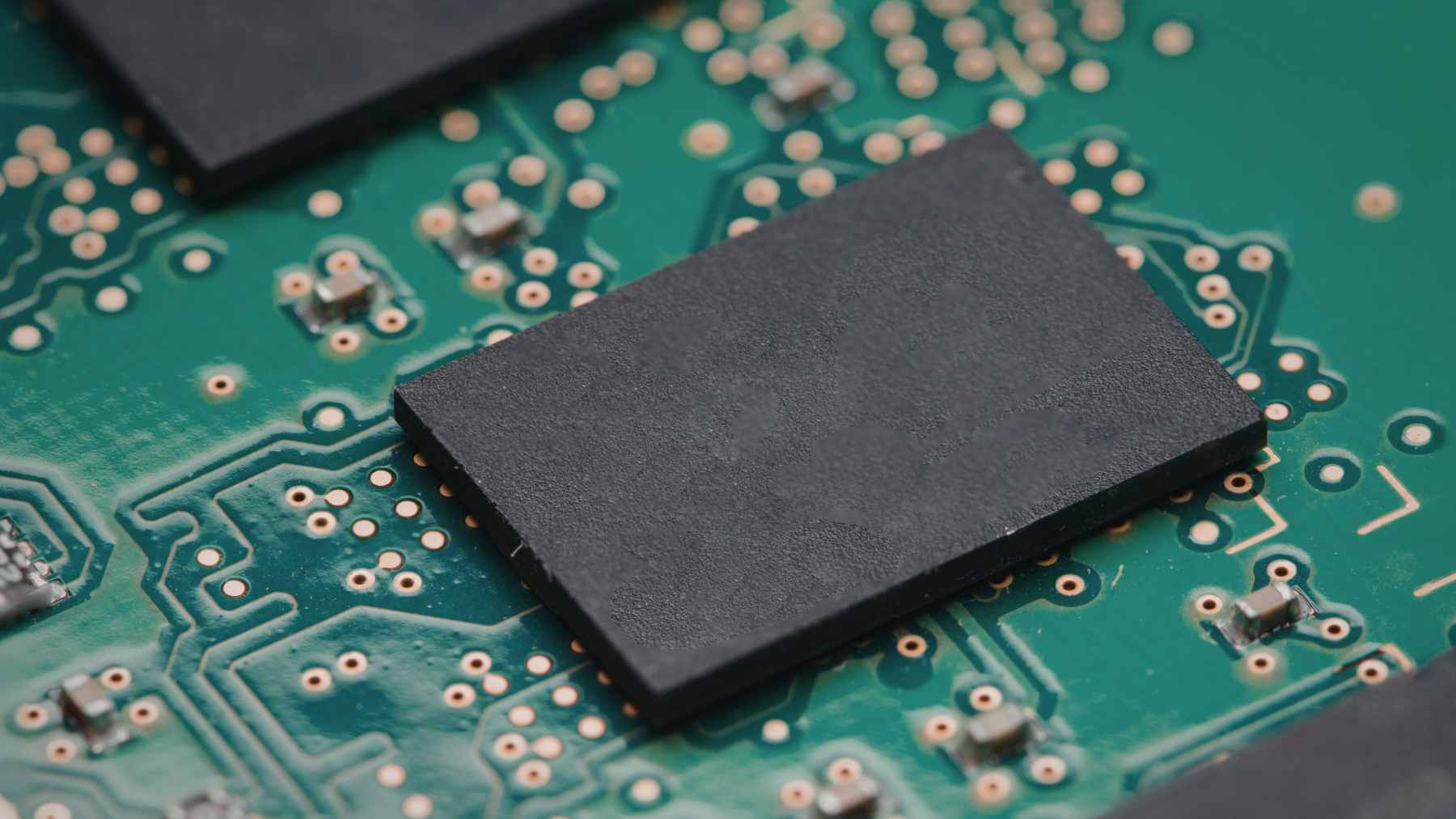
A chip wearing out sounds like the most ordinary thing in tech. But researchers now say one of the biggest aging problems inside silicon transistors can begin with a single “hot” electron that hits a specific energy and snaps a chemical bond. The research was published in Physical Review B.
That tiny event matters because the world is drowning in discarded gadgets. In 2022, global e-waste hit 132 billion lbs. and only 22.3% was formally collected and recycled, according to the Global E-waste Monitor. Keeping electronics working longer will not solve the crisis on its own, but it can slow the churn.
A single electron can start the damage
Inside a modern transistor, hydrogen is deliberately introduced during manufacturing to “passivate” broken silicon bonds at the silicon-oxide interface. Without that seal, dangling bonds can act like defects that hurt performance and reliability.
For years, many engineers assumed degradation was cumulative, like tiny impacts adding up. The new model instead points to a one-electron trigger, where a high-energy electron briefly occupies a hidden state, weakens the silicon-hydrogen bond, and pushes hydrogen out of position.
The most damaging electron energy sits around seven electron-volts, matching a long-observed experimental “sweet spot” for bond breaking.
Then the story gets even more quantum. As hydrogen detaches, it behaves more like a “wave packet” than a classical particle, so bond breaking depends on probability rather than one clean distance rule. That also lines up with observations that the process can be largely temperature-independent.
Why longevity is a climate and pollution issue
E-waste is rising faster than recycling systems can keep up. The Global E-waste Monitor projects e-waste could reach 180 billion lbs. by 2030, while the documented recycling rate could slip to about 20% in a “business as usual” path.
And this is not just about lost gold and copper. The UN-backed reporting warns that discarded electronics can contain hazardous substances such as mercury, creating health and environmental risks when devices are dumped, burned, or handled informally. It is the kind of pollution that can show up far from the people who bought the original product.
So, where do microchip bonds fit in? If a laptop, router, or solar inverter survives an extra few years because its transistors age more slowly, fewer replacements need to be built and shipped. Fewer broken devices also end up in the waste stream.
Deuterium and the business case for boring fixes
One detail from the study jumps out because it is so practical. Replacing hydrogen with deuterium, a heavier isotope that is electronically similar, slowed the degradation process by about a factor of one hundred in experiments the model aims to explain.
Industry has flirted with this idea before. A well-cited 1990s MOSFET study reported that annealing wafers in deuterium could increase hot carrier reliability by an order of magnitude, describing the effect as a kinetic isotope effect. What has been harder is turning that promise into a predictable knob in high-volume manufacturing.
For businesses, the incentives are clear. Longer-lived chips can mean fewer warranty claims, fewer truck rolls for repairs, and less downtime for servers and industrial controls, which is a cost people feel in everything from their internet connection to their electric bill. But chipmakers also weigh speed, yield, and cost–and reliability upgrades rarely come free.
Defense and critical infrastructure cannot swap parts easily
This physics is also a military and defense story. UC Santa Barbara says the work was supported by the Air Force Office of Scientific Research and a research grant from Samsung Semiconductor, which shows how closely reliability ties into both security and business.
The temperature angle matters here. If a failure pathway is not mainly driven by heating, then “just keep it cool” is not a complete strategy for gear that has to run reliably in harsh conditions or remote deployments. Knowing the trigger energy and the quantum pathway makes the problem easier to target with design rules and materials choices.
The researchers also point out that electron-induced bond breaking shows up beyond traditional silicon, including in materials used for LEDs and power electronics.
They highlight ultraviolet LEDs as a case where degradation blocks applications like disinfection and water purification, tying reliability to public health tech as well.
Cleaner chips need cleaner factories, too
Even perfect reliability would not erase the footprint of chipmaking. The US Environmental Protection Agency notes that semiconductor manufacturing uses high global warming potential fluorinated compounds, and that anywhere between 10% and 80% of these gases can pass through tool chambers unreacted and be released into the air under normal conditions.
Energy use is climbing at the same time. One analysis that compiles corporate reporting from major manufacturers found energy consumption in its dataset rose from 58,326 GWh in 2015 to 131,278 GWh in 2023. The big takeaway is that tiny physics can have big policy and market consequences, if industry acts on it.
The press release was published on UC Santa Barbara College of Engineering.