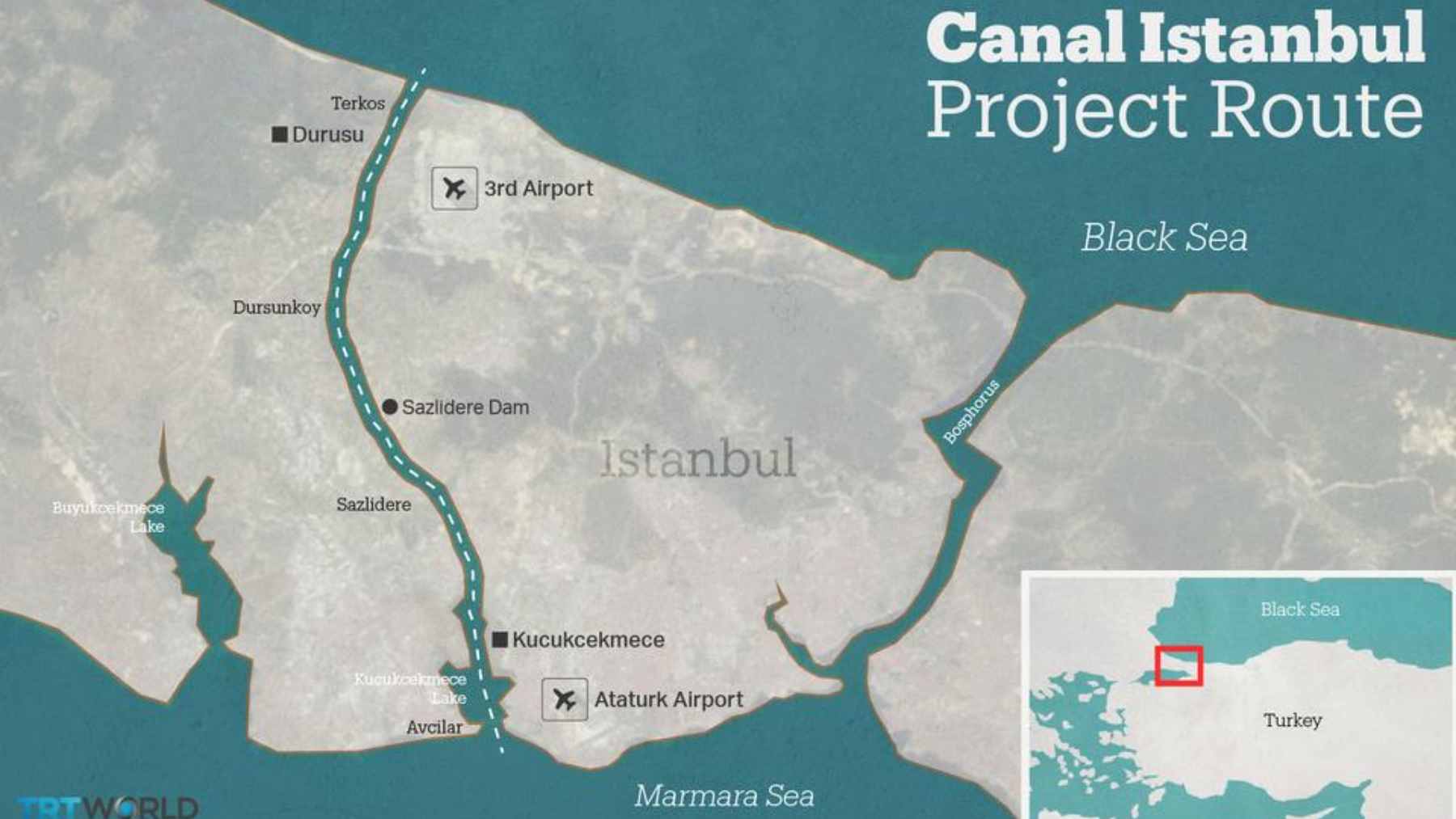
Turkey’s long-debated Canal Istanbul is back in the spotlight as global shipping lanes face a fresh lesson in vulnerability. The official plan calls for a 28-mile artificial waterway across the European side of Istanbul, with a base width of about 900 ft. and a depth of 68 ft., linking the Black Sea with the Sea of Marmara.
The timing matters. When a narrow waterway starts to look risky, everyone notices, from oil buyers to sailors to families filling up their cars.
The Strait of Hormuz handled an average of 20 million barrels of oil per day in 2024, about 20% of global petroleum liquids consumption, and recent disruption there has renewed the debate over whether countries need safer alternatives for trade and energy.
A second route past Istanbul
The Bosphorus already does a difficult job. It carries commercial traffic between the Black Sea and the Mediterranean while cutting straight through one of the world’s largest cities.
Canal Istanbul is meant to run roughly parallel to that natural strait, giving shipowners another way through. The government’s pitch is simple enough: fewer large vessels in a crowded urban waterway could reduce the chance of collisions, groundings, or accidents involving fuel and chemicals.
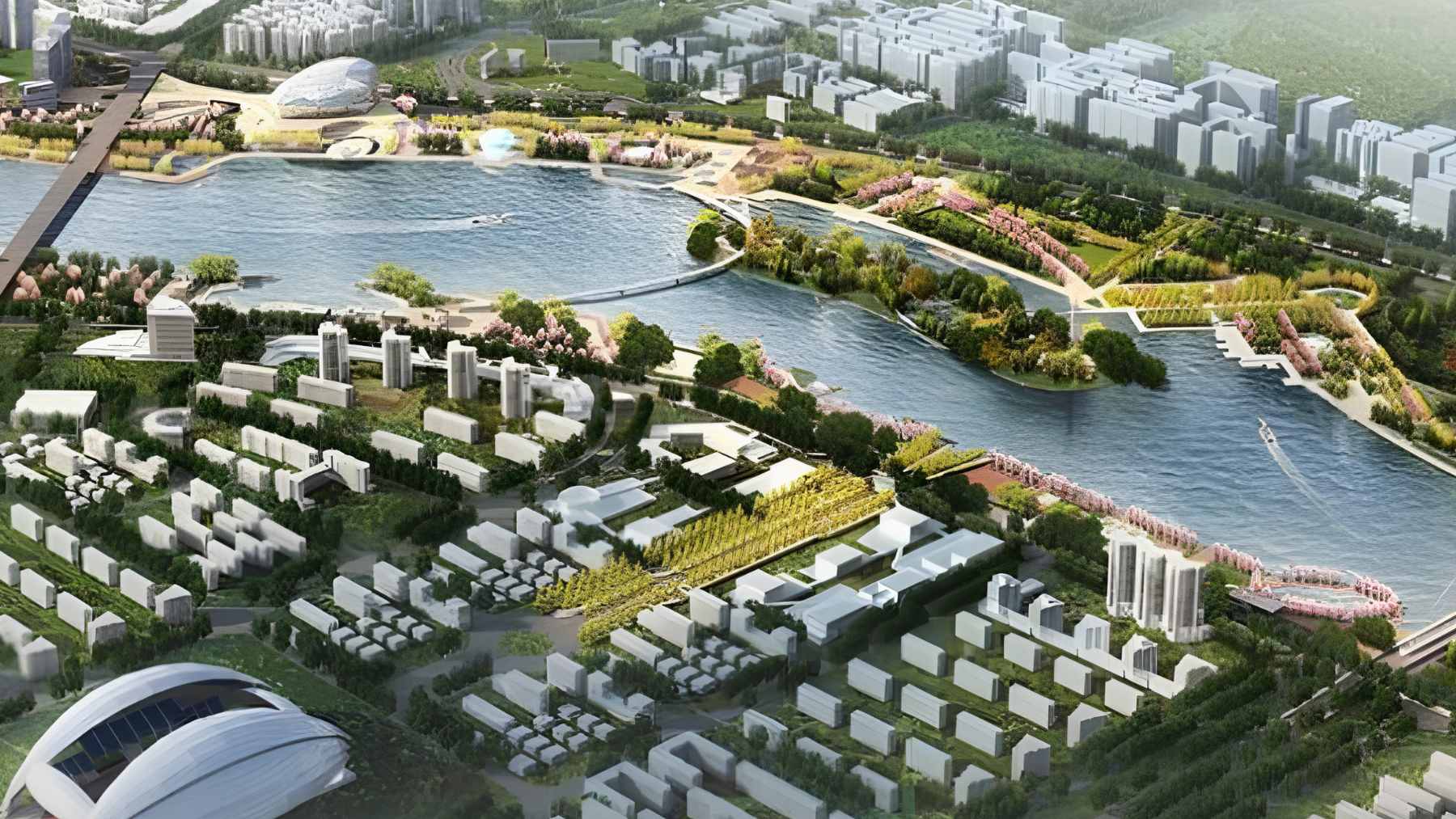
Official project material also says the plan includes two ports, one marina, a recreation area, and one logistics center. In short, this is not just a canal. It is a proposed trade corridor with real estate, transport, and environmental consequences attached.
The Hormuz lesson
The Strait of Hormuz is far from Istanbul, but the basic problem is familiar. A narrow channel becomes a pressure point, and suddenly markets far away start recalculating costs.
The U.S. Energy Information Administration says Hormuz flows in 2024 and early 2025 accounted for more than one-quarter of global seaborne oil trade and about one-fifth of global oil and petroleum product consumption. Around one-fifth of global liquefied natural gas trade also crossed the strait in 2024, mostly from Qatar.
Recent disruption has already forced importers to improvise. Reuters reported that Indian refiners raised imports from Venezuela, Brazil, Angola, and Nigeria in April and May after the Hormuz disruption. That is why governments look at canals and bypasses like insurance policies. The trouble is, insurance has a premium.
Ambition meets money
President Recep Tayyip Erdogan announced Canal Istanbul more than a decade ago and laid the foundation in 2021. Since then, the project has remained politically alive, but its physical progress has been uneven.
Reuters reported in 2025 that the plan had been shelved in recent years largely because of economic turmoil, lack of financing, and public opposition. Transport Minister Abdulkadir Uraloglu still insisted, “We have not abandoned the Kanal Istanbul project.”
Reuters placed the official estimate at about $1.95 billion in 2025, but the real bill can change depending on what is counted, from bridges and roads to land development and financing costs. For now, it remains a strategic wager waiting for money, permits, and political calm.
The water question
Environmental concern centers less on ship traffic and more on what happens when two different seas are linked by another channel. The Black Sea and the Sea of Marmara already interact through a delicate water system, and a second passage could change how that system behaves.
A 2026 study by Seval Sözen and Derin Orhon examined wastewater pollution, the possible loss of vital water sources, salinization risks, dredging, and excavation soil.
Transportation Research International Documentation’s (TRID) record of the study says the findings point to notable environmental challenges that could affect Istanbul’s ecosystem and long-term ecological balance.
What does that mean outside the lab? Changes in salinity and oxygen can be felt by fish, plankton, and the larger food web, not just by scientists reading sensor data. For a city that lives with the sea every day, that matters.
Fresh water and growth
The Sazlıdere area is especially sensitive because it is tied to Istanbul’s water system Official documents argue the total effect on the city’s water reserve would be around 3%, but opponents still worry that a growing city has little room to gamble with reservoirs.
There is also the land around the proposed route. Northern Istanbul has already been reshaped by highways, airport infrastructure, and new development, and a canal can quickly become a magnet for more construction.
At the end of the day, the environmental debate is not just whether engineers can dig it. It is whether Istanbul can absorb another megaproject without weakening the natural buffers that already protect it.
The Montreux question
There is a strategic question, too. The Turkish Straits are governed by the Montreux Convention, which shapes how civilian and military ships move between the Mediterranean and the Black Sea.
Turkey’s official material says Canal Istanbul would not change its rights and responsibilities under Montreux, and presents the canal as an optional, safer passage to the Black Sea. Some critics and legal experts still warn that a new route could invite debate over how old rules apply to new infrastructure.
The issue has grown sharper as Black Sea security has become more sensitive in recent years. For Turkey, the canal is not only an engineering project, it is also a statement about control over a crucial gate.
What happens next
For now, Canal Istanbul is neither dead nor finished. It is a blueprint, a bridge project, a political promise, and an environmental warning all at once.
The Hormuz crisis gives Ankara’s argument new energy because the world can see how one strained sea lane can ripple through oil markets and shipping schedules. It does not erase the local questions sitting in Istanbul’s backyard, though.
A safer Bosphorus is a worthy aim. The harder question is whether a 28-mile canal is the best way to get there.
The study was published on American Society of Civil Engineers.