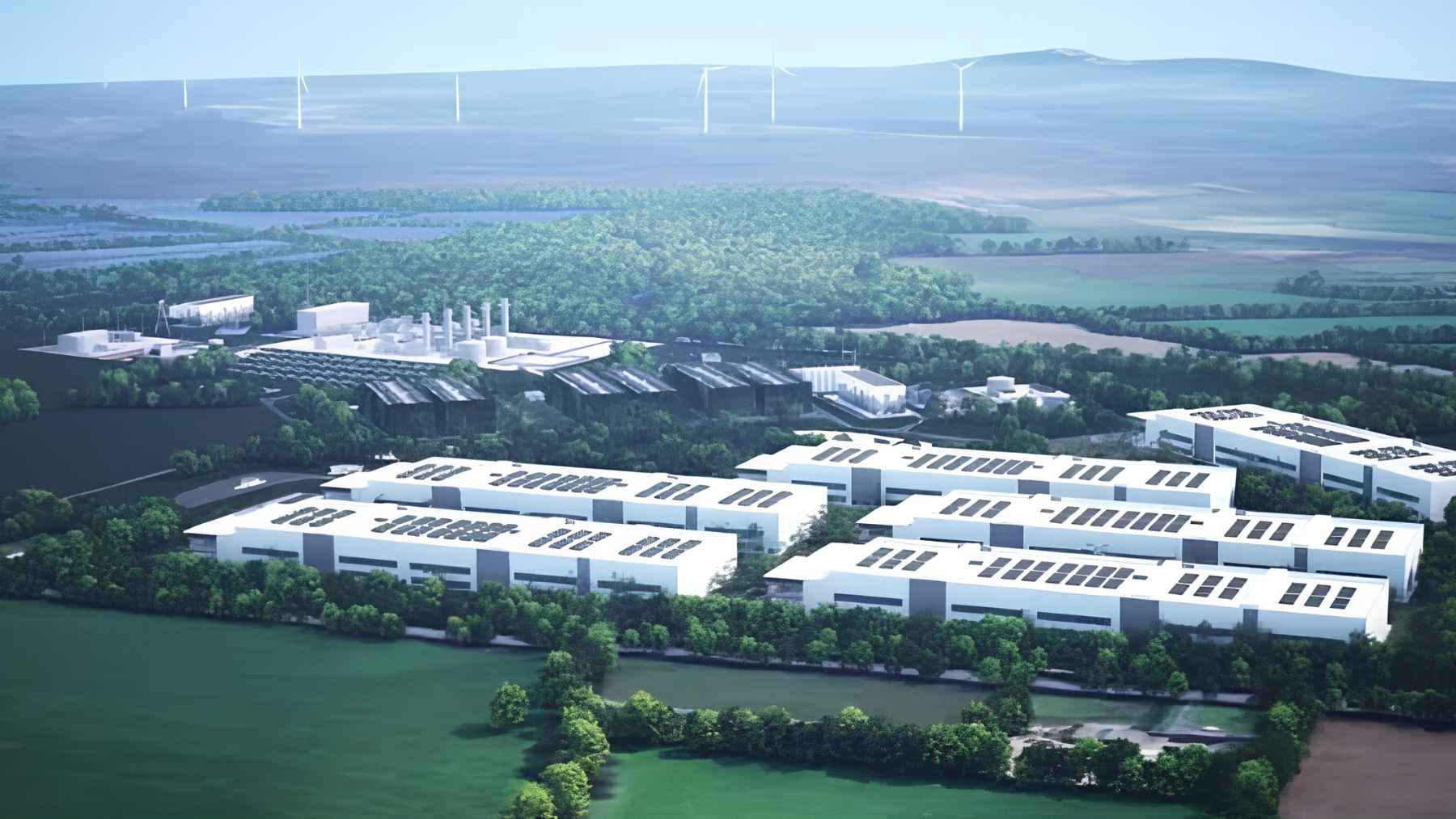
A group of 40 farmers and residents in County Westmeath has taken its fight against a huge data center and solar project to Ireland’s national planning appeals body.
The Red Admiral development near Rochfortbridge would spread across roughly 600 acres and cost about $1.14 billion, while opponents say it would remove valuable cropland and create new risks for wells, flooding, and rural homes.
This is not a simple clash between technology and people who dislike renewable energy. The proposal combines six data center buildings with solar panels, battery storage, fuel cells, and a grid connection, which means its environmental case reaches far beyond the word “solar.”
The bigger question is whether cleaner power promises can outweigh the long-term change of an agricultural landscape.
Why the appeal matters
Westmeath County Council approved the project for 10 years, subject to 32 conditions, but the decision has since drawn 10 third-party appeals. The official case was lodged on June 23, 2026, and An Coimisiún Pleanála lists October 27, 2026, as the target date for a ruling.
Willie Carey, one of the local farmers involved, said the process had become a “divide and conquer approach,” while fellow farmer Frank Kelly stressed, “We are not opposed to solar.” Lumcloon Energy, the parent company behind Red Admiral DC Limited, says it held extensive consultation and changed the design and solar farm boundary after receiving local feedback.
Solar is only part of the plan
Inside the wider site, the secured data center campus would occupy about 96 acres and contain six two-story buildings. The adjoining energy system would include a 180-megawatt solar farm, a 250-megawatt battery with two hours of storage, and 160 megawatts of solid oxide fuel cells.
Those fuel cells would initially be supplied with natural gas, although the technology is described as capable of using biomethane or green hydrogen in the future. At the unlikely full 250-megawatt load, the project’s environmental report estimates annual emissions of 543,000 tons of CO2 equivalent.
One planning condition requires the company to show that the electricity consumed is matched by new renewable generation through a corporate power purchase agreement. That is an important safeguard, but the public documents reviewed here do not establish that every hour of operation would be powered only by the on-site solar farm.
Farmland, wells, and flooding
Here lies the heart of the disagreement. Farmers see productive wheat and tillage fields that could feed families or pass to the next generation, while the project’s environmental report classifies the permanent loss of productive land beneath hard surfaces as a “slight” effect with low sensitivity.
Both statements can exist at once because they measure value differently. The report rates open fields as low local ecological value, yet surveys found seven of Ireland’s nine resident bat species and recorded most bat activity along field edges. Farmers, meanwhile, measure value through food production, inheritance, and whether the land can still be farmed.
Water is another flash point. The plan calls for three on-site wells drawing up to about 10,600 gallons per day, and the developer’s report describes that amount as negligible for the local groundwater resource.
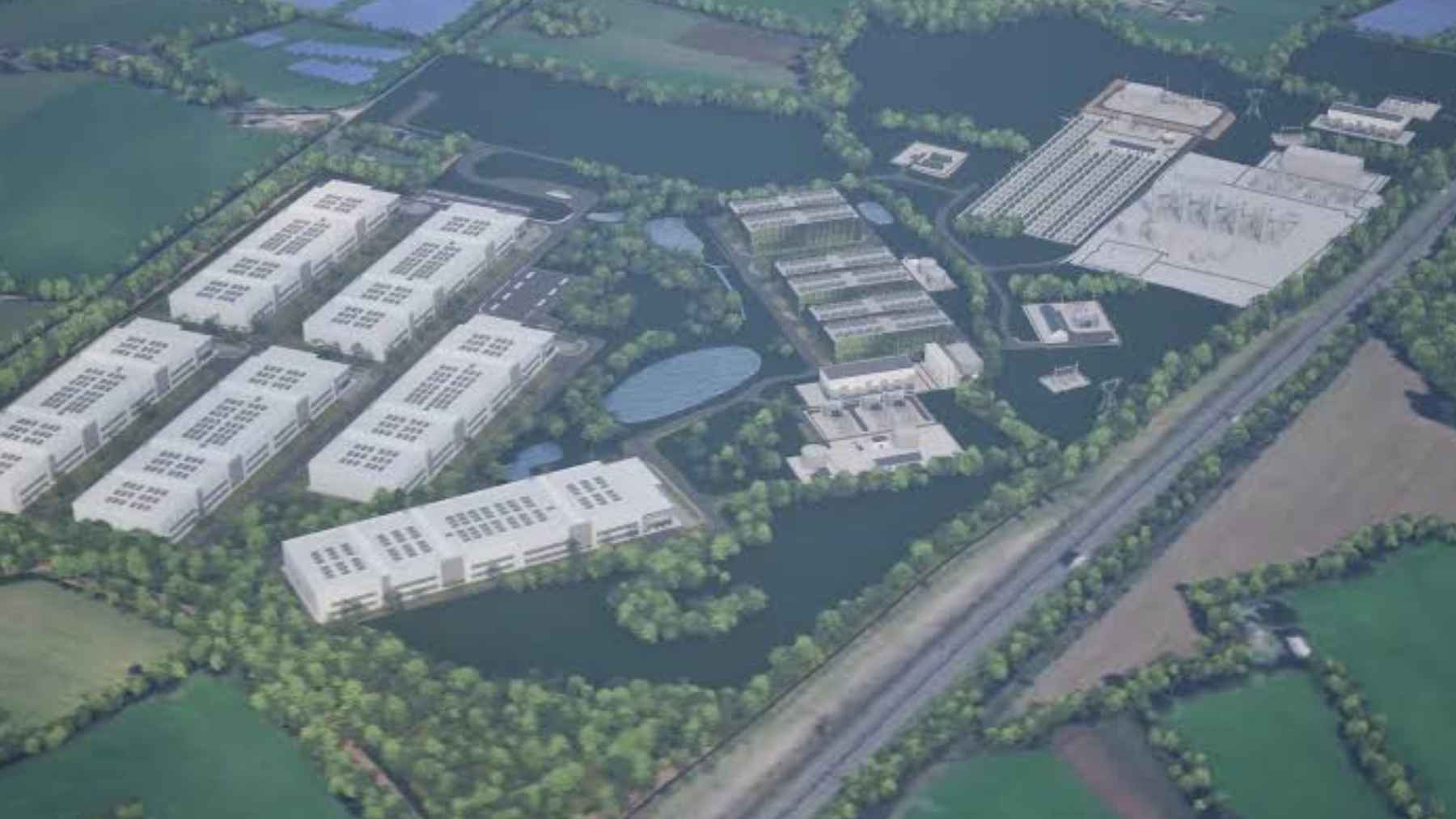
Residents remain worried about long-established household and farm wells, while the same report rates the land at low flood risk and proposes swales, attenuation ponds, and rainwater storage to manage runoff.
Jobs and public money
The economic numbers are substantial. The developer has projected 760 direct jobs and more than 1,000 indirect jobs during a five-year construction phase, while planning documents indicate that roughly 360 to 440 direct roles would involve on-site employees.
The county council would also receive about $9.42 million in infrastructure contributions and roughly $331,000 through a special road levy, according to recent exchange rates. That money could support public works, but it does not answer the separate question of whether this particular location is environmentally and socially suitable.
Ireland’s data center dilemma
Why is one rural planning dispute attracting national attention? Ireland’s data centers consumed 23% of all metered electricity in 2025, up 10% in a single year to 7,663 gigawatt-hours. Their share was larger than that of urban households at 18% or rural households at 9%.
The Irish government says all new data centers must provide energy generation on-site or nearby, with 80% coming from renewable sources. Red Admiral is clearly designed to respond to that pressure, but the appeal shows why electricity is only one line on the sustainability checklist. Land, water, carbon, biodiversity, and community trust count, too.
What happens next
An Coimisiún Pleanála will now examine the appeals and the environmental record before issuing its decision. The ruling may become a practical benchmark for other large energy users trying to pair digital infrastructure with their own generation in rural Ireland.
At the end of the day, this is not a referendum on solar power. It is a test of whether Ireland can expand its digital economy without treating farmland and community consent as spare capacity.
The official appeal file was published on An Coimisiún Pleanála.