A single machine part, heavier than many passenger jets, became a moving sign of Australia’s clean-energy gamble when it rolled through Cooma on 152 wheels. The center cutterhead piece for tunnel boring machine Monica weighed 151 tons, measured roughly 23 ft. wide, and had to be moved at night toward the remote Marica worksite in the Snowy Mountains.
Why go to all that trouble? Because Monica is not just another piece of construction equipment. It is part of Snowy 2.0, a pumped-hydro megaproject designed to act like a giant water battery for a grid that is leaning more heavily on wind and solar power.
A huge part on 152 wheels
The most visible moment came when Monica’s center cutterhead piece moved through Cooma on its way to Marica, north of Kiandra. Snowy Hydro said the entire transfer stretched about 240 ft., making it the kind of convoy people would stop to stare at even if they did not know what it was for.
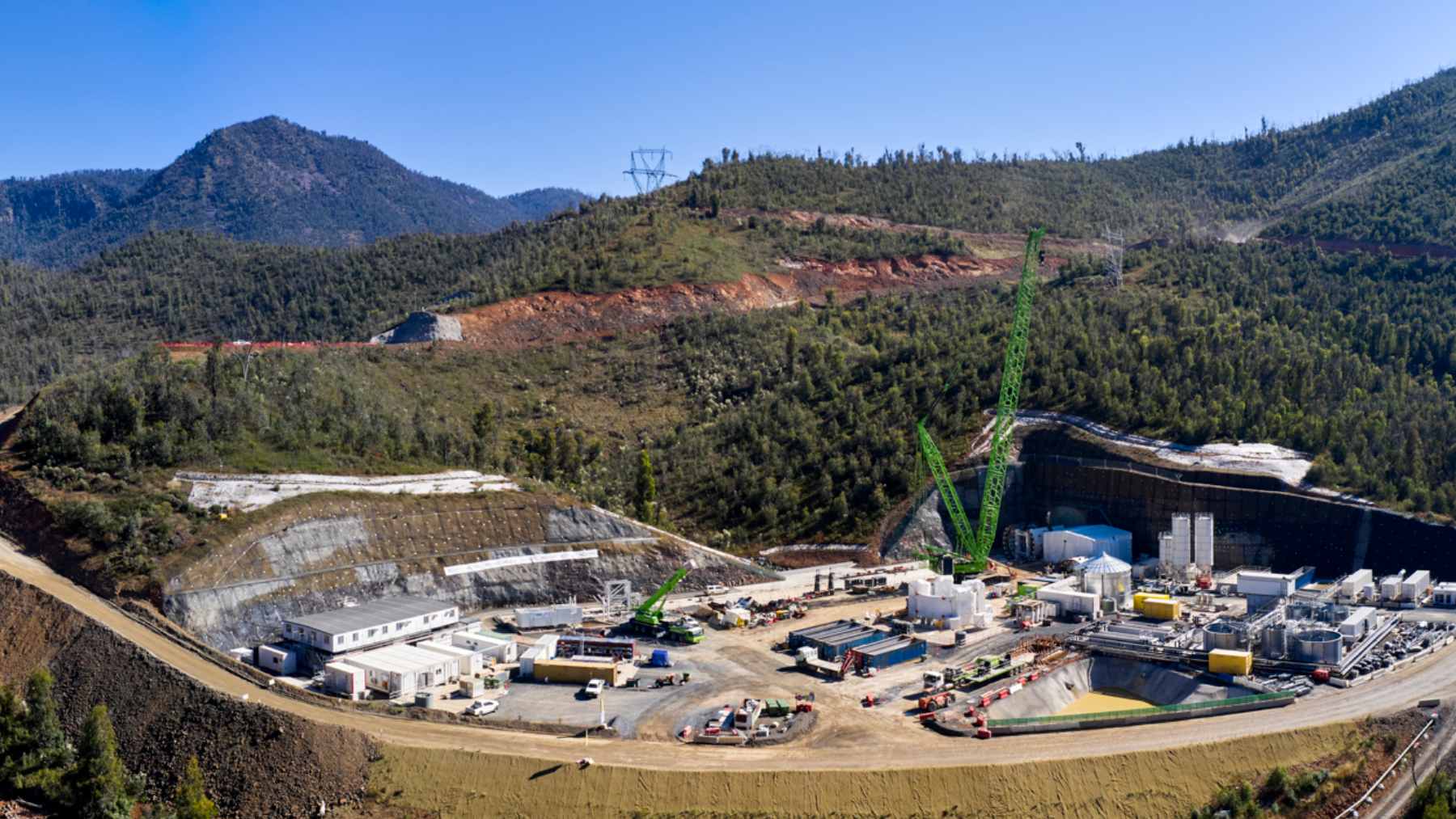
The cutterhead was too large to move in one piece, so it was split into five sections. More than 140 oversized loads were also delivered from Port Kembla to the Marica site in the weeks around the move, turning logistics into a project within the project.
Snowy Hydro Chief Delivery Officer Dave Evans called the move the result of months of planning. “It’s an amazing sight to watch the huge pieces of our tunnel boring machine travel through Cooma,” he said.
Why Monica matters
Monica was later commissioned as Snowy 2.0’s fourth tunnel boring machine, with the renewable-energy project more than 70% complete at that point. The machine was named after Monica Brimmer, a Tumut High School student who won a First Nations art and storytelling competition.
Now, Monica has a hard job ahead. It was custom-built for the Snowy Mountains’ highly variable geology and is set to excavate part of the roughly 10.5-mile headrace tunnel through the difficult Long Plain Fault Zone.
That is where the story gets less flashy and more important. Moving a 151-ton part is impressive, but the real test is whether the machine can help carve the underground links that will let water move between reservoirs when Australia’s grid needs backup power.
A battery made of water
Snowy 2.0 is designed to connect the Tantangara and Talbingo reservoirs through about 17 miles of tunnels and an underground power station at Lobs Hole. The idea is simple enough to explain at the dinner table, even if the engineering is anything but simple.
When electricity demand is high, water can be released downhill to generate power. When there is extra wind and solar energy on the grid, that water can be pumped back uphill and used again later.
Snowy Hydro says the project will have 2,200 megawatts of capacity and 350 gigawatt-hours of storage. By the company’s own figures, that is enough energy to power 3 million homes for a week, which is why supporters see it as a long-duration answer to cloudy, still days.
Clean energy still has a footprint
Still, green infrastructure is not magic. Snowy 2.0 is being built in and around Kosciuszko National Park, and official planning approvals require offsets for the project’s residual impacts on biodiversity, recreation, and heritage.
The New South Wales National Parks and Wildlife Service says the Kosciuszko Offset Project manages funds from Snowy Hydro to address impacts from exploratory works, main works, and transmission connections. Its biodiversity program aims to deliver gains for 19 threatened species, one threatened ecological community, and four ecosystems.
That nuance matters. At the end of the day, Snowy 2.0 is meant to help replace fossil-fuel reliability with renewable storage, but it also has to prove that a clean-energy megaproject can be built with serious environmental accountability.
Momentum underground
Recent official updates show the underground work is moving beyond headline-grabbing convoys. In May 2026, Snowy Hydro said tunnel boring machine Lady Eileen Hudson had completed a roughly 3.7-mile tailrace tunnel and broken through into the underground cavern complex.
The same update said tunnel boring machine Florence was approaching the halfway mark on its roughly 9.3-mile journey. Monica, meanwhile, is excavating from the opposite end of the same tunnel, with the two machines expected to meet in the middle before being disassembled underground.
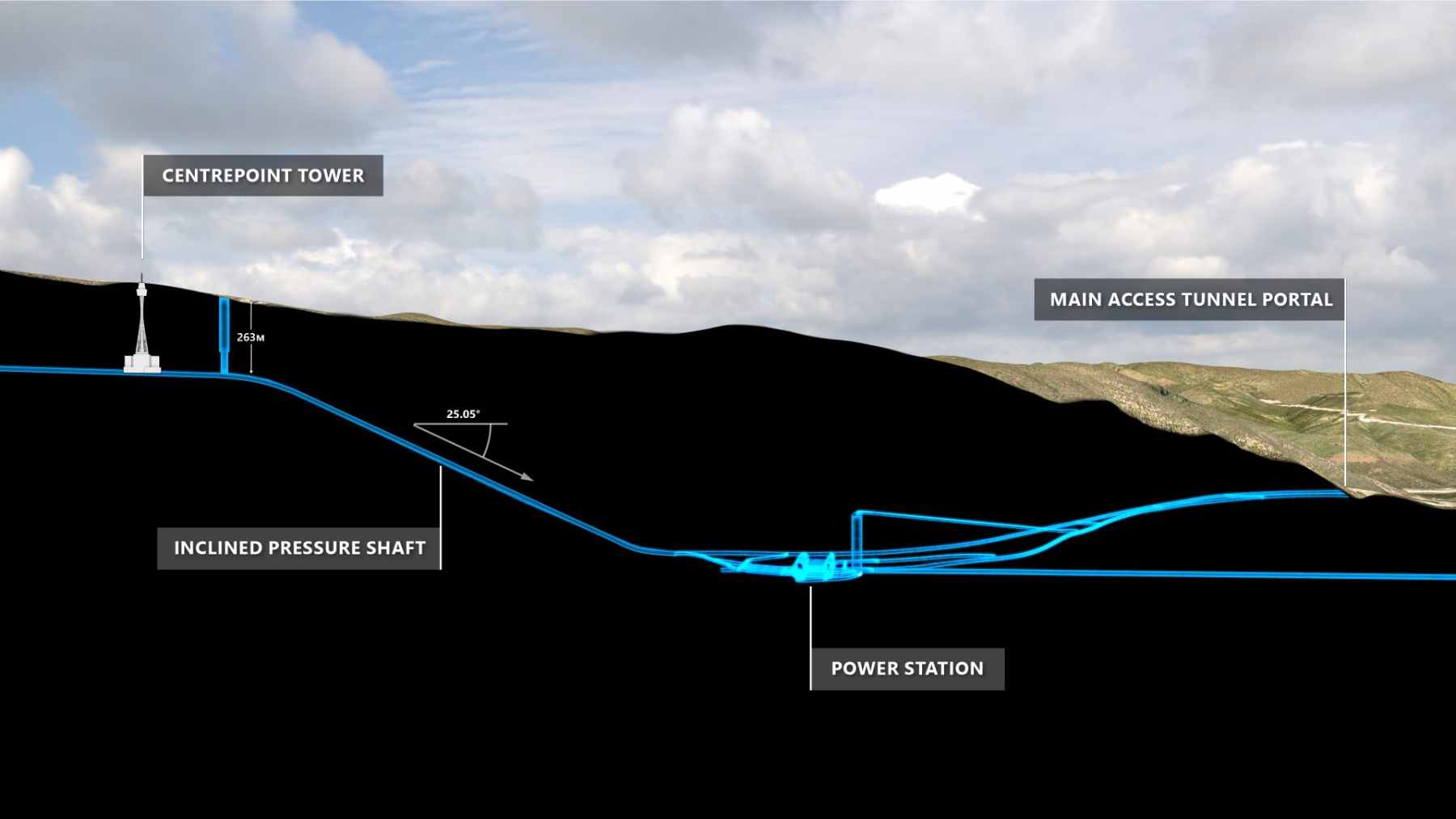
That sounds almost like a scene from a movie. But for the roughly 5,000 workers on the project, it is daily work in rock, dust, steel, and concrete, far below the mountain landscape most visitors know from ski trips and national park drives.
The bigger grid bet
Snowy Hydro’s latest public case for the project leans heavily on reliability. In June 2026, the company cited independent modeling from Baringa Partners and said Snowy 2.0 would provide 350 gigawatt-hours of storage, equivalent to 26 million home batteries.
Snowy Hydro CEO Dennis Barnes put it in everyday terms, saying short-term batteries are “the sprint-runners” while “only Snowy 2.0 can run the marathon.” It is a neat line, but it also captures the real issue facing modern power grids.
Batteries can respond quickly, but most are not designed to cover several days of weak wind and low solar output. Pumped hydro is slower to build and much harder to permit, but once finished, it can provide the kind of long-duration backup that a renewable-heavy grid may need.
What happens next
Snowy Hydro says Snowy 2.0 is scheduled for completion at the end of 2028. If that target holds, the project will become a major part of Australia’s push to keep electricity reliable as more coal-fired power stations retire.
For now, the image that sticks is Monica’s cutterhead rolling through town on 152 wheels. It was a strange sight, yes, but also a reminder that the clean-energy transition is not only about solar panels and sleek batteries. Sometimes, it looks like a 151-ton steel giant crawling through the night.
The latest official statement was published on Snowy Hydro.