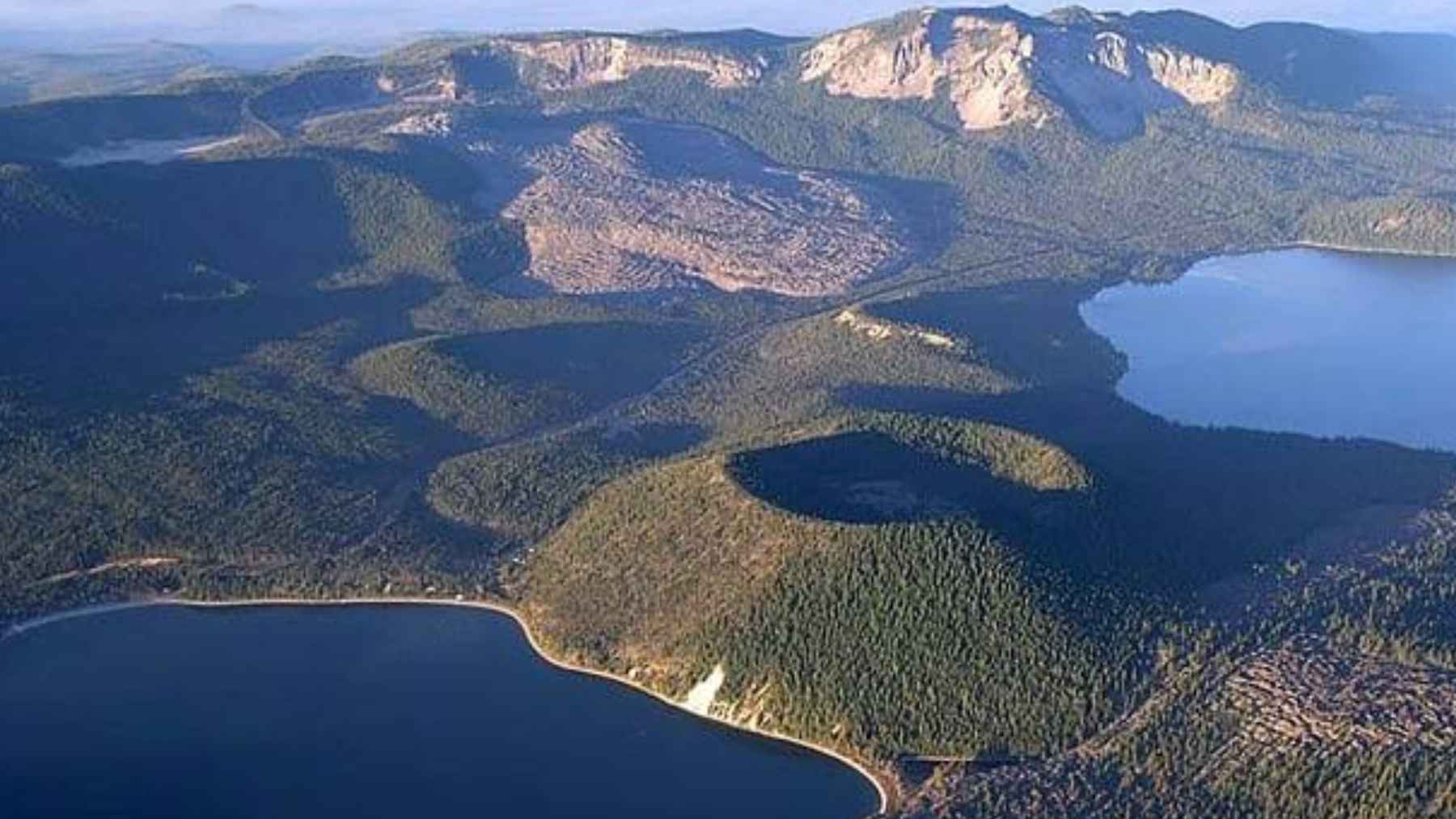
A Texas geothermal developer has connected two deep wells through rock measuring 629°F beneath Newberry Volcano in the middle of Oregon, making what the company calls the hottest enhanced geothermal system ever built. The accomplishment is more than just a hot thermometer reading, but it is not a power plant yet.
Mazama Energy now plans a commercial trial of over 15 megawatts built around an observation well and a horizontal injector-producer pair, followed by a proposed 200 MW development.
The decisive test is whether the company can convert its record-setting reservoir into steady electricity at a cost and environmental impact that utilities, data centers, and nearby communities will accept.
Two wells made the record
The pilot reopened an older well as the injector and added a 10,200-ft. deviated production well. Engineers dug the new well within 6 ft. of its planned path, then circulated fluid between the two through engineered fractures in the hot rock.
That may sound simple in theory, but the underground plumbing is the challenge. Mazama used its Thermal Lattice stimulation process along with sliding sleeves, chemical and nanoparticle tracers, crosslinked fracturing fluids, and fiber-optic sensors to map fracture expansion and temperature in real time.
The drilling numbers are impressive. The company reported a peak penetration rate above 100 ft. per hour, an average of 76 ft. per hour, and a 2,760-ft. bit run without a downhole motor or measurement-tool failure.
629°F is a doorway
The record sits below the temperature that Mazama is looking for. The Department of Energy’s superhot EGS demonstration category targets rock of over 707°F, while Mazama says temperatures surpassing 750°F are available at Newberry at depths shallower than 16,400 ft.
Why chase the extra heat? Hotter fluid carries more usable energy to the surface, potentially increasing output from each well and reducing how many holes must be drilled. Mazama says its design could someday deliver up to 10 times the power density while using 75% less water and 80% fewer wells, but those are still company targets that need commercial proof.
The company is also shooting for electricity below $0.05 per kilowatt-hour. That would have the technology in a far more competitive range, but the Newberry pilot has not demonstrated that cost at commercial scale.
Data centers sharpen the case
What households or server halls care about is not the number on a downhole thermometer; it is whether the project can deliver reliable power at all hours, including at night and during calm weather. The Department of Energy describes geothermal as firm and flexible generation that can run essentially around the clock.
That quality is becoming more valuable as computing loads skyrocket. The International Energy Agency expects global data center electricity use to increase from 485 terawatt-hours in 2025 to roughly 950 terawatt-hours in 2030, while geothermal produced only about 0.4% of U.S. utility-scale generation in 2025. There is plenty of room to grow.
Mazama CEO Sriram Vasantharajan has connected the project directly to what “the next generation of AI and cloud infrastructure will require.” The first unit is an early building block, intended to test whether one hot horizontal pair can underpin a 200 MW development and someday a much larger field.
An active volcano changes the risks
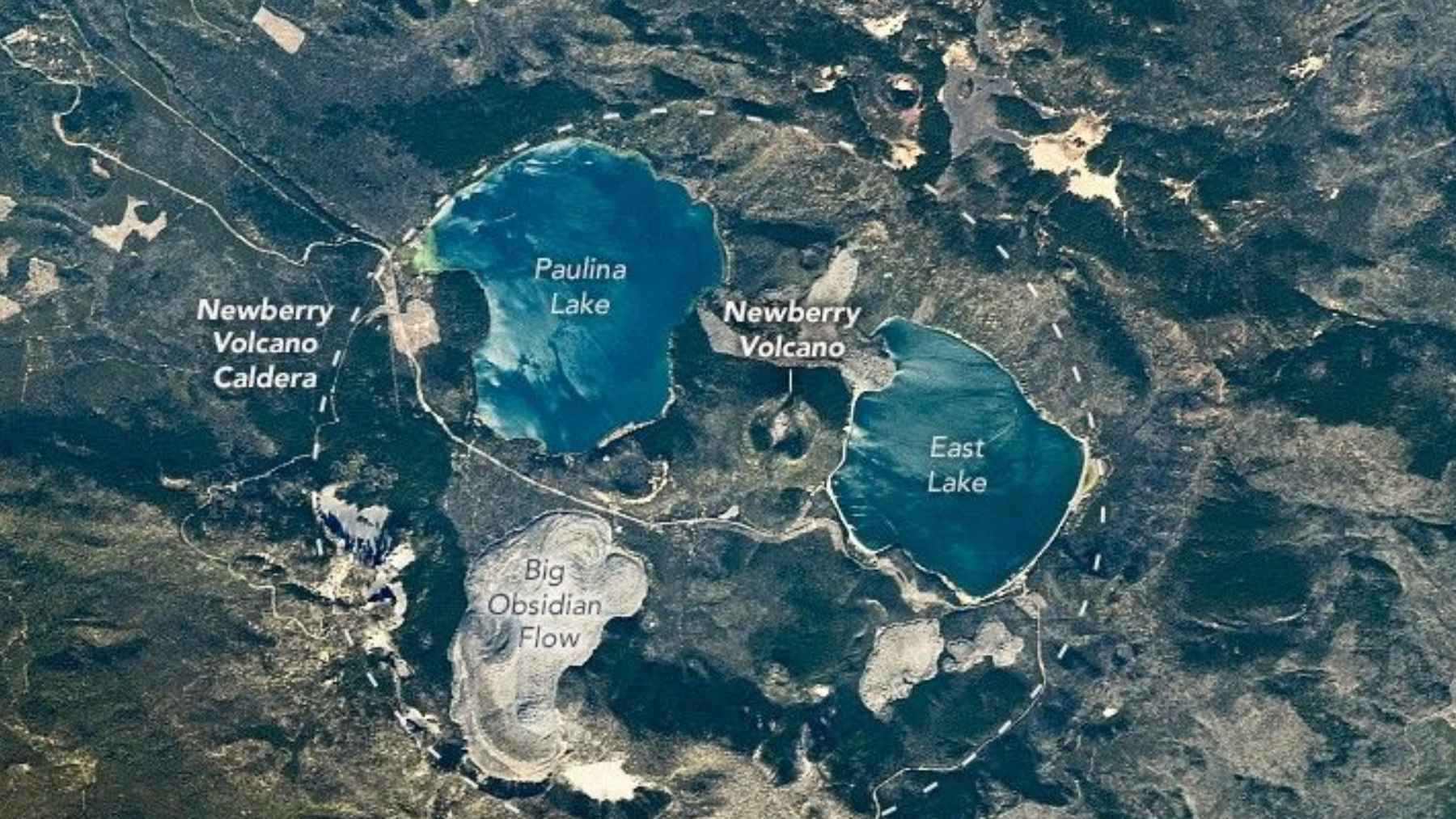
Newberry is not inactive. The United States Geological Survey (USGS) says the broad volcano covers an area about the size of Rhode Island, with its central ‘caldera’ roughly 25 miles south of Bend, and it last erupted about 1,300 years ago. Hot springs, new lava flows, and background seismicity are why the agency still classifies it as active and lists it as a “very high threat” volcano.
That label does not mean an eruption is forthcoming. As of August 7, 2026, Newberry remained at NORMAL alert status with a GREEN aviation color code, while the USGS has indicated that the geothermal work is not expected to alter the volcano’s state or hazard outlook.
Induced earthquakes still form part of the environmental calculations.
Earlier geothermal campaigns in 2012 and 2014 produced hundreds of small quakes of magnitude 2.5 or lower, and Mazama’s work in late 2024 caused some minor seismicity, so the USGS and Pacific Northwest Seismic Network monitor the site and distinguish engineering-related events from volcanic earthquakes.
Now the permits
Mazama has named the observation well ‘Project Athena’ and the horizontal injector-producer pair ‘Project Ceres’. Its public plan calls for a pilot of over 15 MW that would support a first 200 MW project, with the wider Newberry resource described by the company as having more than 5 GW of potential.
The regulatory process is moving, but it is not completed. In late July 2026, the Bureau of Land Management completed a categorical exclusion and decision record covering a new well pad, up to three geothermal wells, a freshwater well, road work, and a water line, while noting that specific geothermal drilling permits still had to be issued.
That is the real next chapter. A temperature record draws headlines, but sustained circulation, manageable seismicity, quality equipment, permits, and actual power sales will determine whether Newberry becomes a clean-energy hub or remains another promising experiment.
What the breakthrough proves
Mazama has shown that oil-and-gas-style drilling and stimulation can connect wells in volcanic rock at temperatures that put extraordinary stress on typical downhole equipment. It has not yet demonstrated years of commercial electricity output with reasonable costs, water use, and reservoir performance.
In any case, the experiment moves superhot geothermal one step closer to the grid. For Oregon, the prize is locally produced, steady power that can complement wind, solar, and batteries without waiting for perfect weather.
The next test is no longer whether the rock is hot enough; it is whether the project can turn that heat into dependable electricity.
The latest official project update was published on Mazama Energy’s EMPOWER page.