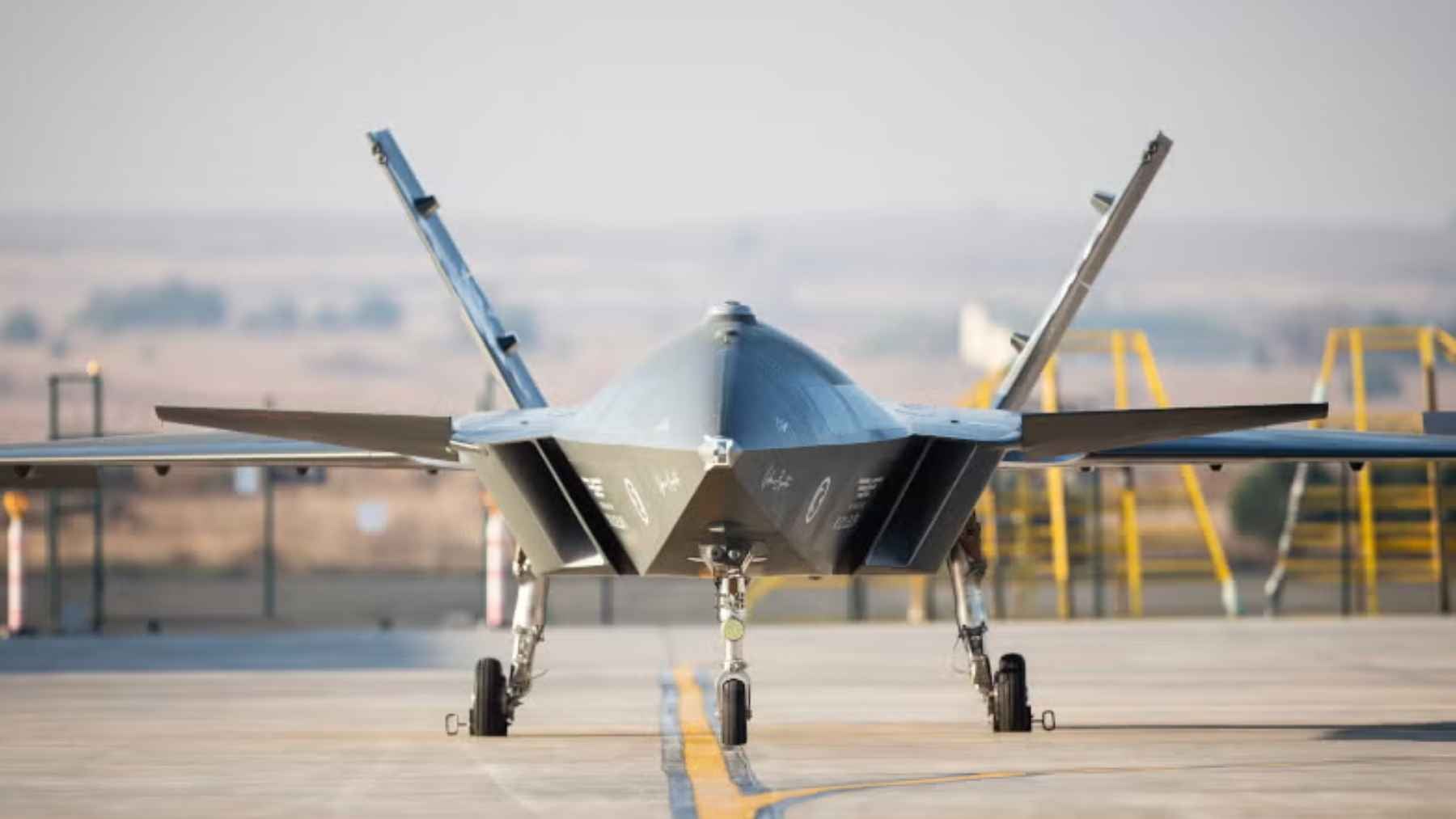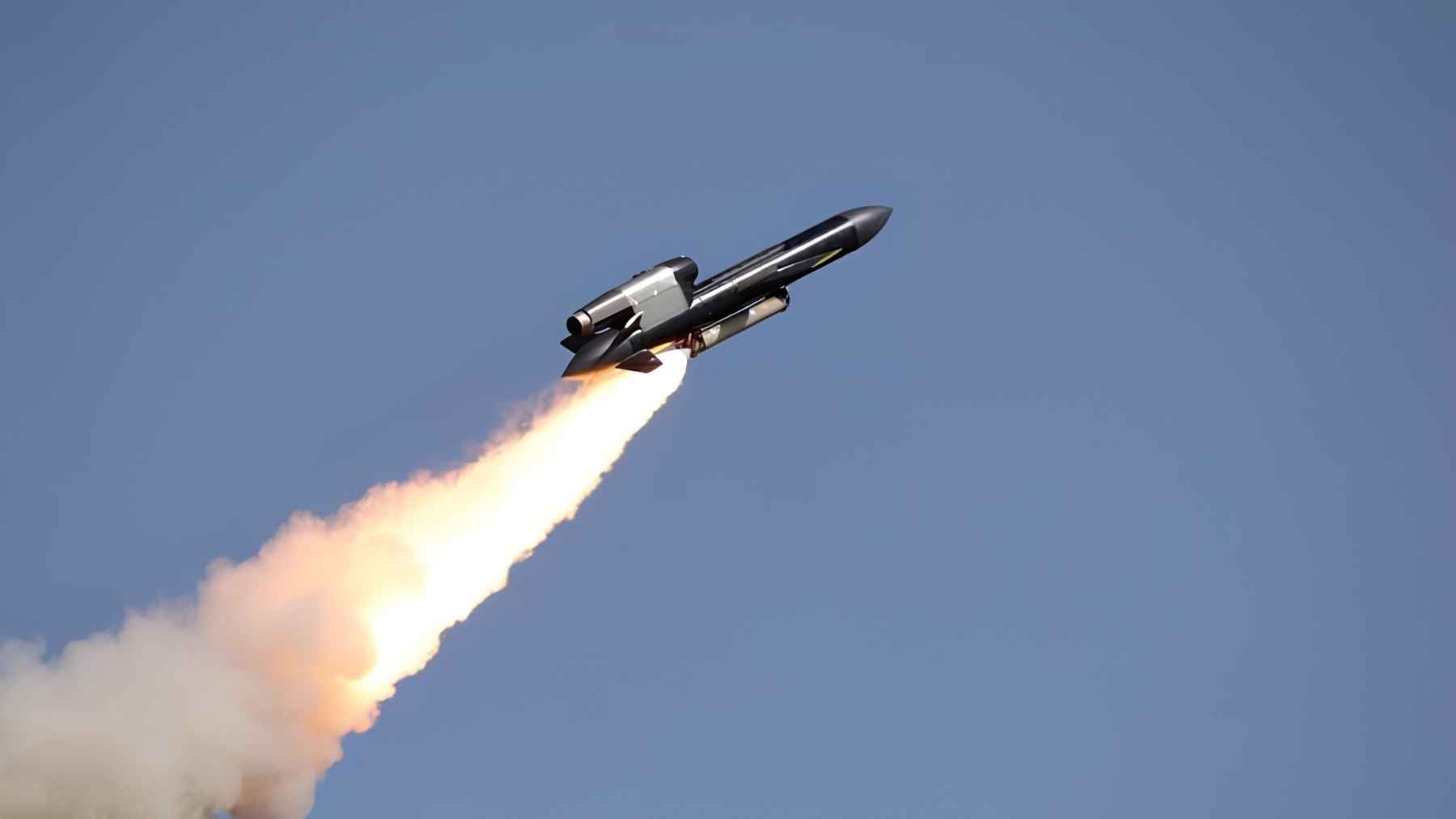
Ukraine’s fast-growing defense industry is challenging one of the oldest assumptions in Western military procurement. A weapon does not necessarily need premium materials, decades of service life, or a multimillion-dollar price tag to deliver a meaningful battlefield effect.
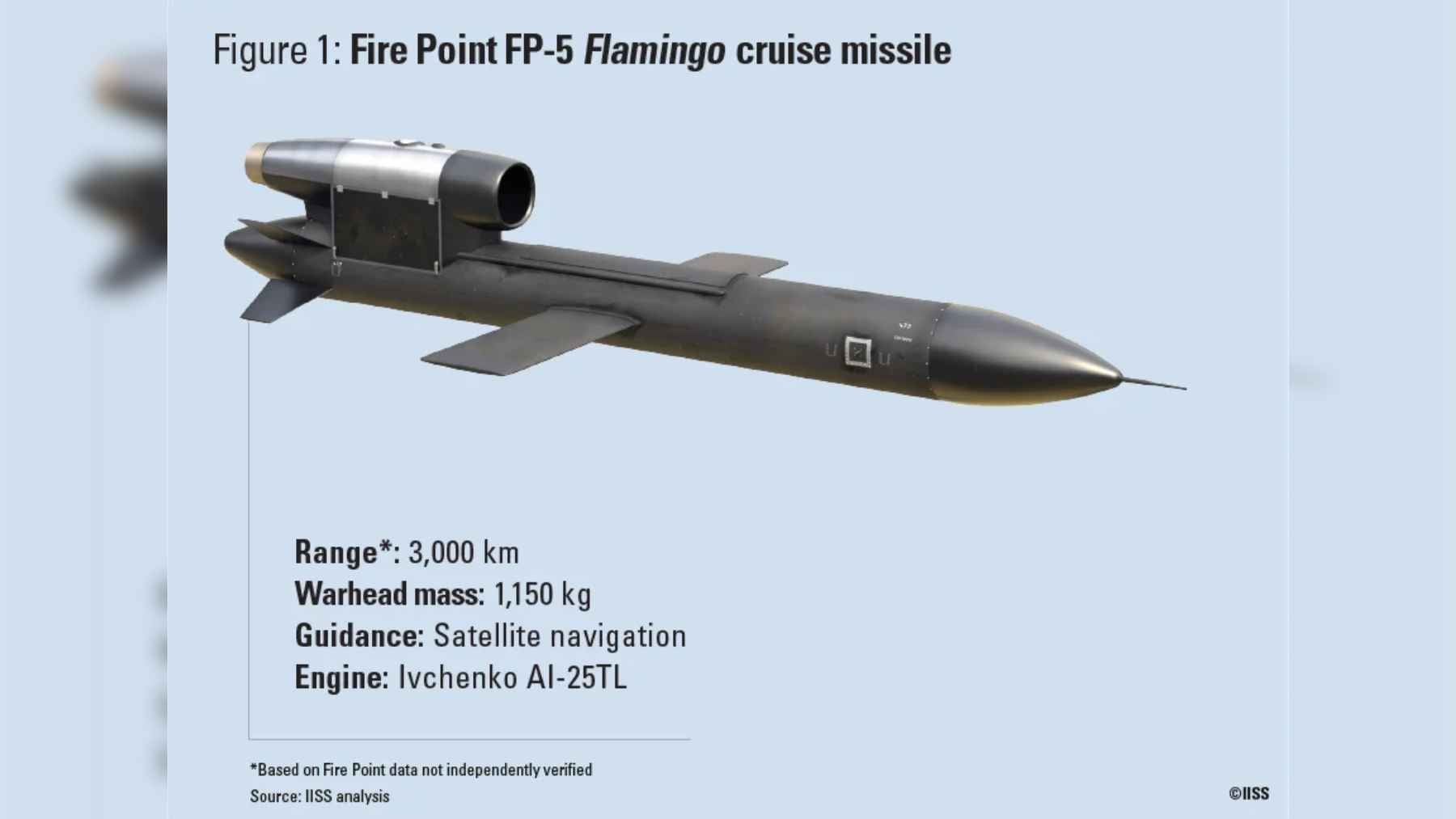
Fire Point’s Flamingo cruise missile reportedly costs less than $600,000, carries a warhead of roughly 2,535 pounds, and can fly as far as 1,864 miles. Those manufacturer-supplied figures would give it a longer claimed range and a larger payload than many versions of the U.S.-made Tomahawk, while costing considerably less.
Ukraine is building for today’s war
The Flamingo reflects a production philosophy shaped by necessity. Ukraine needs weapons quickly, in large numbers, and at prices that allow attacks to continue even when overseas aid or government budgets are under pressure.
Fire Point is reportedly producing around 100 Flamingo missiles each month, alongside hundreds of long-range FP-series drones per day. The company now operates dozens of production facilities and employs thousands of workers, turning what began as a wartime startup into an increasingly important part of Ukraine’s defense industry.
Denys Shtilerman, Fire Point’s co-founder and chief designer, has said the company also produces roughly 200 long-range drones each day and as many as three Flamingo missiles.
Exact output figures remain difficult to independently verify during wartime, but Ukraine’s government has publicly confirmed that Flamingo is no longer simply an experimental project and is already part of the country’s long-range arsenal.
That distinction matters. Many impressive defense prototypes never reach factories in meaningful numbers. Ukraine, on the other hand, is learning how to move from a workshop idea to battlefield production while missiles are still flying overhead.
A missile designed to be used, not stored
The Flamingo reportedly keeps costs down by using restored jet engines originally manufactured for older Soviet-era aircraft. Instead of ordering an entirely new propulsion system, Fire Point modifies equipment that may have little remaining value for conventional aviation.
Its airframe also uses carbon fiber rather than the aluminum alloys found in many traditional missile designs. Lightweight foam is reportedly incorporated into some drone wings, reducing the amount of expensive material and production time required for each unit.
Shtilerman summarized the company’s thinking in unusually direct terms. “They need to fly for 15 hours. Anything beyond that is a waste of money,” he told The Atlantic when discussing the service life required from expendable weapons.
It sounds obvious, but it represents a major break with conventional procurement. Western weapons are often engineered to survive long storage periods, repeated transportation, harsh climates, and complex maintenance schedules.
Those requirements make sense for a missile expected to remain in an arsenal for years, but they can also add time, materials, testing, and cost.
Ukraine is working from the opposite direction. What is the least expensive weapon that can reliably complete one mission?
The Tomahawk comparison needs context
Calling the Flamingo a cut-price Tomahawk makes for an easy headline, but the two weapons should not be treated as exact substitutes. Tomahawks benefit from decades of development, sophisticated navigation, mature launch systems, extensive testing, and integration with U.S. and allied military networks.
The Flamingo’s claimed range of up to 1,864 miles is impressive, as is its roughly 2,535-pound payload. However, independently verified information about accuracy, reliability, survivability, and success rates remains limited. Fire Point’s performance figures should therefore be understood as claims rather than complete proof of equivalent capability.
Still, the comparison reveals something important. A less sophisticated missile does not need to match every Tomahawk feature to create a strategic problem for an opponent. It only needs enough range, accuracy, and destructive power to reach selected targets consistently.
At the end of the day, quantity has a quality of its own. A military able to launch several affordable weapons may create more pressure than one forced to save a small stock of premium missiles for only the most valuable targets.
Lockheed Martin is responding to the same pressure
Lockheed Martin unveiled the PAC-3 Adapted Capability Effector, known as PAC-3 ACE, at the 2026 Farnborough International Airshow as a lower-cost interceptor for the Patriot air and missile defense system.
The company says PAC-3 ACE will cost less than half as much as a PAC-3 Missile Segment Enhancement interceptor. It is intended to defeat a broad range of air and missile threats while working with the existing Patriot fire-control architecture and the Integrated Battle Command System.
A PAC-3 MSE can cost more than $4 million, putting the expected price of ACE below roughly $2 million. The cheaper interceptor could be used against less demanding threats, preserving advanced PAC-3 MSE missiles for ballistic weapons that require their greater performance.
Think of it like using the right tool from the garage. Firing a top-tier interceptor at every incoming drone or basic cruise missile may work technically, but financially it can become impossible to sustain.
Cheap weapons can create an expensive problem
Lower prices do not automatically make warfare more sustainable or environmentally responsible. In fact, cheaper weapons may encourage larger production runs and more frequent launches, increasing fuel consumption, industrial emissions, debris, toxic contamination, and damage to land and infrastructure.
Even so, Fire Point’s manufacturing approach raises relevant questions about resource efficiency. Reusing engines, minimizing unnecessary durability, and reducing dependence on specialized alloys can lower material demand for each weapon produced.
That is not the same as calling the missile “green.” The environmental consequences of war remain severe, regardless of how efficiently a weapon is manufactured. The real lesson is that defense companies are beginning to examine whether every component needs to be expensive, long-lived, and built to standards that exceed its actual mission.
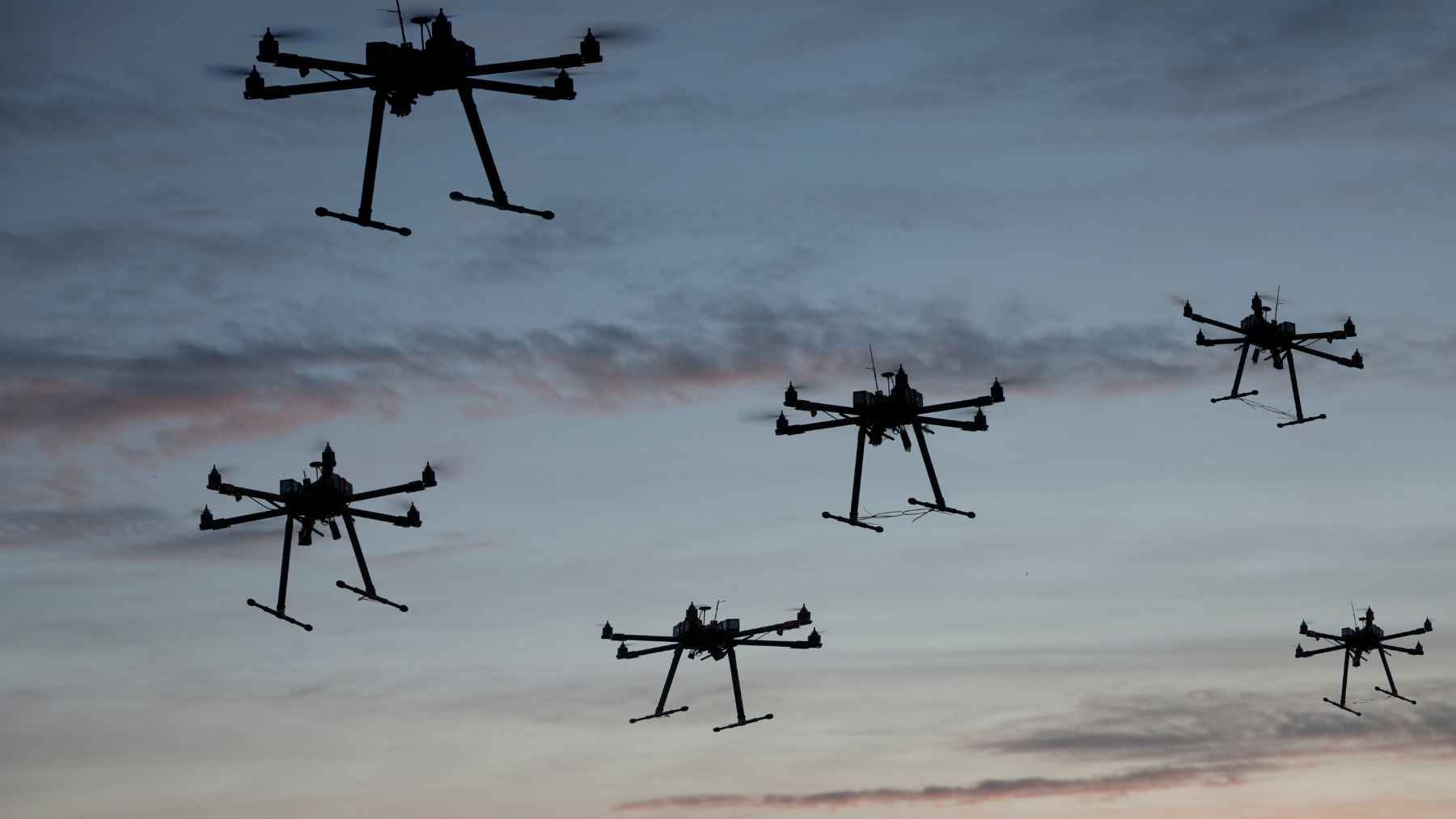
That could eventually influence more than missiles. Drones, electronic warfare equipment, sensors, launchers, and autonomous systems may all move toward shorter production cycles and simpler designs.
Europe wants Ukraine’s manufacturing experience
Ukraine’s growing credibility is also opening the door to international partnerships. Ukraine and nine European countries announced an Integrated Anti-Ballistic Missile Coalition intended to strengthen Europe’s ability to defend itself against ballistic threats.
A related European system called Freyja is expected to combine Ukrainian launchers and interceptor technology with radar, sensors, and guidance equipment from allied manufacturers. Officials hope to have a prototype ready by mid-2027, with Fire Point taking a leading industrial role and Germany’s Hensoldt contributing radar expertise.
Shtilerman has framed the initiative as part of a wider European shift. “It is not the United States that decides whether Europe can defend itself. Europe is building its own shield,” he said.
However, Fire Point’s rapid rise has also attracted scrutiny. Reporting has examined Shtilerman’s previous business activities in Russia, his legal history there, and corruption allegations involving Ukrainian defense procurement.
These concerns do not prove wrongdoing by the company, but they underline why international partnerships will require transparency, auditing, and independent verification.
The bigger lesson for Western defense companies
Ukraine is not replacing the United States as the world’s most technologically advanced defense producer. What it is doing is demonstrating another way to build weapons, one centered on speed, affordability, available materials, and rapid battlefield feedback.
For Western manufacturers, the message is uncomfortable but useful. A technically superior weapon that cannot be produced quickly enough, or that is too expensive to fire in large numbers, may become a strategic bottleneck.
The Flamingo still has much to prove. Yet its influence can already be seen in Europe’s missile plans and in lower-cost American programs such as PAC-3 ACE.
The era of assuming that more expensive always means more useful may be ending. Ukraine’s factories are helping push it out the door.
The official statement on Ukraine’s operational Flamingo missile capability was published on the website of the President of Ukraine.