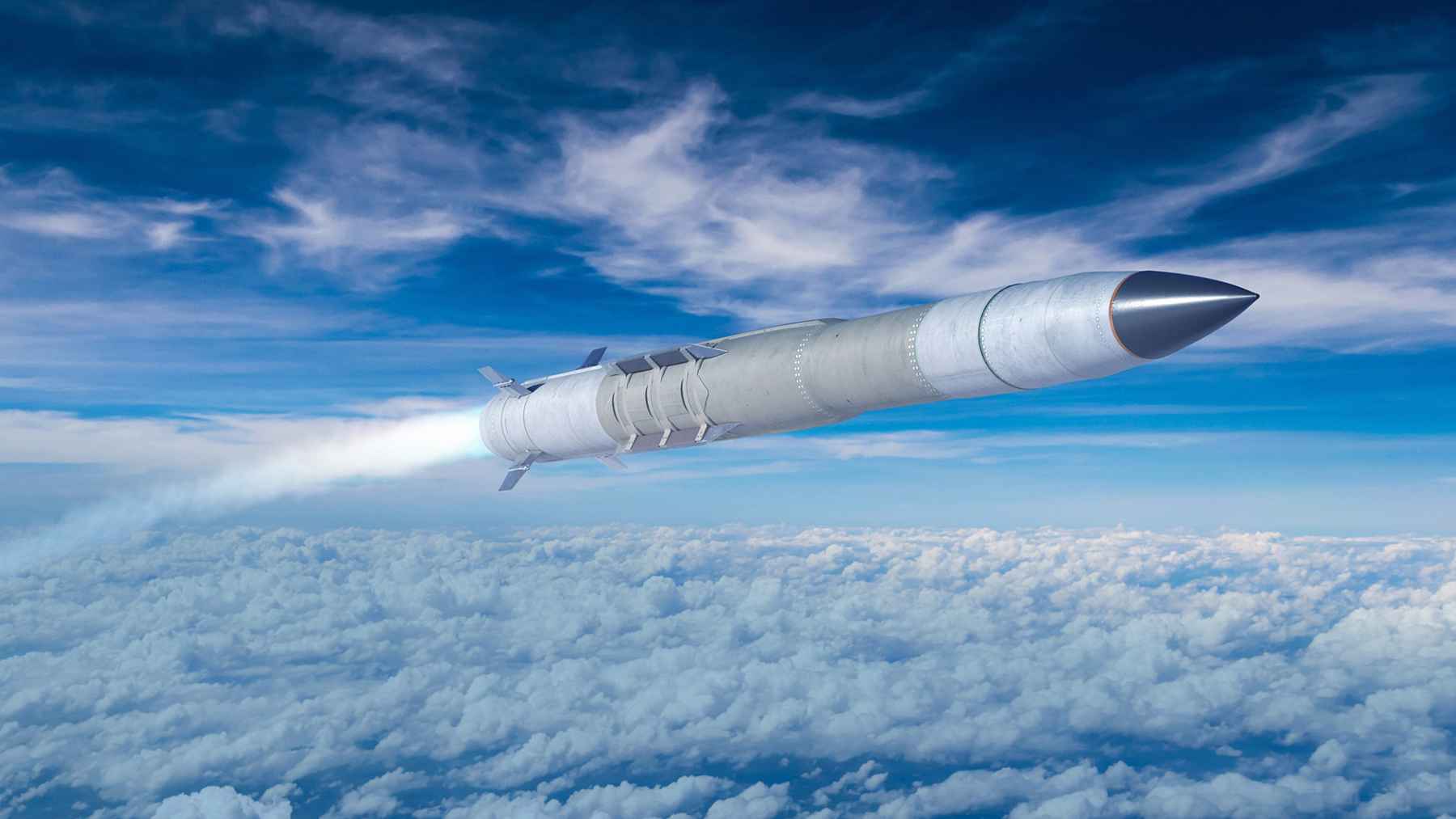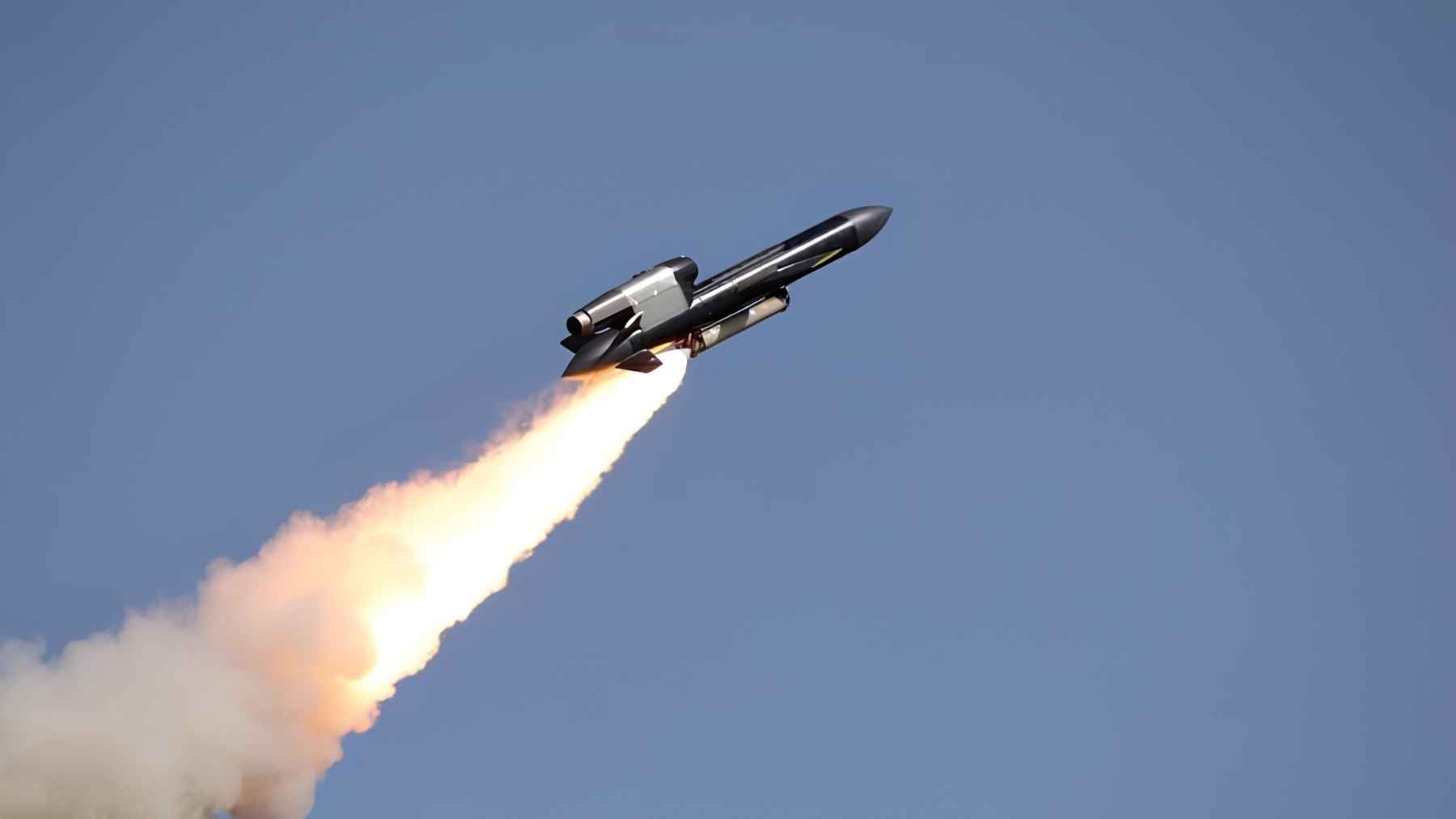
The U.S. Air Force has opened a market search for a transportable ground-based missile launcher designed to protect air bases from cruise missiles and unmanned aircraft across all five Department of Defense UAS groups.
The active federal notice says the service wants to “identify industry partners capable of providing a Ground-Based Launcher solution,” with industry responses due Aug. 7, 2026.
This is not yet a contract or a choice of weapon. But the requirement points to a much bigger shift. The Air Force is looking for a base-defense package that can travel, detect threats, connect with wider command networks, and keep firing when a swarm arrives, rather than a launcher that works only against one type of target.
One launcher for an enormous threat range
At the low end, Group 1 drones generally weigh 20 pounds or less and can include compact reconnaissance or attack aircraft. At the high end, Group 5 aircraft weigh more than 1,320 pounds and include large, high-flying UAVs, while cruise missiles add another fast, low-altitude threat.
The same defensive architecture may have to deal with something small enough to fit in a car trunk and something closer to a conventional aircraft.
The request for information asks companies to address 11 “critical baseline attributes.” They include the types of munitions, integrated sensors, a laser illuminator for fire control, firing rate, magazine depth, command-and-control integration, price, transportability, crew needs, built-in diagnostics, and weapon safety.
The list makes one thing clear. The Air Force is not simply shopping for a tube that launches a missile.
Saturation is the real test
Why focus so heavily on firing rate and magazine depth? Modern attackers often send several drones and missiles at once, forcing defenders to identify, prioritize, and engage many targets in minutes. A launcher that defeats the first few threats but then needs a long reload could leave aircraft, fuel storage, radars, and runways exposed during the rest of the attack.
There is also the cost problem. Using a scarce, high-end interceptor against every low-cost drone may work tactically, but it can drain inventories and budgets faster than an opponent can launch new threats.
The RFI does not prescribe a specific missile mix, so industry may respond with modular magazines or different effectors, but any proposal will have to show that it can sustain the fight.
Recent attacks changed the debate
The request follows a bruising series of attacks on military facilities. Military Times reported that an Iranian strike destroyed a U.S. E-3 Sentry at Prince Sultan Air Base in Saudi Arabia, while another report said at least five KC-135 tankers were damaged at Saudi bases. Those losses turned an abstract base-defense gap into a visible operational problem.
Russia and Ukraine have also demonstrated how waves of one-way attack drones and missiles can pressure air defenses and consume interceptors. Small systems can still cause outsized damage when expensive aircraft are parked in the open. That is the uncomfortable math behind the Air Force’s search.
The Air Force wants defense it can carry
For decades, the service has often depended on Army air-defense units for systems such as Patriot and other ground-based capabilities.
In 2025, Air Force strategist Lt. Col. Phil Ferris argued that the service should retain its own point defenses for small drones and low-flying cruise missiles because Army units are stretched and larger batteries can be too cumbersome for dispersed airfields. His paper was an argument, not official Air Force policy, but the new RFI moves in a similar direction.
That matters because the Air Force’s Agile Combat Employment concept spreads aircraft across smaller or temporary locations instead of concentrating everything at a few large bases. A defensive system for that model needs to arrive with a modest transport burden, operate with a manageable crew, and plug into local or theater sensors quickly.
The RFI does not specify a final footprint, but its emphasis on transportability and manpower leaves little room for a solution that takes days to assemble.
Money is following the threat
The search is not happening in a budget vacuum. The Air Force’s fiscal 2027 request calls for about $1.4 billion for Air Base Air Defense Systems, including $89 million for counter-small-UAS capabilities. That does not guarantee this particular launcher will become a funded program, but it shows that base defense has moved well beyond a theoretical discussion.
For contractors, the commercial opportunity could be substantial, though the technical bar is unusually broad. A company must offer more than an interceptor. It needs sensors, software, safe handling, diagnostics, production capacity, and a command link that lets the launcher receive targeting data fast enough to matter.
Protecting more than aircraft
There is an environmental side to the problem too. Air bases contain aviation fuel and support equipment, so stopping an incoming weapon can also reduce the risk of secondary fires, spills, smoke, and debris around nearby communities.
Kinetic defense is not impact-free, since interceptors require energy and materials to manufacture and can scatter fragments, but preventing a direct strike may avoid a much larger emergency.
The Air Force is asking industry to solve a layered problem with one deployable framework. The hardest part will not be proving that a missile can hit a drone. It will be showing that the whole system can detect, decide, fire repeatedly, move quickly, and stay affordable after the first wave has passed.
The official request for information was published on SAM.gov.