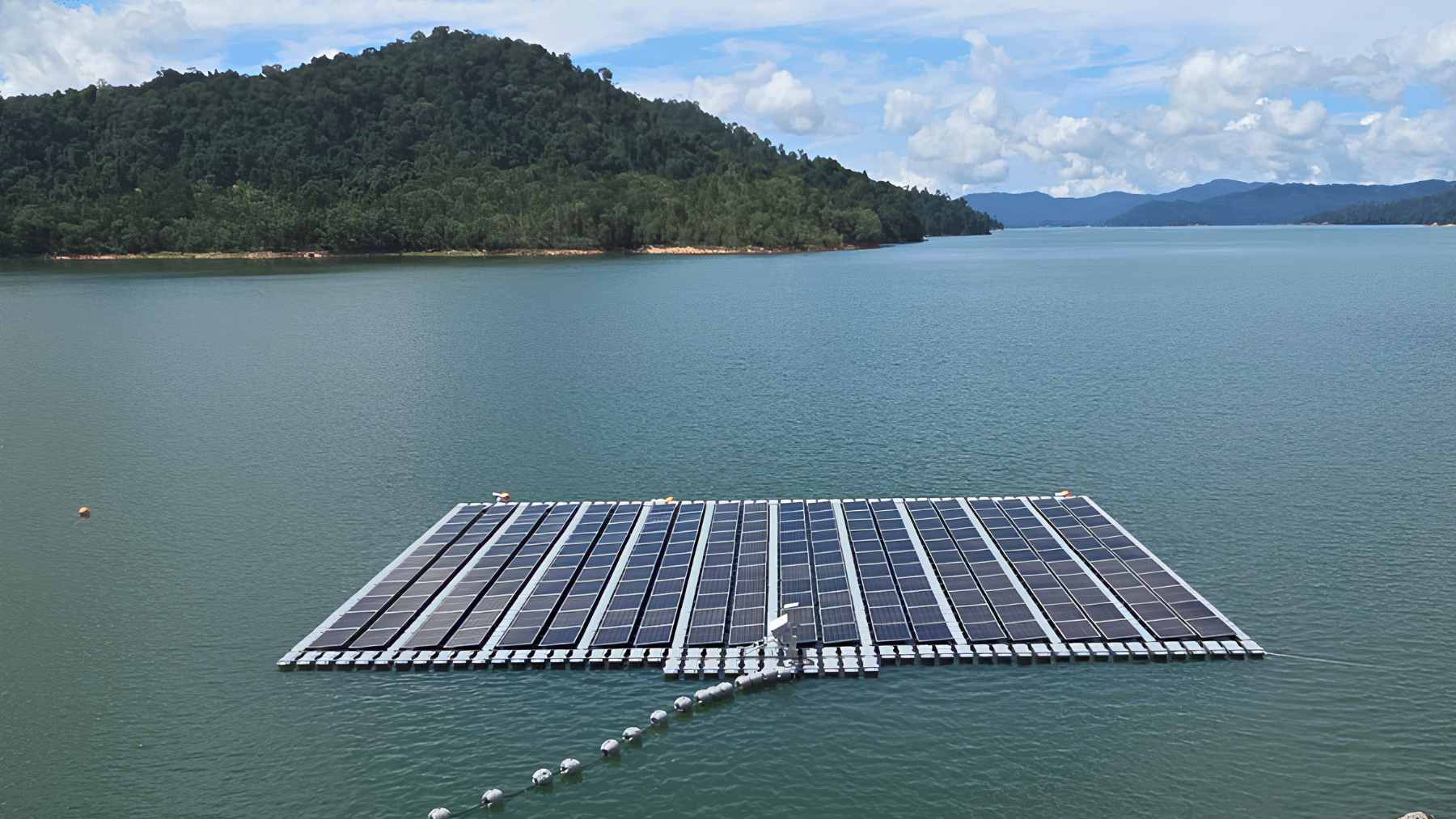
A man-made lake in Malaysia’s Terengganu state is about to do double duty. The Hydro Hybrid Floating Solar (HHFS) plan at Kenyir Lake is moving into a major construction phase after a 595 MWac floating solar and battery contract was awarded, with completion targeted for late September 2028.
Local officials say the first phase could bring the state about RM10 million a year ($2.5 million) once it is fully running. That mix of climate goals and hard cash is why floating solar is catching fire across Asia, where most of the world’s floating PV capacity has been built so far.
What exactly is being built
The core contract is for engineering, procurement, construction, and commissioning of a 595 MWac floating solar photovoltaic plant with a battery energy storage system at Kenyir Lake. Sunview says the contract price is RM1.962 billion ($250 million), work starts June 2, 2026, and the target completion date is September 29, 2028.
On the ground, the project is also a political and economic story. Terengganu Incorporated’s CEO, Datuk Burhanuddin Hilmi Mohamed, said the state expects RM10 million annually once Phase 1 is fully completed, and framed it as a way to reduce reliance on oil royalty income.
The same briefing pointed to the jobs angle, with about 5,000 workers expected in the first phase and more than half described as local labor. Phase 2 and 3 could push total capacity as high as 2.5 GW within five to ten years, according to the same reporting.
Why floating solar is suddenly big business
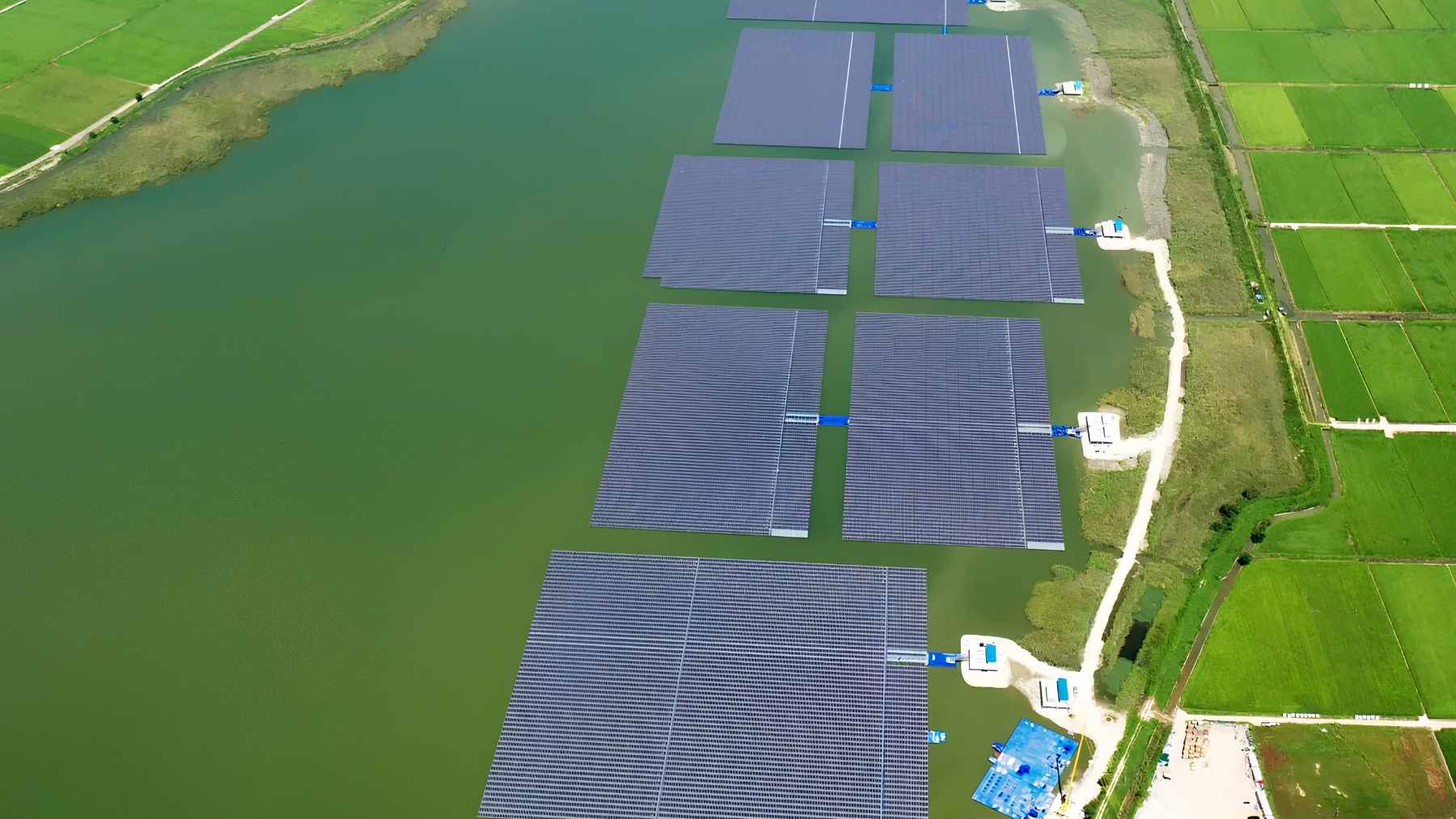
Solar overall is having a blockbuster run, with global additions in 2024 estimated in the hundreds of gigawatts. (iea-pvps.org) Floating solar is still a niche, but it has scaled quickly, with IEA PVPS estimating cumulative floating PV capacity at 7.7 GW by the end of 2023, and noting that almost 90% sits in Asia.
The business logic is simple. Reservoirs already have grid connections nearby, and using water surfaces can ease land pressure that would otherwise pit projects against farms, forests, or housing.
The World Bank’s floating solar handbook also highlights potential benefits like reduced land needs and possible evaporation reductions, though it stresses site-by-site design and monitoring.
Hybridizing with hydropower is the real twist at Kenyir. TNB describes the concept as using daytime solar while hydropower continues operating, with reservoir operations helping smooth supply when sunlight fades, and it has already run a Kenyir floating solar pilot tied to dam operations.
A living lake, not an empty parking lot
Floating solar is often pitched as “low impact,” but the lake is still an ecosystem. A 2024 Nature Communications Earth & Environment study on water-surface PV systems found changes that included lower water temperature and dissolved oxygen saturation, alongside shifts in plankton and bird communities.
On the other hand, the science is not one-note. A 2025 Frontiers in Water study across several sites reported minimal discernible impacts on common water-quality indicators under some conditions, and the IEA PVPS report warns that environmental effects depend heavily on the water body, climate, design, and coverage.
This is where monitoring stops being a box-checking exercise and starts being the whole project. TNB says its Kenyir pilot includes an environmental monitoring system tracking weather and operating conditions, and it positions that data as useful for designers and authorities planning larger deployments.
The tech risk most people miss
Big renewable plants are not just panels and cables anymore. They are software-heavy systems built around inverters, sensors, remote maintenance, and digital controls, which means cybersecurity becomes part of “keeping the lights on,” not an IT afterthought.
NIST has published cybersecurity guidance for smart inverters, flagging practical issues like secure logging, update integrity, and remote access pathways. That matters because inverters are the gatekeepers between solar generation and the grid, and a weak link can become a real operational headache.
Why defense planners care about projects like this
Energy infrastructure is increasingly treated as national security infrastructure, even when it is “green.” NATO says it is working to support national authorities in protecting critical energy infrastructure, reflecting how modern power systems sit closer to security planning than they used to.
In the United States, federal law explicitly ties military readiness to energy security and energy resilience, which is part of why microgrids and backup power systems keep showing up in defense planning documents.
When grids get more digital and more distributed, resilience is not automatic, and that is true whether the asset is a gas pipeline or a solar lake.
What to watch before 2028
For residents and investors, the next two years are about execution. Watch the schedule, local hiring promises, and how clearly developers explain lake coverage, boating and fishing access, and long-term monitoring plans, because public trust is much easier to lose than to rebuild.
For everyone else, the question is performance in real life, not just on a slide deck. Will the battery and hybrid operations actually reduce curtailment and smooth supply when demand spikes during sticky evening heat, and will the lake’s health indicators stay stable as the footprint grows?
The official statement was published on Insage.