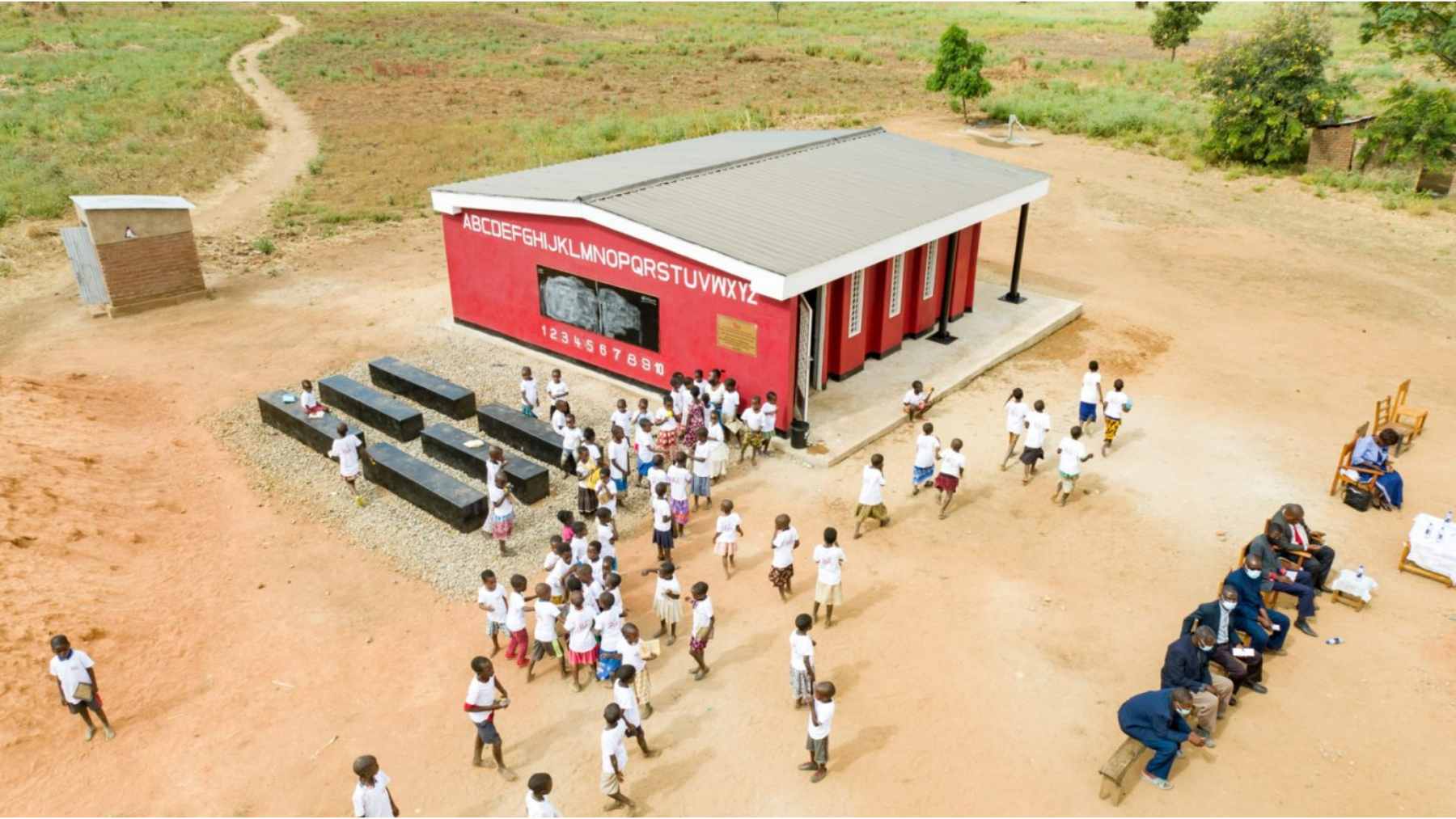
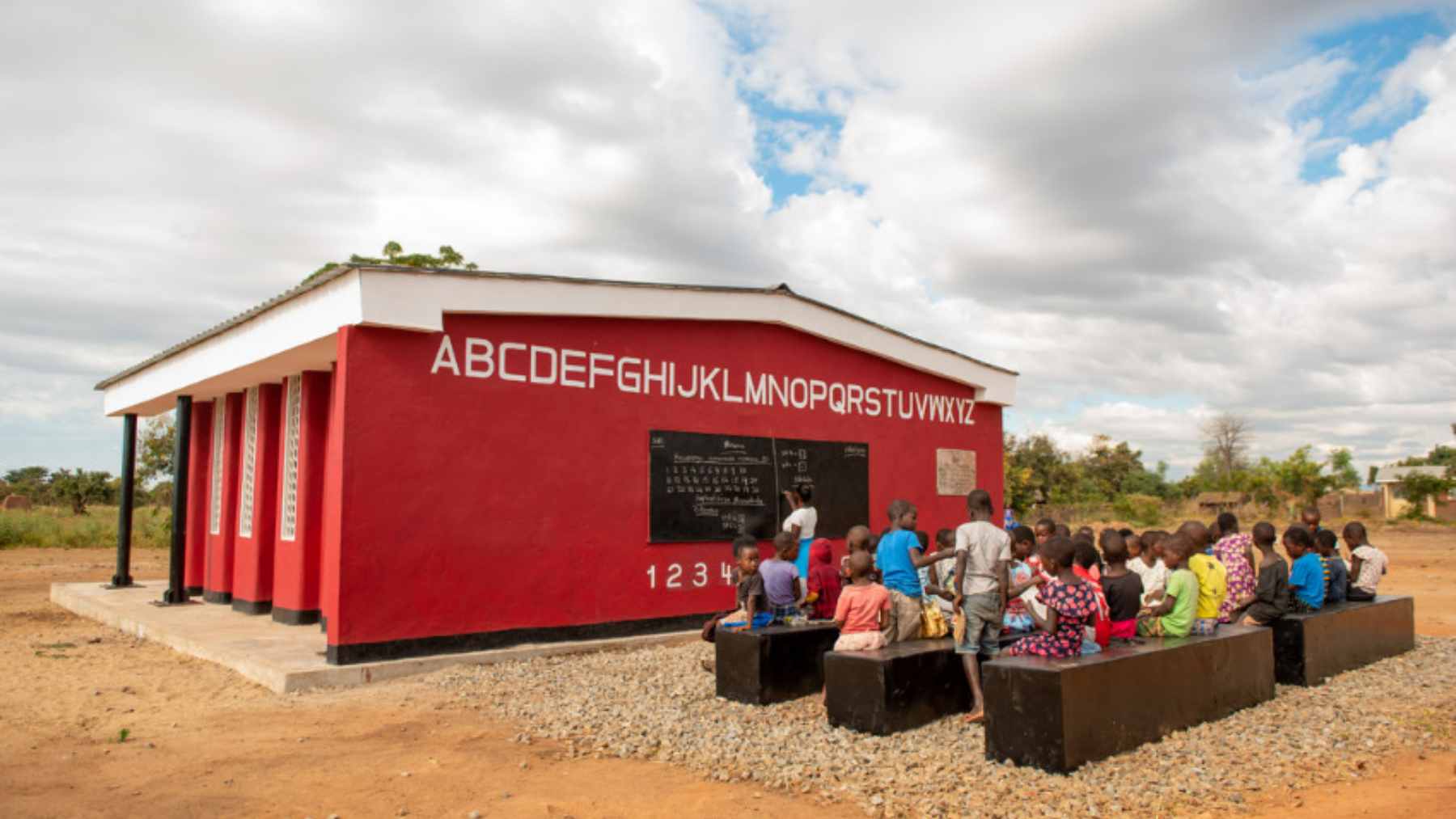
A school can sound ordinary until you realize its walls went up in less than a day. In Malawi’s Salima district, a 3D-printed classroom moved from a technical idea to a real learning space, with children beginning lessons there on June 21 after the building was transferred to the Kalonga village community.
The project, developed by 14Trees, a joint venture linked to Holcim and CDC Group, is not a luxury showcase or a futuristic home built for headlines.
It is a practical test of whether automated concrete printing can help communities that are short on classrooms, reduce construction delays, and lower the environmental cost of basic public buildings.
The 18-hour figure significance
The number that made the project stand out is simple: Holcim said the school’s walls were printed in just 18 hours, compared with several days using conventional building materials.
That does not mean the entire school was finished in 18 hours. Roof work, fittings, finishes, and classroom setup still matter. But speeding up the wall stage can change the rhythm of a project, especially in places where a missing classroom means crowded lessons, long walks, or students learning outside.
How the printing works
In practical terms, 3D concrete printing builds walls layer by layer from a programmed design. Instead of stacking every block by hand, a machine places the material in a controlled path until the planned structure takes shape.
Holcim said the process used its proprietary printing material and can reduce the time, cost, and materials needed for housing and schools.
The company also said the model still relies on local builders for work such as roofing, carpentry, painting, and other finishing jobs, which means the technology does not simply remove people from the construction process.
Why Malawi needed this test
The classroom shortage is the real story here. Holcim cited UNICEF estimates that Malawi needs 36,000 classrooms, a gap that could take 70 years to close with conventional methods. According to 14Trees, 3D printing could reduce that timeline to about 10 years.
Local education officials also framed the project as a direct response to demand. Juliana Kuphanga Chikandila, a Primary Education Advisor representing Malawi’s Director of Education, Youth and Sports, said the Yambe zone had 12 schools before the new building and needed four more primary schools, while the wider district needed about 50 more.
She also pointed to the building’s “durability and design” as reasons students who had left could return.
The green case
There is an environmental argument, too, though it should be treated with some nuance. Holcim said the 3D printing process can reduce a building’s environmental footprint by more than 50% compared with conventional methods.
That matters because construction is not just about walls and roofs. It also means trucks, wasted material, delays, fuel, and the messy reality of building in hard-to-reach places. For the most part, the green promise here comes from using material more precisely and finishing faster, not from pretending concrete has no environmental cost.
A business signal for public works
This is also a business and technology story. 14Trees now describes itself as a construction technology company with projects across housing, education, office, and technical facilities, including 3D-printed renewable-energy control buildings and another pilot classroom in Madagascar.
That wider project list matters. If governments, NGOs, and companies can prove the model is safe, affordable, durable, and suited to local building codes, 3D printing could become a useful option for simple public works. Not every school needs a robot-built wall, of course, but some communities need classrooms faster than the old system can deliver them.
What happens next
The big question is scalability. One school can inspire headlines, but public education needs repeatable projects that survive weather, budgets, maintenance problems, and the daily wear of children using them year after year.
Still, Malawi’s classroom offers a clear lesson. Technology makes the most sense when it solves a plain, stubborn problem.
The press release was published on Holcim.