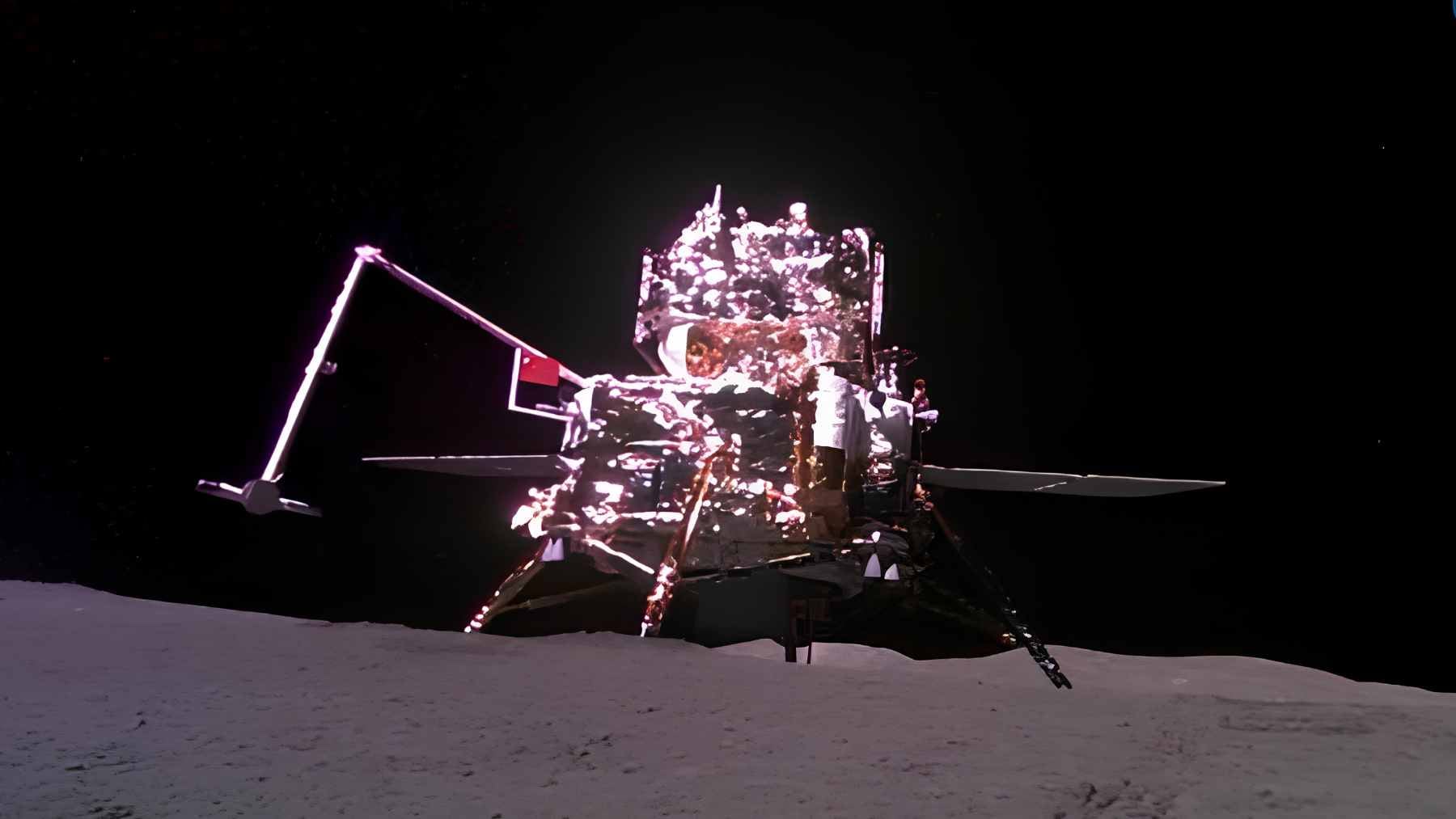
China is detailing a lunar “operation robot” designed to carry tools and help set up a future outpost near the Moon’s south pole, a mission zone tied to Chang’e-8 in the late 2020s. The headline is technology, but the subtext is ecology, because every plan to live off-Earth still has to answer for energy, materials, and contamination.
The Moon has no forests to cut down, but it does have places that can be spoiled. The push toward polar bases and “use what you find” construction forces a basic question that also applies on Earth: can expansion be designed to leave less behind? What does stewardship look like in a place with no life?
A robot built for two-week nights
The proposed machine is described more like a field technician than a simple rover, with a roughly 100-kg (220-lb.) chassis, four wheels, and a humanoid torso with two arms meant for handling equipment.
HKUST says it is leading an international “Hong Kong Operation Robot” effort for Chang’e-8, targeting work-like instrument deployment and sample collection in extreme conditions.
That “extreme” label is not marketing. The robot is described as solar powered and able to hibernate through long lunar nights, when temperatures plunge and sunlight disappears for about two weeks at a time.
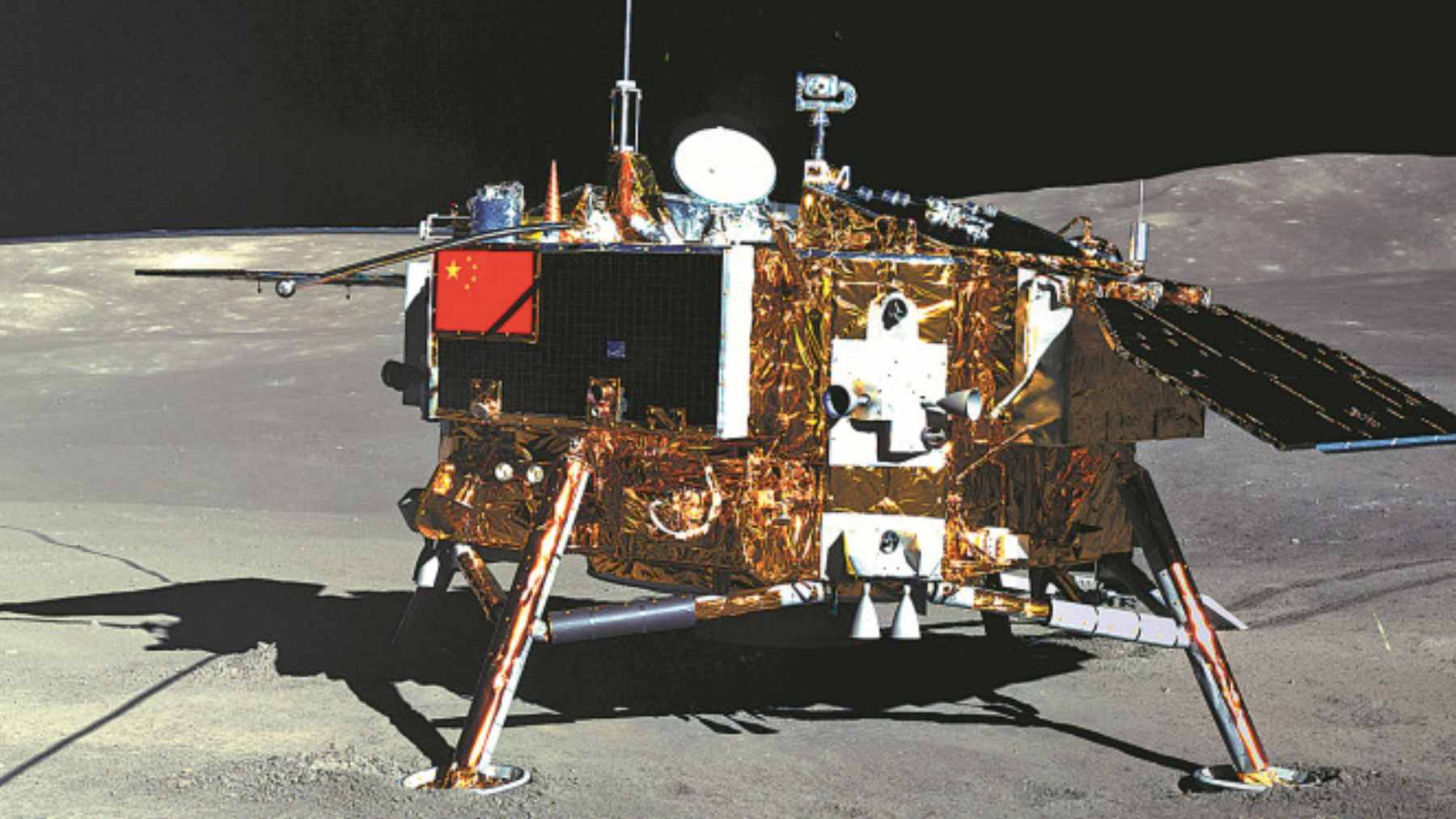
CNSA’s Chang’e-8 international cooperation document sets the mission’s basics, a lander, a rover, and an operation robot working in the lunar south polar region around 2028.
It also lists objectives that read like a sustainability checklist, including in situ resource utilization tests and a “mini enclosed terrestrial ecosystem” experiment–think a tiny sealed habitat, in the lunar environment.
Why the south pole is the new hot spot
The Moon’s poles include permanently shadowed regions, crater floors that can stay dark for billions of years and cold enough to preserve ice. NASA’s overview of “Moon water and ices” notes that multiple missions have found evidence consistent with ice and elevated hydrogen in permanently shadowed polar areas.
That is why agencies are investing in new mapping missions, including NASA’s Lunar Trailblazer to help pinpoint where water may sit on or near the surface.
Still, “water on the Moon” is not a free-for-all. COSPAR’s planetary protection policy flags missions that access permanently shadowed regions and the lunar poles as a special case, calling for stronger documentation and organic inventories to reduce the risk of contaminating scientifically valuable cold traps.
In other words, the Moon has its own version of a protected wetland, it just happens to be frozen and airless.
Security is threaded through the same rules. The Outer Space Treaty urges states to avoid “harmful contamination” of celestial bodies and to show due regard for others, and it also prohibits military bases and maneuvers on the Moon. As more missions target the same polar terrain, environmental care and strategic restraint start to look like the same problem.
Bricks, budgets, and geopolitics
China’s leadership has openly linked Chang’e-8 to construction-style technology. In 2023, the chief planner of China’s lunar programs said Chang’e-8 would land at the south pole and could test advanced techniques, including 3D printing using lunar materials.
That is both a cost saver and a launch saver, because every kilogram not lifted from Earth is less fuel burned getting there.
The business logic shows up in the fine print. CNSA’s cooperation call describes payload opportunities and mass limits, effectively turning scientific ambition into a strict shipping budget and inviting outside partners to compete for scarce lunar “real estate” on the lander.
Robots that can move gear, place instruments, and support other devices quickly become a platform market, not just a one-off gadget.
The United States is leaning into the same commercial dynamics. NASA’s Artemis III planning describes testing commercial lunar landers from SpaceX and Blue Origin as part of the architecture, underscoring how “who builds the hardware” is now central to national space strategy.
The result is a competition that looks economic on paper but strategic in practice.
The footprint that never leaves Earth
Even if lunar construction uses local soil, the first wave still rides rockets through Earth’s atmosphere.
Research in Geophysical Research Letters modeled black carbon from global rocket launches and found that a high emission scenario could warm parts of the stratosphere by up to about 1.5 kelvin, a reminder that where emissions occur can matter as much as how much.
Ozone is part of the same accounting. A 2025 paper reported that frequent rocket launches could delay ozone recovery, with impacts driven by chemicals from some propellants and black carbon from many others. If lunar activity ramps up, the environmental tab will show up at home long before it shows up on the Moon.
Getting a cleaner path to the Moon will take more than clever robots, it will take rules, transparency, and a willingness to treat the poles as protected terrain.
The official explainer was published on NASA.