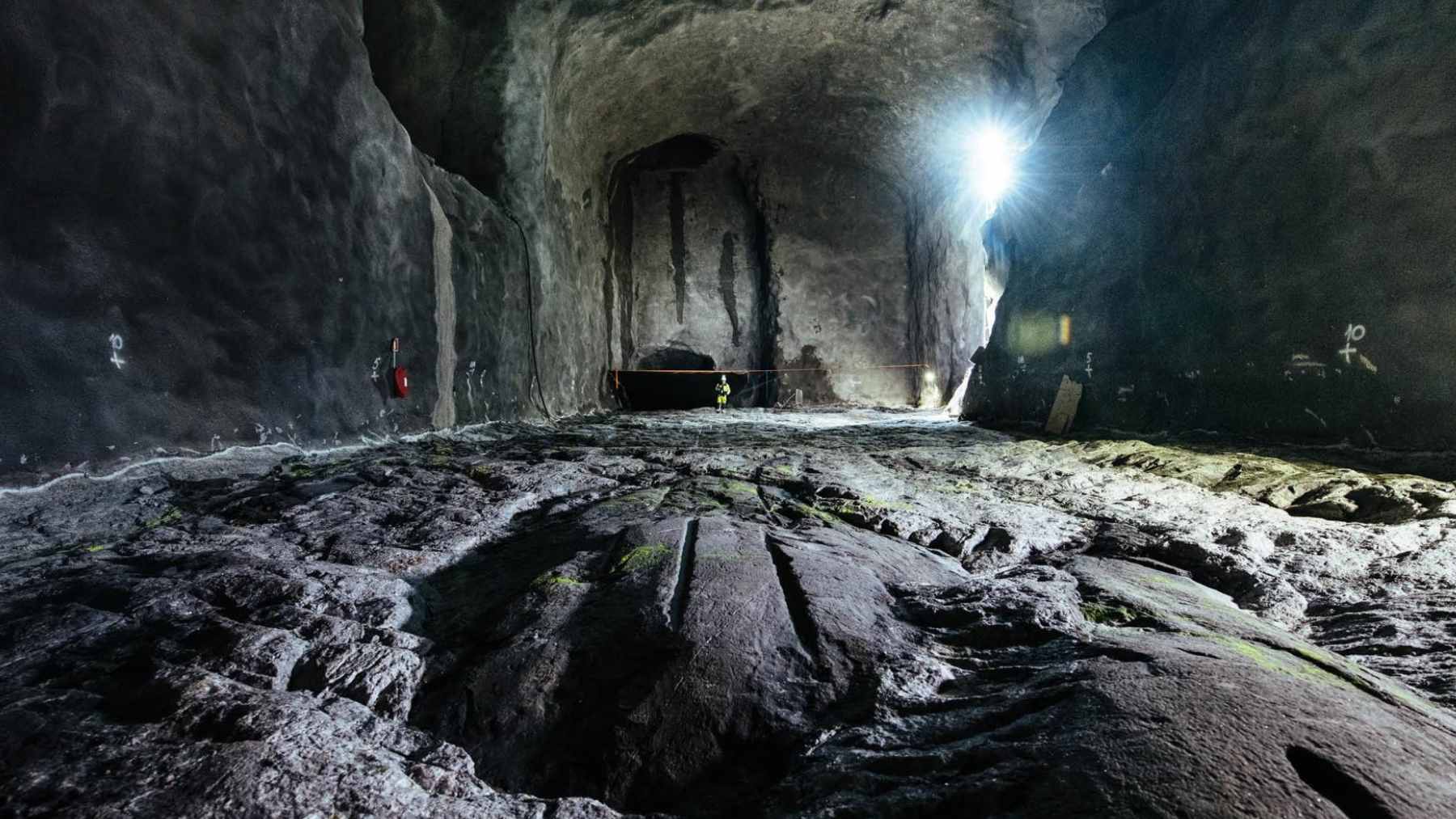
Finland is closing in on something no other country has pulled off yet: a permanent underground disposal site for spent nuclear fuel. The Onkalo repository on Olkiluoto Island sits about 430 meters underground and is built to hold roughly 6,500 tons of spent fuel in a maze of tunnels carved into ancient bedrock.
For climate policy, that matters more than it sounds at first. Nuclear power already sells itself as low carbon, but the waste has always been the awkward question left hanging in the room. Can a facility designed to last beyond any government, language, or map finally make that argument feel complete?
A climate project buried underground
Posiva, the company behind Onkalo, calls the disposal solution “the missing point for sustainable use of nuclear energy,” and that phrasing is doing a lot of work.
The basic pitch is simple: if nuclear is going to help keep the lights on without spiking emissions, the waste has to leave temporary pools and dry casks and move somewhere meant for the long haul.
Finland’s approach is also unusually strict by design. A Finnish law requires radioactive waste generated in Finland to be handled and permanently disposed of within the country’s borders, which has helped keep the program from drifting for decades. It’s not glamorous, but it is the kind of policy muscle memory many countries have never built.
In practical terms, this is the infrastructure side of climate planning. People feel energy debates in the electric bill and in winter heating costs, not in policy memos. A disposal site does not make power cheaper overnight, but it can remove one of the biggest political roadblocks to running reactors for decades.
How Onkalo is meant to stay sealed
Onkalo’s safety concept relies on multiple barriers stacked with a purpose. Spent fuel is sealed into canisters, surrounded by bentonite clay that swells when wet, and then locked inside bedrock chosen for stability and low earthquake risk.
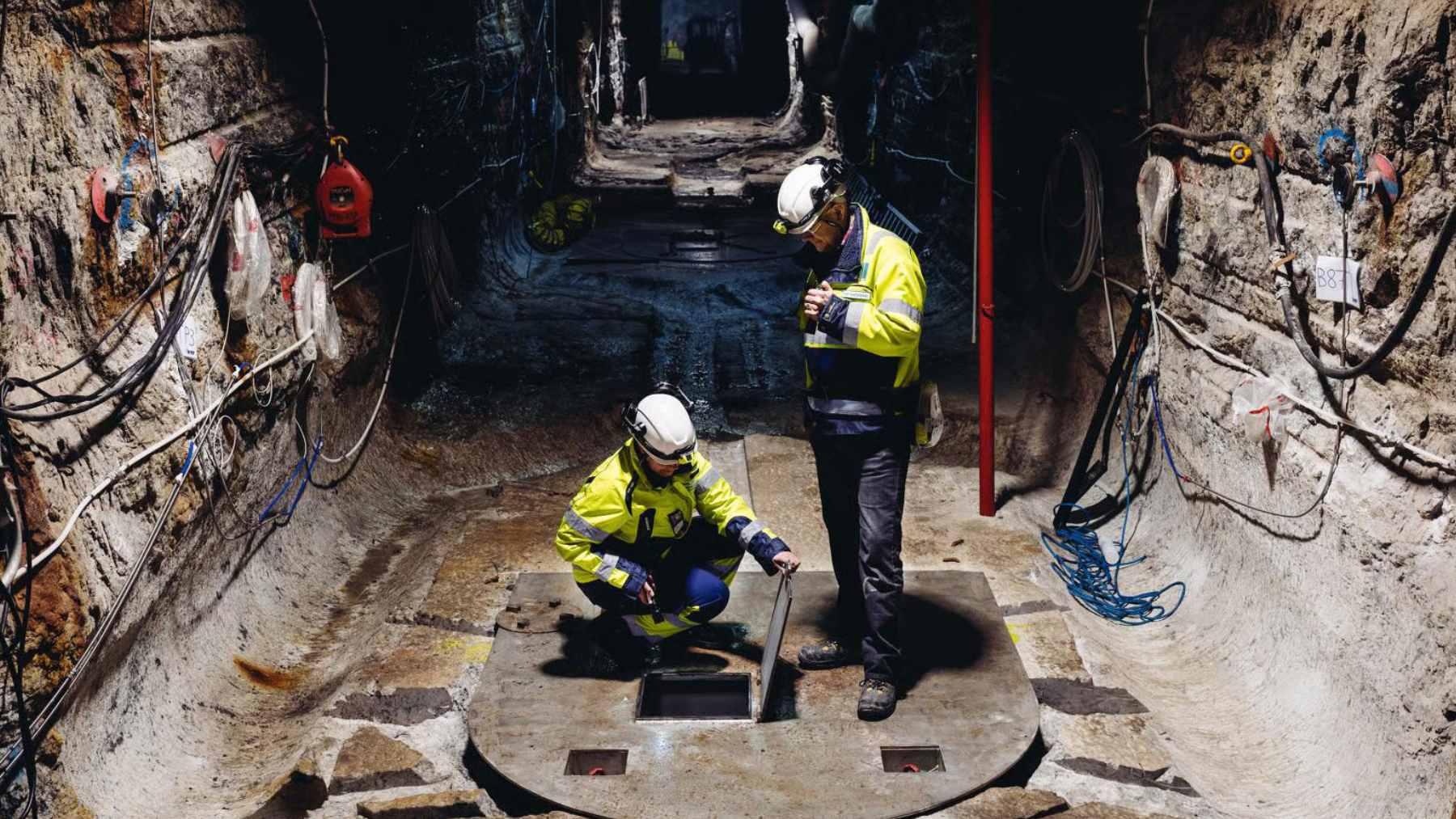
“It’s the isolation from civilization and mankind on the surface that’s important,” Posiva geologist Tuomas Pere said during a recent media tour underground.
The tech story here is quieter but real. The encapsulation and handling steps are designed to be done by remote control and unmanned machinery in the most radioactive zones, which reduces human exposure during routine operations. It’s less “sci fi robot” and more “industrial automation where mistakes are not an option.”
Still, even supporters admit this is engineering with uncertainty. Nuclear safety expert Edwin Lyman has warned there are “uncertainties,” including how copper canisters might corrode over extremely long time spans. His bottom line is blunt: there’s no perfect option, but deep geological disposal is “the least bad option” compared with leaving waste on the surface forever.
The business math of a 100,000-year liability
Onkalo is often described as a roughly €1 billion ($1.16 billion) project, and the point is not only the construction cost. It is that Finland has treated nuclear waste as a line item that has to be funded in advance, not dumped onto future taxpayers by surprise. Finnish utilities have been saving for decades to pay for the disposal work.
The clearest signal is Finland’s National Nuclear Waste Management Fund. In a March 10, 2026 press release, the Ministry of Economic Affairs and Employment said the fund had €3.0 billion ($3.5 billion) in assets at the end of the 2025 financial period to cover the remaining waste management costs of all nuclear waste generated in Finland, including demolition costs of existing plants.
That is what long-term planning looks like when it’s written into the financial plumbing.
And the global comparison is harsh. The IAEA has estimated almost 400,000 tons of spent fuel have been produced globally since the 1950s, with about two-thirds still in temporary storage, and most countries still have no permanent underground disposal in operation.
Sweden has started building its own repository at Forsmark, but it is not expected to open until the late 2030s, while France’s Cigéo project is still not under construction.
The defense angle most people miss
This is not only an environmental story, it is also about vulnerability. Above-ground storage is easier to target, harder to defend forever, and more exposed to natural disasters and human conflict. Lyman has pointed out that nuclear material kept on the surface is “vulnerable to sabotage,” which is one reason deep disposal can be a security upgrade as well as a safety move.
You can see the military problem in other corners of the nuclear world. A 2025 report on AUKUS nuclear submarines warned that managing nuclear waste from defense programs can become a multi-generational burden, and that many countries still have no permanent disposal plan for high-level material. Different program, same physics.
The United States is wrestling with the same reality at civilian scale. In a February 2026 Reuters report, the U.S. had more than 100,000 tons of spent fuel stored on-site and was asking states to volunteer to host geological repositories, while pointing to Finland as the closest example of a country about to make permanent disposal real.
That comparison may be uncomfortable, but it’s useful.
How do you warn the far future?
Here’s the strange part that makes Onkalo feel almost unreal. Spent fuel can remain hazardous for hundreds of thousands of years, which is longer than the entire written history by a wide margin.
So the project has to think about not just containers and rock, but communication with people who might not share our languages, symbols, or even our idea of what a “warning sign” is.
That’s why “nuclear semiotics” has become a serious field, and why Austrian artist and inventor Martin Kunze has worked on what he calls a “nuclear message,” using durable ceramic plates meant to preserve critical information over extreme time scales. It sounds like art until you remember what is at stake.
Onkalo is expected to operate into the 2120s and then be sealed, with no plan for future intervention once it is closed. The whole concept is a bet on careful engineering, steady institutions, and a willingness to pay the full cost of low-carbon power up front.
The press release was published on Finnish Government.