When offshore wind turbines fade into sea haze, birds have even less time to react to a rotor that can look almost transparent in motion. Ever tried to pick out a spinning blade through fog from a moving boat?
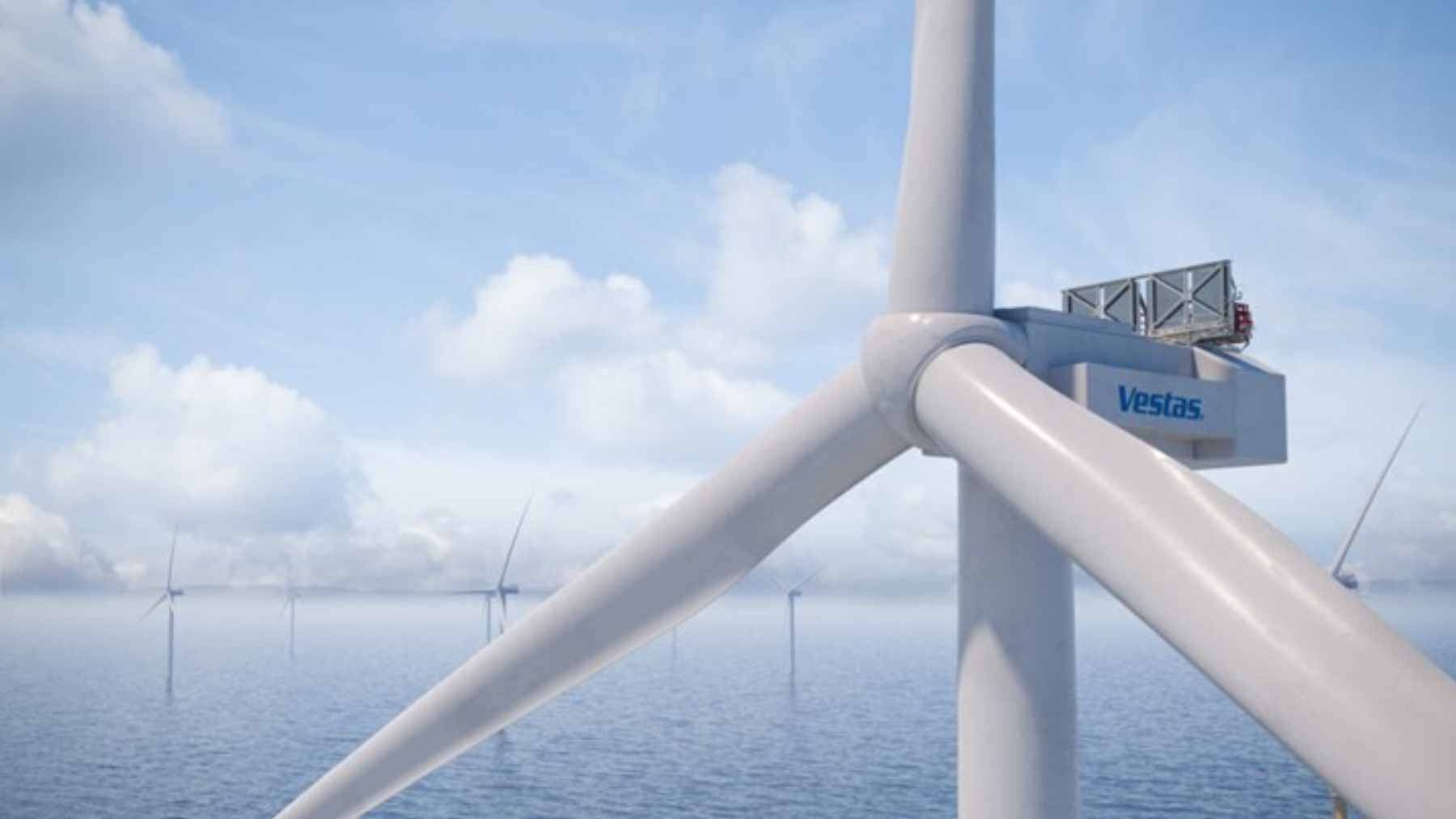
Ecowende and Danish turbine maker Vestas are running a field trial that swaps in one red blade per turbine. At the 760 MW Hollandse Kust West VI site in the Dutch North Sea, seven turbines will carry a red-coated blade while researchers track bird behavior and collision risk.
Vestas sustainability VP Lisa Malmquist Ekstrand said seabirds “largely avoid offshore wind turbines,” but the team wants stronger evidence without leaning on heavy curtailment that can raise costs.
Why one red blade could change the odds for birds
The core idea is not to repaint an entire turbine, but to create a moving visual cue that stands out against glare, fog, and low light. Ecowende describes the goal as creating a “smear” effect that birds may detect sooner than uniform gray blades.
There is a scientific reason engineers keep circling back to “one blade, different color.” A National Renewable Energy Laboratory report explains that fast-moving blade tips can create “motion smear,” where the blade becomes a blur that may appear safer to fly through.
Real-world evidence is still limited, but the signal is intriguing. In an Ecowende webinar summarizing prior field work, one Norwegian site reported a 70% drop in collision victims after painting one blade black, while also noting that larger replications are still needed.
A Carbon Trust study at the Thanet offshore wind farm analyzed over 600,000 videos and observed six collisions.
What is being tested at Hollandse Kust West VI
The trial will run at a wind farm slated for 52 turbines and a 760-MW grid connection, located about 32 miles off the Dutch coast near IJmuiden. Vestas has said offshore turbine installation is expected to begin in the Q2 of 2026, with commissioning targeted by the end of 2026.
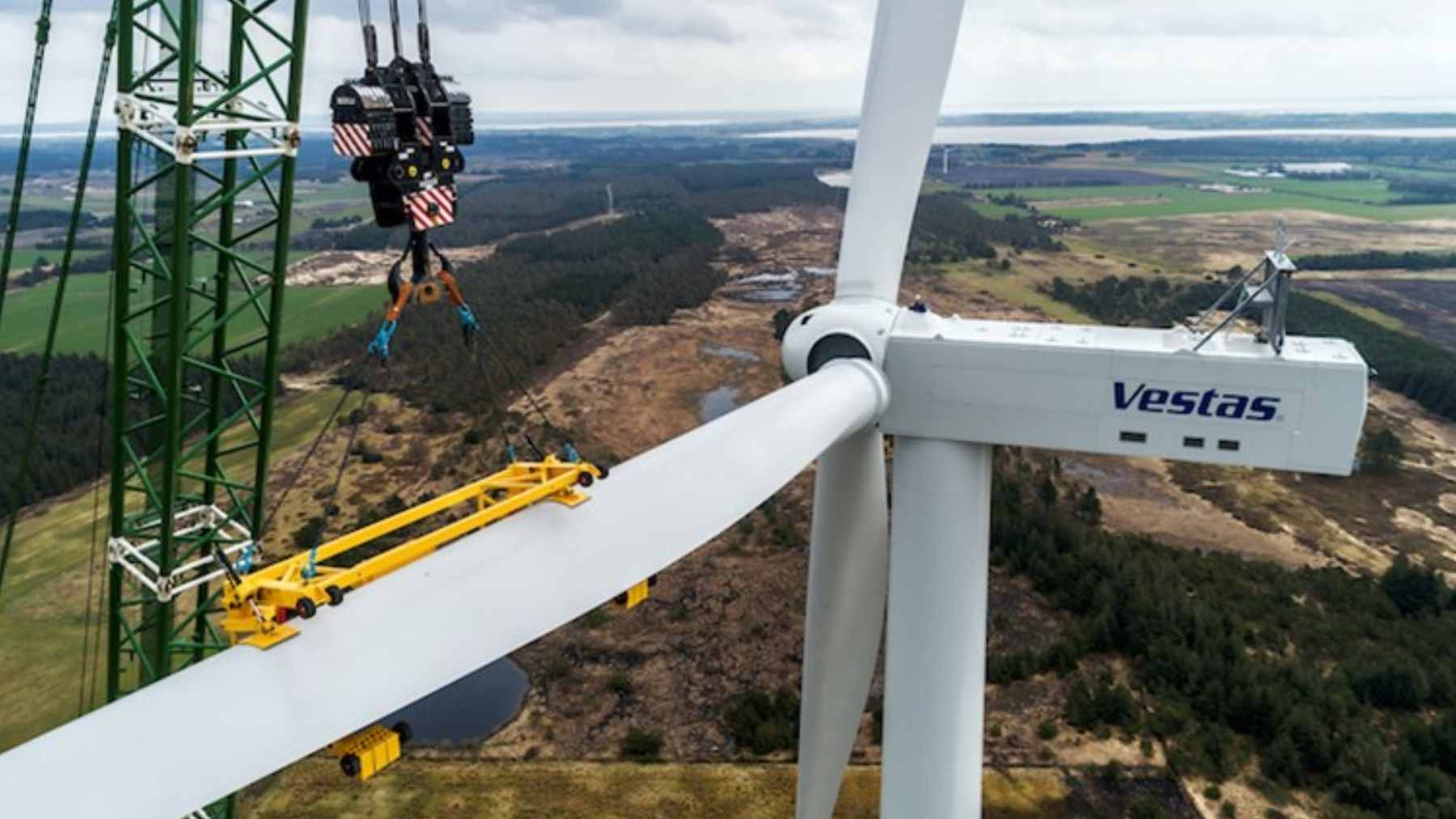
Only a subset of machines will carry the red blades, and that is on purpose. Ecowende’s plan is one red-coated 115.5-meter blade on each of seven V236-15.0 MW turbines, so researchers can compare behavior and risk against standard configurations across the site.
Picking a color is not just a branding decision, it is materials engineering in salty air. Vestas’ technical project manager for the project said red was chosen to “avoid overheating and ensure blade durability,” after considering black and fluorescent options.
The business case hiding behind the paint
Bird protection is not just a feel-good add-on in offshore wind, it is increasingly part of the project risk model. In practical terms, stronger mitigation can lower the chance of legal challenges, reduce constraints during sensitive migration windows, and improve the credibility of environmental impact claims with regulators and communities.
Curtailment is one of the most direct levers, but it comes with a revenue tradeoff. A published case study on radar-assisted shutdown on demand reported “zero soaring bird mortality” during five consecutive autumns, while shutdown time represented about 0.2% to 1.2% of annual operating hours.
Ecowende is trying to stack measures instead of relying on a single fix. Its materials cite higher lower-tip height, reduced lighting, and colored blades, plus seafloor work like Tree Reefs and Oyster Hubs using about 1,000 fruit trees and oysters to spread larvae.
The tech stack that turns a red blade into usable data
If the color shift is the headline, the monitoring is the engine that will decide whether it matters. The field research is being led by Ecowende with Waardenburg Ecology, DHI, and Robin Radar, using a mix of radar and other sensing to test the hypothesis in operating conditions.
That matters because offshore collision data is hard to collect, and even major organizations acknowledge the evidence gaps. In a global guidance report, IUCN notes that many seabird collision estimates rely on theory rather than empirical evidence because monitoring and carcass collection offshore are so difficult.
Some of the most ambitious tooling is already moving from “nice to have” into core infrastructure. Robin Radar has described deploying its MAX bird detection radars for Ecowende and highlighted that one system would be installed on a floating platform to support uninterrupted offshore data collection.
Why defense and security teams pay attention to bird mitigation
Offshore wind sits in busy maritime zones, and sensors placed for ecology can have second-order value. Tracking small, fast-moving objects in cluttered airspace can support broader situational awareness, even as a NATO technical report warns wind farms can affect some ground-based surveillance radars.
The UK’s Defence and Security Accelerator has run competitions aimed at reducing radar clutter from offshore wind farms and preserving intruder detection near turbines.
In the long run, the same monitoring mindset that protects seabirds can also help protect infrastructure. The next question is whether a simple visual tweak holds up offshore.
The webinar slide deck on colored blades and bird flight behavior was published on Ecowende.