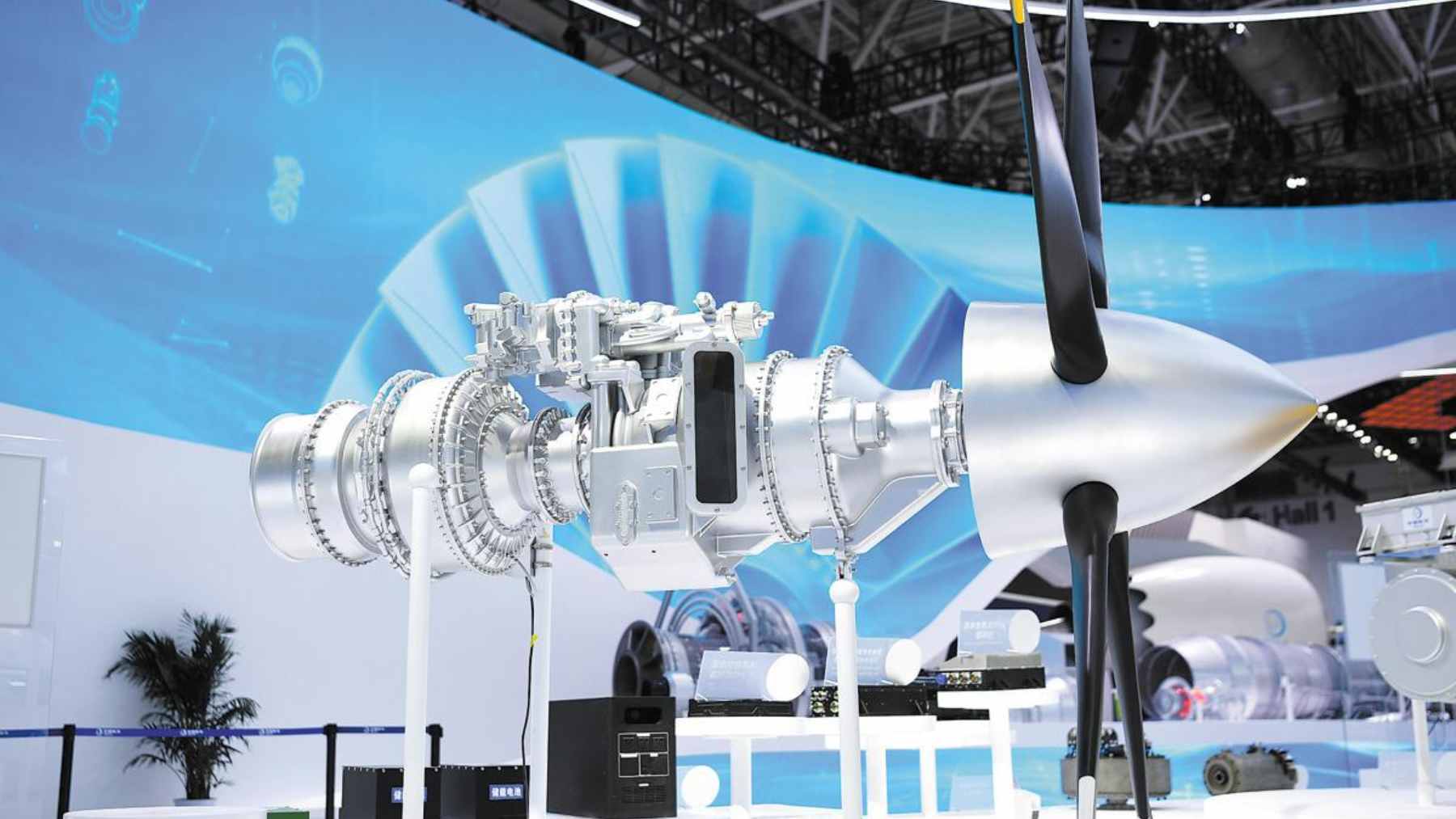
On April 4, 2026, a 7.5-ton unmanned cargo aircraft took off from Zhuzhou in China’s Hunan Province and flew for 16 minutes with a megawatt-class hydrogen-fueled turboprop engine called the AEP100.
Xinhua described it as the world’s first test flight of a megawatt-class hydrogen turboprop and said the aircraft reached about 300 meters of altitude, covered 36 kilometers at 220 km/h, and returned safely after completing its planned maneuvers.
It is tempting to call this “water-powered” flight the moment aviation finally breaks free from fossil fuels, but the bigger takeaway is more practical. China just proved that liquid hydrogen propulsion can survive the messy parts of flight, and now it has to prove everything that comes after: durability, fueling, safety rules, and a clean hydrogen supply.
A short test that still moved the needle
Xinhua reported that experts from the Aero Engine Corporation of China said the flight showed China has a “complete technological chain” for hydrogen aviation engines, from core components to full integration.
That kind of claim matters because integration is where many climate tech ideas quietly fail, especially when vibration, weather, and real takeoff loads enter the picture.
The flight was also a reminder that the first serious hydrogen aircraft may not carry passengers at all. In the background material, the early use cases tied to this engine focus on unmanned cargo, island logistics, and regional routes where fueling can be tightly controlled. That is a narrower market, but it is also a faster way to learn.
Why burn hydrogen instead of using fuel cells?
There are two main visions for hydrogen flight, and they look similar only from far away. One burns hydrogen in a gas turbine cycle, while the other runs hydrogen through fuel cells to make electricity for motors. The Chinese Academy of Engineering’s journal review treats both pathways as real contenders, and it flags “hydrogen gas turbine” and “hydrogen fuel cell” as key directions.
The combustion route is often framed as easier to scale to higher power, while fuel cell systems aim for very low in-flight emissions beyond water. Airbus, for example, says it has down-selected to a “fully electric” concept using fuel cells, and it reported a 1.2-megawatt hydrogen propulsion demonstration in 2023 plus broader system testing in 2024.
That split in approach is not just engineering taste, it is a bet on which problems are harder to solve first.
The climate math includes NOx and contrails
Hydrogen combustion removes carbon dioxide from the tailpipe, but it does not make an aircraft climate neutral by default. An ICAO environmental report notes that hydrogen combustion emissions consist of water vapor and nitrogen oxides, and that water vapor is linked to contrail formation, which contributes to aviation’s climate impact.
That is why the “non-CO2” side of aviation is suddenly getting more attention, even outside climate circles.
Persistent contrails can warm the atmosphere, and some reporting has highlighted that a small share of flights can create an outsized share of contrail impact, depending on weather conditions aloft. If hydrogen aircraft become common, airlines and regulators may still need new tools for routing and altitude choices, not just new fuels.
Green hydrogen is the real bottleneck
The cleanest engine in the world still depends on what is in the fuel truck, or in this case, the cryogenic tank.
The IEA notes that low-emissions hydrogen today is a tiny share of total production, and its analysis also tracks hydrogen by emissions intensity rather than color labels. For aviation, that distinction is everything, because high carbon hydrogen would shift emissions upstream instead of eliminating them.
The Chinese Academy of Engineering review lays out why this is not only a fuel supply issue.
It lists technical barriers such as integrated aircraft and engine design, onboard storage of liquid hydrogen, precise metering and control, thermal management, and stable low emission combustion, and it proposes development goals toward 2028, 2035, and 2050. In other words, this is a long runway, even after a successful 16-minute hop.
A business play with defense echoes
In business terms, the “low-altitude economy” pitch is a clue about how hydrogen could enter the market. Small cargo corridors, island routes, and other controlled operations can concentrate demand, justify early infrastructure, and reduce the regulatory burden that comes with passengers.
If costs for low carbon hydrogen fall, these routes could become a real testbed for decarbonizing regional logistics, not just a demo for headlines.
There is also a military and security angle that is easy to miss when the story is told as a green breakthrough.
NATO has warned that high fuel demand can increase vulnerability and may require forces to protect supply lines, which is one reason defense planners watch energy transitions closely. Meanwhile, the IEA’s record oil stock release in March 2026 was a reminder that fuel shocks are not abstract, and they can reshape investment priorities fast.
The official statement was published on Xinhua.