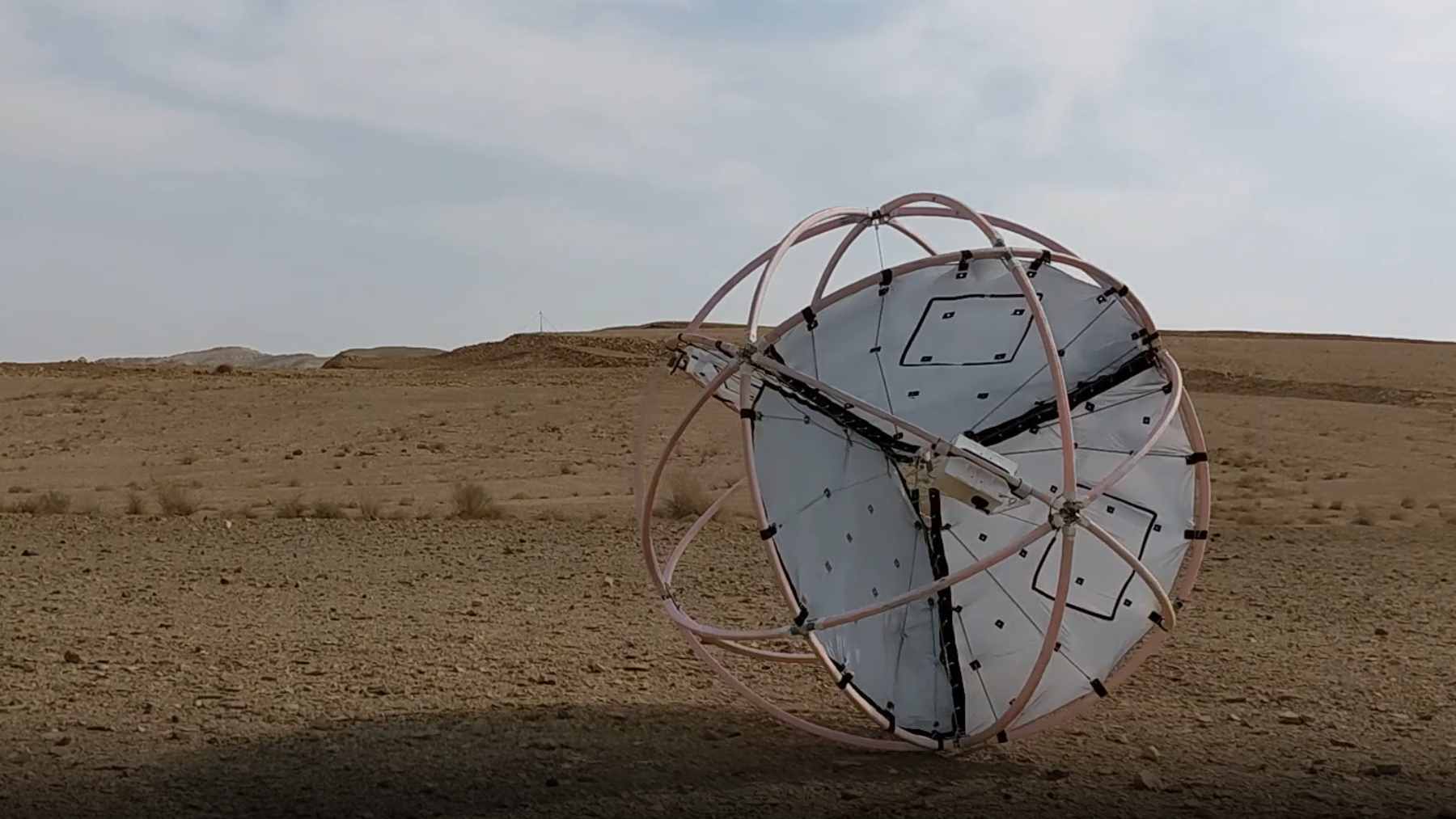
A rover that runs on wind instead of wheels just finished a field campaign in Chile’s Atacama Desert. The prototype from Team Tumbleweed was tested out of the Atacama UC Alto Patache research station, a site picked for its extreme conditions and Mars-like winds.
The headline detail is the tech, but the bigger story is what it could change. What if the next wave of planetary exploration relied more on the environment itself, the same way wind power tries to cut the electric bill back home?
A rover that rides the wind
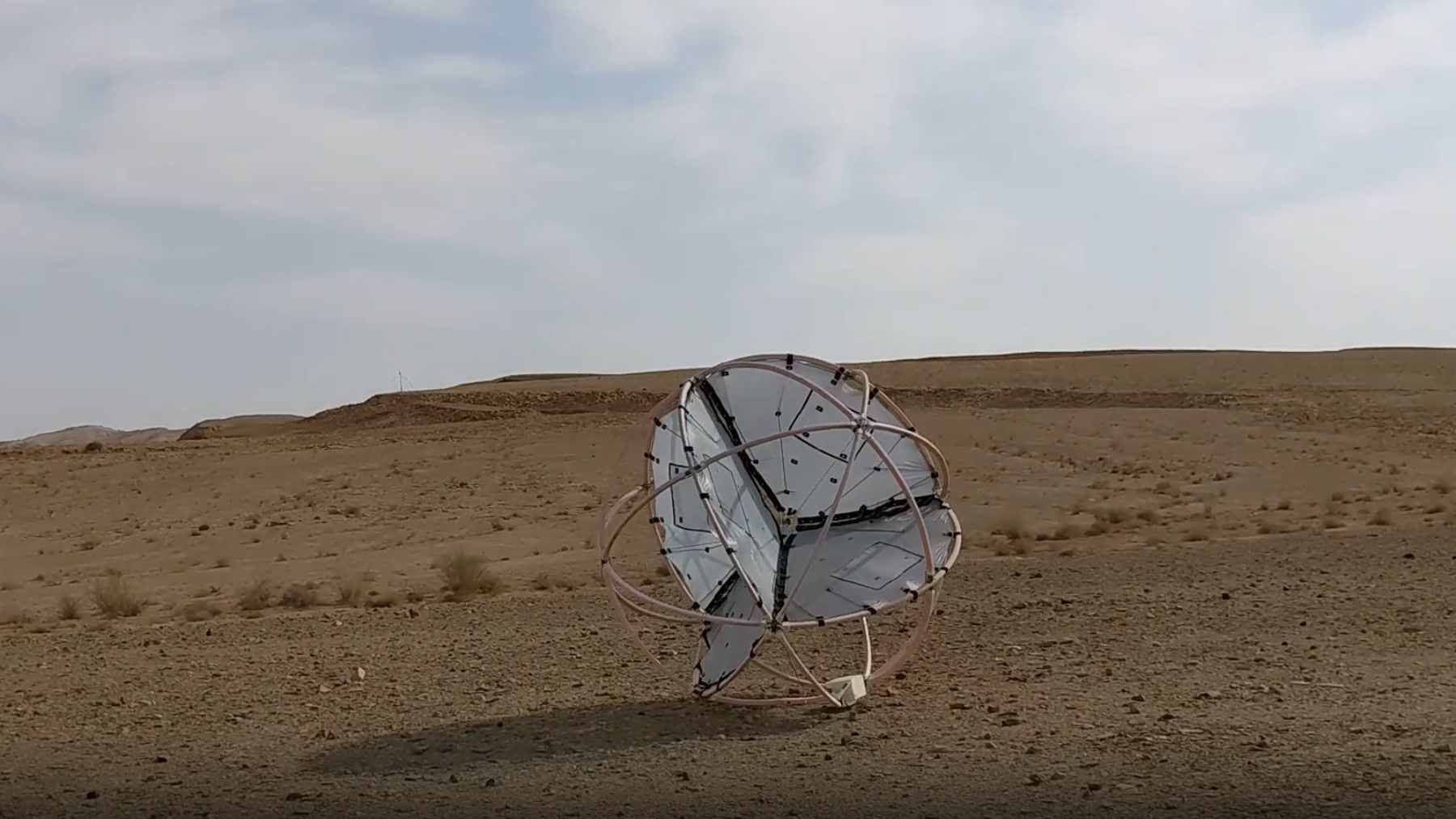
If you have ever watched a tumbleweed sprint across a road after a gust, you already get the concept. This rover has an elliptical frame made from carbon fiber cables and moves using wind energy, without wheels or fuel.
UC’s report says the rover weighs about 3.5 kg (7.7 lbs.) and is designed to reach up to 15.9 meters per second, around 57 km/h (29 mph). The station sits on Chile’s coastal desert about 40 miles south of Iquique, which makes logistics hard but testing honest.
Team lead James Kingsnorth said the local wind cycle is similar to what you would expect on Mars, with stronger winds in the afternoon and calmer periods overnight and in the morning. In plain terms, it is the kind of place where the wind can shove sand into your shoes and expose any weak point in a design.
The science packed into a tiny platform
This is not a stunt toy meant to tumble for a few minutes and stop. Inside a box that acts as the rover’s “brain” are a camera, microphone, GPS, a gamma ray spectrometer, a magnetometer, and sensors that record temperature, atmospheric pressure, humidity, wind, and ultraviolet radiation.
Moritz Itzerott, a physicist on the project, said the idea is to keep collecting soil and environmental data as the rover moves, then transmit it to a Martian weather station over long periods. That long timeline is key, because one snapshot rarely tells you how an environment really behaves.
There is also an environmental reason the station matters beyond being “Mars on Earth.” UC notes it has more than 20 years of continuous observations of fog and other atmospheric conditions, which can help researchers compare a moving rover’s readings with long-term baselines.
Ecology by way of space engineering
Why does a Mars rover belong in an environmental story at all? The instrument list is basically a mobile weather and radiation station, and the UC team says this kind of work opens new questions about magnetism, geological composition, and climatology in the Atacama itself.
Team Tumbleweed’s broader pitch is not a single rover doing heroic science, but many small platforms acting together. In Europlanet Magazine and ESA’s own project materials, the concept is framed as a distributed sensor array that can spread out, collect measurements across wide areas, and later act as a network of stationary stations.
That kind of network is a better match for environmental phenomena that shift across space and time. Europlanet has argued that multiple wind-driven rovers could provide a more simultaneous view of atmospheric and surface processes from different locations than today’s surface missions usually can.
In that same release, Kingsnorth said the tests showed the rovers “could indeed operate and collect scientific data on Mars.”
Business logic in a windy shell
A lighter rover is not just easier on a launch vehicle, it is easier on a budget line. Europlanet Magazine points to World Economic Forum figures that value the global space industry at over $500 billion and project it could pass $1.8 trillion by 2035, which helps explain why low-cost mobility ideas are getting serious attention.
Kingsnorth’s article also says Team Tumbleweed aims to make access to the Martian surface 100 times cheaper by trading heavy mobility systems for wind-driven motion and scale. If that claim holds up, it could widen the market for miniaturized instruments and low-power electronics that are tough enough for extreme environments.
Military and defense implications are hard to ignore
Autonomous systems built for deserts and harsh weather rarely stay in one lane. A wind-driven rover could, in theory, support defense missions needing localized weather or radiation data in remote regions where fuel and maintenance are real constraints, even if the current focus is scientific exploration.
For now, the most grounded questions are the practical ones. Can it clear rocks, handle shifting winds, and transmit useful data without babysitting, day after day?
If you want the details straight from the source, UC has published a full rundown of the Atacama test and what the team is trying to prove.
The official statement was published on Pontificia Universidad Católica de Chile.