What happens when a shipping lane becomes a minefield and the ocean floor turns into a security problem? A hydrogen-powered underwater drone from Bremen-based Euroatlas is being pitched as a way to search wide areas for mines and suspicious activity without keeping crews at sea for weeks.
That matters far beyond the military. The same undersea routes that move oil and gas also carry internet cables and power links, and disruptions can ripple into everyday life through higher fuel costs and shakier connectivity.
The Strait of Hormuz is also an environmental chokepoint
The U.S. Energy Information Administration says nearly 20% of global oil supply flowed through the Strait of Hormuz before military action began in late February. In April, it reported Brent crude averaged $117 per barrel and warned the shock can take a long time to unwind.
Reuters reported in April that Iran deployed about a dozen mines in the strait, and the exact locations are not publicly known. Former naval officers told Reuters clearing them could take weeks even with modern drones and robotics.
There’s also an ecological angle hiding in plain sight: more naval activity means more impulsive noise, more risk of accidental releases, and more pressure on a marine environment that already runs hot and salty.
Greyshark aims to stay down for 16 weeks
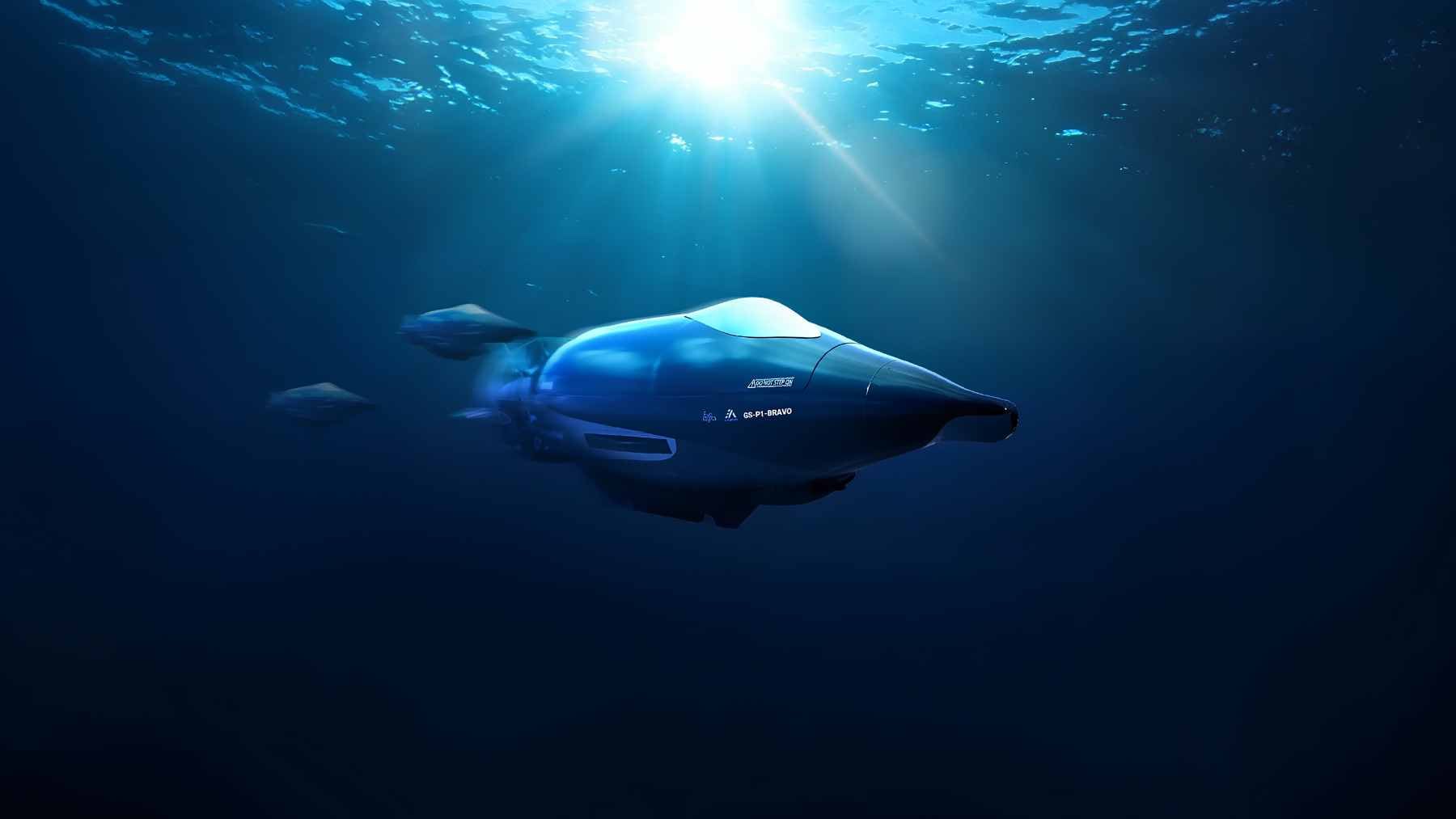
Euroatlas says its Greyshark autonomous underwater vehicle, co-developed with EvoLogics, is designed for long-duration missions like mine countermeasures and monitoring critical undersea infrastructure.
In the company’s brochure, the hydrogen fuel cell variant is listed with endurance of up to 16 weeks, and the performance chart shows a reach of about 10,700 nautical miles at 4 knots.
Speed is part of the pitch, too. The brochure lists 10-plus knots operational speed and more than 1,100 nautical miles of reach at 10 knots.
Interesting Engineering reports the vehicle carries 17 sensors and can generate seabed images at about 1.6 inches per pixel.
It quotes a Euroatlas executive saying six vehicles run by one person could map the entire strait in under 24 hours, adding, “No manned asset would be able to do it that fast, and autonomy also makes the mission much safer.” The outlet says sea trials are scheduled for August 2026.
Mine hunting has a hidden ecological price tag
If a mine detonates or gets deliberately blown in place, the shock wave does not stop at a ship’s hull. A joint UK government position statement on unexploded ordnance clearance says high-order detonations can cause seabed damage and can injure or disturb marine species because of the associated noise.
That’s why better detection matters. If an autonomous system can map a suspected minefield accurately and spot changes over time, operators can plan fewer interventions and prioritize lower-noise disposal methods whenever possible.
There’s another long-term worry as well. Studies of old munitions and unexploded ordnance show that as casings corrode, explosive chemicals can leak into water and sediment, creating a slow-moving contamination risk.
The seabed economy is driving the business case
The ocean floor is not just a battlefield, it’s infrastructure. The International Telecommunication Union says submarine cables carry about 99% of the world’s internet traffic and estimates more than 500 active and planned cable systems, with more than 170 repairs reported worldwide in 2025.
You don’t need to be a naval planner to feel the impact of a broken cable. Payments slow down, cloud services wobble, and even a simple video call can get choppy at the worst time.
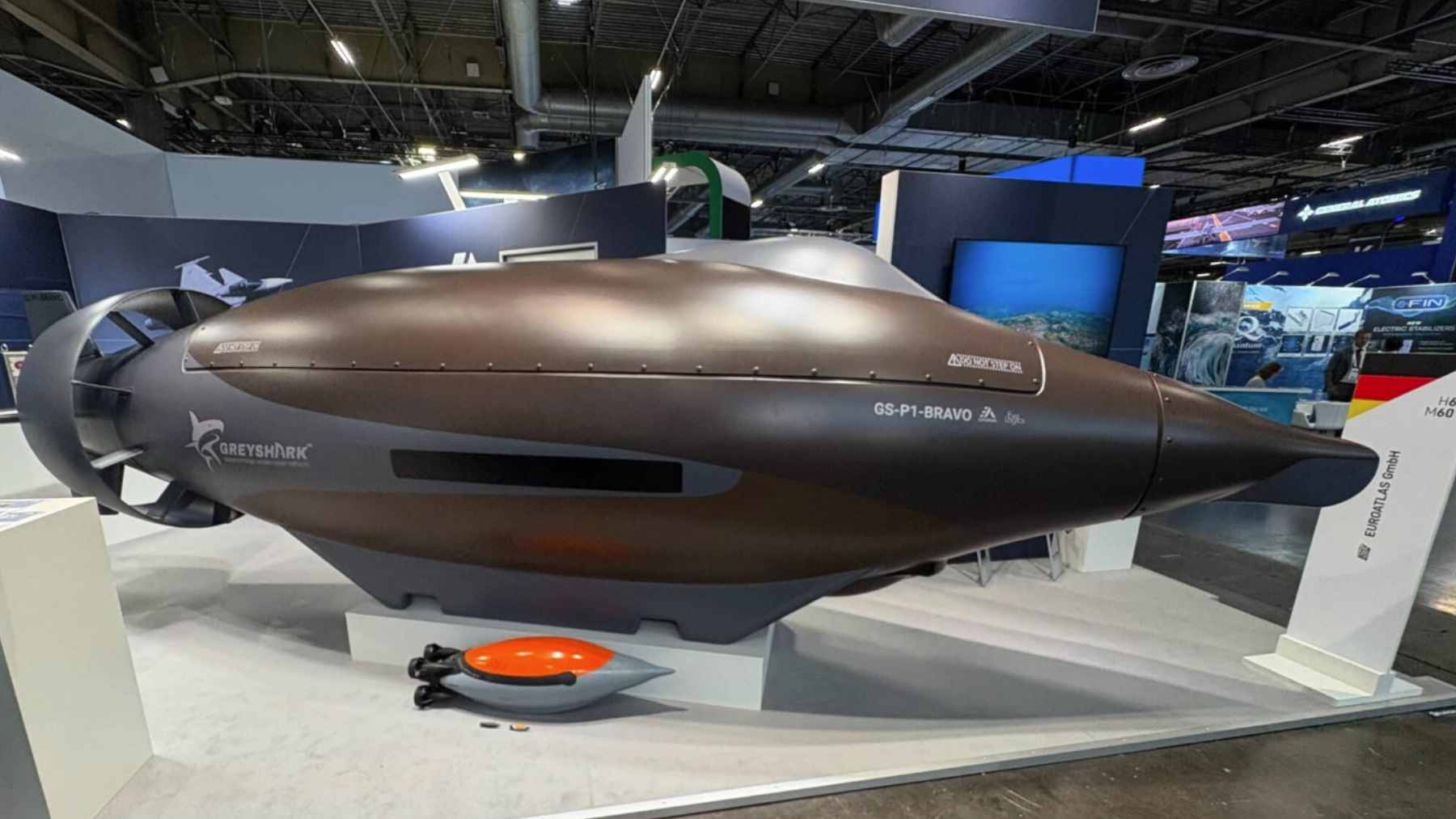
This is where defense technology starts to look like a resilience tool. Reuters reported in 2025 that two European governments signed contracts worth more than €100 million ($116 million) for Greyshark, and DSEI Gateway later reported Euroatlas planned to begin serial production of its battery-powered variant in late July or early August 2026.
Autonomy underwater brings a new rules problem
A single operator supervising multiple underwater vehicles sounds efficient, but it also concentrates responsibility. If an AI model flags “mine-like” objects, who confirms the call, and how do you avoid turning a false alarm into an expensive disruption for shipping and fishing?
Data is the next question. These platforms collect detailed maps of the seafloor and the objects on it, and that information is valuable for security and for science, but it can also be sensitive in the wrong hands.
Europe is already testing this idea in real conditions. SeaSEC’s 2026 “Data2Sea” challenge weeks brought navies and industry together for live trials focused on building a near real-time picture of above-and-underwater threats to critical infrastructure.
What to watch next
The big test will be whether long-endurance drones actually reduce risk, or simply shift it. If they replace some crewed patrols and cut the number of explosive clearances, that’s a quieter outcome for people and for marine life.
But the clock is moving faster than policy. As hydrogen-powered autonomy moves from brochures to deployments, environmental safeguards and transparency standards will need to follow, not trail behind. The latest data show how quickly a maritime disruption can bleed into energy markets and budgets.
The official report was published on U.S. Energy Information Administration.