The most futuristic part of the F-35 Lightning II might not be the jet at all. It might be the pilot’s helmet, a custom-built display that pipes targeting data and real-time imagery straight onto the visor, so the pilot rarely has to look down.
But there’s a second story hiding behind that “see-through” magic. The race for sensor-heavy, always-on military tech is also a race for energy, materials, and supply chains, and those all come with an environmental price tag that governments are starting to measure more openly.
A wearable cockpit in the sky
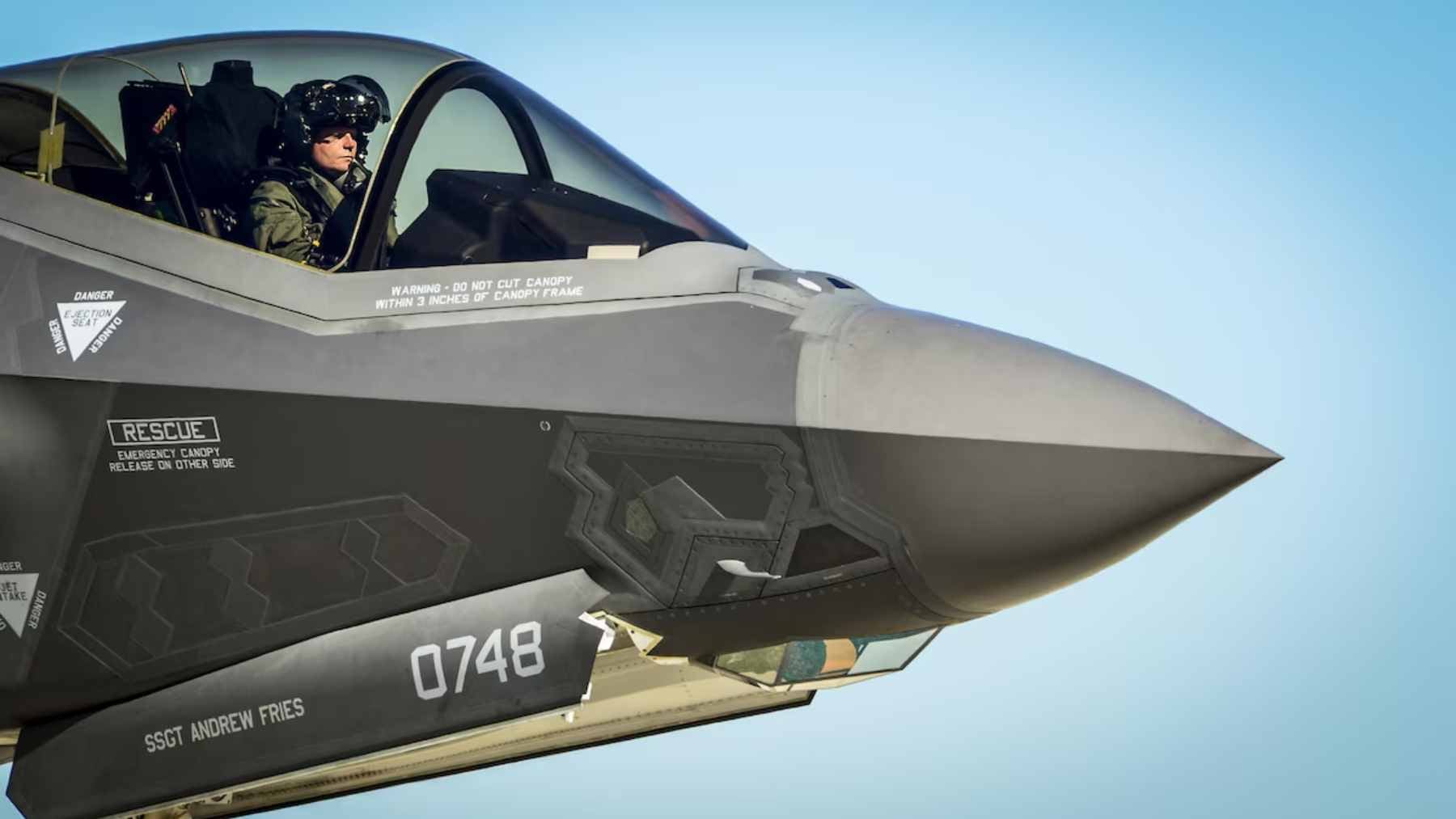
The F-35’s Gen III Helmet Mounted Display System is designed to be the pilot’s primary display, merging flight, tactical, and sensor data into one view. Collins Aerospace says the helmet integrates the head-up display concept with visor-projected night vision, so the pilot can keep eyes forward day or night.
A big reason it feels like science fiction is the “look-through” capability. Raytheon describes how its Electro-Optical Distributed Aperture System feeds the helmet with real-time imagery from six infrared cameras mounted around the aircraft, providing a 360-degree sensor view that helps with everything from missile warning to navigating severe weather.
Why a helmet can cost supercar money
One factor is fit. Collins Aerospace notes that a custom helmet liner is part of the design, aiming for precise comfort and reduced fatigue, and the optics are built around a wide field of view with integrated night vision.
That level of engineering is one reason the helmet is widely reported to cost about $400,000 per unit. In February 2024, Collins Elbit Vision Systems, a joint venture between Collins Aerospace and Elbit Systems of America, said it delivered its 3,000th F-35 Gen III helmet.
It also reported more than 1 million flight hours across 40 fighter platforms for its helmet-mounted display systems. Put another way, it is not just protective gear, it is part of the jet’s human-machine interface, and that kind of installed base tends to lock in long-term maintenance, upgrades, and supply contracts.
Jet fuel is the emissions elephant in the hangar
If you want the environmental context, the Department of Defense basically spells it out. In its emissions reduction plan, DoD reports that its Scope 1 and 2 emissions totaled 56 million tons of CO2 equivalent in fiscal year 2021, and that jet fuel combustion accounted for 80% of operational emissions and about half of total DoD emissions.
That matters because the high-tech helmet sits on top of a platform that runs on vast quantities of fuel. On the installation side, DoD says it spent $3.3 billion in FY2021 to provide power, heat, and cooling to 284,000 buildings, plus $140 million to fuel about 180,000 vehicles.
For most of us, the energy reality check shows up as the electric bill, but for air forces it shows up as kerosene, tanker logistics, and the carbon that comes with every training sortie, and that is the catch.
Supply chains are where climate meets procurement
The DoD plan also warns that Scope 3 emissions, including emissions from the defense industrial base and supply chains, may be equal to or greater than Scope 1 and 2 emissions. That is the part that often gets lost when we focus only on what comes out of the exhaust nozzle.

So what happens when procurement starts caring about carbon the way it cares about cost and performance? DoD points to the federal acquisition debate over contractor greenhouse gas disclosures and climate-related financial risk, and it says it intends to use procurement programs to reduce embodied emissions in the products it buys.
Counting emissions is becoming part of readiness
This push is not just a U.S. story. NATO published a methodology in 2023 to map and analyze greenhouse gas emissions for the NATO enterprise, supporting decision-making as it assesses the feasibility of reaching net-zero emissions by 2050.
The fine print is important. NATO says the methodology is a first iteration and it excludes emissions from NATO-led operations, missions, training, and exercises, partly because data can be sensitive and hard to collect consistently.
What readers should watch next
The next wave of defense innovation may be judged on more than performance alone. DoD argues that emissions cuts can also create “warfighting advantage,” and it highlights on-site generation, storage, and microgrids to keep missions running during extreme weather or grid disruptions, the same moments when power can flicker at home, too.
The F-35 helmet is a useful symbol here, because it shows how “digital dominance” depends on physical systems, factories, and power.
The press release was published on RTX.