The Appalachian Mountains have long been tied to America’s energy story, mostly through coal. Now, a new U.S. Geological Survey estimate suggests the same region could play a very different role in the future, powering electric cars, phones, laptops, military equipment, and the batteries that help keep the grid steady.
According to the USGS, parts of the eastern United States may contain about 2.5 million tons of undiscovered, economically recoverable lithium oxide. At last year’s import level, that could replace 328 years of U.S. lithium imports, a striking number at a time when China still dominates much of the global battery supply chain.
Still, this is not a battery miracle arriving tomorrow. It is a map, and maps only matter if the country can turn them into careful, responsible production.
A new energy prize
Lithium is one of those materials most people use every day without thinking about it. It sits inside the phone on the kitchen counter, the laptop in a backpack, cordless tools in the garage, and the electric vehicles now showing up in more driveways.
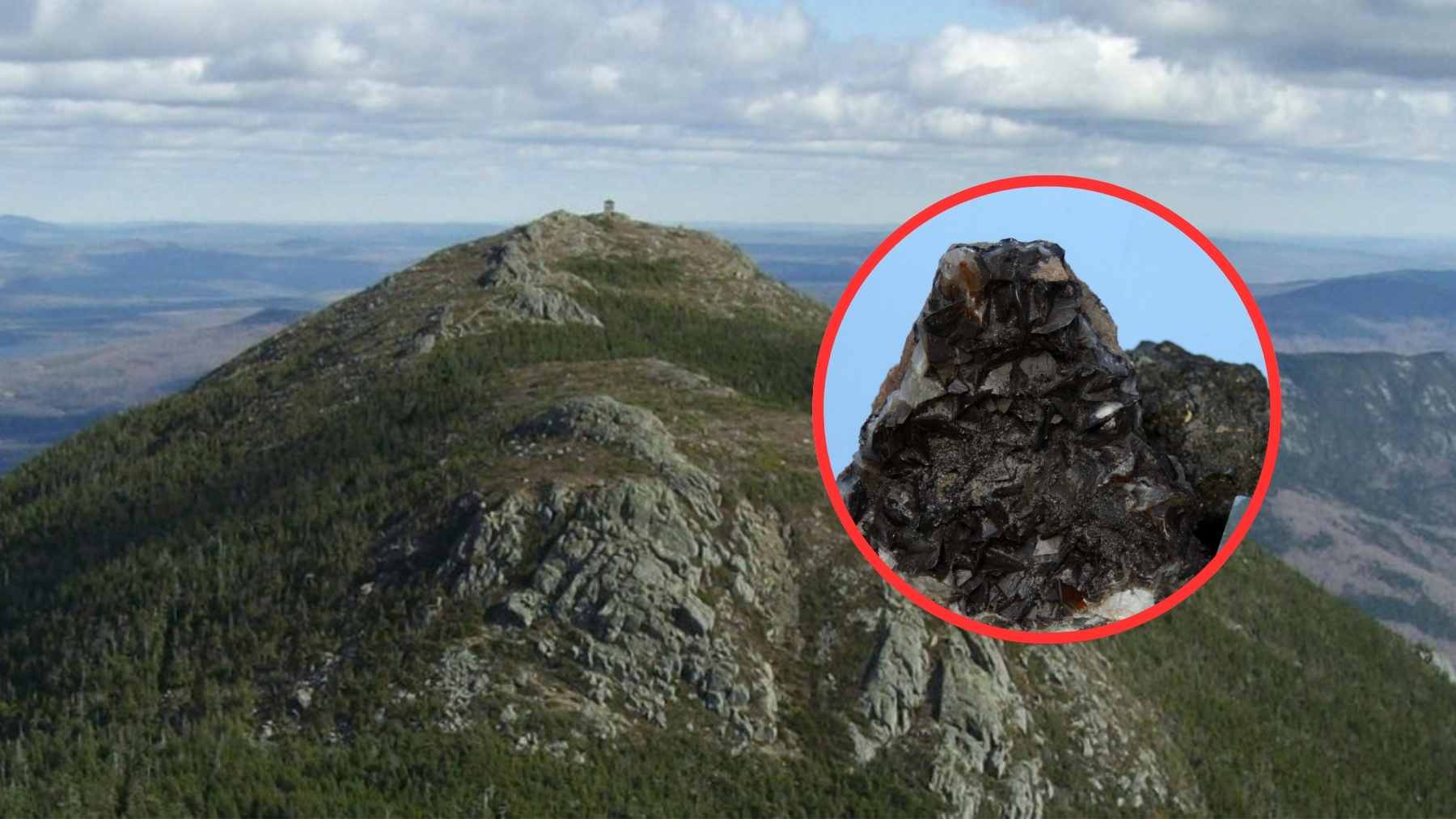
The USGS says the southern Appalachians hold an estimated 1.6 million tons of lithium oxide, mostly concentrated in the Carolinas. Another 1 million tons are estimated in the northern Appalachians, especially in Maine and New Hampshire. The lithium is found in pegmatites, large grained rocks that look somewhat like granite.
Think of those rocks as ancient vaults. They formed from deep geologic forces that helped build the Appalachian Mountains more than 250 million years ago, when plate movements pushed continents together into the supercontinent Pangea. Some of the melted rock from that process was rich in lithium, and that is what scientists are now trying to measure more carefully.
Why it matters
The size of the estimate is hard to picture, so the USGS translated it into everyday technology. The agency says the Appalachian lithium could be enough for 130 million electric vehicles, 1.6 million grid scale batteries, 180 billion laptops, or 500 billion cellphones. That is not pocket change for the battery economy.
This matters beyond electric cars. Grid batteries can help store power when demand spikes, including during summer heat waves, when air conditioners push electric systems hard. Lithium-ion batteries also power computers, phones, electric tools, military equipment, energy storage systems, and some aerospace alloys.
All in all, the find touches business, defense, technology, and the environment all at once. Cleaner transportation needs batteries. Data centers need backup power. The military needs reliable equipment. And households, whether they follow battery policy or not, care about the electric bill and whether the lights stay on.
China’s lead remains
This discovery does not erase China’s advantage overnight. The USGS says the United States had one sole lithium producer and relied on imports for more than half of the lithium it used last year. Australia is the world’s largest lithium producer, China is second, and China accounts for the majority of global lithium refining and consumption.
That is the bottleneck. Finding lithium in the ground is one thing. Building mines, processing sites, refineries, battery factories, and transport links is another. The road from Appalachian rock to a finished battery pack is long.
There is also pressure from rising demand. The scientific paper behind the northern Appalachian assessment notes that lithium demand could rise more than 48 times by 2040 because of electric vehicles and energy storage needs. The USGS also projects that world lithium production capacity will double by 2029.
The environmental test
There is a critical part that should not get lost in the excitement, however. The USGS estimate is about resources that may be economically recoverable, not material already coming out of the ground. Permits, local concerns, water use, forest impacts, truck traffic, and mine cleanup will all matter.
The agency also makes clear that uncertainty is part of the science. Its estimates are presented at the 50% confidence level. In the northern Appalachians, for example, the USGS says it is equally likely that there is more than 1.5 million tons of lithium oxide as it is that there is less.
That nuance is important. A big number can grab headlines, but communities live with the consequences of extraction. If Appalachia is going to become part of the clean energy supply chain, the work cannot look like a rushed replay of older mining booms.
What happens next
USGS Director Ned Mamula said, “This research shows that the Appalachians contain enough lithium to help meet the nation’s growing needs.” He called it a major contribution to U.S. mineral security at a time when global lithium demand is rising rapidly.
The research team used geologic maps, tectonic history, geochemical sampling, geophysical surveys, and records of mineral occurrences to estimate how many lithium deposits may remain undiscovered. Details from the southern Appalachian assessment, covering the region from Maryland to Alabama, are expected later.
So, what should readers keep in mind? The United States may have a much larger domestic lithium base than many people realized. But the real story is not just the discovery. It is whether the country can build a supply chain that is secure, affordable, and environmentally responsible.
The official statement was published on U.S. Geological Survey.