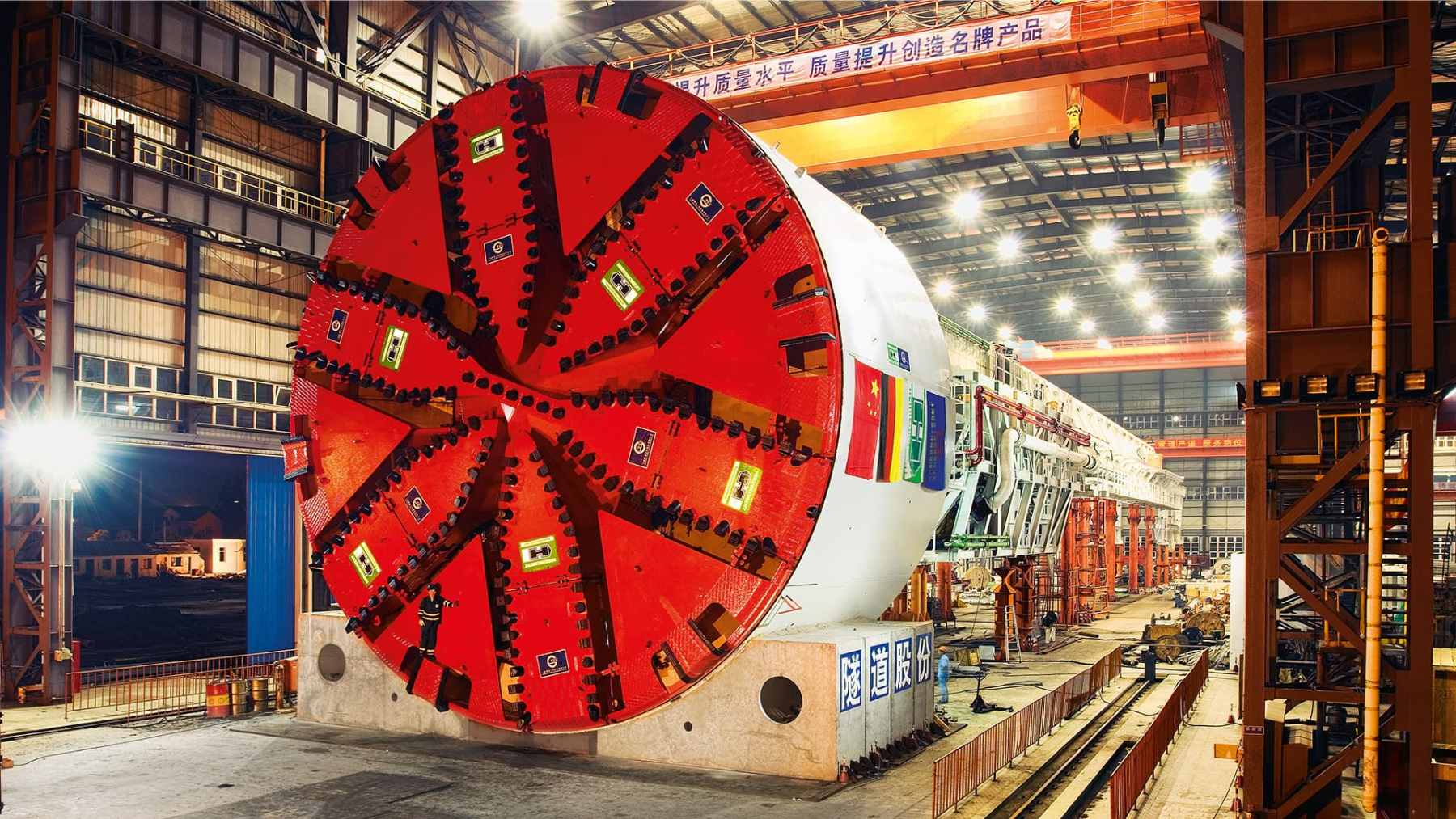
Most people picture tunnel construction as brute force. A giant machine digs, trucks haul dirt away, and eventually a road appears where there was once rock, mud, or seabed. But the story of the Mixshield S-880 “Qin Liangyu” is more interesting than that.
This 120-meter machine did not just break an engineering record, it helped Hong Kong build a major underwater road link while, by official estimates, reducing dredging, marine sediment disposal, and disruption to sensitive coastal waters.
Recognized by Guinness World Records as the largest tunnel boring machine, the S-880 measured 17.63 meters across its shield and weighed 4,850 metric tons (5,350 US tons).
A giant built for wet ground
The S-880 “Qin Liangyu” was built by Herrenknecht and used by Bouygues Construction for the Chek Lap Kok to Tuen Mun subsea road tunnel in Hong Kong.
This was not dry, friendly ground. It had to work through waterlogged soil beneath seas and rivers, where one mistake can mean flooding, pressure problems, or long delays.
According to the American Society of Mechanical Engineers, the machine had a power output of 5,600 kW and could advance about 30 meters a day in saturated ground and rock. Those numbers sound huge, but the real achievement is control. It dug, removed material, stabilized the ground, and lined the tunnel as it moved forward.
The tunnel it helped open
The machine worked on the Tuen Mun-Chek Lap Kok Link, a major route connecting Hong Kong’s Northwest New Territories with the Hong Kong-Zhuhai-Macao Bridge, the airport, and North Lantau. The Hong Kong Highways Department describes the Northern Connection as a sub-sea tunnel, while the Southern Connection uses viaducts.
This was also a business and infrastructure story. The contract for the roughly 3-mile dual 2-lane sub-sea tunnel was valued at HK$18.2 billion, with Dragages-Bouygues Joint Venture listed as the contractor. For anyone tired of traffic jams, airport detours, noise, and exhaust fumes, that kind of route is more than a trophy project–it changes how a city moves.
A cleaner way to dig
Why does that matter for the environment? Because building under the sea is never impact-free, but some methods disturb far more of the seabed than others.
The Highways Department says using tunnel boring machines instead of the traditional immersed tube method reduced dredging and disposal of about 11 million cubic meters of marine sediment, roughly the capacity of 4,900 standard swimming pools.
The same official engineering note says the method helped minimize impact on Chinese white dolphins and other marine life, reduced disruption to heavy marine traffic along Urmston Road, and avoided the need to divert existing submarine power cables serving Hong Kong International Airport.
That is the environmental angle hiding inside this giant machine. Less dredging means less stirred-up sediment, less seabed disturbance, and fewer construction conflicts in waters that are already busy and ecologically sensitive.
Pressure below the seabed
The work was extreme. Hong Kong’s government news service said the deepest section of the Tuen Mun-Chek Lap Kok Tunnel sits about 60 meters below sea level, and specialist hyperbaric workers faced pressure nearly six times greater than at the surface.
Picture the difference between an ordinary road job and a work site where crews move through pressurized shuttles before reaching the excavation chamber. It sounds almost like spaceflight, except it happened under the seabed.
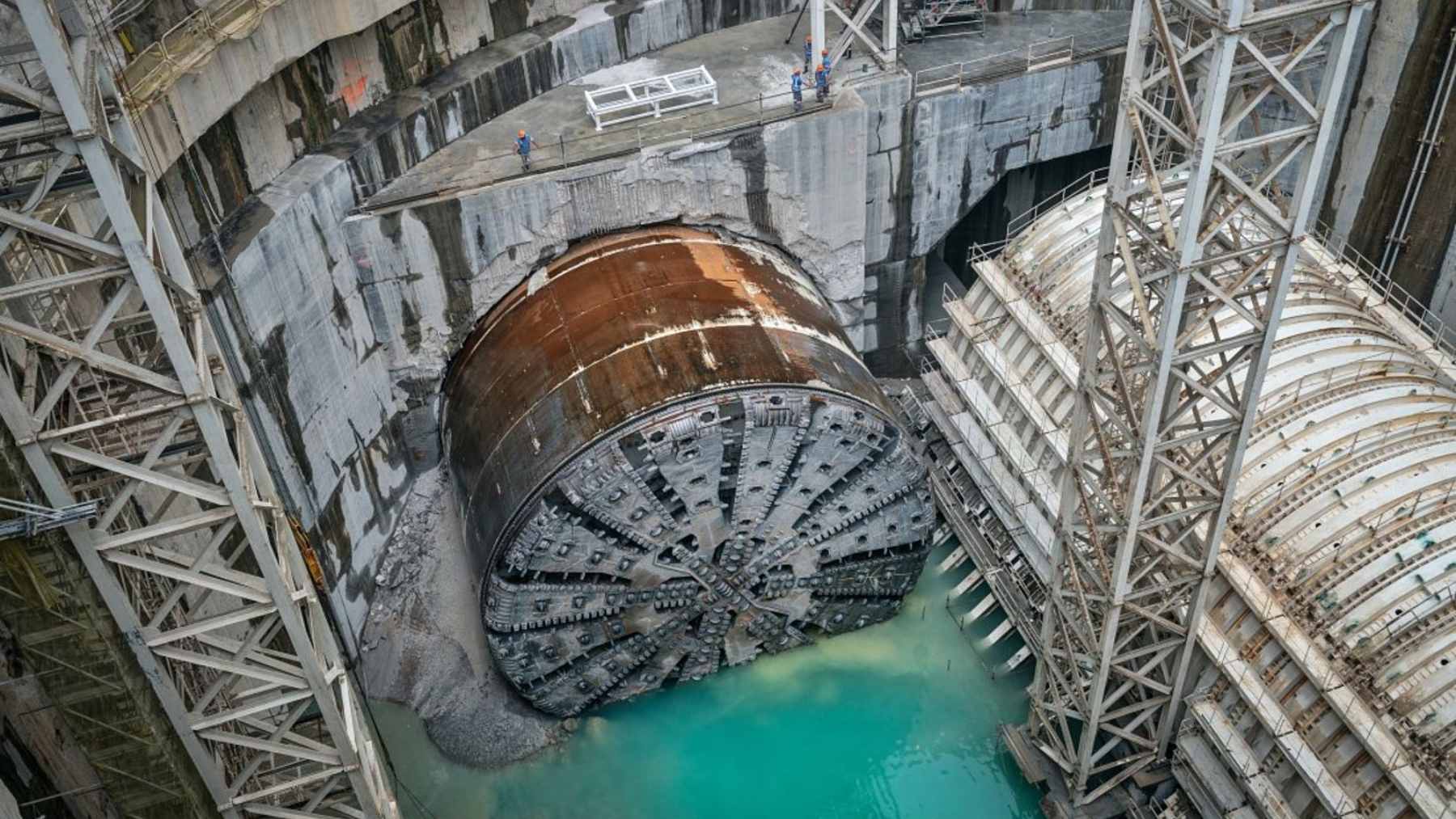
The machine’s 17.63-meter section was excavated between March 25 and November 3, 2015. After that, its shield was converted to 14 meters so it could help complete the remaining tunnel work alongside another Herrenknecht machine. The two 14-meter machines broke through on February 27, 2019.
Why it still matters
At the end of the day, the S-880 shows where modern infrastructure is heading. Cities want faster routes, but they also face tighter environmental rules, crowded coastlines, and public pressure to reduce construction disruption.
Still, bigger is not automatically better. Machines like this are expensive, energy hungry, and technically demanding. The environmental case depends on the project, the geology, and what the alternative would have done to the seabed.
Not just a huge machine
The Tuen Mun-Chek Lap Kok Link Northern Connection opened to the public on December 27, 2020, according to the Highways Department. The Southern Connection had already begun opening in 2018, tying the route into the broader Hong Kong-Zhuhai-Macao Bridge network.
So the real lesson may be simple: sometimes the biggest machine is not just the loudest symbol of construction. Used carefully, it can also be a tool for building with fewer scars on the landscape beneath the water.
The official engineering feature note was published on Hong Kong Highways Department.