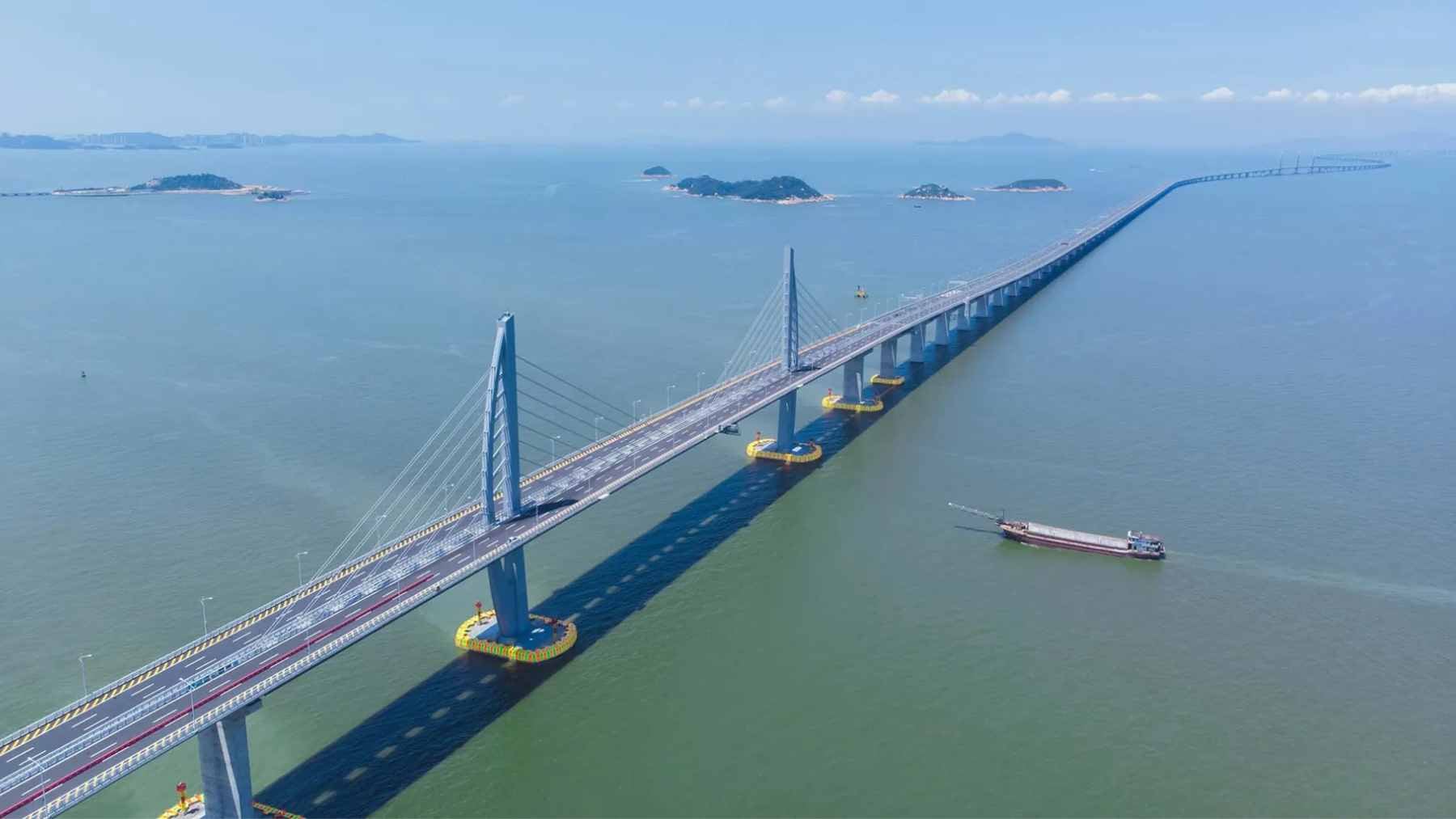
The Hong Kong–Zhuhai–Macao Bridge is the kind of project that makes your brain do math. It stretches 34 miles across the Pearl River Delta, and it can get you from the Hong Kong port to Zhuhai or Macao in about 40 minutes.
China’s state media put the investment at ¥126.9 billion (about $18.3 billion), pitching the bridge as a faster way to stitch the Greater Bay Area together. But what happens when a new transport artery runs through the home range of the Indo-Pacific humpback dolphin, better known locally as the “Chinese white dolphin”?
A business superhighway over open water
For businesses, the appeal is time you can actually plan around. The bridge operates 24 hours a day and is promoted as a link that puts major Pearl River Delta cities within a three-hour commute from Hong Kong, which reshapes everything from meeting schedules to same-day deliveries.
It is also a border checkpoint built into a highway. Arup says the Hong Kong Boundary Crossing Facilities sit on a new artificial island next to Hong Kong International Airport and process cars, coaches, and goods vehicles traveling between Hong Kong, Zhuhai, and Macao.
A megaproject built with tech thinking
On paper, the bridge is not a single span at all. Arup describes a main section made up of three navigation channel bridges (Jiuzhou, Jianghai, and Qingzhou), plus a 4.2-mile underwater tunnel and artificial islands, a setup meant to keep shipping lanes moving while meeting tight airspace constraints near the airport.
Arup’s technical write-up reads less like old-school civil works and more like industrial manufacturing. It describes thousands of precast bridge deck segments and other prefabricated components, alongside construction choices intended to limit hydrodynamic disruption and overall environmental impact.
The dolphins were never just a side note
So what does “minimizing impact” look like in concrete and steel? Arup says “single column” piers with pile caps buried in the seabed were used to minimize obstruction to water flow and limit impacts on Chinese white dolphin habitat, and it also highlights “non-dredged” reclamation methods that leave marine sediment in place.
Still, those design choices have not erased the broader pressure on dolphin habitat around Lantau.
A 2025 CUHK study using data from 1996 to 2020 reports Hong Kong’s Chinese white dolphin population fell from 158 in 2003 to 37 in 2020, and it links the sharpest declines in northern Lantau waters to land reclamation, high-speed vessel traffic, and water pollution that includes the bridge’s artificial island.
Monitoring shows how thin the margin is
The latest official monitoring adds numbers to a debate that has been running for decades in Hong Kong. A government-backed report covering April 2024 to March 2025 logged 119 vessel surveys and 162 dolphin groups, but it estimates the combined dolphin abundance across key Hong Kong survey areas in 2024 at 38 animals.
North Lantau is where the trend turns stark. The same report says annual estimated abundance there has been in single digits since 2018, including an estimate of one dolphin in 2024, compared with the highest annual estimate of 102 dolphins in 2003.
A separate peer-reviewed look closer to the bridge footprint complicates the picture.
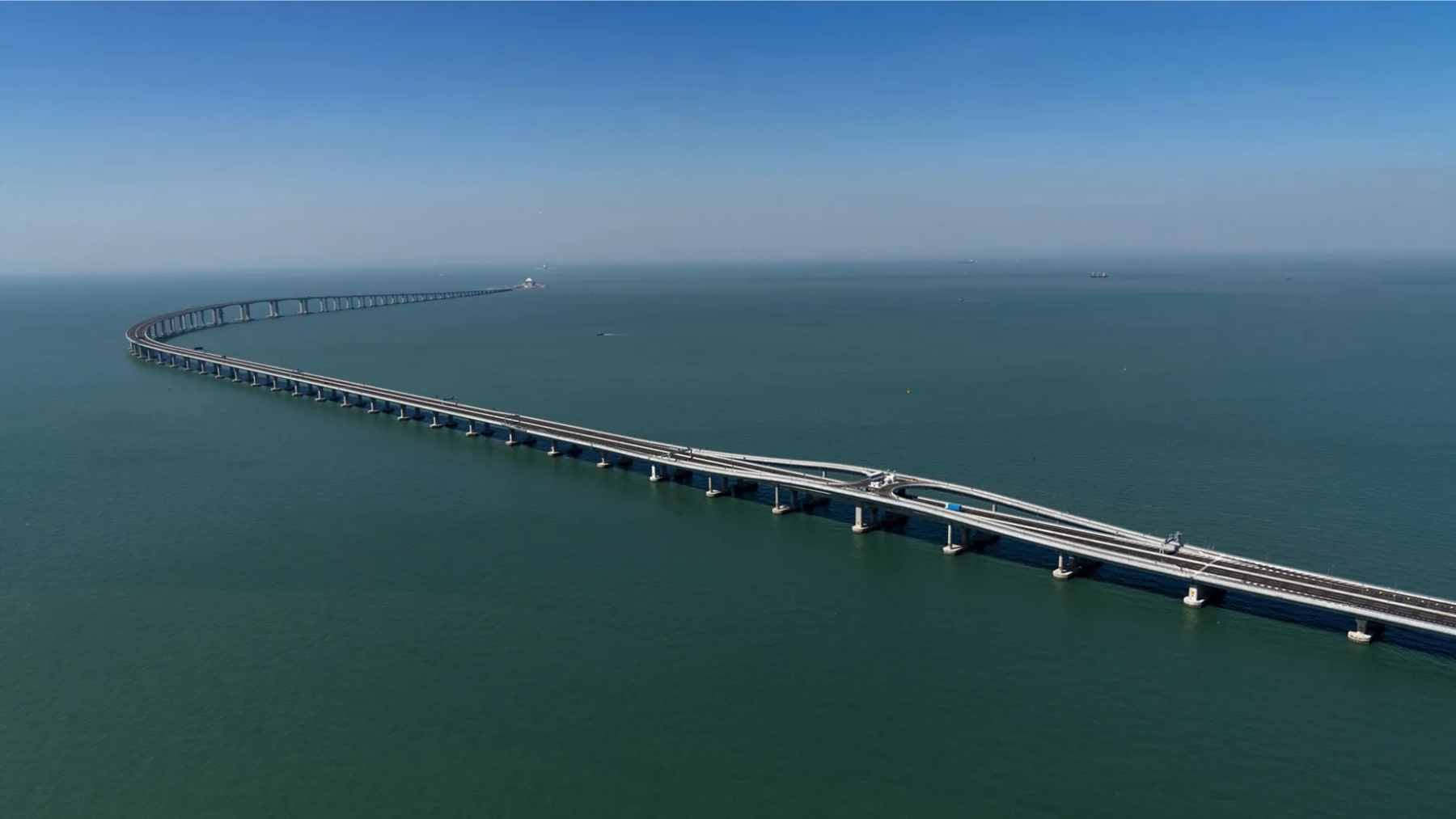
A 2024 study in Frontiers in Marine Science found humpback dolphins in Lingding Bay were sighted closer to the bridge after construction and that identified individuals still traversed underneath it, while noting possible confounding effects from COVID-era reductions in human activity and a vessel buffer zone of about 3 miles that restricts traffic near the bridge.
Where environment, resilience, and security overlap
Here is the part that rarely makes the glossy brochures: Arup notes the bridge structures were designed for a 120-year life with seismic isolation features such as friction pendulum bearings, and parts of the alignment were shaped by aviation and helicopter safety constraints near the airport.
For defense planners and emergency responders, that kind of resilience is not abstract.
The same Frontiers study notes that vessel activity is restricted in bridge waters and within a buffer zone except for cases such as emergency disposal and official duties, which shows how safety rules can also change the soundscape and boat traffic that dolphins experience. Big bridges are easy to measure in miles.
The official monitoring report was published on Hong Kong’s Agriculture, Fisheries and Conservation Department.