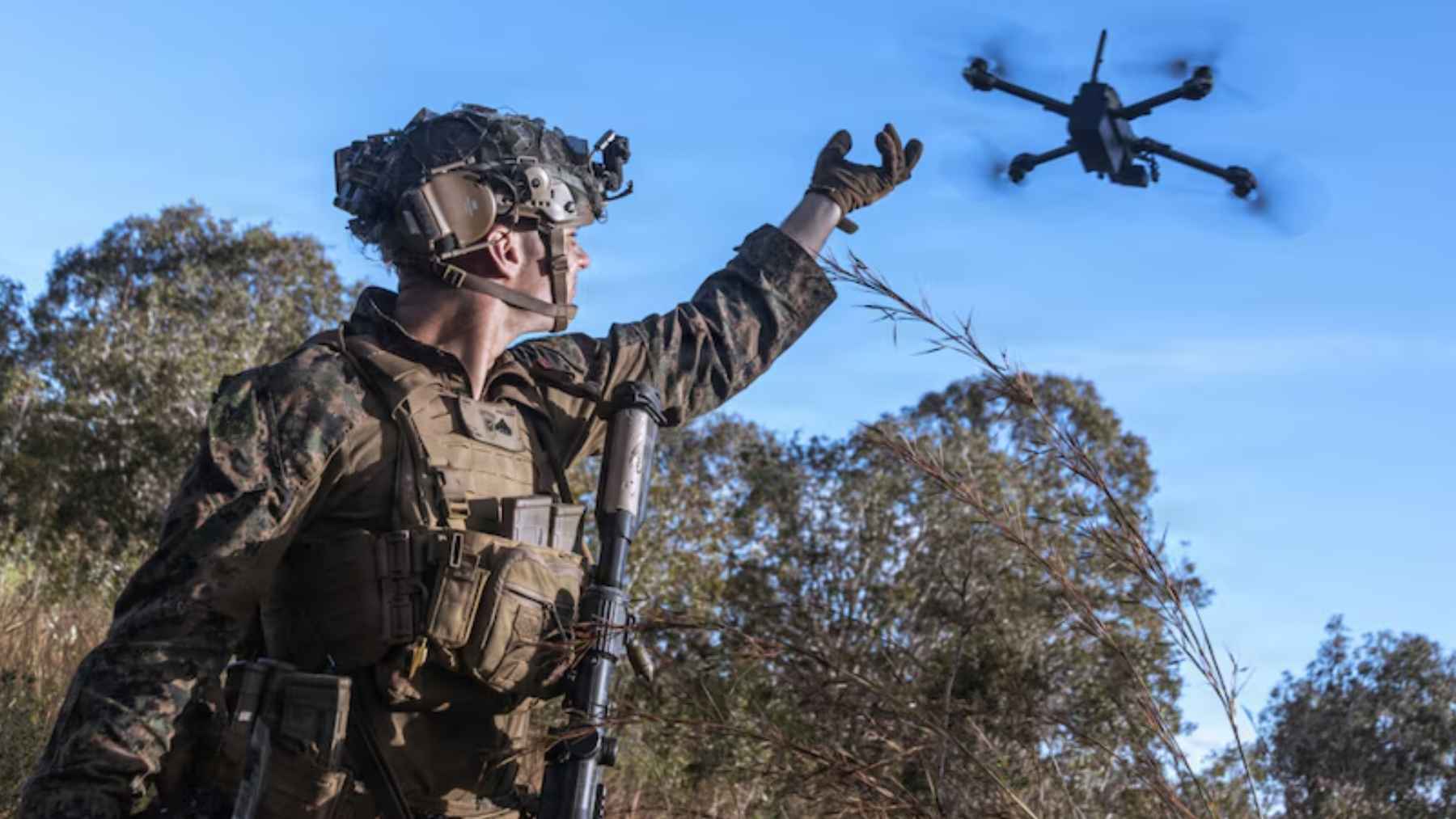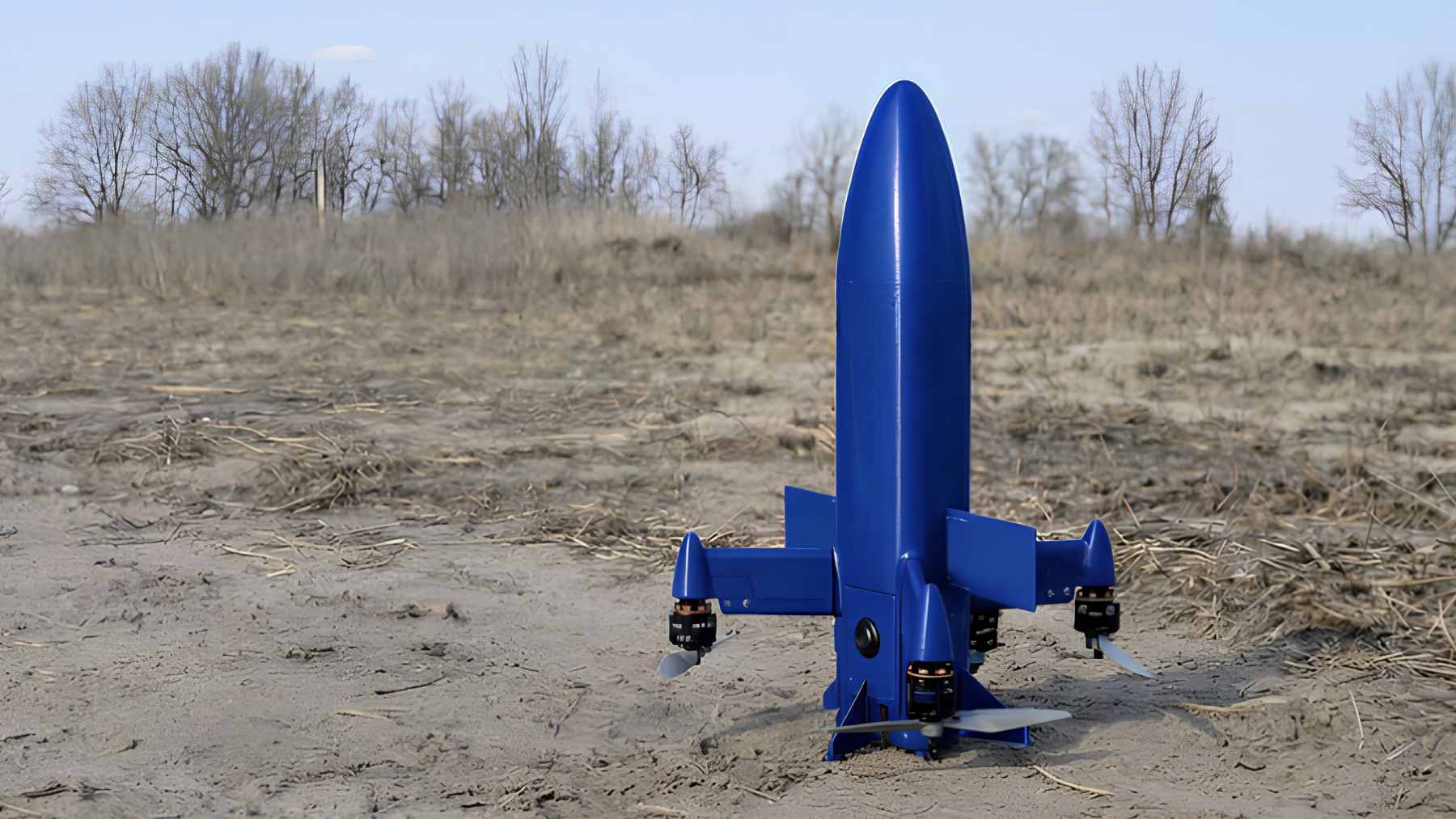
Japan’s Terra Drone says its Terra A1 interceptor is now being deployed with a Ukrainian unit, and the company has released footage it says shows a successful interception of a long-range unmanned threat. For military planners, the takeaway is straightforward: air defense is being rebuilt around cheap, mass-produced machines.
For the rest of us, there’s another takeaway that rarely makes the headline. If drone defense scales the way smartphones did, the environmental footprint shifts from fuel to batteries, circuit boards, and piles of damaged hardware. What happens when “battlefield tech” starts to look like e-waste?
A cheap interceptor changes the math
Reuters reported the Terra A1’s price at 400,000¥ (about $2,526), a fraction of the roughly $4 million cost often cited for a Patriot interceptor. Terra Drone CEO Toru Tokushige summed up the new reality with one line, saying “everyone started doing the maths.”
Terra Drone says Terra A1 can cover about 32 km (20 miles) and reach around 300 km/h (185 mph), using electric propulsion for lower noise and heat signatures.
The company began operational deployment in Ukraine in mid-April and now says the system has performed under actual operational conditions, though independent verification is naturally limited by the fog of war.
Electric drones are not automatically green
An electric drone has no tailpipe, so it can feel cleaner in the moment, especially near cities and power plants. Terra Drone frames electric propulsion as part of a stealth package, not a climate feature, but the environmental side still matters.
Batteries and electronics depend on critical minerals, and that supply chain brings land and water impacts that do not show up on a battlefield video.
The International Energy Agency says scaling recycling could reduce the need for new mining by about 25% to 40% by 2050 in a scenario aligned with national climate pledges, and it estimates recycled battery minerals can carry far lower emissions than mined material. If your house has a drawer full of dead chargers, you already understand the basic challenge.
Drone strikes can create pollution crises
Precision does not guarantee a clean result when targets include fuel and chemicals. In Russia’s Black Sea port of Tuapse, Ukrainian drone strikes on an oil refinery and port sparked toxic smoke and spills, and Reuters reported more than 13,300 cubic meters of fuel oil and contaminated soil had been cleared.
Ukraine’s own environment is under heavy strain, even when some emissions fall because industry slows.
A United Nations Environment Programme review described a multi-dimensional environmental crisis, and the European Commission’s Joint Research Centre has warned of rising toxic pollution risks linked to the war. The pollution bill does not vanish, it just shows up in different places.
Japan’s drone push is also demographic
Japan’s interest in unmanned systems is not only about lessons from Ukraine. A Brookings analysis found Japan’s Self-Defense Forces were at about 89.1% of authorized strength as of March 2025, with the Ground Self-Defense Force at 87.7% and lower enlisted staffing at 60.7%. The same analysis projects Japan’s recruitment-age population could fall about 30% by the mid-2040s.
In that context, Japan has moved to institutionalize unmanned warfare inside the Ground Self-Defense Force, with reports describing new offices focused on operations and acquisition.

The Diplomat reported Tokyo planned to allocate about ¥1 trillion through fiscal 2027 to procure several thousand unmanned systems. That scale matters because a bigger fleet also means a bigger stream of batteries, sensors, and broken parts to manage.
Exports could globalize the waste problem
Japan is widening the market for defense hardware. Reuters reported Tokyo overhauled export rules by scrapping older limits that largely kept exports to five noncombat categories, allowing overseas sales of lethal systems under case-by-case screening.
Demand is already pulling the supply chain outward. Reuters reported Gulf states were eyeing the low-cost Terra A1 as Iranian drone attacks drain missile stocks, and it noted Terra Drone’s regional footprint through work with Aramco, including talk of localizing production.
When production, use, and disposal happen in different countries, environmental accountability can get blurry fast.
What to watch for next
The world is already struggling with electronics waste. The ITU’s Global E-waste Monitor says 136 billion lbs. of e-waste were generated in 2022 and only 22.3% was documented as formally collected and recycled, and the World Health Organization warns that informal handling can release hazardous substances into the environment.
If drones become a mass, semi-disposable layer of defense, governments and companies will need rules that treat them like high-risk electronics, not just “hardware.” Contracts can require battery take-back, traceable recycling, and designs that are easier to disassemble, plus serious cleanup planning when drones help ignite industrial sites.
The press release was published on Terra Drone.