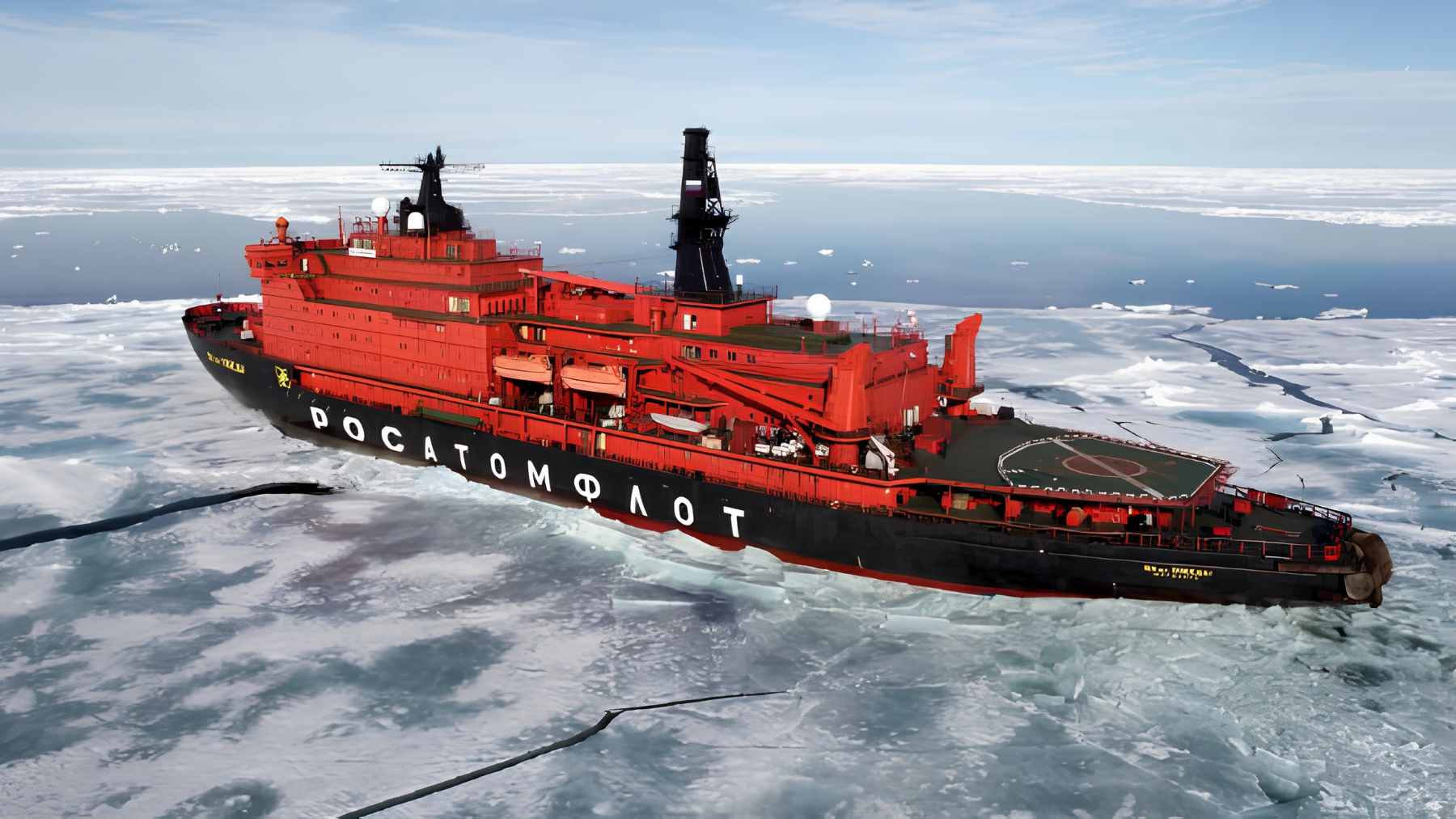
Have you ever wondered what keeps a Liquefied Natural Gas (LNG) tanker moving when the sea around it turns into a hard white wall? In Russia’s Arctic, the answer is not one powerful ship, but an entire nuclear fleet.
Russia has deployed all eight of its nuclear-powered icebreakers at the same time, a first for the Northern Sea Route. The move is meant to keep oil, LNG, and industrial cargo moving through the Gulf of Ob and the Yenisei Gulf after ice formation began about two weeks earlier than in 2024.
A full fleet at work
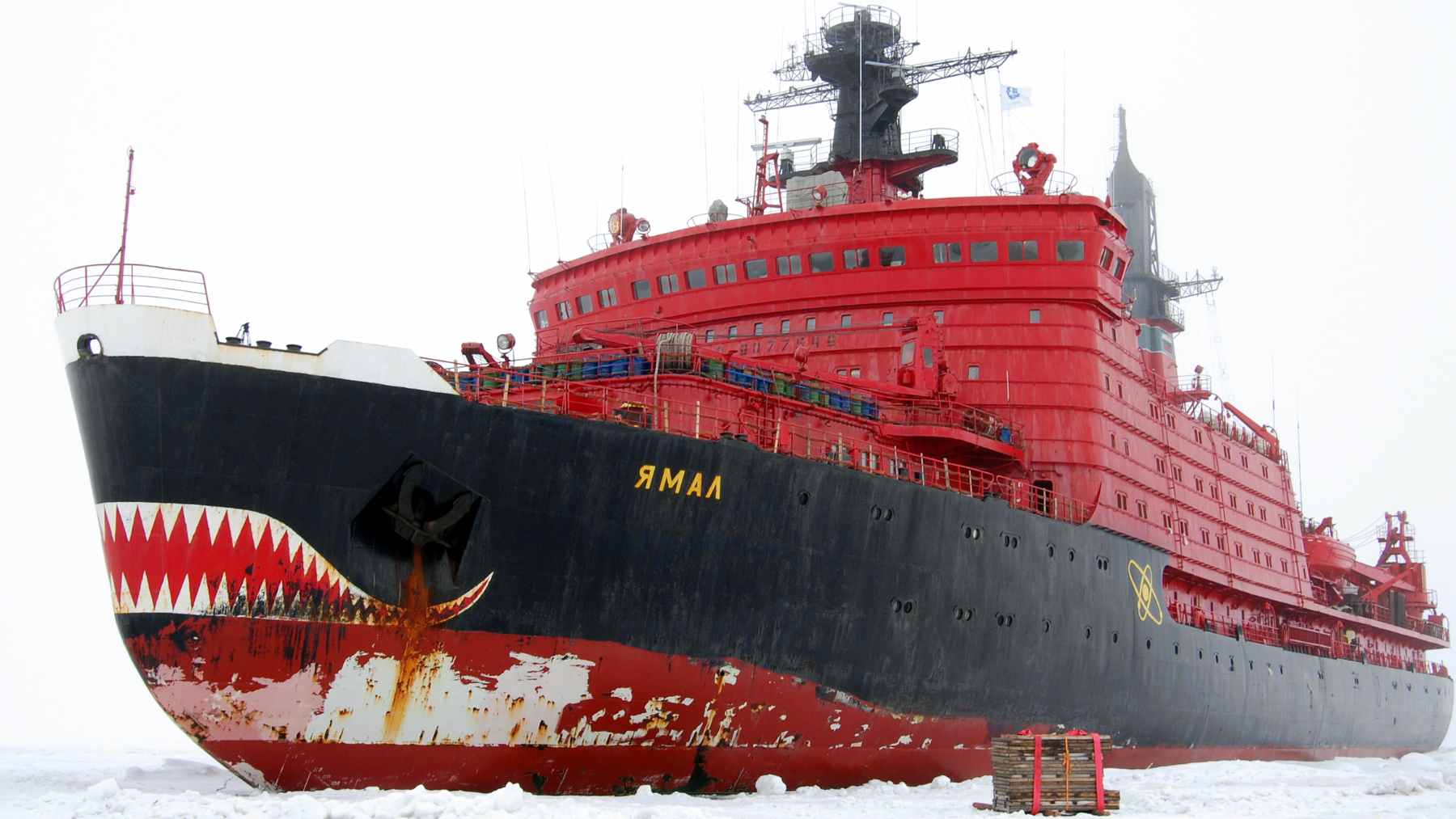
The ships are not spread out randomly. Taymyr, Yamal, Arktika, Yakutiya, Sibir, and 50 Let Pobedy have been working in the Gulf of Ob, while Ural and Vaygach were assigned to the Yenisei Gulf and Yenisei River.
That split matters because these waters lead to some of Russia’s most important Arctic export sites, including Yamal LNG, the Arctic Gate oil terminal, and industrial cargo linked to Norilsk Nickel. In practical terms, the icebreakers are clearing the driveway for Russia’s northern energy economy.
Why the rush now
Rosatom chief Alexei Likhachev had already signaled the scale of the operation in November. “From the beginning of December all eight icebreakers will take up their routes,” he said, according to reporting carried by Russian maritime outlet Flagman News.
This is not just about bad weather, though. The European Union adopted its 19th sanctions package in October 2025, including a phased ban on Russian LNG imports, with long-term contracts set to end from January 1, 2027. The EU then formally adopted a broader regulation in January 2026 to phase out Russian pipeline gas and LNG.
The ships behind the move
Russia’s nuclear icebreaker fleet is a mix of old and new. The newer Project 22220 vessels include Arktika, Sibir, Ural, and Yakutiya, while Chukotka, Leningrad, and Stalingrad are still under construction.
These vessels are built for a punishing job. Project 22220 icebreakers use two RITM-200 reactors and can break through ice up to about 3 meters thick, which is why Moscow sees them as essential for year-round Arctic shipping.
The numbers are colder
Even with all that power, the Northern Sea Route is not booming the way Moscow once hoped. Cargo volumes fell to 41 million tons in 2025, down 2.3% from the year before, and energy cargoes still dominate the route.
LNG accounted for 58% of total volumes, oil for 21%, and gas condensate for roughly 4%. That tells the real story here. This is not just a shipping lane, it is a frozen energy corridor.
A risky Arctic tradeoff
There is an environmental contradiction sitting in plain sight. Nuclear-powered ships are being used to keep fossil fuel exports moving through one of the world’s most fragile regions.
That does not make the operation simple or safe. Analysts have warned that pushing older nuclear icebreakers harder can bring technical and environmental risks, especially in remote Arctic waters where emergency response is limited.
What happens next
Russia gains wider winter shipping windows and a stronger route toward Asian buyers. But it also faces aging ships, sanctions pressure, vessel shortages, and increasingly unpredictable Arctic ice conditions.
To sum it all up, the full deployment looks less like a victory lap and more like a pressure gauge. The Northern Sea Route is becoming a place where climate, energy, technology, and geopolitics collide in real time.
The official update was published on Rosatom Newsletter.