The Pentagon is setting the stage for a major surge in mass-produced cruise missiles, and it is doing it with a very Silicon Valley-style playbook.
In an official May 13 release, the U.S. Department of War said new framework agreements with Anduril, CoAspire, Leidos, and Zone 5 could support procurement of more than 10,000 low-cost, containerized cruise missiles in three years starting in 2027.
This is mostly being framed as a readiness and deterrence story, but it is also an environmental one. “Affordable mass” still has to be built, shipped, tested, and powered, and that shows up as emissions in the real world.
The Defense Department’s own reporting and outside research both point to a large military carbon footprint, which makes any big new production ramp hard to ignore.
The low-cost missile plan in plain English
The Department of War says the new agreements are meant to “rapidly field” large volumes of “effective and affordable” strike capability. In the release, the Under Secretary of War for Research and Engineering, Emil Michael, framed the push as delivering “affordable mass” at “unprecedented speed.”
The timeline is aggressive. The department plans to buy test missiles from all four companies starting in June 2026, then run an experimentation and assessment campaign that leads to a Military Utility Assessment, with production lots envisioned for 2027 through 2029 under firm fixed-price terms.
There is also a parallel track for hypersonic weapons. The same release says that once Castelion completes testing and validation, the department expects a two-year contract for at least 500 Blackbeard missiles annually, while seeking authority to buy more than 12,000 over five years.
Why shipping containers matter
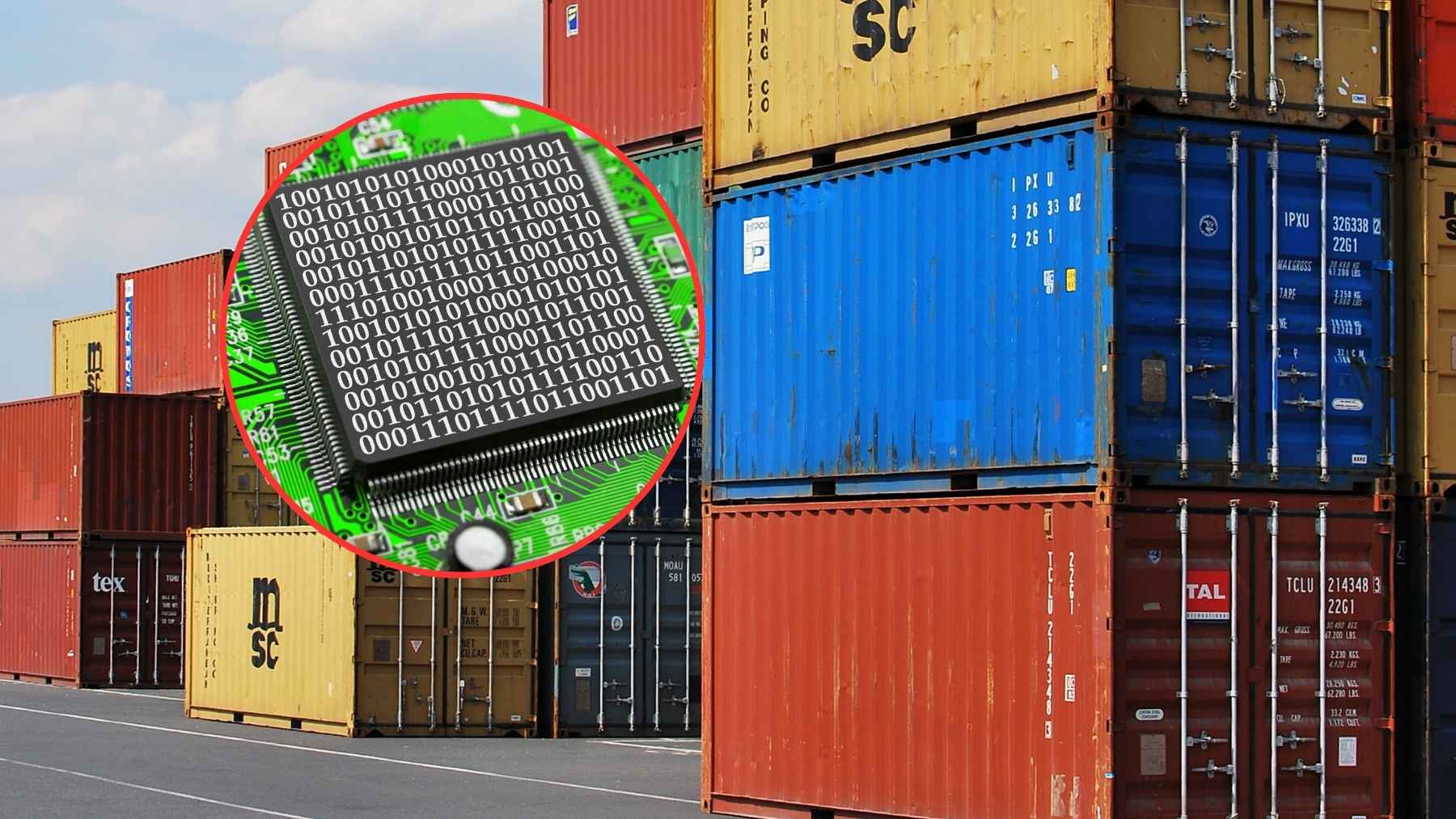
The most eye-catching detail is how “containerized” this really is. Military Times reported that Anduril’s surface launched Barracuda 500M munitions can be built into standard 20-foot shipping containers that hold up to 16 “all-up rounds,” then moved like ordinary cargo to a launch point.
That same reporting says the Barracuda 500M is pitched as a long-range strike option with a range of more than 500 nautical miles and a 100-pound munition payload. Operators can use Anduril’s AI enabled Lattice software or other fire control tools to select targets and coordinate launches.
From an environmental perspective, this design choice cuts two ways. Using standard logistics can reduce the need for specialized on site construction, but it can also increase routine movement of heavy equipment and disperse activity across more locations. Without a published life cycle estimate for this program, it is hard to know where the net footprint lands.
The climate math defense planners rarely show
Climate is the part that often gets left out of the “industrial base” conversation. A Defense Department report on greenhouse gas emissions says total DoD emissions were 61 million tons of CO2 equivalent in FY2019, with 62% from operational sources, and jet fuel accounting for about 80% of operational emissions.
Academic work suggests the longer-term totals are even more striking. A 2025 paper in PLOS Climate notes that, according to DoD reporting, Scope 1 and Scope 2 emissions were over 700 million tons of CO2 equivalent across the 2010 to 2019 decade, and calls that estimate conservative because it excludes at least some Scope 3 emissions.
There is also an important caution about what spending increases can mean. A Scientists for Global Responsibility review synthesizing multiple studies estimates that a standardized $100-billion rise in military spending could add roughly 35 million tons of CO2 equivalent to the military carbon footprint, while emphasizing uncertainty, since military emissions data is often incomplete.
What to watch as production ramps up
The business story here is not subtle. Leidos says it will build an initial 3,000 low-cost containerized munitions and expand facilities in Huntsville, Alabama and McEwen, Tennessee, while leaning on a modular design and a common Weapon Open Systems Architecture approach to scale and upgrade more quickly.
The department is betting that commercial-style speed can translate into military scale. In its release, it says the agreements are designed to move at the speed of commercial industry and lock in “on time, on cost” delivery, with vendors reaching scale in some cases without direct government investment.
The next key moment is June 2026, when test missile buys are expected to start, because that is when the program’s real-world energy and materials footprint begins to harden into contracts and factory schedules.
It is also where pressure for transparency can become practical, especially since the Department of Defense’s climate planning has repeatedly emphasized climate-informed decision making and supply chain resilience.
The official statement was published on War.gov.