Have you ever looked at a sunny apartment balcony and wondered why it cannot do more than hold a chair, a plant, or a drying rack? In Australia, that question is moving from a niche clean-energy debate into a real policy headache.
A small number of renters and apartment residents are already plugging in portable home batteries without official approval, according to Renew Economy. That is illegal under current rules, but it also points to a bigger problem. The rooftop solar boom has helped homeowners cut bills, while many renters are still watching from the sidewalk.
A battery boom with a missing renter
Australia’s home battery market is moving fast. The Clean Energy Regulator said the country had surpassed 400,000 battery systems by mid-May, with 11.4 GWh of usable capacity either validated or pending.
That growth has been helped by the federal Cheaper Home Batteries Program, which is designed to keep discounts around 30% for a range of battery sizes. The program is also expected to support more than 2 million battery installations by 2030.
But here is the awkward part: the households most able to use these incentives are usually the ones with roofs, garages, and permission to install permanent equipment. Renters and apartment residents often have none of those things.
The plug-in shortcut
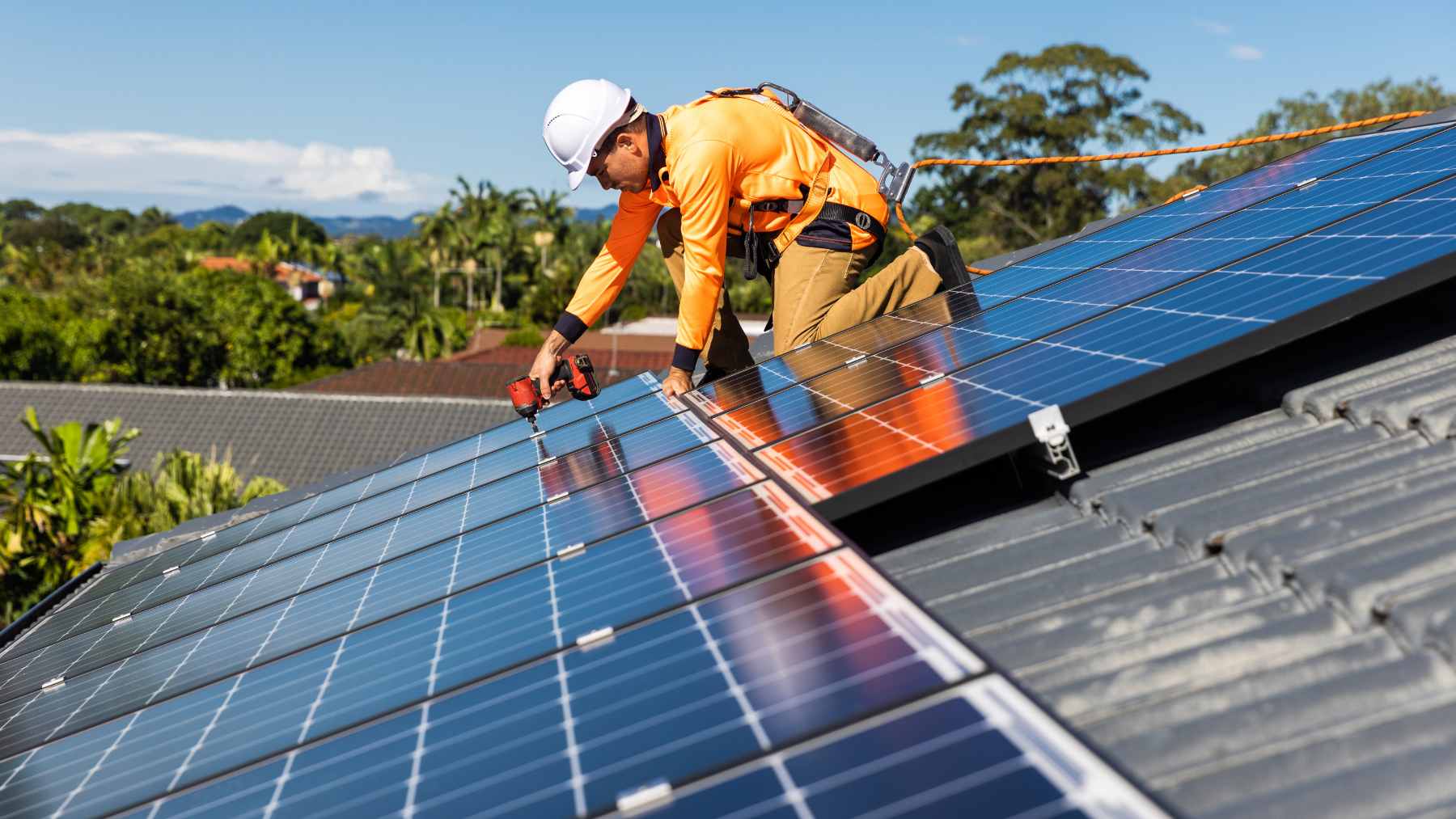
That is where balcony solar and plug-in batteries enter the picture. These systems are usually smaller than rooftop solar setups and are designed to sit on balconies or outdoor spaces, then feed power into a home through approved equipment.
In Australia, campaigners and some companies want a legal pathway for these devices. Renew Economy reports that Anker Solix is among the firms preparing for local interest, especially as free midday electricity programs make small batteries more useful.
Phil Krok, Anker Solix’s sales manager in Australia, told Renew Economy that “Solar Sharer” could unlock the value of this kind of product. For a renter, that could mean charging a battery when power is free and using it later for small appliances, lights, or a laptop.
The safety puzzle
Still, there is a reason regulators are moving carefully. Plugging energy equipment into a home circuit is not the same as plugging in a toaster.
Battery and solar tester Glen Morris has pointed to one major concern involving residual current devices, also known as RCDs. These safety switches are meant to shut off electricity when they detect a fault, but certain direct-current behavior can interfere with older or unsuitable devices.
NSW Government guidance shows why that issue matters. Type AC RCDs have been banned in new Australian installations since May 2023 because they may not detect some modern electrical faults involving direct-current components.
Germany offers a clue
Australia is not starting from scratch. Germany has already made plug-in balcony solar a mainstream part of its energy transition, and the scale is no longer tiny.
Germany’s Federal Network Agency said about 430,000 new plug-in balcony solar systems were registered in 2025. Those systems accounted for about 0.5 GW of new solar capacity, or 3.2% of Germany’s added solar power that year.
That does not mean Australia can copy and paste the same rulebook. Electrical standards differ, housing layouts differ, and apartment buildings bring their own safety and insurance questions. But Germany shows that small solar can move beyond the hobbyist stage when rules are clear.
Free power raises the stakes
The timing is important. Australia’s Solar Sharer Offer will require retailers to offer households with smart meters at least three hours of free electricity in the middle of the day, when solar generation is high. It starts July 1, 2026, in South Australia, New South Wales, and South East Queensland.
Victoria is moving, too. Its Midday Power Saver will begin October 1, 2026, with a free power window from 11 am to 2 pm each day for households on the plan. The Victorian Government says the offer is optional and best suited to households that can shift usage into that window.
In practical terms, that allows running the dishwasher, charging devices, or cooling a home when solar power is abundant. But for renters who are away during the day, a battery could be the missing piece. Charge now, use later–a simple idea with complicated rules.
What happens next
The pressure is now on regulators to draw a line between unsafe DIY behavior and approved plug-in systems that could help more people share the benefits of renewable energy. Doing nothing may not stop demand. It may just push more people toward unofficial products.
The cleanest path would likely involve approved devices, clear installation limits, smart-meter compatibility, landlord and apartment-body rules, and safety protections that electricians can trust.
At the end of the day, this is not just about gadgets on balconies, it is about whether the energy transition works for people who do not own a roof.
For now, renters should not treat overseas-approved devices as automatically legal or safe in Australia.
The official statement was published on Energy.gov.au.