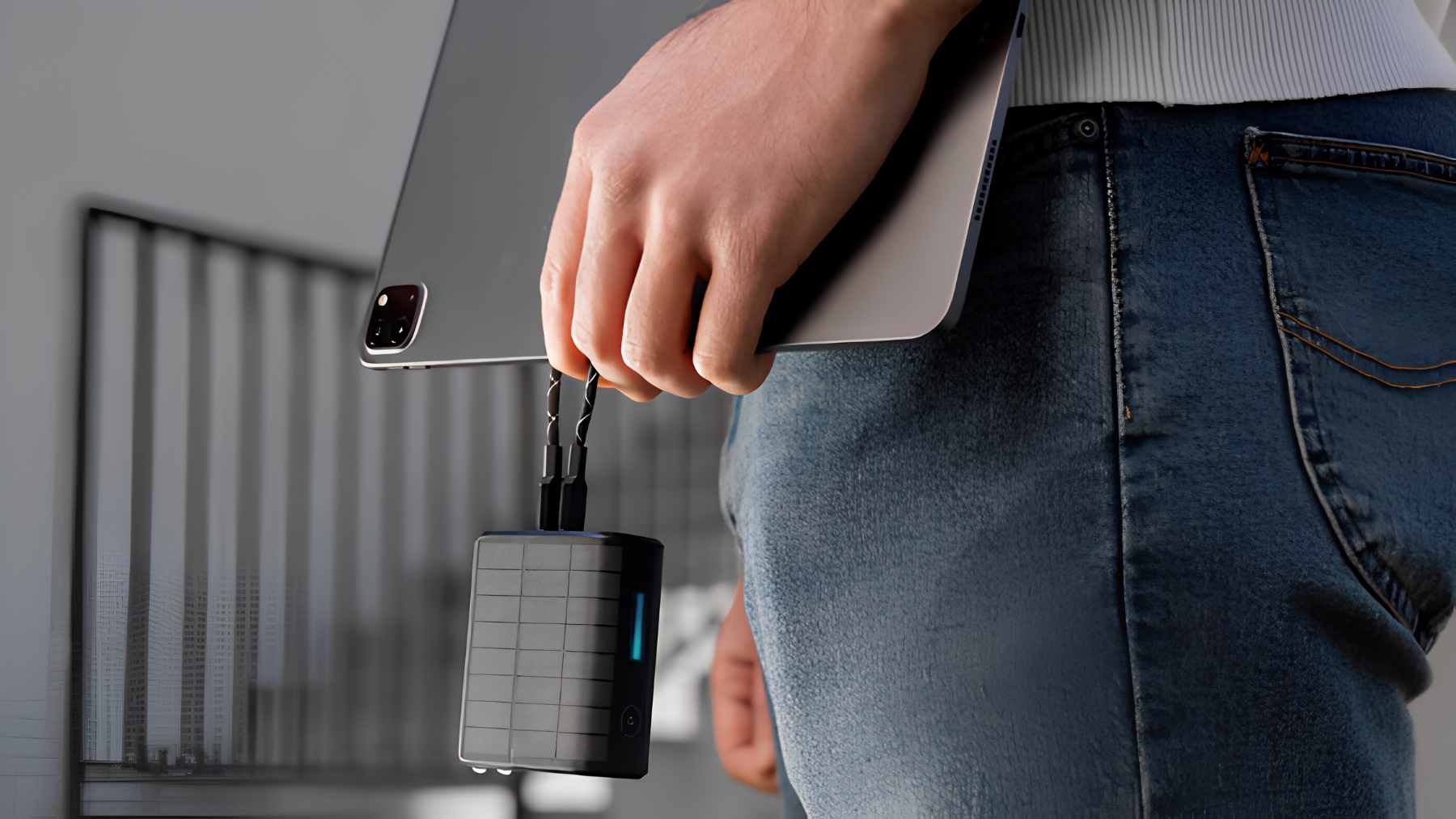
Portable power used to mean keeping a phone alive for a few extra hours. Solly is now pitching something much bigger with a solar power bank that combines 20,000 mAh of capacity, up to 300 W of output, fast USB-C charging, a built-in wall charger, and an integrated solar panel.
The point is not hard to understand. More people work from laptops, travel with several devices, and rely on cameras, drones, tablets, and phones every day. When the outlet disappears, whether during a blackout, a long trip, or a summer afternoon at a campsite, the little details suddenly matter.
More than a phone charger
The Solly campaign presents the device as a 20,000 mAh power bank with a built-in 110 V and 220 V wall charger, dual 140 W USB-C ports, and a 20 W USB-A port. The listed total output reaches 300 W, which puts it in a different category from the small backup batteries many people keep in a drawer.
In practical terms, the product is aimed at laptops as much as phones. Solly says it can support devices such as notebooks, smartphones, tablets, cameras, drones, and other small electronics.
That matters for remote workers and creators who move from airport gates to coffee shops to hotel rooms. Nobody wants to hunt for a wall outlet while the battery icon turns red.
Solar is the backup plan
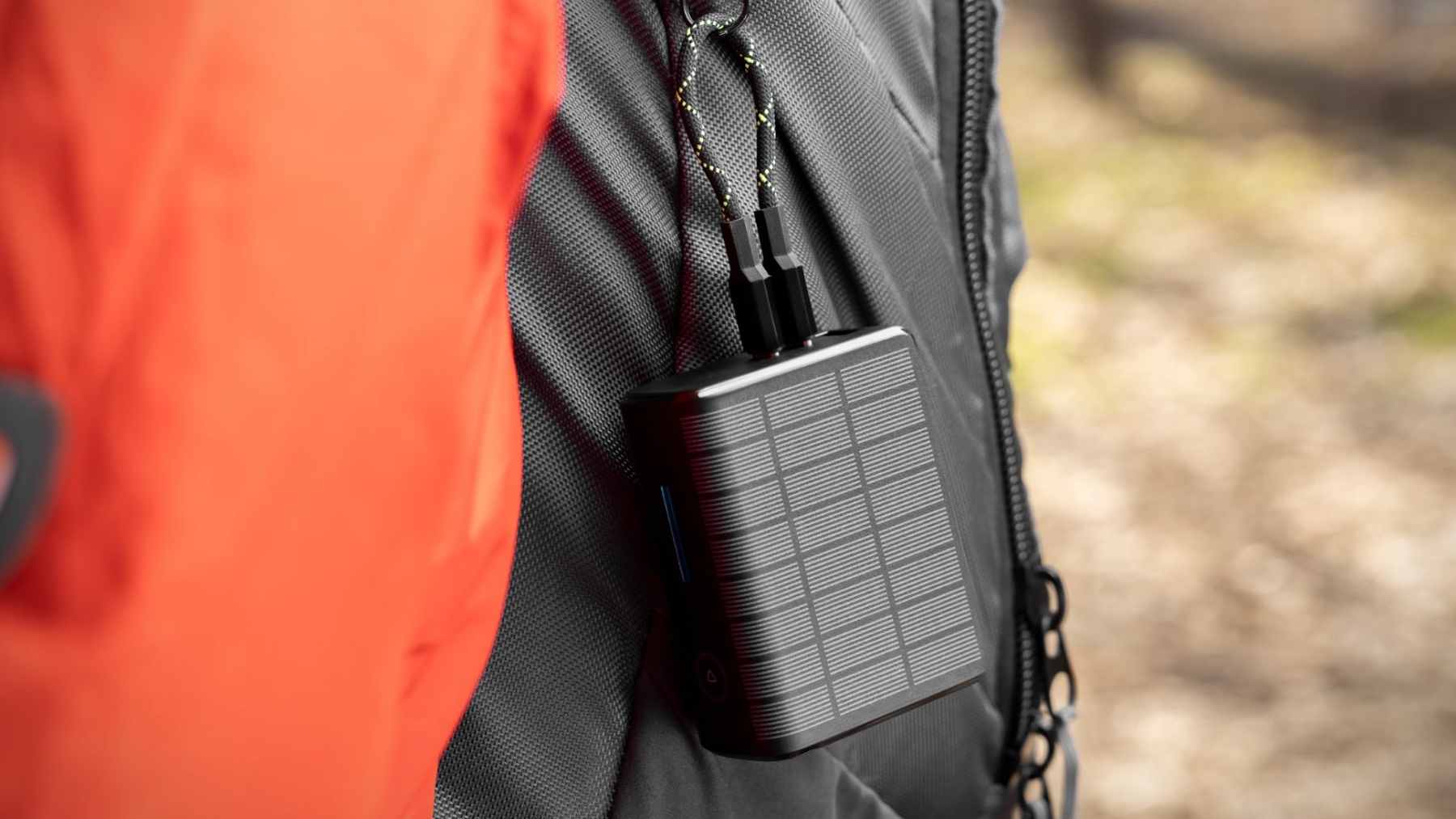
The built-in solar panel is the feature that gives the product its environmental angle. According to the available product information, the panel can recover about 800 mAh per hour under ideal sunlight, which means solar charging is useful, but not instant.
So, is this a tiny solar power station in your backpack? Not really. A full solar recharge would take much longer than plugging it into the wall, and sunlight conditions are rarely perfect.
Still, slow power is better than no power in the right situation. During camping trips, long hikes, traffic delays, or outages that drag on longer than expected, even a partial charge can keep a phone, GPS unit, or small camera running.
Fast charging changes the routine
Solly says the unit can fully recharge from a wall outlet in about 26 minutes. That is one of the campaign’s biggest claims, because the waiting time is often what makes high-capacity power banks annoying in everyday use.
The built-in plug also removes one more item from the travel pouch. That sounds all too familiar to anyone who has packed three cables, two adapters, and still forgotten the right charger.
There is a fair note of caution here. Until independent reviewers test the final retail version, the fastest charging numbers should be treated as company claims rather than proven real-world performance.
Travel rules still matter
The campaign describes Solly as airplane-safe, and the tracker page lists the product with that positioning. That is important because travelers need to think in watt-hours, not just mAh, when bringing lithium batteries on flights.
The FAA says rechargeable lithium-ion batteries are generally limited to 100 watt-hours per battery, with larger spare batteries from 101 Wh to 160 Wh requiring airline approval. The TSA also states that spare lithium batteries, including power banks and phone charging cases, must be carried in carry-on baggage.
For most people, that sounds like fine print, but it is the kind of fine print that can decide whether a device gets through airport security or stays behind.
Why this launch stands out
The real appeal of Solly’s design is not one single feature. It is the combination of high output, fast charging, solar backup, multiple USB ports, a built-in wall plug, and a travel-adapter style design.
That mix shows where portable energy is heading in 2026. Power banks are no longer just emergency phone accessories. For the most part, they are becoming small pieces of personal infrastructure.
There is also an environmental story here, but it needs some nuance. A compact solar panel will not replace home electricity or solve the energy transition, yet it can make users more aware of how much power their devices consume and how valuable stored energy becomes when the grid is out of reach.
Crowdfunding comes with caution
Kickstarter and BackerKit list the Solly project as funded and in progress, with the campaign running from April 28, 2026, to June 8, 2026. The product has drawn attention from backers because it promises a lot in a compact package.
But crowdfunding is still crowdfunding. Production schedules can shift, final specifications can change, and buyers should read campaign updates carefully before treating any launch date as guaranteed.
Even so, the idea behind Solly is easy to see. As work, travel, and daily life become more device-heavy, portable power is moving from convenience to necessity.
The official campaign was published on Kickstarter.