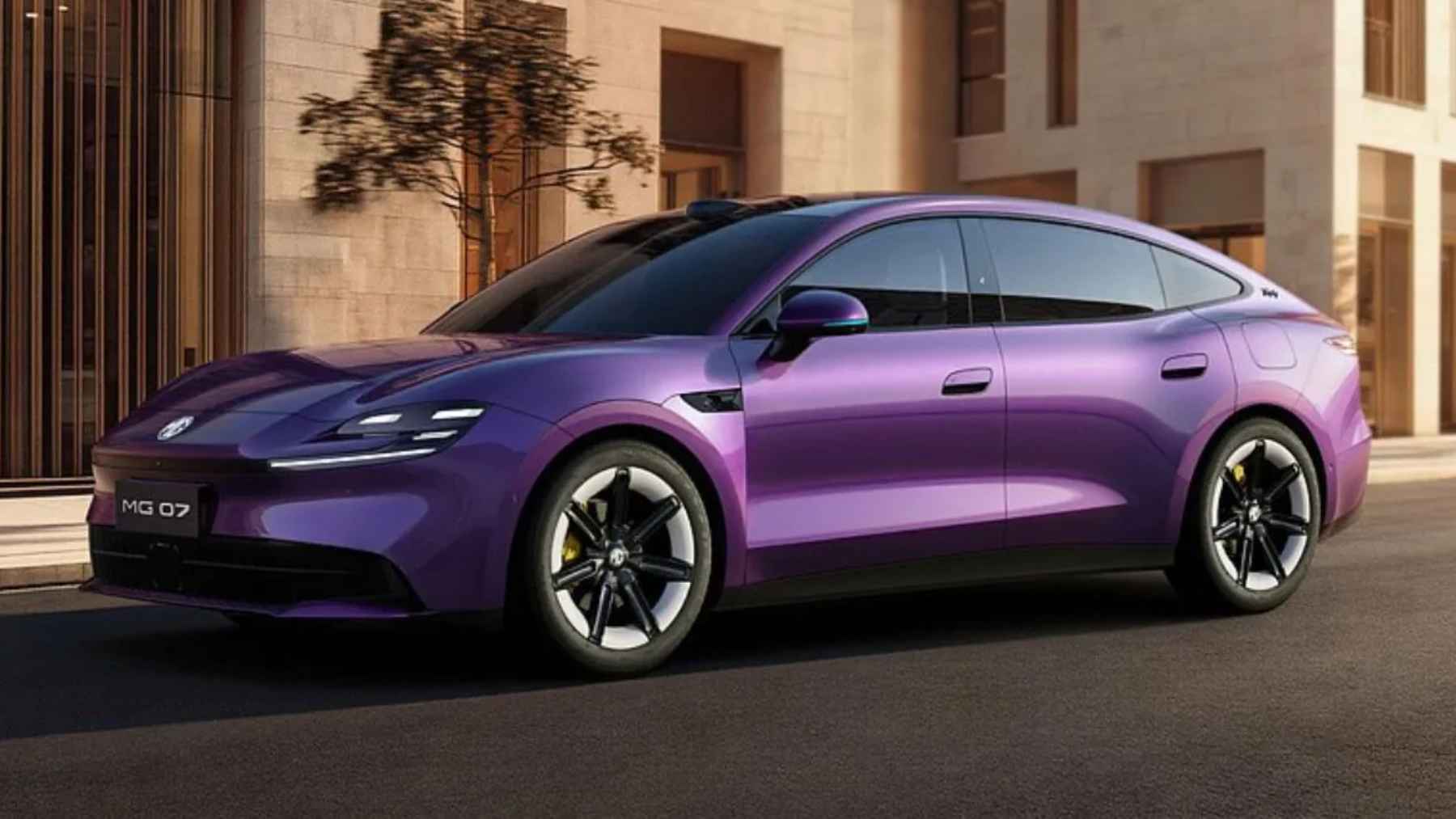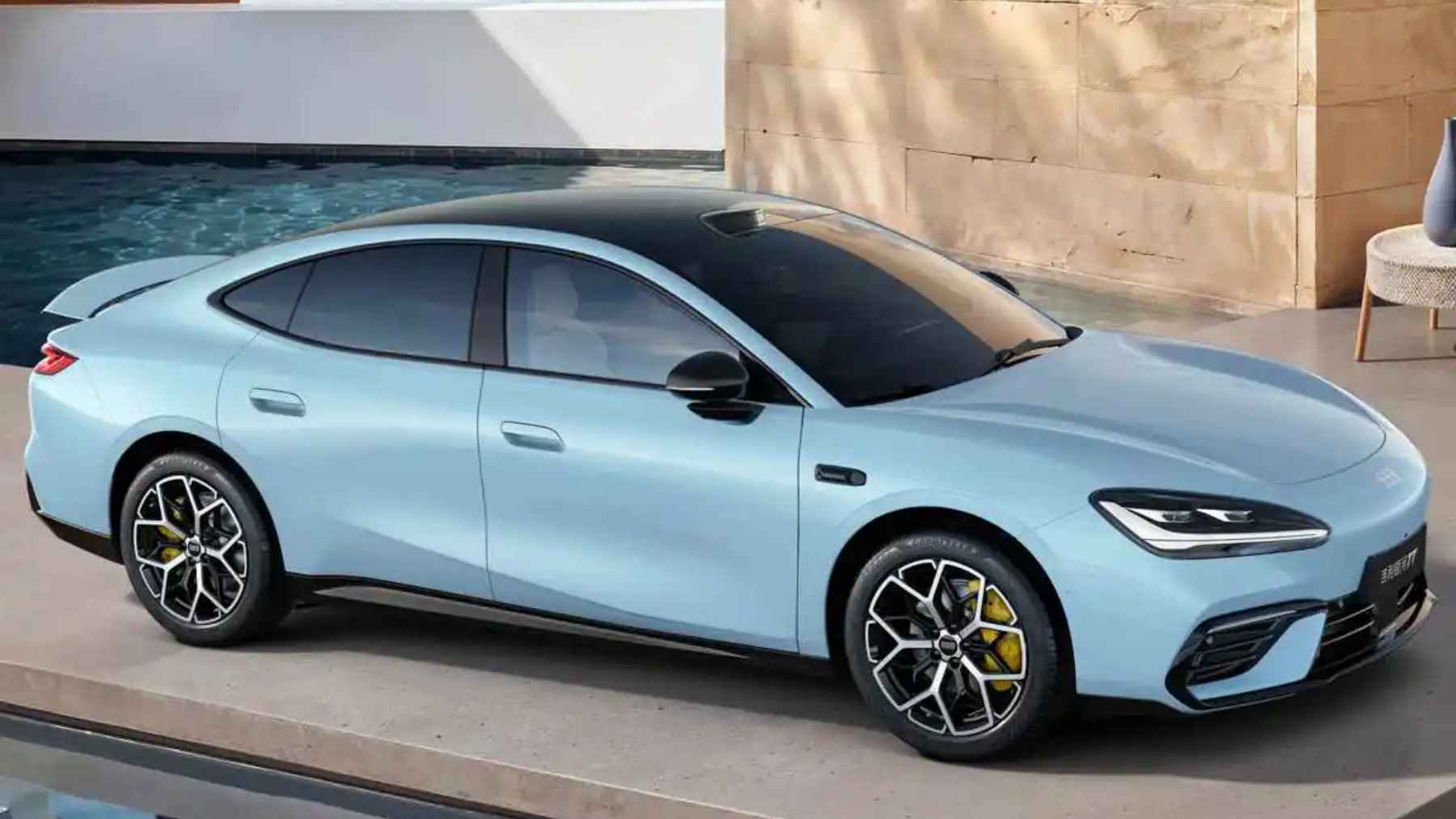
Geely is betting that the next stage of the electric-car race will not be won by installing the biggest possible battery. Its new Galaxy TT sedan is rated for as much as 450 miles under China’s CLTC cycle while using a 75.2-kWh pack, putting efficiency rather than battery bulk at the center of the story.
The key hardware is a new 16-in-1 Intelligent E-Drive developed with InfiMotion. The compact 800-volt unit weighs 165 pounds and helped a production TT record energy consumption equivalent to about 7.6 miles per kWh during a run around Qinghai Lake, according to Geely. That is a striking number, but the test conditions matter.
A long-range claim from a modest battery
Geely plans three battery options with capacities of 52.4, 63.8, and 75.2 kWh. Depending on the version, the official CLTC ranges work out to roughly 336, 398, 404, or 450 miles, with the longest-range configuration using the largest pack.
At face value, the flagship rating equals almost 6 miles of travel for every kilowatt-hour stored in the battery. That is especially notable in a sedan nearly 16.4 feet long. Why carry a giant pack if smarter engineering can make each unit of electricity go farther?
Still, the 450-mile figure is not a U.S. EPA rating. EPA testing combines city, highway, aggressive high-speed, hot-weather, and cold-weather cycles, so American readers should not treat the CLTC number as a guaranteed everyday result. Geely also warns that driving habits, road conditions, and climate can change the final result.
What 16-in-1 actually means
The new drive system brings major propulsion and control functions into one package. These include the motor, reduction gear, motor controller, onboard charger, DC-to-DC converter, vehicle controller, battery management hardware, and software for energy, charging, motion, and system health.
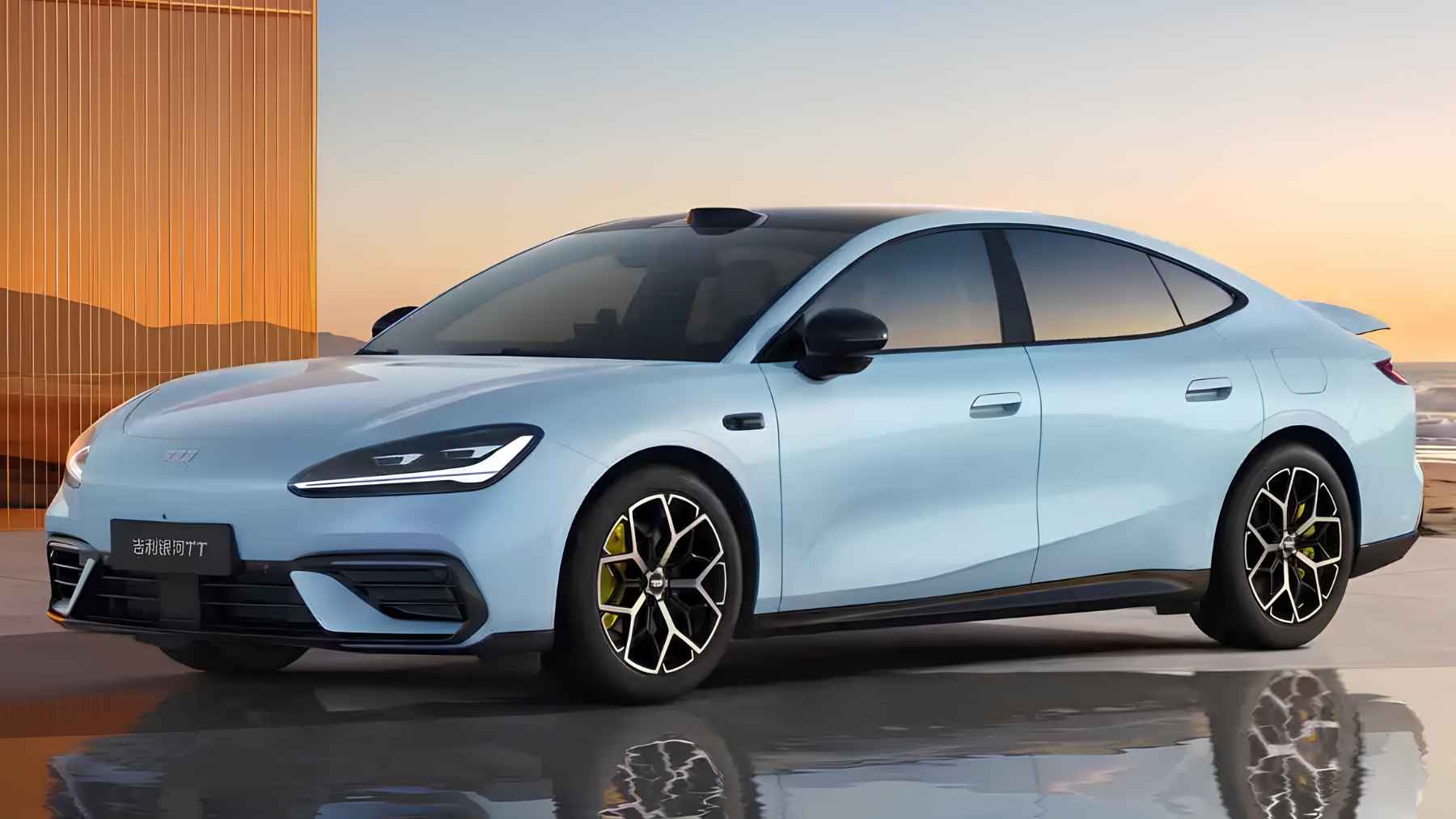
Bringing those pieces closer together can shorten electrical paths, reduce separate housings and wiring, and free up installation space. Geely uses a magnesium-alloy casing to keep the unit at 165 pounds, while the U.S. Department of Energy notes that lighter EV components can improve range or allow manufacturers to use smaller, lower-cost batteries.
Geely reports a comprehensive efficiency of 93.8% on the CLTC cycle. That is a company-reported test-cycle figure rather than a promise that the system will deliver the same efficiency in every situation. Even so, small reductions in electrical and mechanical losses matter because wasted energy becomes heat instead of motion.
The Qinghai Lake record needs context
During the Qinghai Lake challenge, the Galaxy TT consumed electricity at a rate equivalent to about 7.6 miles per kWh. Guinness recognized the specific achievement as the lowest energy consumption by a production battery-electric sedan while circumnavigating the lake.
That wording is important. The result came from one route and one set of conditions, not every possible combination of traffic, speed, temperature, elevation, tires, and climate-control use. A driver creeping through a warm city will see a different number from someone pushing into a winter headwind on the highway.
The record nevertheless shows what the hardware can do when the full vehicle is optimized. It also shifts attention away from battery capacity alone. Range is not just a bigger-tank contest.
Speed did not disappear
Efficiency does not mean the Galaxy TT is slow. Geely says the dual-motor all-wheel-drive version produces about 570 horsepower and reaches 62 mph in 3.8 seconds, placing it firmly in performance-car territory.
The system uses integrated control and AI-assisted torque management to adjust power more quickly and precisely. A 54-channel directional cooling design can lower the motor’s maximum temperature by as much as 27 degrees Fahrenheit during sustained high-load operation, while active lubrication helps protect the shafts and gears.
Geely also claimed a second Guinness title after two TT vehicles completed a continuous twin-vehicle drift of more than 28.6 miles on a wet surface. That stunt will not reduce anyone’s charging bill, but it placed heavy demands on torque response, cooling, and control stability. It was a stress test dressed up as a spectacle.
Smaller batteries could have a bigger environmental payoff
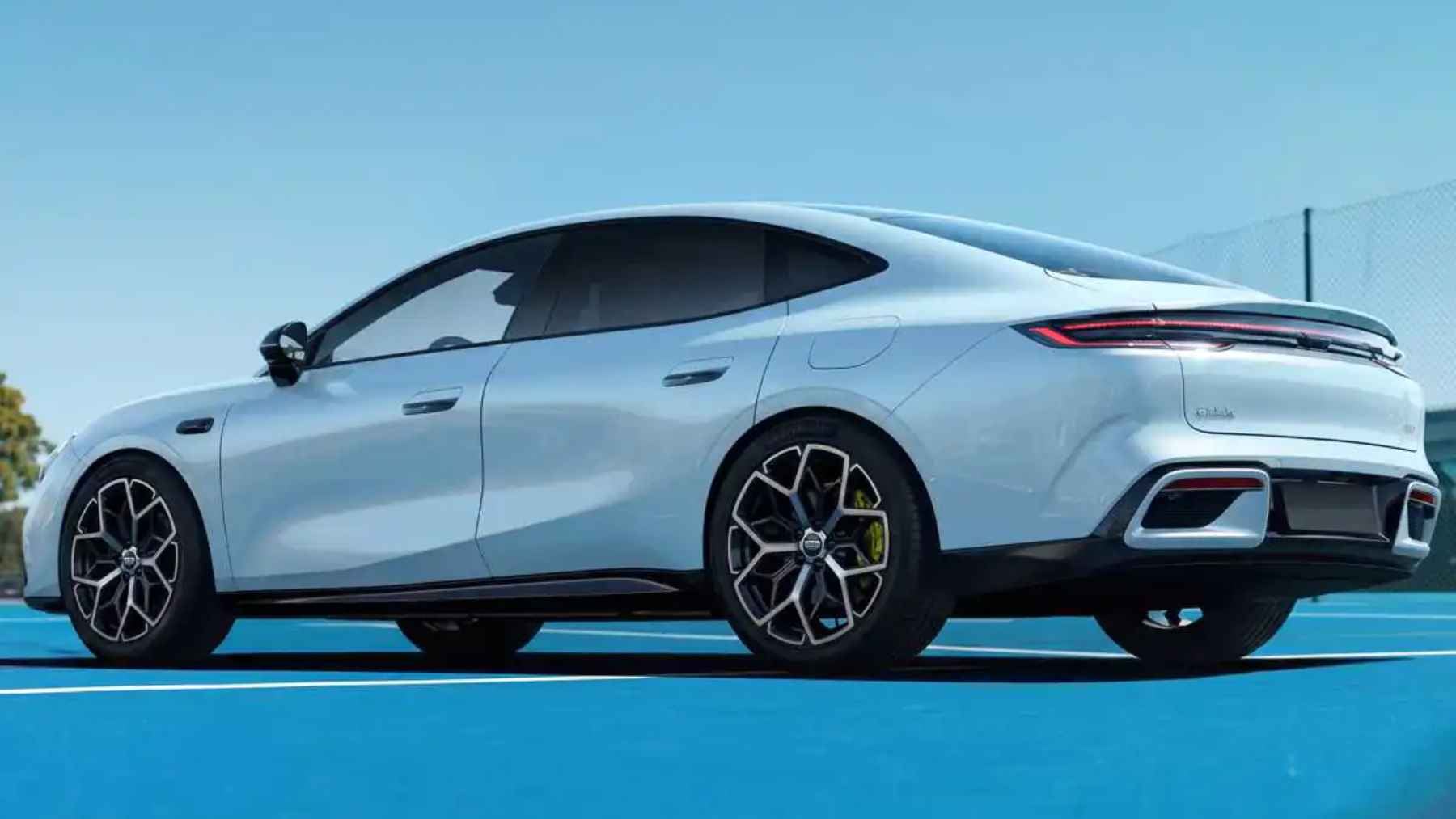
For drivers, higher efficiency means buying less electricity to cover the same distance. For manufacturers, it can also mean achieving a useful range with fewer battery cells, less mass, and potentially lower production costs.
That matters because electric vehicles remain the main source of global battery deployment. The International Energy Agency reported that EV battery deployment reached 1.2 terawatt-hours in 2025, while rising mineral demand continues to shape supply chains and industrial policy.
Using battery capacity more carefully could ease some of that pressure, although the benefit depends on chemistry, durability, manufacturing, and recycling.
There is another caveat. A lightweight magnesium housing and a smaller pack are not greener when viewed across the full lifecycle. The Galaxy TT will need transparent battery sourcing, long-term durability data, repairability, and independent energy testing before its environmental advantage can be measured with confidence.
The real race is against wasted energy
The Galaxy TT is entering the same fiercely competitive Chinese electric-sedan market as the Xiaomi SU7. Geely has already opened pre-sales for the high-performance TT Ultra, while initial deliveries are expected to begin in China in August.
Li Chuanhai, vice president of Geely Auto Group, said electric drive systems are becoming “increasingly critical to vehicle efficiency, performance, reliability and customer experience.” That is the larger business message here. If Geely’s figures hold up outside record attempts, rivals may have to chase better motors and smarter controls instead of simply adding more battery.
The most sustainable kilowatt-hour is the one a car does not waste. The Galaxy TT has made an impressive opening claim. Now it has to prove it on ordinary roads.
The statement on the technology was published on InfiMotion.