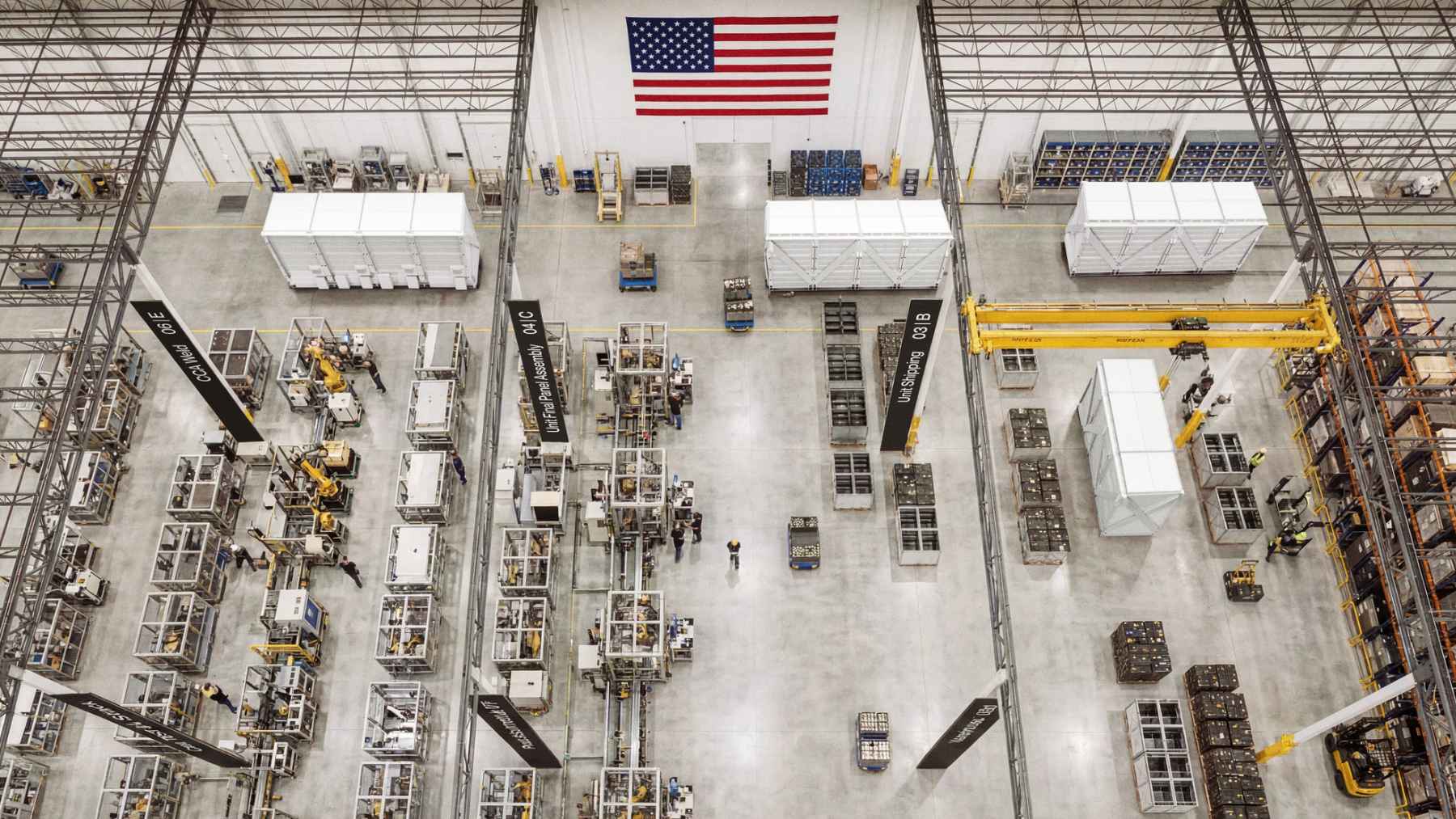
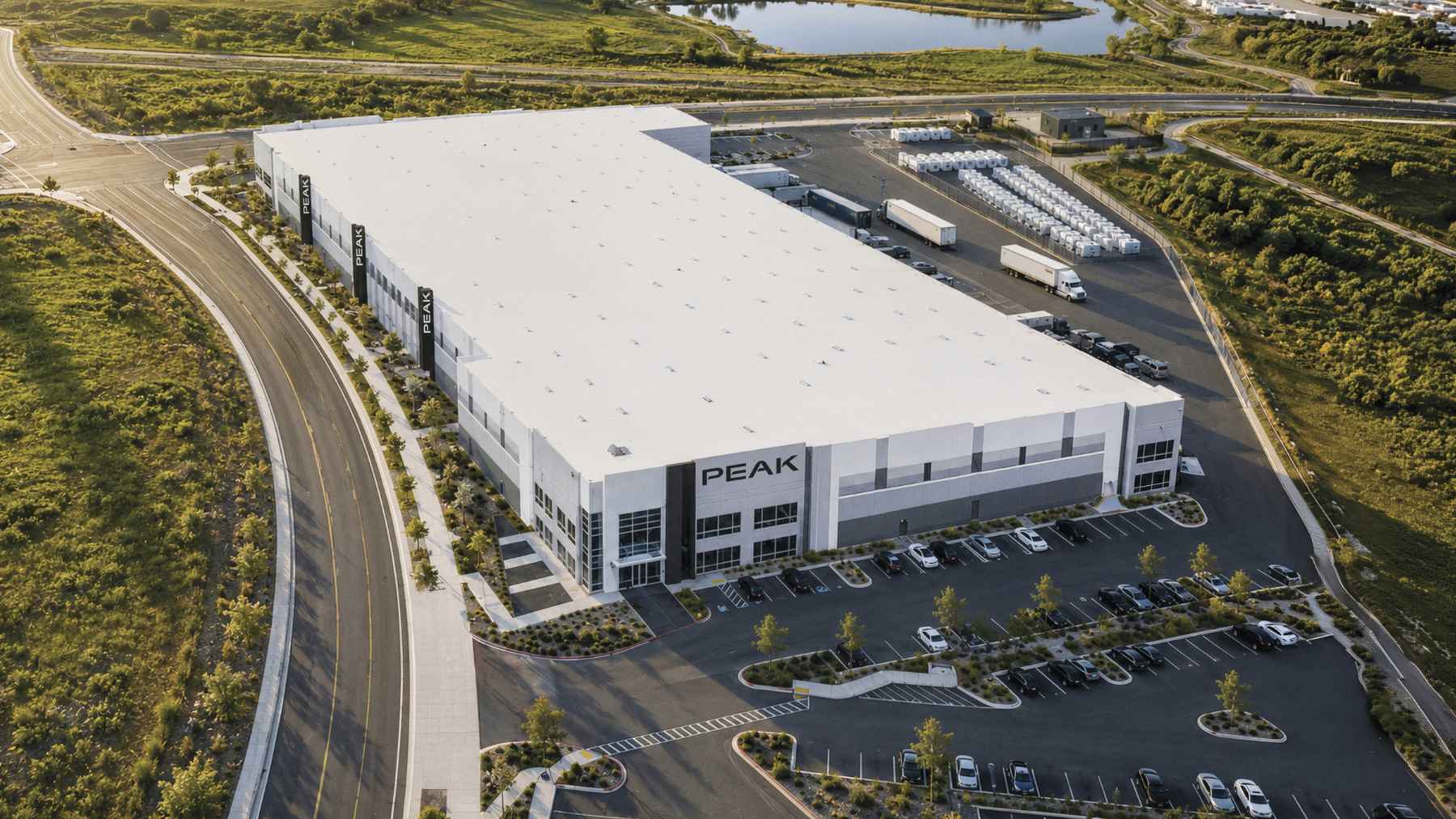
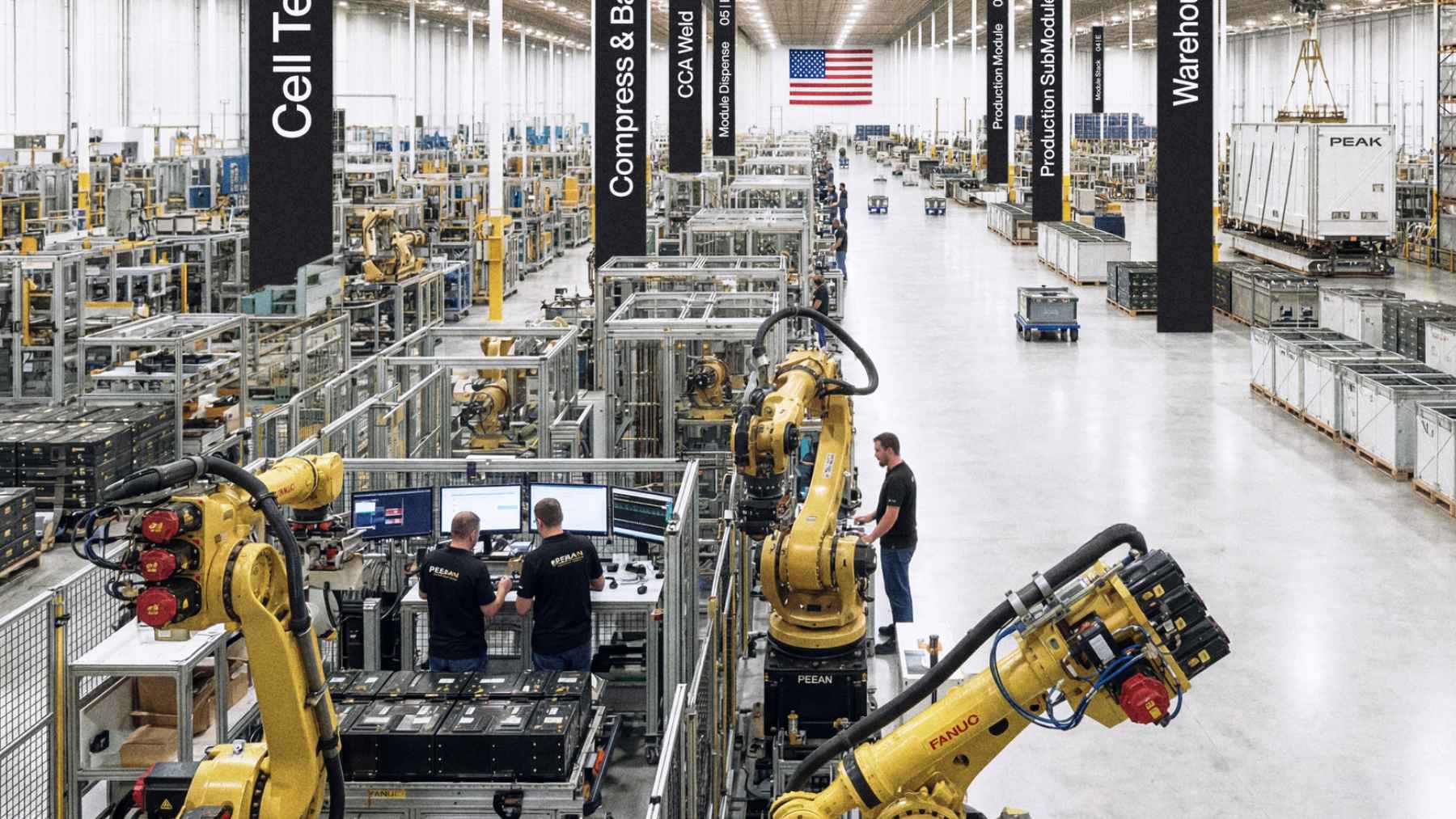
Peak Energy has chosen Sacramento’s Metro Air Park for what it calls America’s first factory dedicated to grid-scale, sodium-ion energy storage systems. The roughly 183,000-ft.² site is expected to make up to 4 gigawatt-hours of battery systems each year, with initial production and shipments planned for the first quarter of 2027.
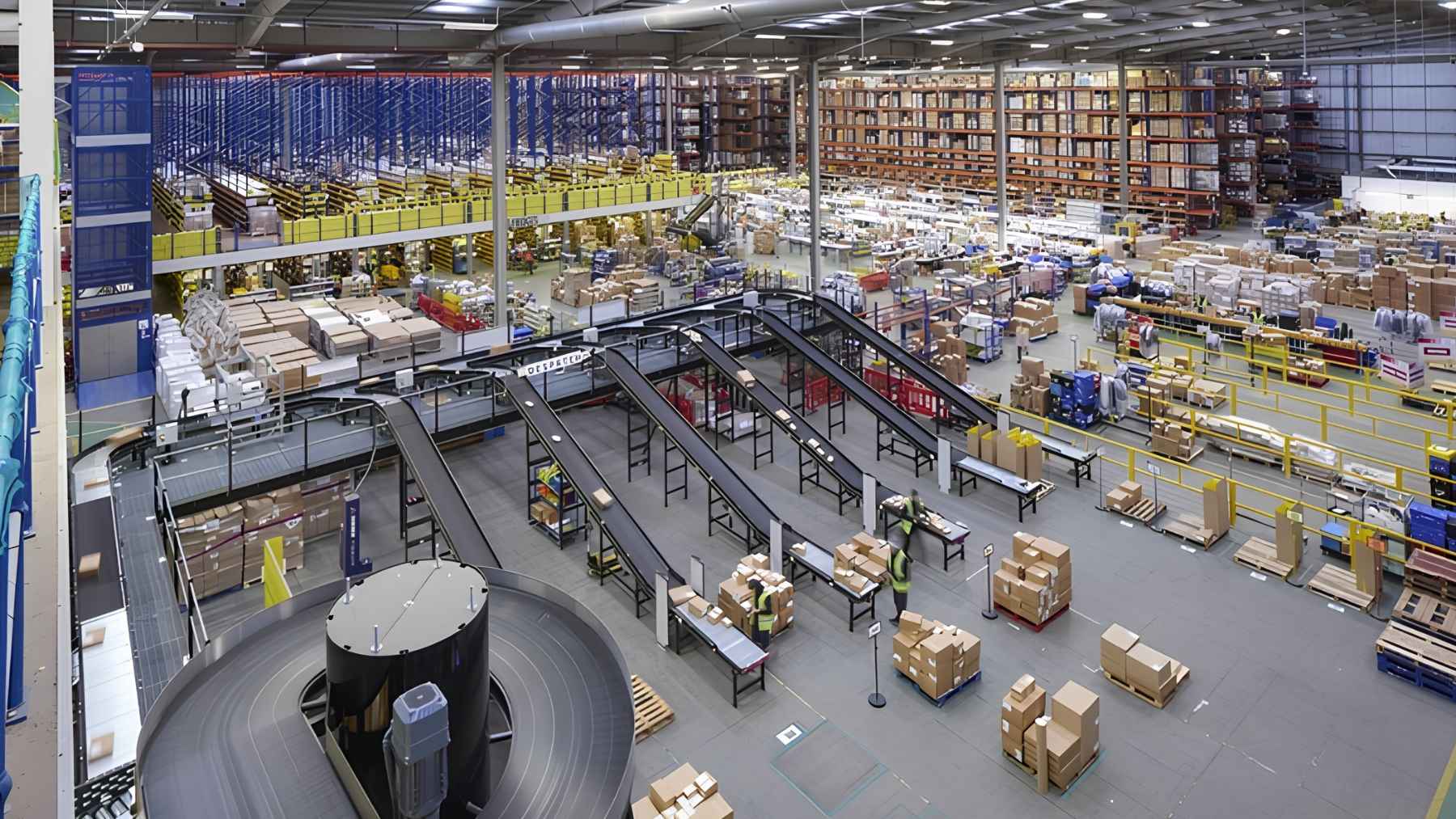
There is an important detail behind the “gigafactory” label. The Sacramento plant will automate the assembly of complete storage systems, but it will not perform the highly technical work of making battery cells. Peak currently works with manufacturers in China for cells, while its partnership with General Motors is intended to support a domestic cell supply later.
A $71 million bet
Peak says the Sacramento project represents up to $71 million in investment and about 240 new jobs, with average annual pay above $90,000. The company also received a $10.5 million California Competes tax credit, while Sacramento County expects the plant to expand the region’s advanced manufacturing base.
Why Sacramento? Peak points to the area’s skilled workforce, access to California energy customers, and proximity to its Bay Area headquarters. Local economic leaders are also retraining some laid-off Blue Diamond workers for battery jobs that Barry Broome described as “accessible to people in our neighborhoods.”
What 4 GWh really means
At the site, Peak will assemble large battery systems designed for utilities, renewable energy projects, and other grid users. Cameron Dales said the factory will produce “four gigawatt-hours of large-scale grid batteries” per year for projects in Sacramento and across the country.
Peak describes that annual output as enough to power nearly four million homes per year. Batteries do not generate electricity, however, and that comparison is easy to misread. The number of homes served depends on discharge duration, customer demand, system efficiency, and how often the batteries are cycled.
In practical terms, the systems will charge when power is available and release it when demand rises. That can make solar and wind easier to use, reduce pressure during peak hours, and sometimes defer new power plants or grid upgrades. It does not guarantee lower electric bills by itself.
Why sodium fits the grid
Sodium-ion cells store and release energy through ion movement, much like lithium-ion cells, but they use sodium-based materials. Is this simply table salt inside a container? Not quite, since “salt battery” is only shorthand for a more complex chemistry and electrolyte.
The supply-chain appeal is easy to understand. The Department of Energy says sodium is globally accessible and the United States holds the world’s largest soda ash deposit, while Sacramento County says Peak’s systems avoid critical minerals such as lithium, nickel, and cobalt.
The trade-off is lower energy density and less commercial maturity. That is a problem for long-range vehicles, where every pound and inch matters, but far less troublesome for a stationary unit beside a substation. General Motors says sodium-ion chemistry may work across a wider temperature range and reduce the need for active cooling.
Safer does not mean fireproof
Peak’s central pitch is that its NFPP sodium-ion system is more thermally stable and uses passive cooling, removing fans, chillers, and fluid loops. The company lists a 20-year design life, 96% round-trip efficiency, and four to eight hours of storage, but those are vendor specifications rather than a long record of commercial operation.
California residents have reason to ask hard questions. The January 2025 fire at Moss Landing, an operating lithium-ion storage site, triggered a 24-hour evacuation of about 1,200 people, though EPA monitoring found no public health risk.
Sacramento’s project is a manufacturing plant rather than the same type of facility, but local reporting places it less than one mile from a Natomas neighborhood.
Recent research adds an important caution. Tests published in 2025 found that sodium-ion cells can still enter thermal runaway and release hazardous gases, while another study placed the tested sodium chemistry’s hazard between nickel-manganese-cobalt and lithium iron phosphate cells under its conditions.
Those experiments used different sodium chemistries from Peak’s NFPP system, so they do not judge this product directly, but they show why “safer” should never be read as “risk-free.”
The domestic gap
The Sacramento factory still matters for American manufacturing. It can turn imported cells into finished grid systems at far greater scale, shorten part of the supply chain, and create skilled local jobs. Assembling a battery system in California is not the same as producing its cells and raw materials in the United States, though.
That is where General Motors comes in. GM has invested through GM Ventures and says it plans to prototype purpose-built sodium-ion cells at its battery center in Warren, Michigan. The partnership is intended to pair future American-made cells with Peak’s grid storage platform.
Demand is not the immediate problem. Peak says it already has more than 6 gigawatt-hours of customer commitments from Jupiter Power, Energy Vault, and RWE Americas, which is more than one full year of the Sacramento plant’s planned output. The tougher task is delivering those orders at the promised cost and reliability.
What Sacramento should watch
The first milestones are straightforward. Peak must begin shipments on schedule, deliver the promised jobs, publish meaningful safety and performance data, and give nearby residents a clear emergency-response plan. Its claims of 20% lower storage costs and 99% uptime should be treated as targets until independent operating data confirms them.
At the end of the day, Sacramento is betting that the best battery for a power grid does not have to be the same battery used in a car. If Peak meets its cost, safety, and production goals, the factory could strengthen renewable power and establish the region as a serious clean-energy manufacturing center.
The official announcement was published on Peak Energy.