For decades, a Mercedes at a German taxi stand looked almost as normal as the meter on the dashboard. That familiar picture is changing, and Chinese automaker BYD believes the space left behind can become an opening for a new generation of electrified fleet cars.
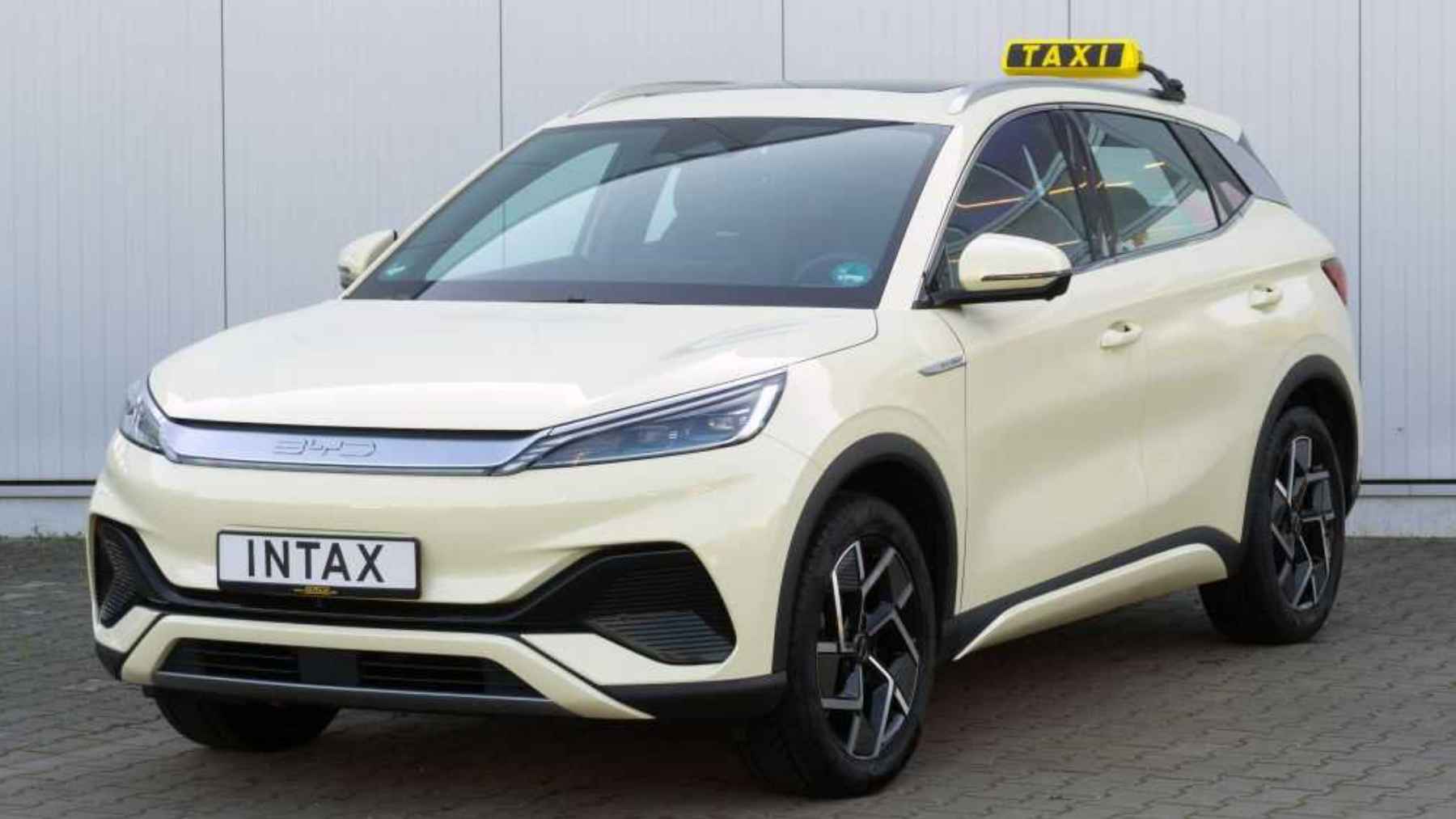
On July 21, BYD Germany announced a nationwide taxi and rental-car push built around the SEAL 6 DM-i Touring, four conversion specialists, and roughly 100 already converted vehicles. The plug-in hybrid is rated for up to 839 miles of combined WLTP range, including as much as 62 miles on electricity, while two fully electric models are expected to follow.
A familiar taxi star fades
Mercedes and taxis were once almost inseparable. The Ponton, the “Stroke Eight,” the W123, and later C-Class and E-Class models built a reputation around comfort, durability, and the ability to spend long hours in stop-and-go traffic.
The current E-Class can still be turned into a taxi by outside specialists, but Mercedes no longer supplies the W214 with its old factory taxi package.
The retreat fits the company’s wider emphasis on high-end passenger cars and premium vans, while reported German registration data showed Mercedes taxi sales falling from 1,730 units in the first eight months of 2023 to 497 in the same period of 2024.
BYD is selling a complete system
BYD is not dropping a family wagon at dealership doors and hoping taxi companies notice. It has recruited DIE Transform of the Lang Group in Nümbrecht, INTAX in Oldenburg, Heedfeld in Berlin, and Reuss in Hamburg to handle industry-specific conversions across Germany.
Those partners are meant to guide a vehicle from the original order through the professional conversion and into service. BYD and DIE Transform are also keeping around 100 converted vehicles in stock, which matters because a taxi waiting in a workshop is not earning fares.
In a translated statement, Carsten Schopf, BYD Germany’s B2B director, said the program is intended to support an “economical and sustainable transition” for fleet operators. Still, the announcement did not publish taxi-specific lease rates, discounts, or conversion costs, so the full financial case remains unclear.
An 839-mile figure needs context
The headline range is impressive, but it is easy to misunderstand. The SEAL 6 DM-i Touring’s 839-mile figure is a combined European WLTP estimate using gasoline and a charged battery, not an all-electric range and not a U.S. EPA rating.
Its battery-only range is rated at up to 62 miles. That setup could let a driver complete many urban trips on electricity and then rely on the gasoline engine when stopping to charge would interrupt a busy airport run or a late-night shift.
BYD lists fuel economy of about 47 mpg when the battery is depleted, so regular charging remains central to the environmental and operating-cost case.
Space is another part of the pitch. The wagon offers about 23.8 cubic feet of luggage room, expanding to roughly 54.2 cubic feet with the rear seats folded, which is useful when suitcases, strollers, or mobility equipment arrive at the curb.
The green case depends on the city
A plug-in hybrid can reduce gasoline use and local tailpipe pollution during its electric miles, but it is no longer locally emissions-free once the engine starts. That distinction is becoming important as some German cities tighten their fleet rules.
Since Jan. 1, 2025, Hamburg has allowed only locally zero-emission taxis and rental cars to receive new operating licenses, with a later deadline of Jan. 1, 2027, for certain large and wheelchair-accessible vehicles. Existing vehicles can continue operating, but a new SEAL 6 DM-i would not satisfy that city’s zero-emission requirement.
This is where BYD’s coming electric models matter. The ATTO 3 EVO is rated for up to 317 miles of WLTP range and can charge from 10 to 80% in 25 minutes, while the SEALION 7 Comfort is rated for about 300 miles.
For urban fleets with dependable fast charging, those models may fit stricter city policies better, while operators covering long rural routes or frequent airport transfers may value the hybrid’s ability to avoid charging downtime.
What taxi operators will really judge
Taxi buyers do not shop like ordinary private motorists. They care about purchase price, downtime, service coverage, parts availability, cabin wear, rear-seat comfort, residual value, and whether the vehicle can survive years of repeated starts, stops, door slams, and long shifts.
BYD has addressed one visible bottleneck by lining up conversion partners and keeping finished cars ready. The announcement did not provide long-term German taxi durability data or the commercial terms that would let operators compare its total cost with a Toyota, Volkswagen, or third-party Mercedes conversion.
That is the real test. A long advertised range can attract attention, but a fleet manager will be watching repair invoices, energy bills, and the number of hours each car spends earning money.
Can BYD take the taxi crown
The timing is favorable. Mercedes has stepped back, some cities are pushing fleets toward zero-emission vehicles, and BYD is arriving with a plug-in hybrid plus two battery-electric alternatives instead of relying on a single model.
But taxi dominance is earned one shift at a time. The SEAL 6 DM-i Touring gives BYD a credible entry into a market that Mercedes once seemed to own, not an automatic victory. The three-pointed star took decades to become a taxi symbol.
BYD now has an open lane, but it still has to prove that its cars, service network, and prices can handle the miles.
The press release was published on BYD Germany.