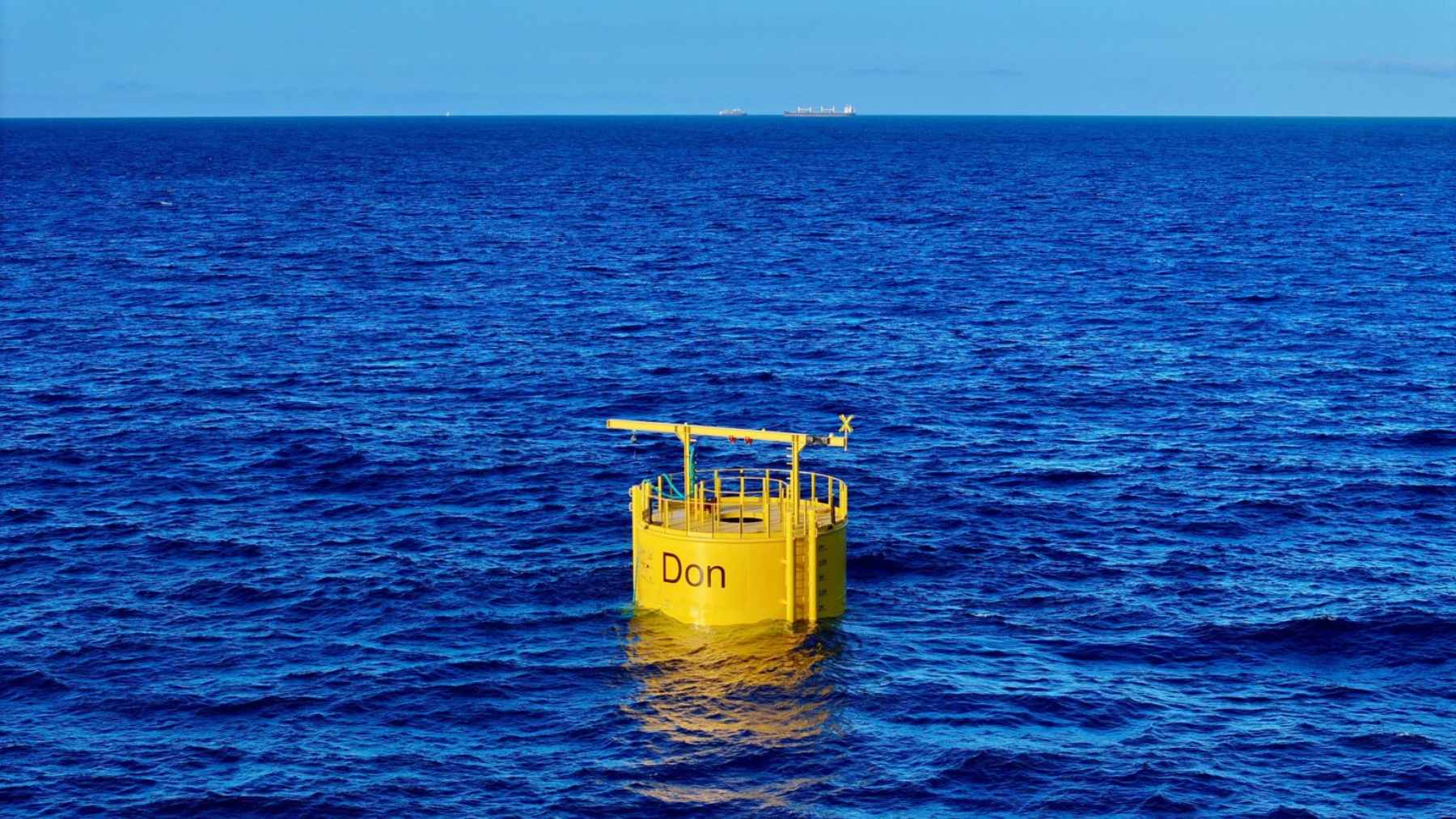
A strange new machine is floating off the coast of Gran Canaria, and it is not chasing wind, waves, or sunshine. UK-based Global OTEC says it has completed the offshore installation of what it calls the world’s first purpose-built platform designed to unlock continuous renewable energy from the temperature difference between warm surface seawater and cold deep ocean water.
That may sound like science fiction, but the idea is surprisingly down to earth. In practical terms, the ocean becomes a giant heat battery, one that does not clock out at sunset or wait for a breeze. The question now is whether this technology can move from a promising offshore test to a reliable tool for island grids that still depend heavily on costly diesel fuel.
How ocean heat makes electricity
Ocean Thermal Energy Conversion (OTEC) uses a simple temperature gap to do a difficult job. Warm surface water heats a working fluid that boils at a low temperature, and the vapor then spins a turbine connected to a generator.
Cold seawater from deeper in the ocean then cools that vapor, turning it back into liquid so the cycle can begin again. According to the U.S. Energy Information Administration, OTEC systems generally need a temperature difference of at least 36°F to produce power, which is why tropical waters matter so much.
That is the big advantage over many familiar renewables. Solar panels are powerful, but not at night. Wind turbines can produce huge amounts of electricity, but only when the wind blows. OTEC, for the most part, is trying to offer something different: steady baseload power from the sea.
Why Gran Canaria matters
The prototype has been installed at the Oceanic Platform of the Canary Islands (PLOCAN), a marine technology test site off Spain. Global OTEC says the location gives engineers access to deep ocean water close to shore, which helps them test system performance and environmental impact in real conditions.
This is not just a random spot on a map. The Canary Islands have become an important testing ground for ocean energy because the region combines warm surface water, accessible deep water, and a regulatory setting built for offshore experimentation.
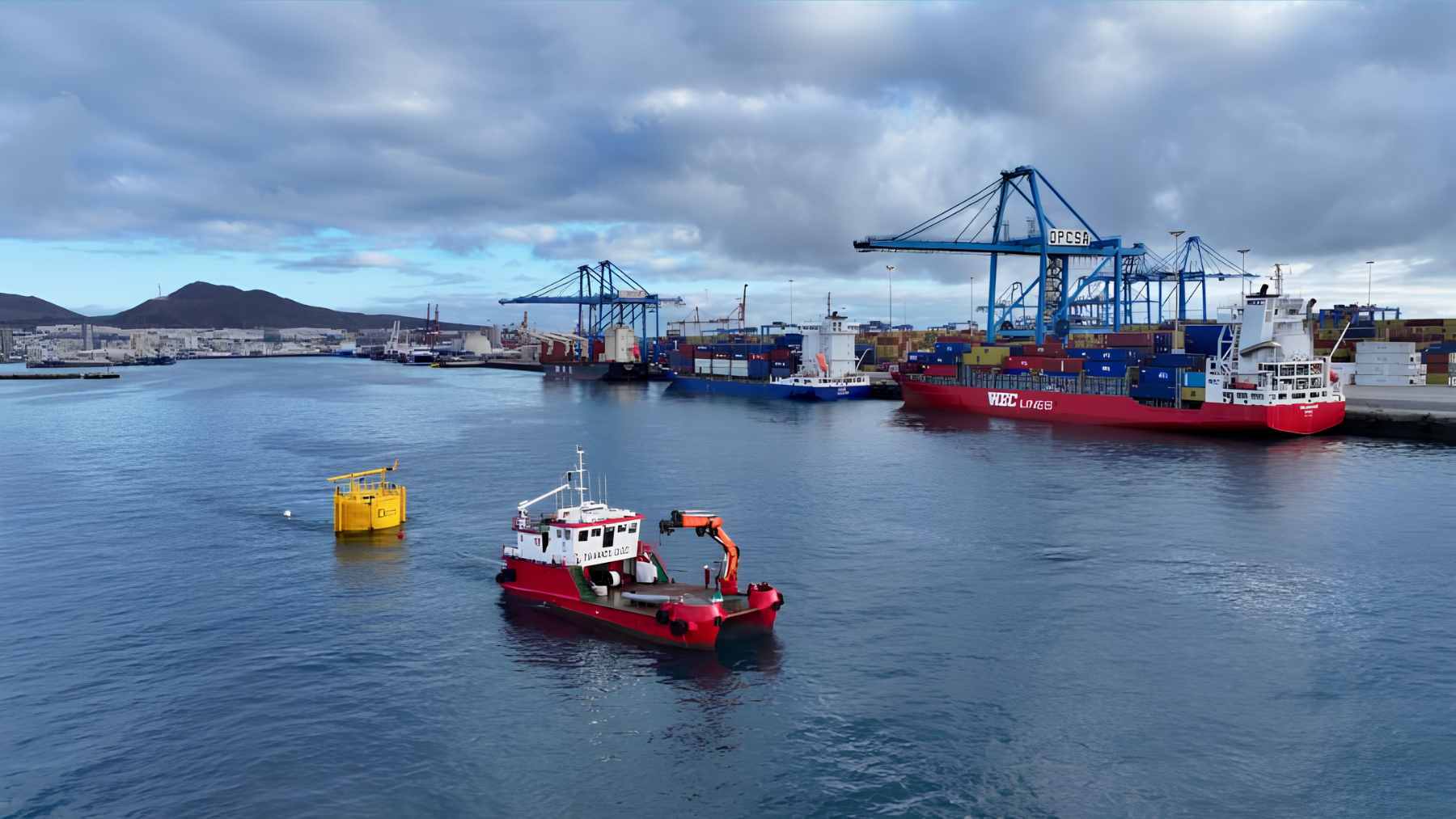
The project is part of PLOTEC, a European effort focused on floating OTEC platforms that can survive extreme ocean conditions. PLOCAN says the broader initiative is backed by Horizon Europe and UK Research and Innovation with a total investment of about $4.1 million, using recent exchange rates.
The pipe problem
For years, OTEC has had one stubborn engineering headache. To make the system work, developers need a way to pull cold water from far below the surface, and that usually means large, expensive pipes.
Global OTEC says moving the system offshore could reduce the pipe length needed by 80% compared with onshore operations–no small plumbing detail. Less pipe can mean lower cost, simpler installation, and a more realistic path toward scaling the technology for island markets.
The company also said the PLOTEC project reached a key milestone with the deployment and connection of the vertical seawater intake riser. In plain English, that is the part of the system that lets the platform reach down into cold deep water, where the other half of the temperature engine is waiting.
A lifeline for diesel islands
Global OTEC is not pitching this first to huge continental power grids. The clearer target is smaller tropical island systems, where diesel and heavy fuel oil still play an outsized role in keeping lights on, fridges running, and hospitals powered.
That matters because diesel power can be expensive and exposed to fuel price shocks. Global OTEC says it has identified more than 25 gigawatts of existing fossil fuel capacity across tropical islands that could potentially be replaced by OTEC systems over time.
There is another practical benefit, too. OTEC can also be used to desalinate ocean water, according to the EIA, which means the same broad energy system can support electricity and fresh water needs. For an island community, that is not a luxury feature. It can be everyday resilience.
Built for rough weather
The platform is named “Don,” and PLOCAN describes it as a prototype designed to generate clean ocean energy continuously and operate safely even during storms and hurricanes. The structure includes a cylindrical hull, a cold-water intake pipe, and a dedicated connection point.
That matters because a power system meant for tropical islands cannot be fragile when storm season arrives. A technology that works only on calm days is helpful, but it is not enough when people need backup power after a hurricane.
PLOCAN said in February 2026 that the project had entered its final validation phase under real conditions. Rough seas and turbulence created logistical headaches, but the consortium also saw those conditions as useful stress tests for the prototype.
What happens next
Dan Grech, founder and CEO of Global OTEC, described the installation as a turning point for the sector. “This is the moment where OTEC moves away from controlled environments into the real world,” he said.
The company says its next step is to bring the first OTEC Power Module to Hawaii. That makes sense. Hawaii has deep ocean water close to shore, long experience with ocean energy research, and real pressure to reduce imported fuel dependence.
Still, this is not a magic switch for every coastline. OTEC needs the right water temperatures, the right depths, and offshore equipment that can survive years of punishment. But for tropical islands staring at high fuel bills and hotter climate risks, the ocean may be more than scenery. It could become part of the grid.
The press release was published on Global OTEC.