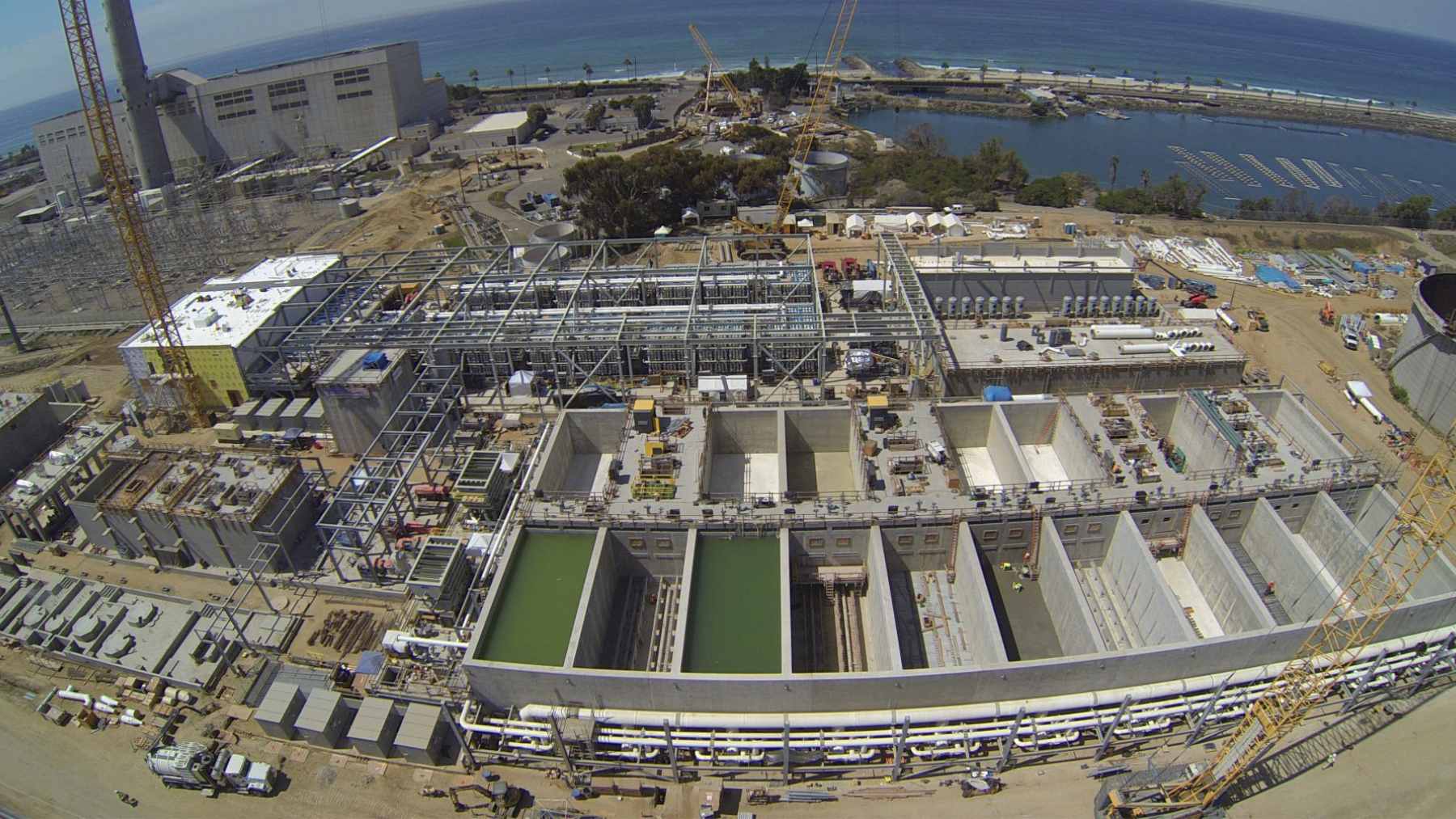
San Diego is flirting with a new kind of water diplomacy. The San Diego County Water Authority board has approved a memorandum of understanding to explore an interstate pilot that could let agencies in Arizona and Nevada tap San Diego’s supplies from the Claude “Bud” Lewis Carlsbad Desalination Plant.
If it works, the deal could shift pressure off the Colorado River without building a new pipeline across the desert.
On paper, it sounds almost too neat. Coastal seawater becomes drinking water in Carlsbad, and San Diego can “move” a slice of its Colorado River allocation to where shortages hit hardest, while bringing in revenue that could soften local ratepayer costs. But desalination is energy-heavy, ocean-facing infrastructure, and the trade-offs are real.
A paper water swap, not a new pipeline
The Water Authority says the agreement is designed as a transfer and exchange pilot with the U.S. Bureau of Reclamation, the Metropolitan Water District of Southern California, and agencies in Nevada and Arizona, with the other parties still needing to ratify the MOU. It was approved unanimously by San Diego’s board, which signals momentum but not a finished deal.
In other words, this is a launch button, not a signed contract for deliveries.
The concept hinges on swaps that happen “on paper,” using existing infrastructure instead of building expensive new facilities, according to the Water Authority. The same statement calls it a potential first for transferring water across state lines within the Colorado River Basin if it’s successfully developed. That’s a big shift in how drought planning could work in the Southwest.
Why San Diego has water to share
San Diego did not stumble into this position by accident. The Water Authority says it has invested roughly $3 billion in water reliability efforts, and a recent agency overview shows imported supplies from the Metropolitan Water District made up 95% of its water in 1990 but 14% in 2023.
The same document points to a 49% decline in per-capita regional water use since 1990, with 119 gallons per person per day reported for 2025.
Infrastructure played a role, too. The Water Authority’s San Vicente Dam Raise added more than 157,000 acre-feet of storage, and its fact sheet says about one-third of that new capacity is reserved for emergencies like an earthquake cutting off imported supplies. That kind of planning is easy to overlook until the day your neighborhood is told to conserve again.
The business math behind an expensive gallon
Desalination reliability comes with a price tag, and San Diego’s own numbers put it in plain view. An April 2026 Water Authority fact sheet says the agency’s contract calls for buying between 48,000 and 56,000 acre-feet per year for 30 years, which it says is enough for about 400,000 people annually.
It also lists the fiscal year 2025 price at about $3,500 per acre-foot, while pegging the “typical monthly cost” at about $5 per household.
So why would San Diego want to sell any of this? The Water Authority’s statement says purchases from the Carlsbad plant could generate new revenues and offset costs for residents, with “affordability” framed as a priority for ratepayers.
That’s where the deal turns from water policy into kitchen-table economics, because the promise is that a drought hedge could also take a little sting out of the water bill.
Tech upgrades make desal safer
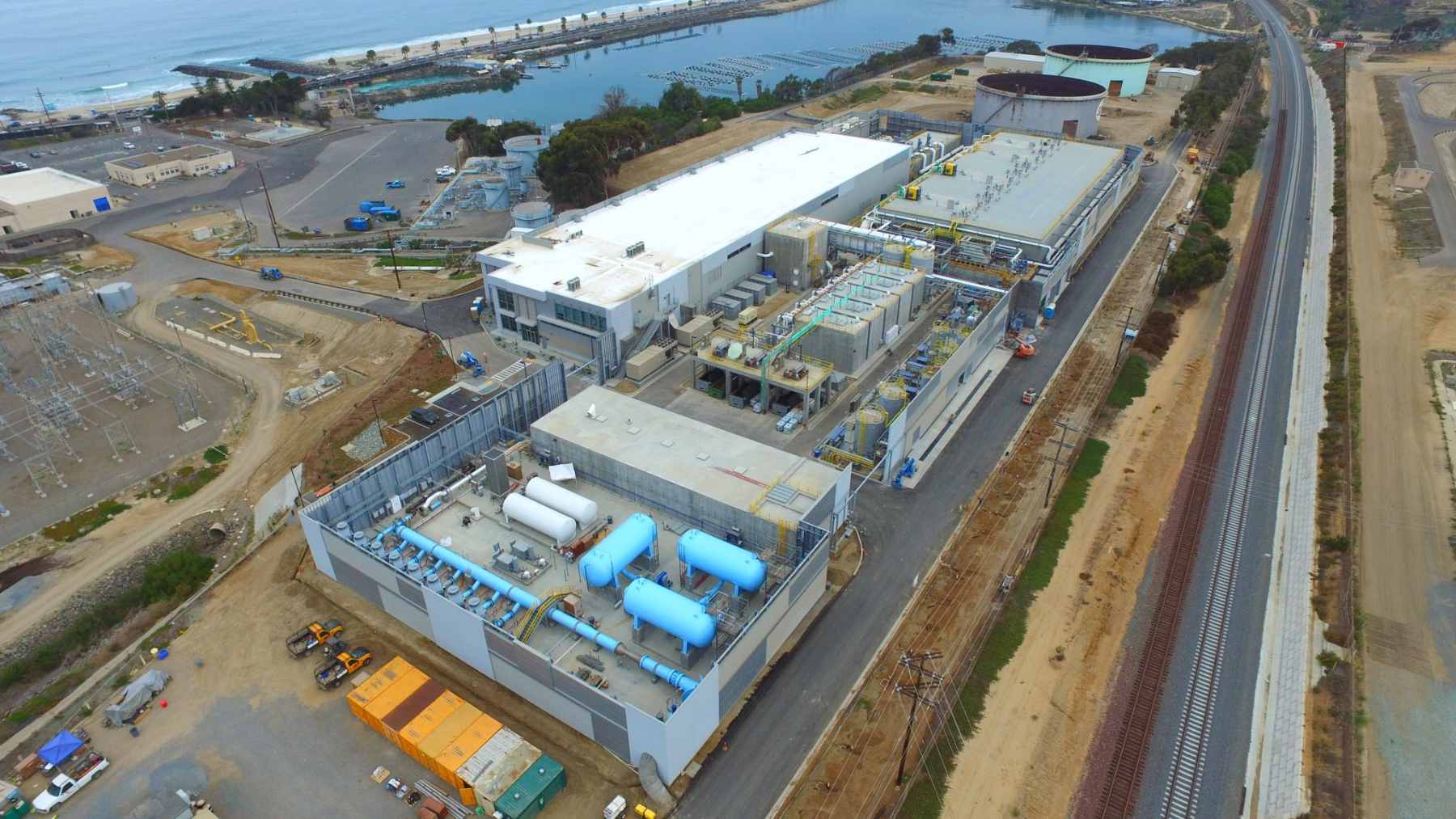
The Carlsbad plant is a modern reverse-osmosis facility, and the Water Authority describes a process that includes pretreatment, microfiltration, and then reverse osmosis through thousands of pressure vessels and tens of thousands of membranes.
It also highlights energy recovery as the key tech lever, saying the plant has 144 energy recovery devices that reduce reverse-osmosis energy consumption by 46%. The agency estimates those devices save about 146 million kilowatt-hours per year and reduce carbon emissions by about 46,000 tons annually.
Intake and discharge tech matters for marine impacts, not just efficiency. An Engineering News-Record profile of a new intake and discharge facility says the Carlsbad plant originally relied on cooling water from the Encina Power Station, then shifted as the power station stopped operations, and ultimately moved to a new $200 million system.
ENR also reports the project uses 1-millimeter screens (11 total) to help protect marine life, and it was engineered to handle hazards like sea level rise, tsunamis, and earthquakes.
Water infrastructure now has a cyber angle
Water is not just an environmental issue anymore, at least not in the way it used to be. The Cybersecurity and Infrastructure Security Agency describes supplying water and managing wastewater as essential services that support the operation of all U.S. critical infrastructure.
And a U.S. Army War College article on installation resilience puts it plainly, quoting a senior official that “enhancing energy and water resilience on our installations is essential to preserving our operational capabilities, regardless of the threat.”
That matters because modern water systems run on digital control, remote monitoring, and a lot of interconnected equipment. The EPA has a dedicated cybersecurity hub for the water sector and notes it is partnering with the FBI to increase cyber awareness.
In April 2026, the EPA also announced a joint cybersecurity advisory with the FBI, CISA, and NSA focused on threats to water systems, which is a reminder that keeping the tap running is now partly an IT problem.
The federal hurdle is coming fast
The MOU is arriving at a moment when Colorado River governance is already in motion. The Water Authority explicitly tied the idea to the Bureau of Reclamation’s work with Basin States, Mexico, and Tribal Nations on new operating guidelines for the river.
Reclamation has already released a Draft Environmental Impact Statement for post-2026 operations for Lake Powell and Lake Mead, with the public comment period ending March 2, 2026.
This is the context that makes the San Diego proposal feel less like a local story and more like a regional test case, especially since Reclamation says the Colorado River provides water for more than 40 million people, supports hydropower, and serves Tribal Nations and parts of Mexico.
For readers, the key details to watch are how much water is actually tradable, what it costs when electricity prices swing, and how tightly environmental monitoring is enforced along the coast.
The official statement was published on San Diego County Water Authority.