Europe has spent years telling people to fly less, then quietly making it easier to do the opposite. Cheap short-haul tickets are still everywhere, while booking a cross-border train can feel like juggling apps, operators, and backup plans.
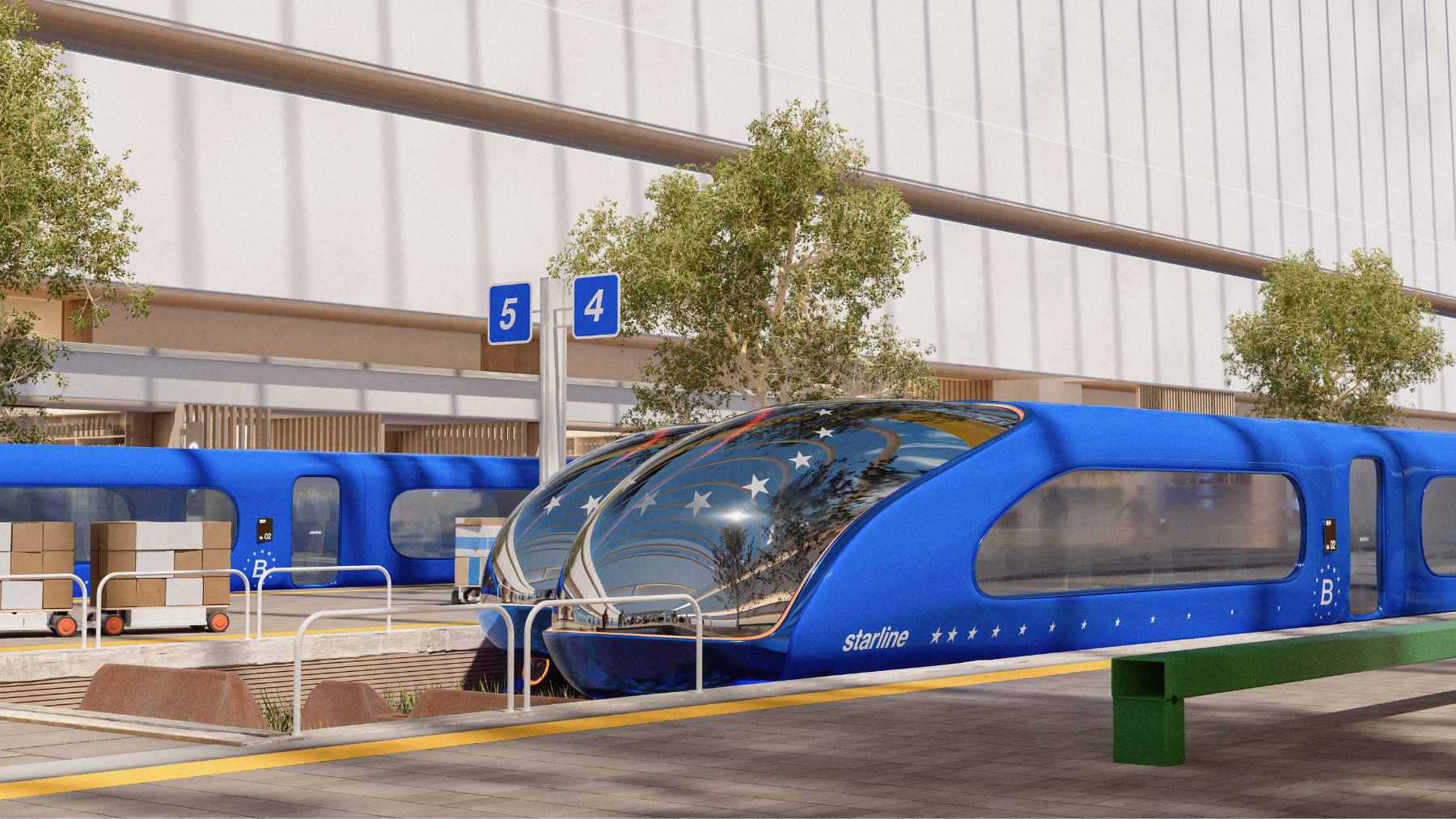
Now a Copenhagen-based thinktank called 21st Europe is pushing a bold alternative called Starline, a proposal for a pan-European high-speed rail network designed to work like a metro system. It is a climate story on the surface, but it is also about business competitiveness, digital infrastructure, and even security.
Starline’s pitch is simple travel with lower emissions
Transportation remains one of Europe’s toughest climate problems, and the European Environment Agency says transport made up about 29% of the EU’s total greenhouse gas emissions in 2022.
It is also one of the few major sectors where progress has been slow, with the EEA noting only modest declines since 2005 and a small estimated increase in 2024 compared with 2023.
Starline’s core argument is that high-speed rail can pull travelers away from short flights at scale, and its blueprint claims high-speed rail can emit far less CO2 per trip than aviation.
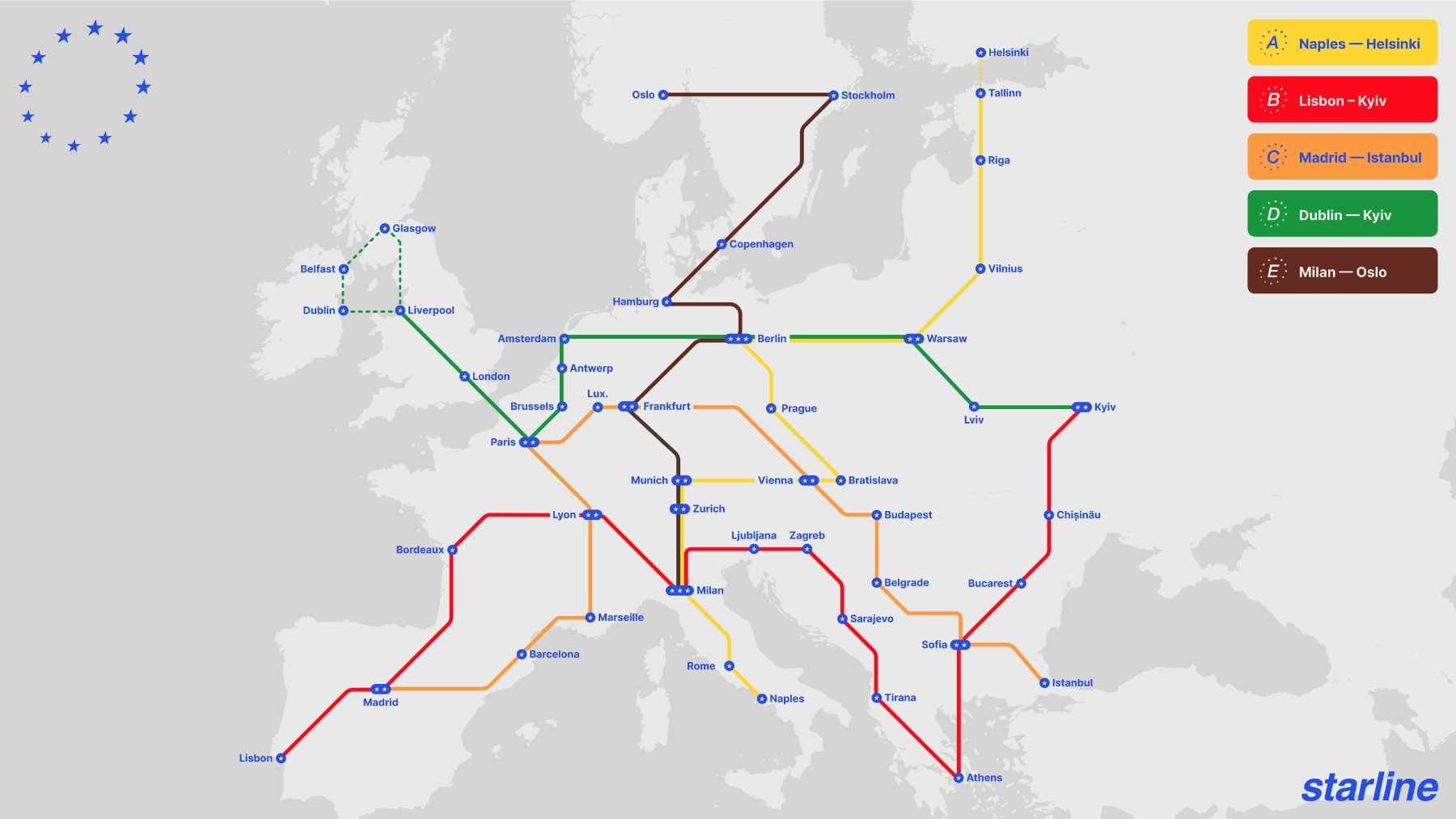
Media coverage of the concept describes a network of roughly 22,000 km (13,700 miles), with trains running in the 300 to 400 km/h range and linking 39 destinations across Europe, including extensions toward the UK, Turkey, and Ukraine.
The real bottleneck is tech, not steel
If Starline sounds like a giant construction project, the blueprint is actually obsessed with friction you feel in daily life. Why does buying a train ticket across borders still feel harder than buying a flight, even when the train is the greener choice?
The European Commission is now pushing on the same pain points, with a plan to accelerate high-speed rail that includes upcoming work on cross-border ticketing and booking, wider deployment of ERTMS for interoperability, and new rules meant to make cross-border operations simpler.
In practical terms, that is the digital glue that turns separate national lines into something that behaves like one network.
Business wins only if prices and freight make sense
Here is the uncomfortable truth that shows up in the expense of everyday travel: multiple studies and watchdogs keep finding that trains are often more expensive than flying on many European routes, which pushes travelers toward the higher-emitting option even when they want to do the right thing.
A recent Greenpeace analysis reported that flying was cheaper on nearly 60% of 100 routes it reviewed, despite rail being far less polluting.
Starline tries to answer that with economics, not just ideals. The blueprint proposes fares that are “significantly lower than short-haul flights” and leans heavily on a parallel freight strategy, including dedicated cargo capacity and station “fulfillment hubs” meant to move time-sensitive goods by rail instead of short-haul freight flights or trucks.
That freight revenue is presented as a way to subsidize passenger affordability over the long run.
Defense and resilience are becoming part of the rail argument
This is where the conversation expands beyond climate and convenience. Europe’s security community has been talking for years about “military mobility,” which is essentially the ability to move equipment and personnel quickly across borders, and rail capacity is part of that picture.
The European Commission’s Action Plan on Military Mobility 2.0 frames transport infrastructure as dual-use, and it explicitly points to assessing rail infrastructure limitations on priority corridors for oversized cargo and improving resilience and cybersecurity.
Starline is not a defense program, but standardized cross-border corridors and predictable logistics are the same building blocks that resilience planning depends on.
The environmental fine print is electricity and concrete
Rail is usually the low-carbon option, but it is not magic. The climate benefit depends heavily on the electricity mix powering trains, and life-cycle emissions can shift as grids get cleaner or dirtier.
The European Commission has found that, across the routes it analyzed, rail trips had CO2 emissions about 6.5 times lower than flights on average, which is a big advantage even before you consider the extra time and hassle that comes with airports.
Still, large rail projects also have embodied emissions from construction, and a life-cycle assessment of a Spanish high-speed line found infrastructure construction dominated the project’s life-cycle greenhouse gas footprint, which is why ridership and long-term utilization matter so much.
What to watch next
Starline is a blueprint, not a signed contract, and its own authors describe it as a starting point meant to “ignite conversation” about what a truly integrated European rail experience could look like.
Still, the timing is not random, because the European Commission is already outlining a path toward a faster high-speed rail network by 2040, including coordinated financing and binding work to remove cross-border bottlenecks.
So the real test is not whether the map looks inspiring, but whether Europe can line up power, permits, interoperability, and funding without losing a decade in political noise.
The official blueprint was published on 21st Europe.