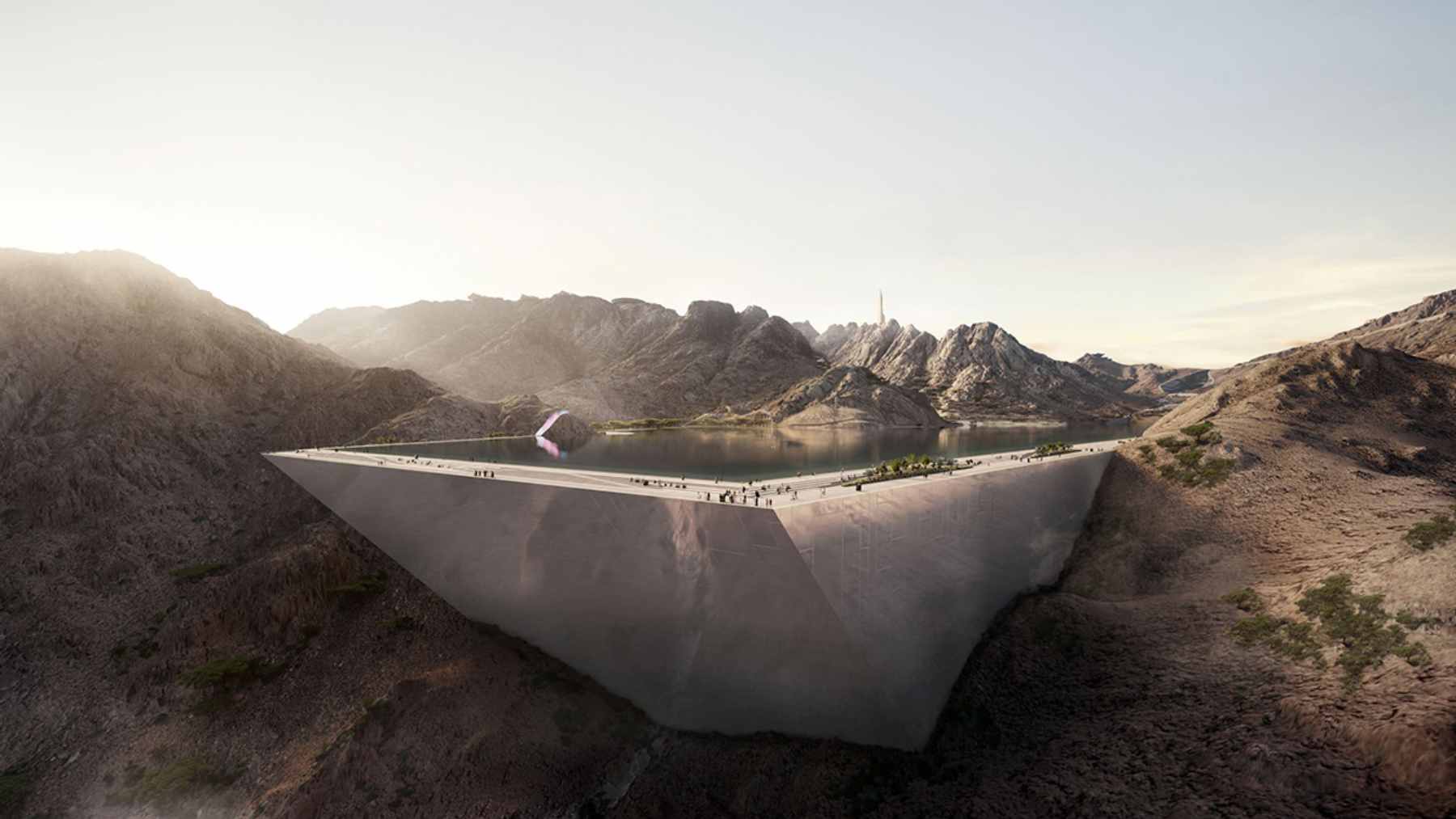
Saudi Arabia’s plan to carve a 2.8-kilometer (1.74-mile) freshwater lake into the mountains of Trojena has hit a major reset.
On March 25, 2026, Webuild said NEOM exercised a “termination for convenience” clause on the package to build three dams and “The Bow,” with the termination effective March 29 and the work about 30% complete. Webuild put the remaining backlog at about €2.8 billion.
The same package had been announced in January 2024 as a $4.7-billion effort to build one of the central features of Trojena, NEOM’s high-altitude tourism project.
That does not prove the lake is gone, but it does show how much one artificial body of water controlled the story. This is not just a resort story, it is a water, energy, tourism, and credibility story wrapped into one concrete-lined basin.
A lake at new heights
Trojena is pitched as a year-round mountain destination on Jebel al Lawz, at altitudes reaching up to 2,600 meters above sea level. NEOM says that cooler elevation would help support winter sports, adventure tourism, and luxury hospitality in a region better known for desert heat than ski slopes.
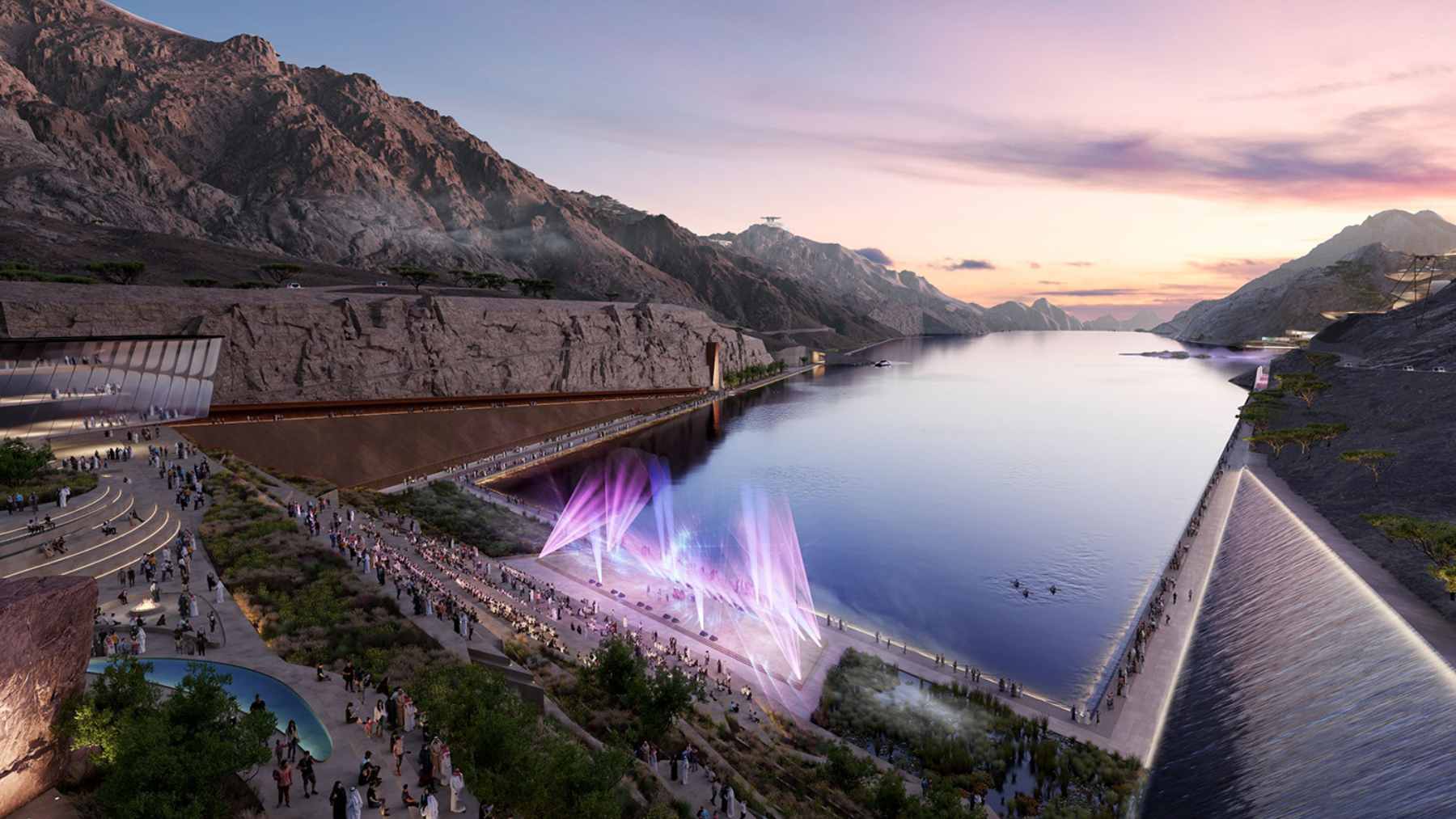
At the heart of that pitch is the Valley cluster, centered on a 2.8-kilometer man-made lake with paddleboarding, kayaking, and water biking. It sounds simple on a rendering, but anyone who has watched a pool level drop during a hot week knows open water is not just decoration, it is work.
Why the dams matter
The original plan depended on three barriers, not just one wall. Webuild said the main dam would rise 145 meters and stretch 475 meters, while the second dam would also use roller-compacted concrete and the third would be made of rock. The artificial lake was expected to cover 1.5 square kilometers (0.6 square miles).
That kind of engineering can be spectacular, but it is not magic. A mountain reservoir needs foundations, seals, inspections, refill water, and long-term maintenance. In other words, the lake was never just a beautiful backdrop for tourists. It was the system everything else had to trust.
The latest public update does not name a replacement contractor, a revised lake design, or a new timetable. That silence matters because hotels, roads, utilities, and visitor promises all depend on whether the water plan comes back quickly, slowly, or in a different form.
Hotels were waiting on shoreline
Before the construction reset, the lake was already built into Trojena’s hotel marketing. Marriott International announced plans for Saudi Arabia’s first W Hotel in Trojena, with 236 guest rooms and views of the mountains and freshwater lake. It also announced a 500-room JW Marriott property inside “The Bow.”
Minor Hotels also announced a 270-key Anantara resort in Trojena’s Water Village, with lake or mountain views, private pools for some rooms, a spa, and its own helipad. The current Anantara page lists the resort as opening in 2030, another reminder that the calendar around Trojena is already moving.
That is the business risk hiding behind the environmental one. If the shoreline changes, the luxury pitch changes, too. A room with a lake view needs a lake.
The Games clock moved
Trojena also lost one of its most public deadlines. In January 2026, the Saudi Olympic and Paralympic Committee and the Olympic Council of Asia confirmed that the 2029 Asian Winter Games would be postponed to a later date, with Saudi Arabia instead hosting standalone winter sports events in the coming years.
Then, in February 2026, the Olympic Council of Asia signed a host city contract for the 2029 Asian Winter Games in Almaty, Kazakhstan. That decision eased the immediate pressure on Trojena, but it also removed the biggest showcase for proving that winter sports could work in this desert mountain setting.
AP noted that the original award had faced criticism over environmental concerns and the practicality of hosting winter sports in a place naturally poor in water and precipitation.
The environmental question remains
The hardest part of a desert lake is not drawing the shoreline. It is operating the system in real weather, with refill water, energy demand, maintenance, construction traffic, and the knock-on effects of roads and hotels. In a city commute, traffic jams, noise, and exhaust fumes are easy to see. In a remote megaproject, the costs can be more spread out, but they still count.
NEOM has said Trojena, like the rest of NEOM, will be powered by renewable energy while protecting cultural and environmental heritage–that is the promise. The open question is whether the next version of the lake plan, if it moves forward, can show the water balance and energy math clearly enough for the public to judge it.
For now, Trojena is less a finished postcard than a case study in the limits of ambition. Engineers can bend landscapes in astonishing ways, but budgets, schedules, and water still have the final word.
The official statement was published on Webuild Group.