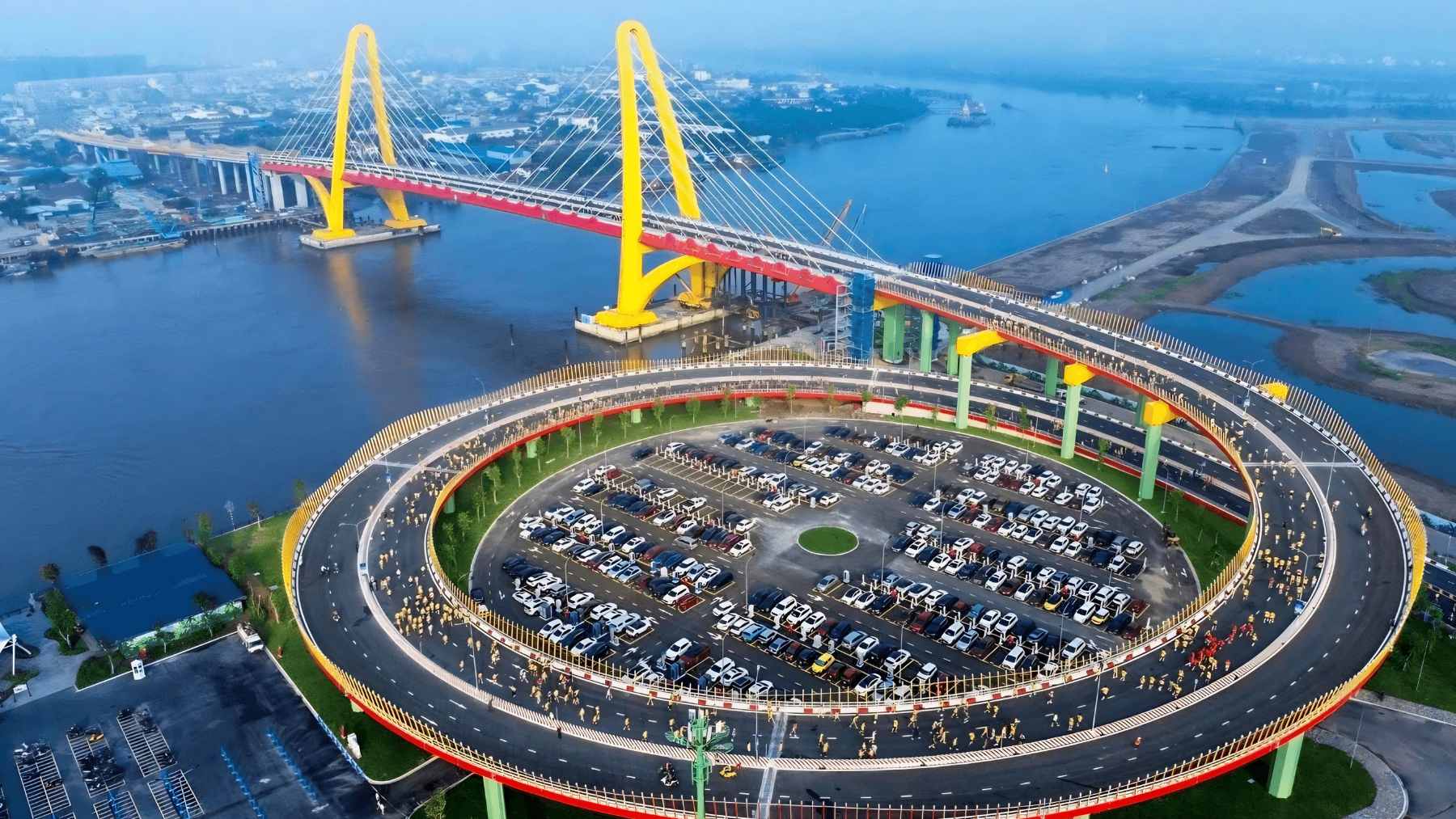
Vietnam’s port city of Hai Phong has opened the Royal Bridge, also known as May Chai Bridge, a VND 2.3 trillion-plus crossing over the Cam River that connects Vinhomes Royal Island on Vu Yen Island directly with the city center.
The project is drawing attention not only because it cuts the trip to roughly five minutes, but because local reports say it became the fastest bridge ever built across the Cam River, completed in about 22 months.
This is the kind of infrastructure people notice right away. Fewer detours can mean less time stuck in traffic, less noise around old routes, and fewer exhaust fumes outside homes and shops. But the bigger environmental question is trickier: does a faster road simply move more cars, or can it help Hai Phong build a cleaner, better-planned urban corridor?
A 22-month record
Construction began in September 2023, and the bridge opened to traffic on July 15, 2025, according to Vietnamese media reports. At roughly 22 months, that timeline beat earlier Cam River bridge projects such as Kien Bridge, Binh Bridge, and Hoang Van Thu Bridge.
The project stretches nearly 2.2 kilometers (1.3 miles), with a 21-meter-wide main deck and four lanes for vehicles. Its approach bridges are 17.5 meters wide, starting on Vu Yen Island near the Vu Yen Park pedestrian street and ending at Le Thanh Tong Street in Gia Vien Ward.
Why the location matters
This is not just a shortcut. One side of the bridge is Hai Phong’s older urban core, tied to the city’s traditional port activity and long commercial history. The other side is Vu Yen Island, where a new urban district is taking shape around Vinhomes Royal Island.
That makes the Royal Bridge a business story as much as a transport story. At the end of the day, it is trying to pull a developing island district closer to the daily life of the city, not just closer on the map.
A gateway over the river
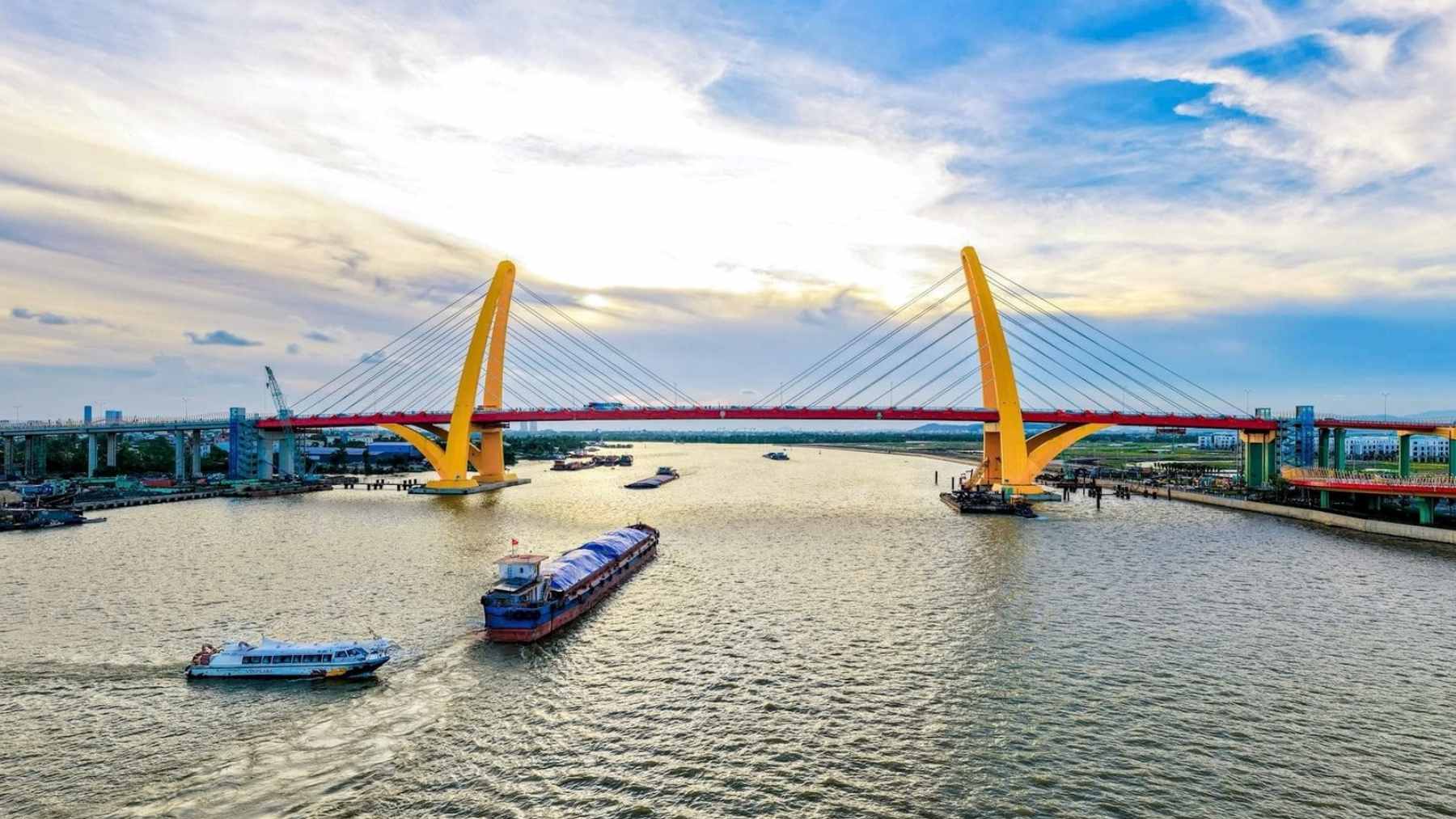
The bridge was designed around the idea of a “World Gateway Bridge,” with two towers leaning toward the river to form a broad arch. Vingroup described the twin towers as a symbol of soaring wings and a welcoming gateway for investment and economic opportunity.
The structure also had to respect the river beneath it. Local reports describe 89-meter towers, a 200-meter main steel girder, and a navigable clearance of 110 x 25 meters, helping vessels continue moving through the Cam River corridor.
The green question
A shorter trip does not automatically mean a cleaner trip. If easier access brings more private cars, emissions can rise, especially during traffic jams and oppressive summer heat. But if the bridge is paired with smarter planning, public transport, electric mobility, and walkable zones, the environmental payoff can be much stronger.
That matters because Vietnam has committed to reaching net-zero emissions by 2050 in its climate filings.
In plain English, big infrastructure is now being judged by more than speed and concrete. It is also being judged by what it does to energy use, traffic, air quality, and the places where people actually live.
A business signal
The bridge also arrives as Vingroup pushes deeper into infrastructure and green energy. In August 2025, the company said it was adding “Infrastructure” and “Green Energy” as new pillars, including rail, bridges, ports, logistics, renewable power, and battery energy storage.
That is where this bridge becomes more than a real estate connector. It is an early test of whether private-sector infrastructure can move quickly while still fitting a cleaner, more resilient urban plan. Speed is impressive–sustainability is harder.
What to watch next
For residents, the first changes will be simple. The drive gets shorter, the island feels closer, and the city’s northeast growth corridor becomes easier to reach. For businesses, that can mean faster movement of workers, visitors, and services.
The real environmental story will take longer to measure. Watch traffic levels, public transport links, EV charging access, river safety, and whether new development protects green space instead of paving over it. A bridge can open a road, but planning decides what kind of city grows around it.
The official statement was published on Vingroup.