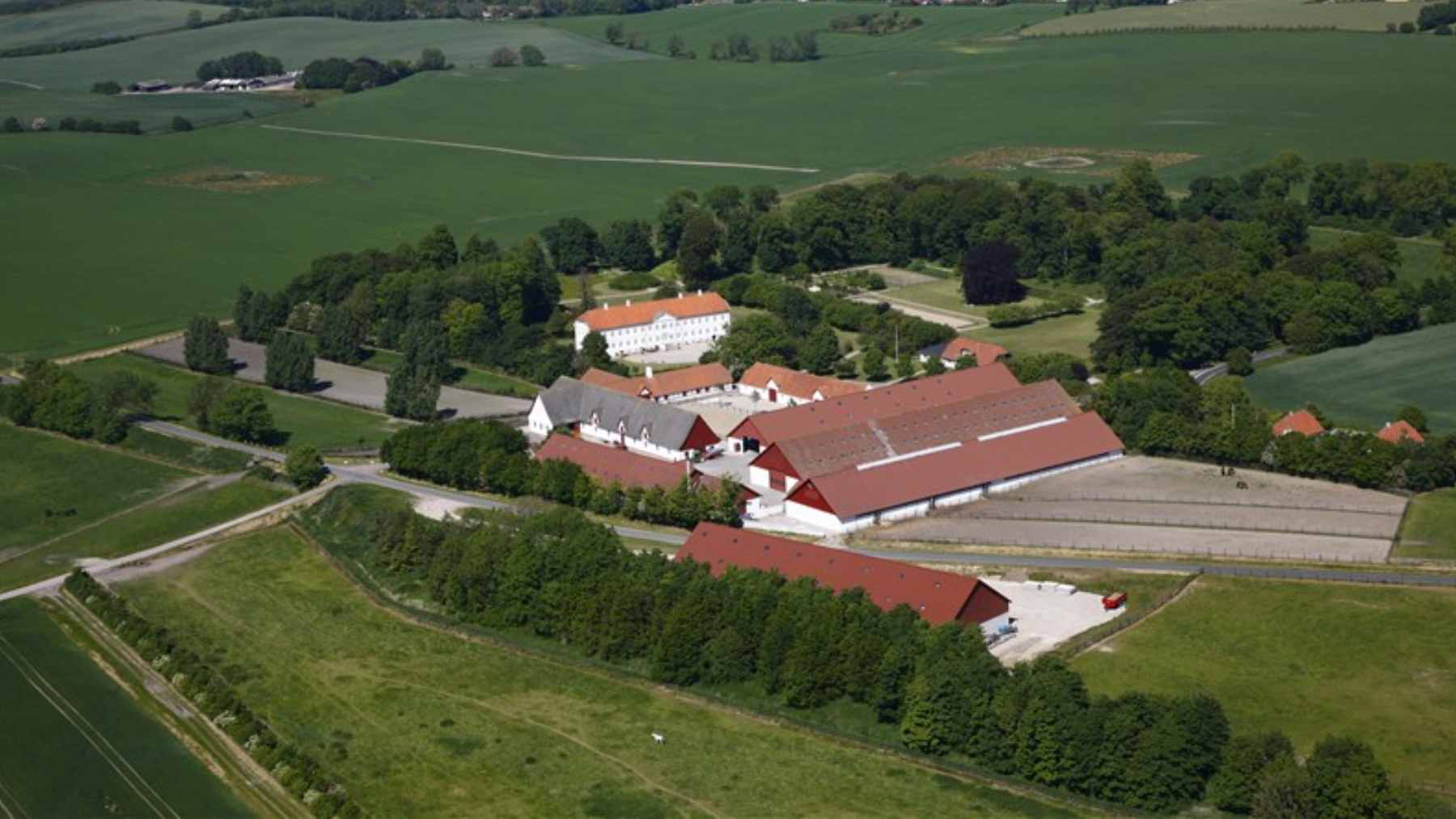
The family behind LEGO has expanded its Danish estate with a fresh land purchase, and the numbers tell a bigger story than one local property deal. Schelenborg Gods, on the island of Funen, has bought 38 hectares (94 acres) across two plots for 8.57 million kr. ($930,000), equal to 225,000 kr. ($24,400) per hectare, according to Danish farm media reports.
At first glance, it sounds like another billionaire real estate move. But farmland is no ordinary asset. It grows food, stores water, shapes rural communities, and when managed carefully, can help soften some of the environmental stress already pressing on Europe.
A small deal with a big signal
The estate is linked to the Kirk Kristiansen family, whose holding company KIRKBI owns theLEGO Group through family ownership. Schelenborg itself is not a LEGO factory, of course. It is an old Danish estate with fields, woods, farm buildings, and a business model rooted in agriculture.
The newly acquired property includes 1,612 m² (17,400 ft.²) of residential and operating buildings, with a 217-m² (2,300 ft.²) house and the rest used for business. Niels Skifter, director of Schelenborg Gods ApS, told the newspaper, “We own land around what we are taking over, so it makes sense for us.”
Farmland is not just dirt
Why would one of Denmark’s richest families keep buying farmland? The simple answer is that good agricultural land is scarce, useful, and often resilient over time. Anyone who has watched food prices climb at the grocery store knows land is not just a line on a balance sheet.
In Hungary, official data show how sharply values can move. The Hungarian Central Statistical Office said the average price of arable land reached about 2.4 million forints ($8,000) per hectare in 2024, while agricultural and forest land prices rose 4.6% from the previous year.
The environmental catch
Here is the tricky part: buying land does not automatically mean helping the environment. A field can be managed in ways that protect soil, water, and wildlife, or in ways that make those systems more fragile.
The IPCC has warned that land degradation affects people and ecosystems, and that agriculture is a major driver when land is managed unsustainably. It also says many sustainable land management practices can increase carbon in soils and vegetation while giving local adaptation benefits.
What Schelenborg grows
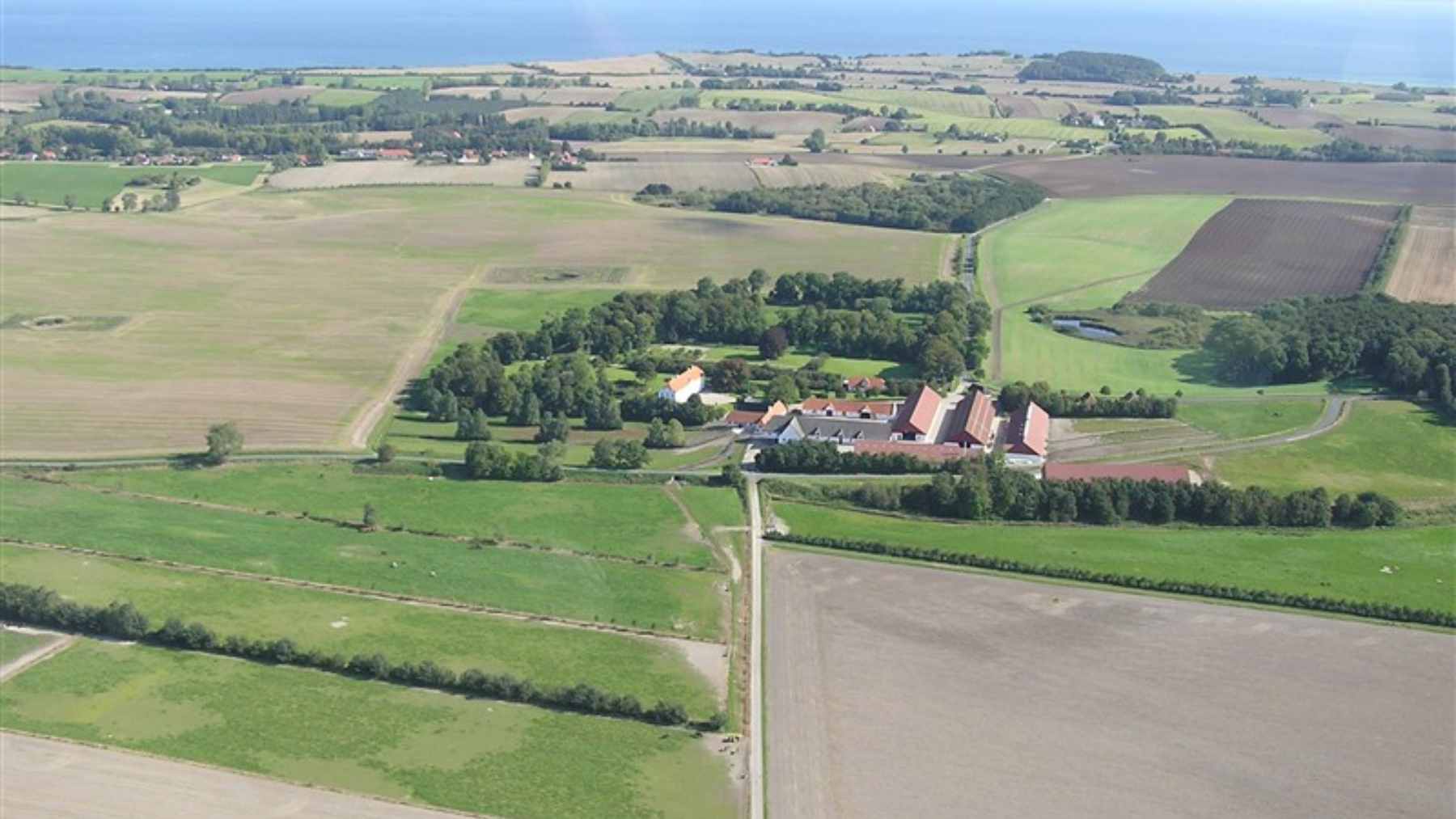
Schelenborg is, for the most part, a working farm. Its agricultural operation covers roughly 750 hectares (1850 acres), with about 70 hectares (170 acres) of forest, and the production is focused on traditional cash crops such as bread wheat, malting barley, winter rapeseed, spinach for seed, grass seed, and cut grass.
That detail matters–this is not a story about a billionaire family turning an entire estate into untouched wilderness. It is about the quieter, more complicated reality of European land today, where food production, investment, forests, and climate pressure all share the same map.
KIRKBI’s climate lens
The broader family office has been much more direct about climate in its public materials. KIRKBI says its Land Sustainability work aims to convert up to 10,000 hectares (25,000 acres) of low-yield farmland in Denmark into mainly production forest within a decade, with a focus on climate-robust mixed forests, biodiversity, and carbon storage.
By the end of 2025, KIRKBI Climate said it had acquired about one third of that 10,000-hectare ambition and established roughly 900 hectares (2200 acres) of new forest. A separate 2025 KIRKBI press release also said KIRKBI Climate manages around 10 billion kr. ($1.6 million) and plans to invest up to another 10 billion over five years in climate-focused businesses.
Why this matters beyond Denmark
Land is becoming a quiet battlefield in the climate economy. Not with tanks or missiles, but with deeds, titles, crop choices, forest plans, and patient capital. Who owns the land can influence what gets planted, how much biodiversity survives, and how rural areas adapt to summer heat waves.
There is also a social question that should not be brushed aside. When wealthy families and investment vehicles buy more farmland, local farmers may welcome stable ownership, but they may also worry about access, competition, and prices. Both things can be true.
A purchase with a bigger message
For the Kirk Kristiansen family, the latest Schelenborg purchase appears to be a practical expansion of land already surrounding the estate. The public record does not show it as a climate project, and it would be misleading to pretend otherwise.
Still, the deal lands at a moment when land is being treated less like empty space and more like infrastructure. It can produce crops, hold carbon, protect water, support wildlife, and store family wealth. That is a lot to ask from a field.
The official statement on KIRKBI’s land sustainability strategy was published on KIRKB.