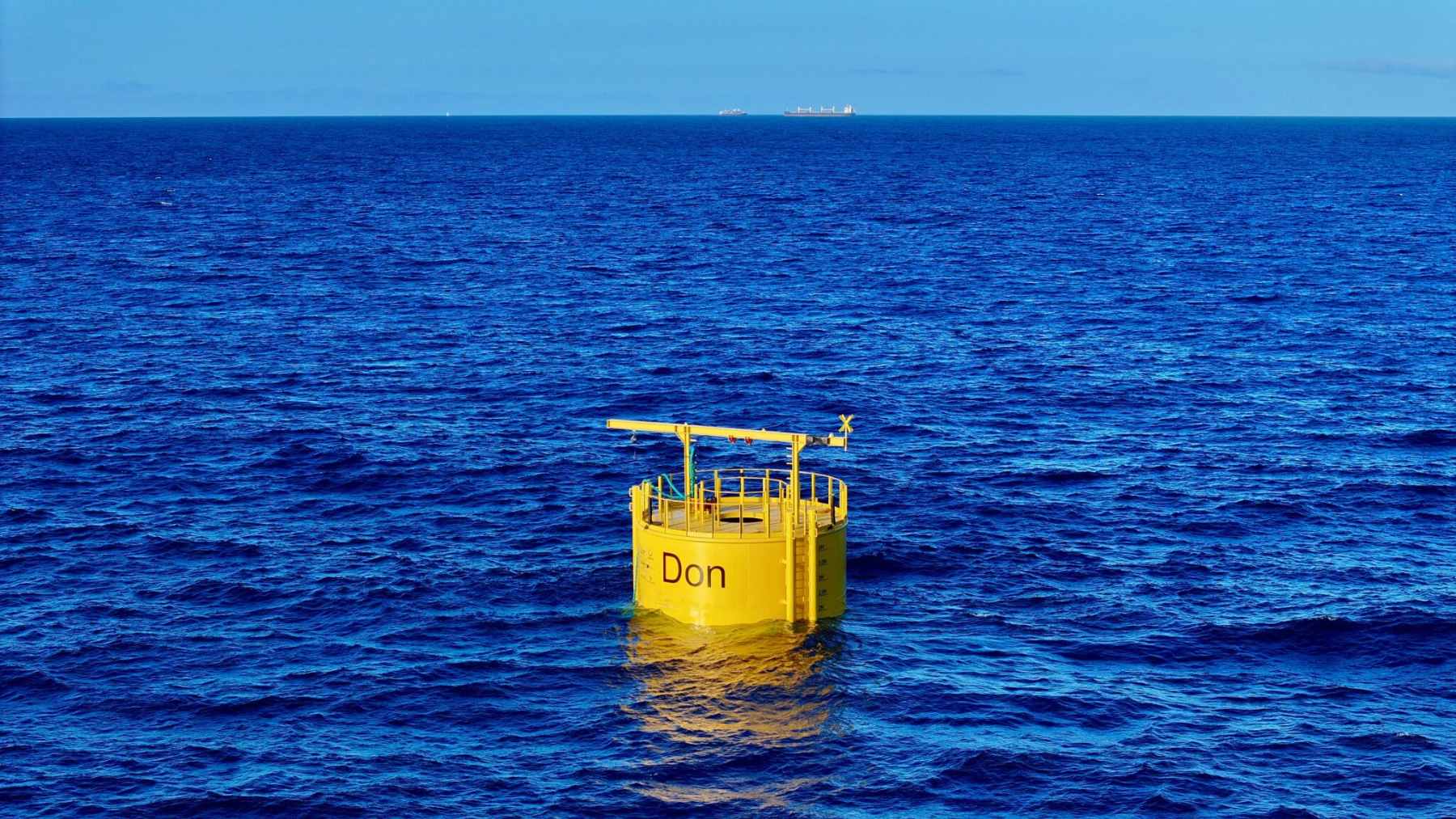
A British clean energy company has put an unusual machine into the Atlantic off the Canary Islands, and the idea behind it is surprisingly simple. Global OTEC says it has completed the offshore installation of a floating prototype designed to produce renewable power from the temperature gap between warm surface seawater and cold deep water.
This is not a commercial power plant ready to lower anyone’s electric bill tomorrow. Still, the test matters because many island grids still rely heavily on diesel and heavy fuel oil, which can mean volatile costs, noisy generators, exhaust fumes, and a dependence on fuel that has to arrive by ship.
A different kind of marine power
The technology is called Ocean Thermal Energy Conversion, or OTEC. It uses warm surface water to help vaporize a working fluid, sends that vapor through a turbine, and then uses cold deep seawater to condense it back into liquid.
What makes that attractive? For the most part, it does not wait for sunshine or wind. In tropical regions, the ocean can keep that temperature difference day and night, which makes OTEC interesting for places that need clean power after sunset and during calm weather.
That does not make it magic. A small temperature gap is hard to turn into useful electricity, and offshore equipment has to survive salt, waves, corrosion, and the kind of weather that can humble robust machines.
What was installed
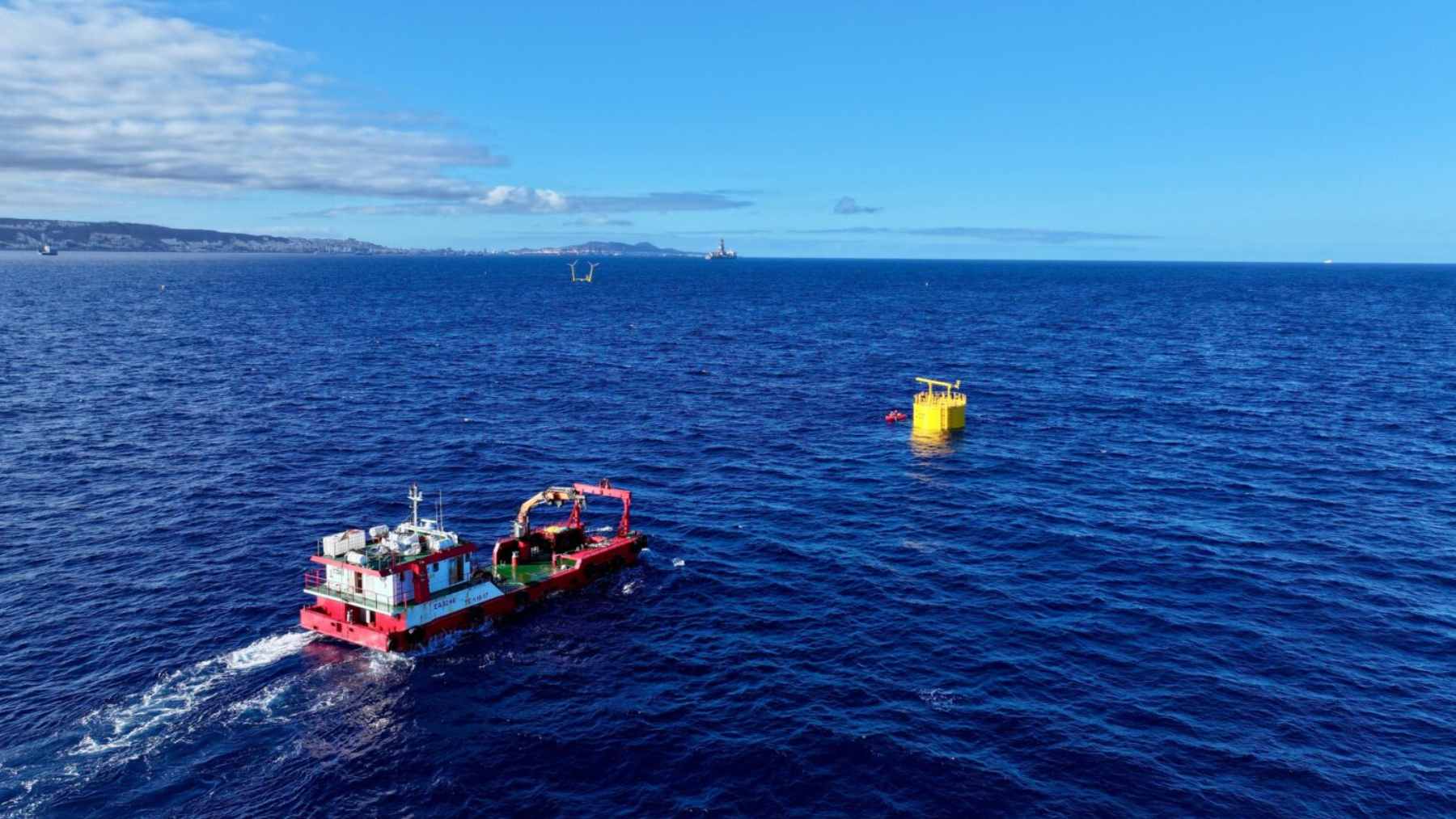
The prototype is part of the European PLOTEC project and sits at the Oceanic Platform of the Canary Islands, known as PLOCAN, off Gran Canaria. PLOCAN said the floating structure, named “Don,” was designed to operate in open-sea conditions and generate continuous clean energy by using the ocean’s thermal gradient.
Global OTEC says the latest milestone was the deployment and connection of the vertical seawater intake riser. That part matters because the pipe brings up the cold deep water that lets the OTEC cycle close, and the company describes it as one of the most complex steps in an offshore system.
Dan Grech, founder and CEO of Global OTEC, summed up the significance with a clear line: “This is the moment where OTEC moves away from controlled environments into the real world,” he said.
Why islands are watching
The Canary Islands are not just a scenic backdrop for the trial. PLOCAN gives engineers access to deep water close to shore and a real marine test site, which is much closer to everyday operation than a lab tank or a neat computer model.
That setting matters for tropical and subtropical islands where solar panels and wind turbines may help, but land can be scarce and seabed conditions close to shore can be difficult. At the end of the day, a small grid still has to keep lights, hospitals, water pumps, and air conditioning running when the weather changes.
Global OTEC says offshore OTEC could cut the pipe length needed compared with onshore systems by about 80%. The company has also identified more than 25 GW of existing fossil fuel capacity across tropical islands that could be replaced over time, though that figure points to a possible market, not a guaranteed buildout.
The bigger project
PLOTEC is backed by Horizon Europe and UK Research and Innovation, with PLOCAN saying the project carries a total investment of €3.5 million ($4.1 million).
The consortium includes partners from Spain, the United Kingdom, Portugal, Italy, and Austria, including Global OTEC, WavEC, Quality Culture, AGRU, Cleantech Engineering, and the University of Plymouth.
The European Commission’s CORDIS page describes the project as an effort to turn solar heat stored in the ocean into dependable power, while also testing circular materials, modeling tools, and economic, social, and environmental impacts.
In practical terms, the trial is not only asking whether the platform can float and work, it is also asking whether this technology can be built responsibly and affordably. That is the harder question, and it is the one investors, island governments, and energy planners will care about most.
What comes next
PLOCAN said in February 2026 that PLOTEC had entered its final validation phase under real conditions, after months of adverse sea conditions that gave the team useful stress-test data.
The partners are now working to fold those results into design and simulation models before the project closes, which PLOCAN said was scheduled for mid-2026.
Global OTEC is already looking beyond Spain. The company says it plans to take its first OTEC Power Module to Hawaii, a move that could push the technology closer towards a practical island energy product if the offshore validation holds up.
For now, the biggest news is more modest, and probably more important. OTEC has left the controlled environment and is being measured against the ocean itself. The sea will have the final word.
The official statement was published on Global OTEC.