When the grid fails, diesel generators usually take over. They keep the lights on, but they are loud, pricey, and painfully dependent on fuel deliveries that can vanish after a storm or during a conflict, the kind of disruption that turns “backup power” into an everyday problem.
That’s why a decade-old student invention feels relevant again. In 2015, Florida teenager Hannah Herbst built a simple probe called BEACON that turns moving ocean water into electricity using low-cost parts, and she designed it with remote communities in mind. What if the strongest “power plant” in a coastal village is the current under its docks?
The BEACON idea in plain English
Herbst, then 15 and based in Boca Raton, won the Discovery Education 3M Young Scientist Challenge and a $25,000 prize for an “energy probe prototype” aimed at harvesting “untapped energy from ocean currents,” inspired by a pen pal in Ethiopia who lacked reliable power.
In other words, the goal was not a flashy gadget, but a tool for places where power lines and water systems never arrived.
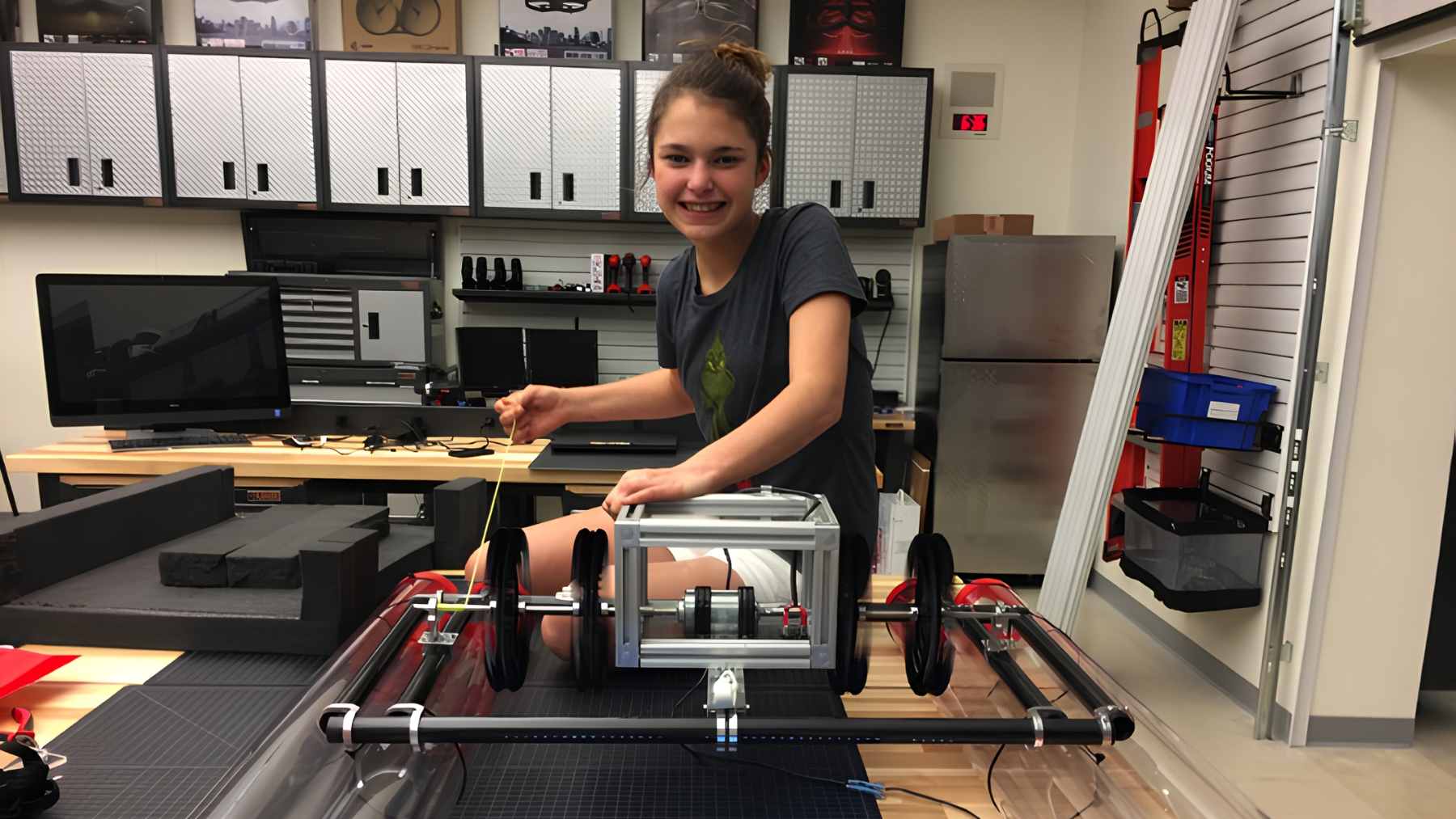
The prototype itself is refreshingly straightforward. Reporting at the time described a 3D-printed propeller and pulley system connected to a small generator inside a PVC tube, with early testing in the Boca Raton Intracoastal Waterway powering LED lights.
Herbst also talked openly about making the design shareable. “When I’m done developing it, I’m going to open source it,” she told Fast Company, promising that anyone could access the materials list and data to build their own version. That open approach matters, because it turns a single prototype into a blueprint others can adapt.
Ocean power is predictable, but it is not plug-and-play
What makes BEACON interesting is that it does not lean on the sun or the wind. Ocean currents do not care about daylight, and the U.S. Department of Energy notes that marine energy comes from the natural movement of water and that these resources are “highly predictable,” which is exactly what you want when the alternative is rationing battery time.
That predictability matters for remote islands and coastal villages where a week of clouds can be more than an inconvenience.
DOE also estimates the U.S. marine energy resource could provide the equivalent of about 57% of U.S. electricity generation in 2019, which explains why researchers keep returning to the sea even when prototypes look small.
But the same ocean that offers a steady push can also punish hardware, and the maintenance bill can eat savings fast. Think saltwater corrosion, barnacle growth, and storms that do not care about your warranty.
On the global side, the ocean-energy market is still tiny compared to solar and wind. The International Renewable Energy Agency estimated about 494 megawatts of installed ocean energy capacity worldwide by the end of 2024, a reminder that the industry is early and costs remain high.
Yet small systems can matter long before the gigawatt era, especially when the alternative is burning diesel for every kilowatt-hour.
Scaling up means solving nature, law, and finance
A $12 prototype is a great headline, but ocean hardware is unforgiving. Turbine blades can snag debris, anchors can fail, and even minor design changes can shift impacts on fish or marine mammals. The trouble is that deploying anything offshore triggers permits, consultations, and often years of data collection.
In the U.S., the Marine Energy Environmental Toolkit pulls together the regulatory map, risk categories, and site-specific issues that can slow projects down.
It is not glamorous, but it is the difference between a promising demo and a project that survives public review. For communities that want clean power without wrecking ecosystems, this is where the hard work lives.
There is also the science gap. A major 2020 report led by Pacific Northwest National Laboratory noted that we still have limited data on how marine energy devices affect animals and habitats, particularly over long periods and at commercial scales. That uncertainty makes investors nervous and regulators cautious, which drags timelines out.
Defense and telecom are watching coastal power for a reason
Here is the part that rarely makes the clean-energy headline: remote energy is also a military problem, because fuel convoys and fragile grids are strategic vulnerabilities. The Department of Defense’s Operational Energy Strategy says the Pentagon wants to reduce operational energy demand, diversify supply, and build resilience for contested logistics.
That includes renewables, storage, and better energy management, not because it sounds good on a brochure, but because it can save lives and extend operations. On the civilian side, the same logic is showing up in telecom. If a cell site loses power after a hurricane, the phone signal disappears right when families are trying to find each other.

In 2024, the U.S. Navy highlighted a renewably-powered ocean buoy deployed near Monterey Bay that supports research and tests 5G maritime communications.
The point is not that buoys will power cities, but that ocean-based systems can provide persistent power and data links where cables or fuel deliveries are risky. That overlap between clean energy and security is only going to grow.
What readers should keep in mind
The BEACON story is inspiring, but it is not a plug-and-play solution yet. The real takeaway is that small, cheap prototypes can spotlight a resource that is easy to overlook, especially for coastal regions that already live with traffic noise, generator exhaust, and high fuel costs.
If policymakers want this to scale, they will need to treat ocean energy like infrastructure, not a science fair. That means patience on permitting, real money for long-term testing, and serious planning for maintenance and decommissioning, so today’s “clean” device does not become tomorrow’s seafloor trash.
For readers, the key question is not whether ocean currents can make electricity, but whether the full system makes sense where you live. Look for projects that show durability, clear environmental monitoring, and a plan for maintenance, not just a flashy video of LEDs lighting up.
The smartest path likely blends ocean power with storage, efficient appliances, and of course, other renewables.
And one more thing: sporadic electricity access is still a daily reality for millions, and solutions that work in rich countries do not always survive in places with weak grids and limited repair capacity.
The official commentary was published on International Energy Agency.