Cuba’s energy crisis has made even a simple workday harder to finish. Fuel is scarce, blackouts are routine, and many people who depend on electric tricycles for deliveries or passenger rides face the same frustrating question every morning: will the battery last long enough?
A 21-year-old Cuban entrepreneur, Yadán Pablo Espinosa, has turned that problem into a small but striking clean-energy business. From a home workshop in Arroyo Naranjo, on the outskirts of Havana, he and his family team have installed solar panels on more than 15 electric tricycles, giving workers extra range without asking more from an overloaded power grid.
Solar roofs on wheels
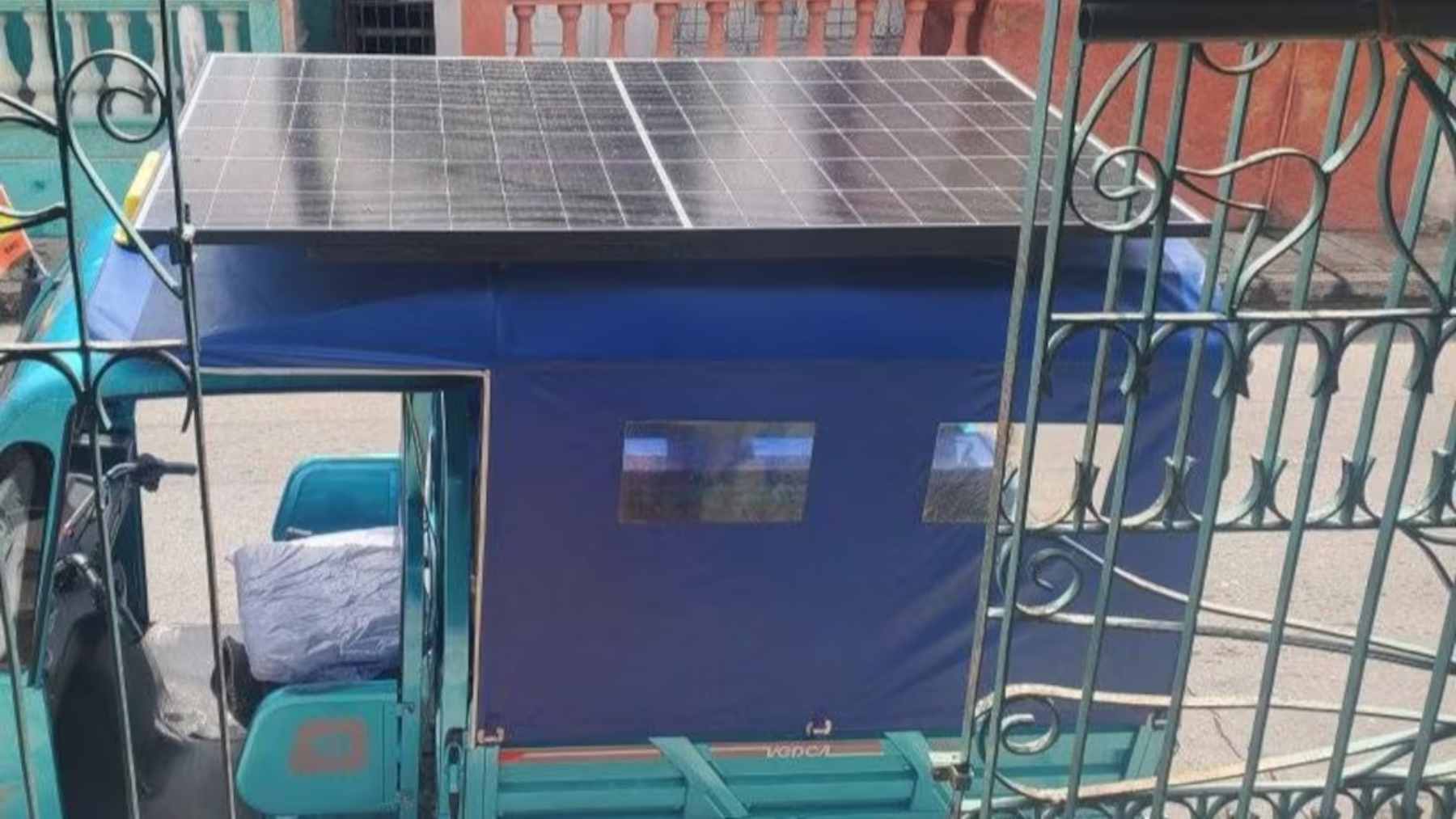
The idea is simple, but useful. Espinosa mounts a photovoltaic panel on the roof of the tricycle, using a handmade iron frame that also works as shade for the driver. In that sticky Cuban heat, that matters, too.
According to EFE, the system sends solar power directly to the motor while the vehicle is moving, with support from the battery. Once the tricycle stops, the energy captured by the panel helps recharge the battery.
That does not make the vehicle fully independent from charging. For the most part, it reduces the pressure on the battery during the workday, which can mean fewer forced stops, fewer lost trips, and less anxiety about where the next outlet will be.
A crisis behind the invention
Cuba has been suffering a severe energy crisis since 2024, driven by aging thermoelectric plants, lack of foreign currency for fuel imports, and more recently, tighter U.S. restrictions on oil supplies, according to EFE and Reuters.
The island received a 110,000 ton Russian oil shipment in late March, but Reuters reported that Cuban officials warned it was only short-term relief. Energy Minister Vicente de la O Levy said Cuba would need eight similar ships each month to cover generation and industrial needs.
At street level, a solar panel on a tricycle is not just a green gadget. It is a workaround in a country where the electric bill, the fuel line, and the daily commute have all become part of the same problem.
Why tricycles matter
Electric tricycles have become a visible part of Havana’s transport system. Some move passengers through crowded streets, while others carry food, goods, and market supplies in a city where gasoline vehicles have become harder to keep running.
EFE reported that many gas stations had stopped selling fuel for more than two months by early April, while interprovincial bus departures had been reduced to a quarter of normal levels. Local transport and other lower-priority services were also heavily cut back.
That’s why extra battery life matters. Less downtime can mean more deliveries, more fares, and a better chance of getting through the day without turning away customers because the vehicle is running out of charge.
Built without state backing
Espinosa’s project is not a state-funded energy program. EFE reported that he began installing the solar modules less than a month before its April 28 report, working with his father, three brothers, and a friend.
Together, they build the iron supports, acquire the panels, and install the systems themselves. The panels used so far have capacities between 550 and 650 watts, according to the same report.
It is small-scale. Still, small-scale does not mean minor when a worker’s income depends on one vehicle. For customers, the difference between a tricycle that lasts all day and one that dies early can be the difference between bringing money home and losing work.
Workers see the change
One client, Yoandis Castro, told EFE the solar panel is “very good, because it helps charge.” Castro, a 47-year-old Havana resident, said she transports goods for markets and plans to expand her electric vehicle fleet with panels.
Orlando Muñoz, 62, who transports passengers near the busy 100 and Boyeros avenues in Havana, also said his solar-equipped tricycle has “greater performance.” He added that it helps keep the battery alive while he works.
That may sound modest. But in a city shaped by traffic jams, noise, exhaust fumes, and now fuel shortages, every extra hour of clean electric transport has value.
Clean energy under pressure
The environmental benefit should not be overstated. Fifteen tricycles will not transform Cuba’s emissions profile, and solar panels alone cannot repair a fragile national grid.
But this experiment does show something important: renewable energy becomes especially powerful when it solves an everyday problem, not just when it appears in a national plan or a corporate brochure.
U.N. experts recently described the U.S. fuel blockade on Cuba as “energy starvation” and said it has pushed essential services toward the brink. They also noted that the crisis could open a path for Cuba to embrace renewable energy more deeply.
A small workshop with a big lesson
Espinosa’s homebuilt solar tricycles are not polished showroom technology. They are practical, improvised, and aimed at people who need to keep moving.
That is what makes the story stand out. At the end of the day, this is clean tech doing what clean tech is supposed to do: turning available energy into real-world resilience.
The report was published by EFE and carried on SWI swissinfo.ch.