Russia’s expanding use of Shahed-type attack drones has turned air defense into an arithmetic problem as much as a military one. A country can stop an incoming drone with a sophisticated missile, but doing that hundreds of times can burn through money and scarce ammunition at an alarming pace.
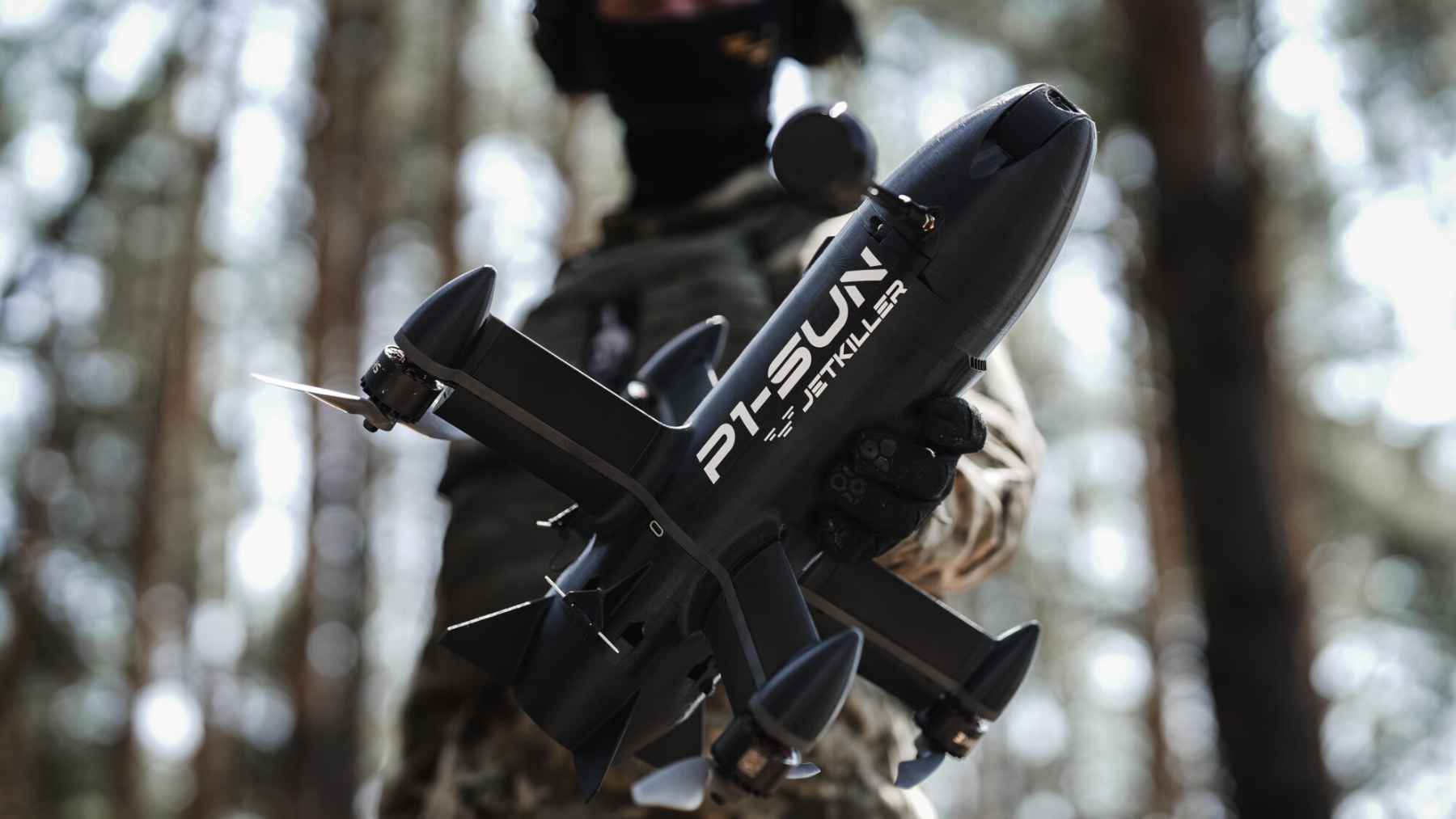
Ukraine’s answer is increasingly a smaller interceptor built for the job. SkyFall says its P1-SUN has destroyed 5,000 Shaheds, with claimed effectiveness of 80% to 100% depending on weather and operator experience. The bigger story, though, is the network around it, including radar, remote control, training, mass production, and increasingly AI-assisted guidance.
A cheaper layer
Why spend a multimillion-dollar interceptor on every incoming drone if a purpose-built system can handle some of them? Reuters reported that P1-SUN versions supplied to Ukraine cost about $1,000, while a Shahed-136 may cost between $50,000 and $100,000 and a PAC-3 interceptor can cost around $4 million.
That does not make the P1-SUN a replacement for Patriot, but it changes the math for lower-tier threats.
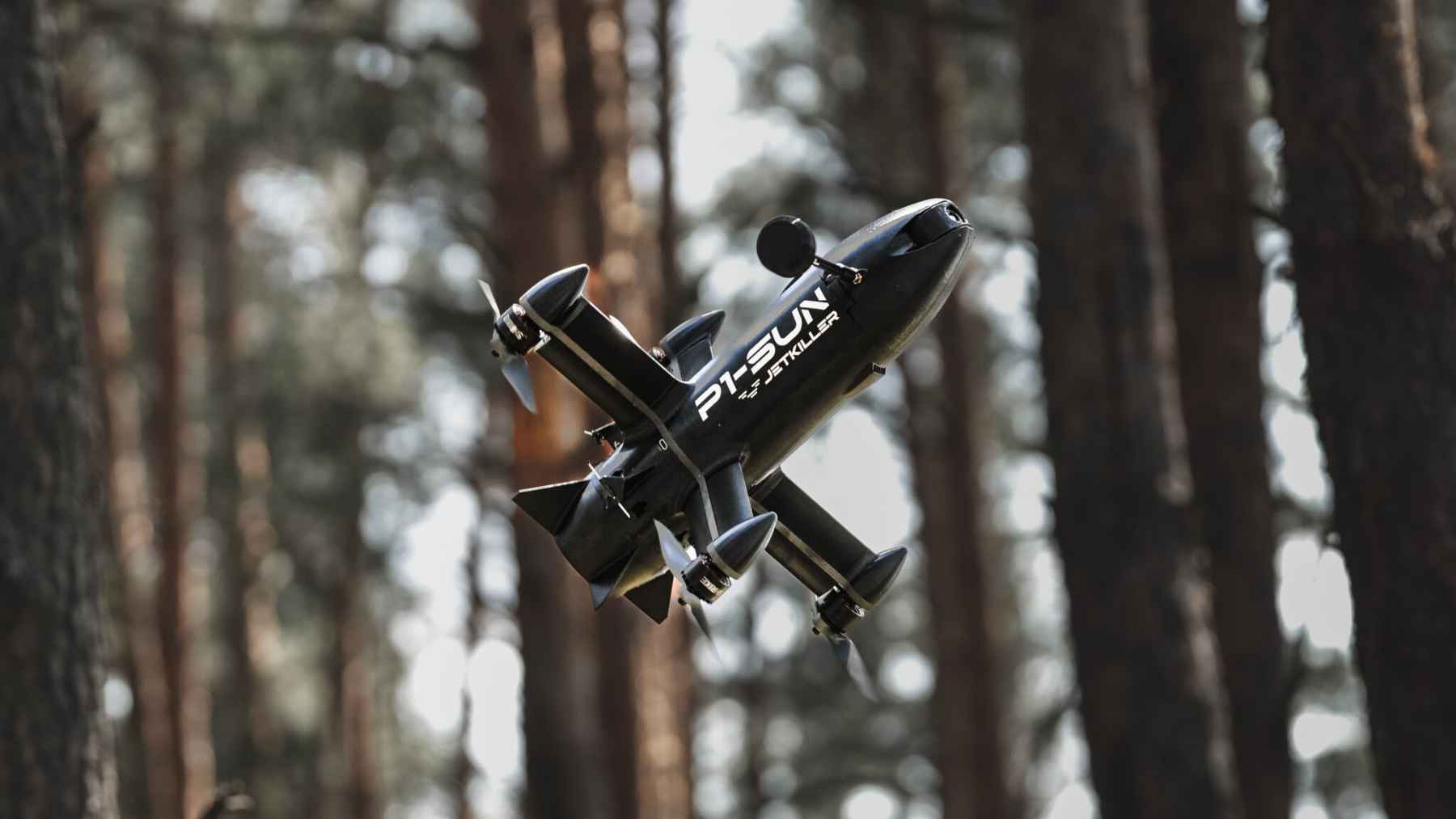
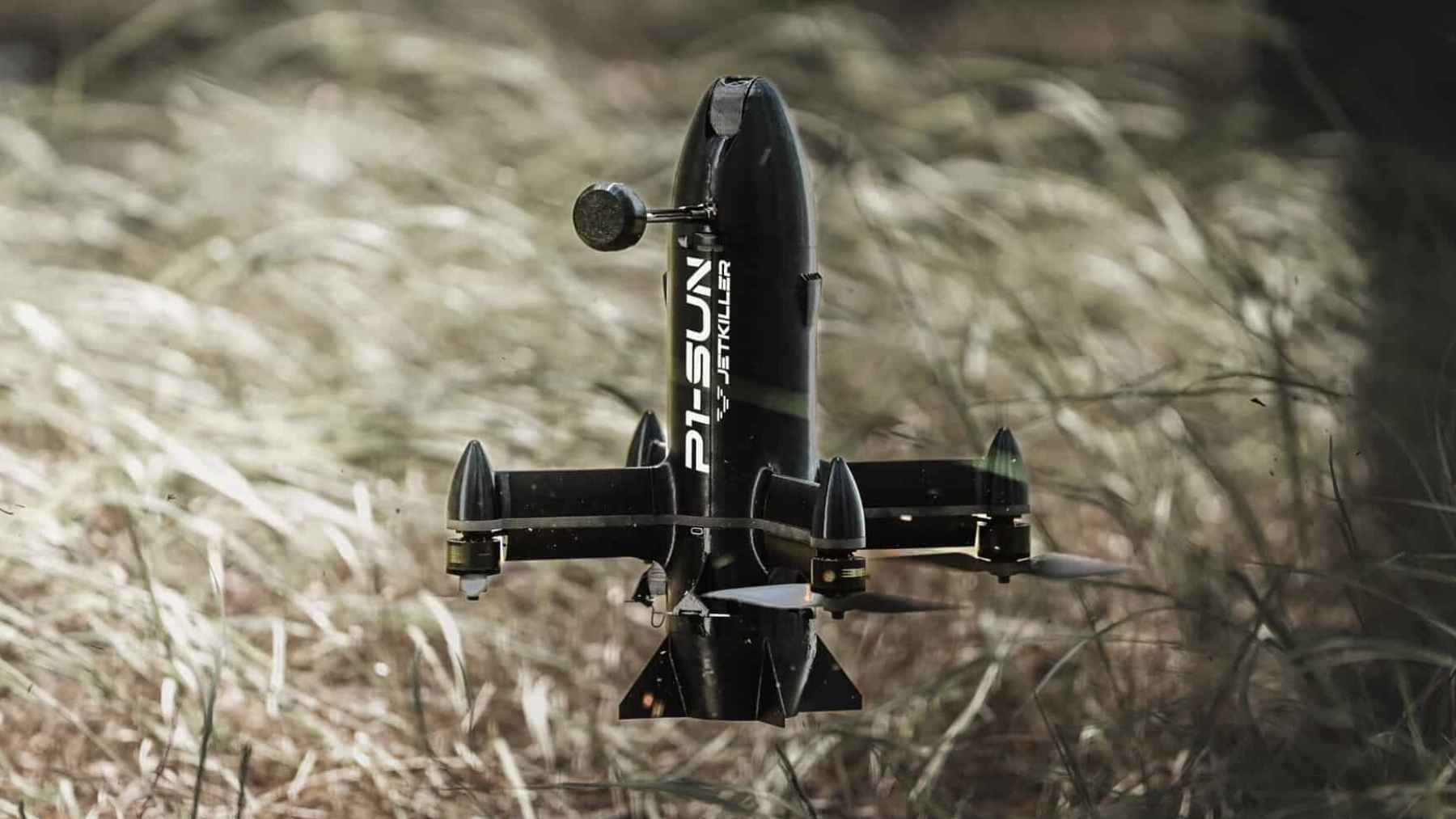
Public specifications vary by model and configuration. The latest P1-SUN Long is reported to reach about 193 mph, climb to roughly 29,500 ft., operate 21 miles from its launch point, and pursue a target for up to 17 minutes with a roughly 1.8-lb. warhead. In practice, it is a short-duration hunter, not an aircraft meant to patrol the sky for hours.
The tally needs context
During a demonstration for the Polish Press Agency, a SkyFall representative identified as Maksym said, “It has already shot down five thousand Shahed drones, which we have confirmed.”
He said the tally included newer or modified threats, such as jet-powered Shaheds, models using Starlink terminals, drones carrying anti-tank mines, and aircraft acting as carriers for smaller FPV drones.
Those are manufacturer figures, and the latest total has not been independently audited in the public reporting reviewed here. Reuters reported more than 1,500 Shahed interceptions in early March, while a June report citing SkyFall put the number above 3,500 over six months. The rising totals suggest very rapid deployment, but readers should keep the attribution in mind.
Radar and pilots matter
The P1-SUN is not simply launched into open sky and told to find something. SkyFall says a radar system detects the incoming target and sends its position to an operator team, then the interceptor uses that guidance and its live image feed to locate and destroy the drone. That is why the airframe is only one part of the result.
SkyFall also says its academy has trained more than 20,000 military personnel, including pilots, engineers, and instructors, with round-the-clock support available to crews. The company says an interceptor can be placed at a launch site while the pilot controls it remotely from another Ukrainian city or even abroad.
That may reduce risk and make scarce expertise easier to share, but dependable communications remain essential.
From a garage to mass production
SkyFall puts its current P1-SUN production capacity at 50,000 units per month. Reuters reporters who visited an undisclosed facility described rows of 3D printers making plastic parts alongside workers assembling and soldering the aircraft. Capacity is not the same as actual monthly deliveries, but the number shows how seriously the company is treating scale.
SkyFall says it began after Russia’s full-scale invasion in February 2022, when an engineer built early designs in a garage, and now employs designers, electronics engineers, former missile-industry specialists, and about 200 war veterans.
The company also makes the six-rotor Vampire, which can carry about 60 lbs. for attack, remote mining, or logistics. It told the Polish Press Agency (PAP) that one recently delivered blood to a wounded soldier.
AI takes on the final chase
In June 2026, SkyFall presented the P1-SUN Long with an AI-based terminal guidance system. Depending on the optics, the company says the software can detect and lock onto a target from about 1,000 meters away, while remote updates allow new algorithms to reach deployed systems without a trip back to the factory.
SkyFall also says the module runs on standard processors rather than scarce high-end graphics chips.
The current concept still leaves an important role for people. A company representative said the operator would authorize the mission, then the interceptor could launch, locate the target, and complete the attack while the human monitored the process.
SkyFall’s longer-term vision includes one pilot supervising 10 or more interceptors and eventually overseeing swarms, but that remains a development path rather than proof of fully autonomous mass operations today.
Why other countries are watching
The economics have attracted attention well beyond Ukraine. Reuters reported interest from the United States and Middle Eastern countries, while SkyFall estimated it could export 5,000 to 10,000 interceptors without reducing Ukraine’s supply. The harder part may be training, because a drone can ship in a crate, but combat judgment cannot.
P1-SUN is not a magic shield. Weather, operator skill, radar coverage, and communications still shape the outcome, but for cities and power networks under repeated attack, that balanced system may matter more than any single headline number.
The field report was published on PAP.