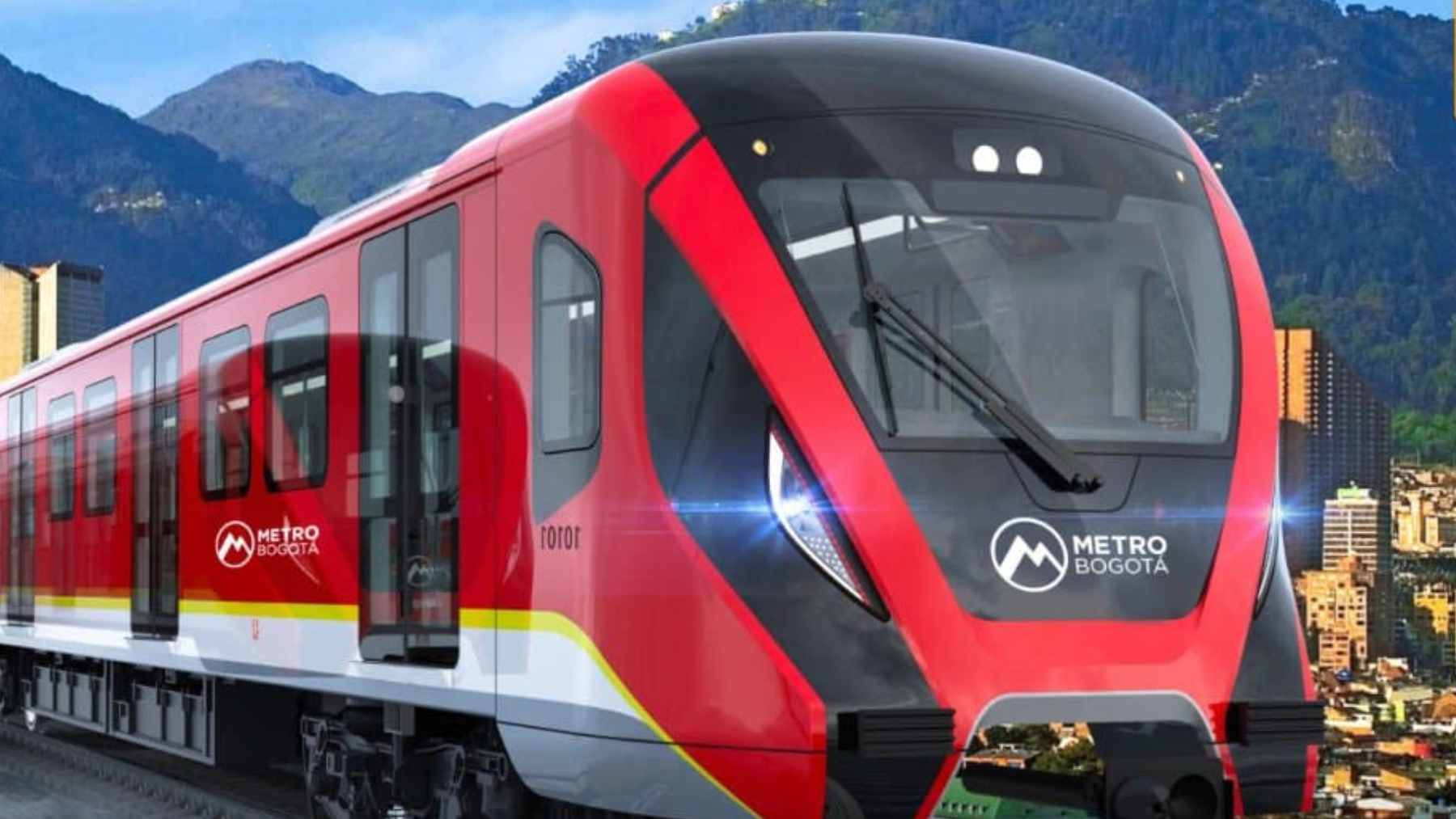
What changes when a city that has spent more than 80 years waiting for a metro finally sees a train move by itself above the street? In Bogotá, that question is no longer theoretical.
The first line of the city’s metro has moved into energized and autonomous testing on its elevated viaduct, turning one of Latin America’s most-watched infrastructure projects into something people can actually see rolling.
The latest official update also changes the scale of the story. Bogotá now has 11 of the 30 trains that will make up Line 1, while 19 more are expected to arrive this year from China, according to the city’s May 29 update. The line is expected to be completed in September 2027, with commercial service planned for March 2028.
A train that now moves by itself
The biggest milestone came when the train began moving with its own electric power on the viaduct. Before that, the first rolling test used support vehicles to pull train #2 from the Bosa workshop yard toward Station 2, a slower but necessary step to check rails, curves, clearances, and other basic conditions.
Then came the moment that felt different. On May 25, Bogotá confirmed that one train had moved with electric energy on the elevated track, without being pulled by another vehicle. Mayor Carlos Fernando Galán said the system uses GOA4 automation, meaning it is designed to operate without a driver in normal service.
Built in China
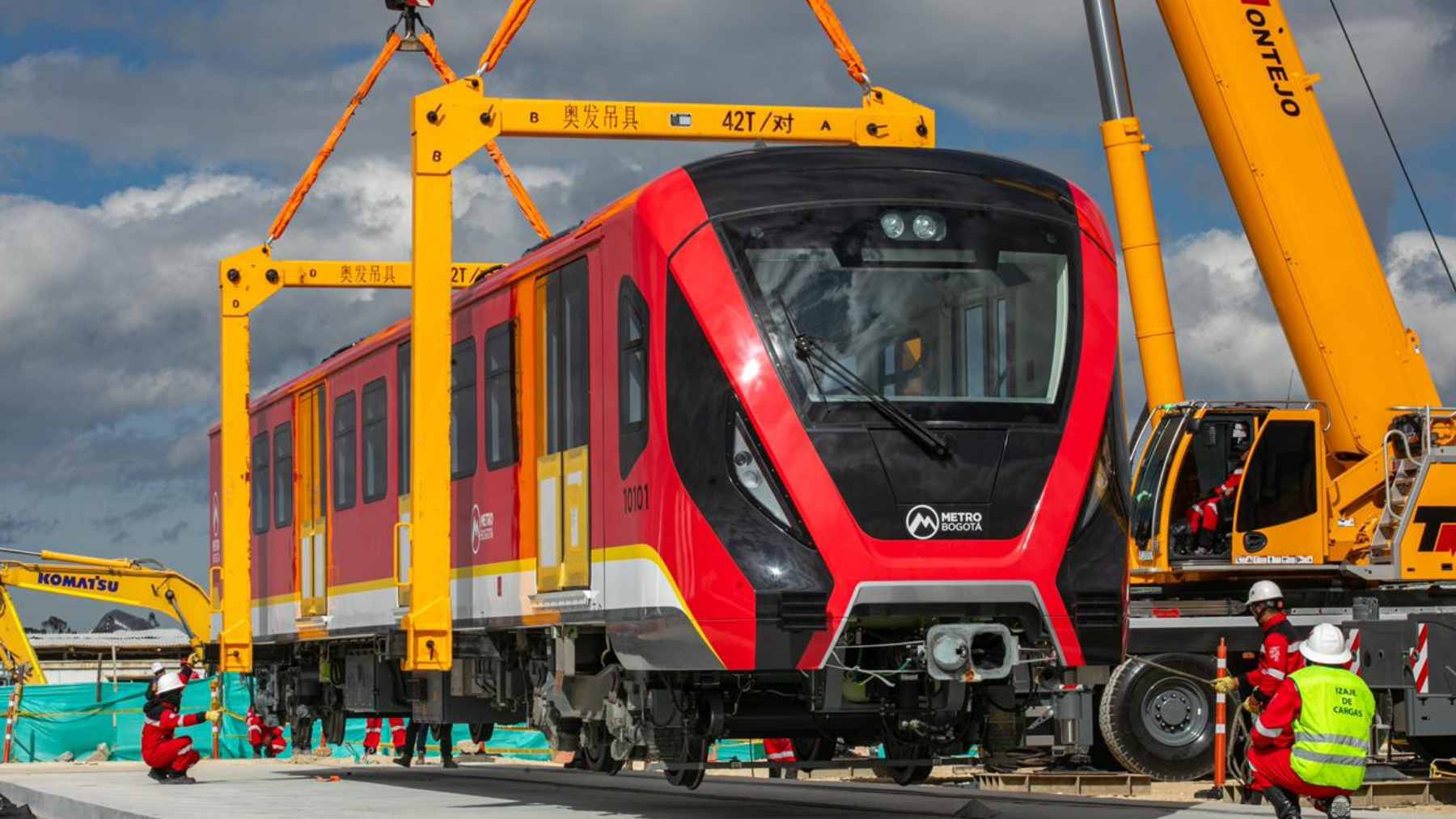
The trains are being manufactured in Changchun, China, by CRRC Corporation Limited, one of the world’s major rail manufacturers. From there, the trains travel to the port of Qingdao before being shipped to Colombia, a long industrial chain that shows how deeply Chinese rail technology is now tied to Bogotá’s future commute.
Each train has six cars and can carry up to 1,800 passengers, with 252 seats. They are about 440 ft. long, around 9.5 ft. wide, and nearly 12.8 ft. high, with an average commercial speed of about 26 mph. That may sound modest until you compare it with a daily trip that can now take well over an hour in traffic.
The technology is not just about shiny new cars. The trains are fully electric, automatic, and monitored from an operations control center. They will also use CBTC signaling, a communications-based system that helps trains keep safe distances and operate more efficiently.
Why the air matters
Bogotá’s metro is being sold as a mobility project, but it is also part of a much bigger environmental bet. The city’s climate plan says transportation accounts for 48% of its greenhouse gas emissions, and it points to an electric metro network as one of the key tools for shifting away from fossil fuel based urban transport.
This will mean fewer trips need to depend on diesel buses, motorcycles, private cars, or long stop-and-go traffic jams. Electric trains do not produce tailpipe pollution along the route, and in a city where commuters can spend a painful chunk of the day on the road, that matters.
Cleaner air is not an abstract bonus when people are breathing it on sidewalks, at bus stops, and outside schools.
There is also an energy detail that is easy to miss. Galán said the trains can recover up to 30% of the energy used when braking and feed it back into the system for other trains to use. Small technical details like that are where the environmental promise of the project either becomes real or stays stuck in a brochure.
A long line with a longer ambition
Line 1 is already large by regional standards. The main corridor runs about 14.9 miles, linking Bosa in the southwest with Calle 72, and official data says it will include 16 stations, with 10 connected directly to TransMilenio.
Bogotá is also studying an extension to Calle 100. That proposal would add roughly 2 miles of elevated track and three more stations, connecting the line with areas near Calle 85, Calle 92, and north of Calle 100.
One of the most important pieces would be a link with RegioTram and TransMilenio, turning the metro into part of a wider regional web instead of a single isolated line.
That is where the project starts to look less like a train and more like a new city map. For the most part, the promise is simple: make transfers easier, cut travel times, and give people a reason to leave some car trips behind.
The street level test
The city says the project has already reached 77.5% progress, while about 9 miles of viaduct had been built by the latest official update. More than 16,500 workers are now involved, and the administration says the metro will transform more than 346 acres of public space along the corridor.
That sounds impressive, but the hardest part may still be ahead. A metro is not judged only by concrete, trains, or opening day ceremonies. It is judged by whether people trust it, whether transfers work, whether stations feel safe, and whether the service actually saves time on a rainy Monday morning.
For now, Bogotá has crossed a line that once felt distant. The train is on the viaduct, it has moved under its own power, and the remaining Chinese-built units are expected to complete the fleet before the system opens to passengers.
The official statement was published on Bogota.gov.co.