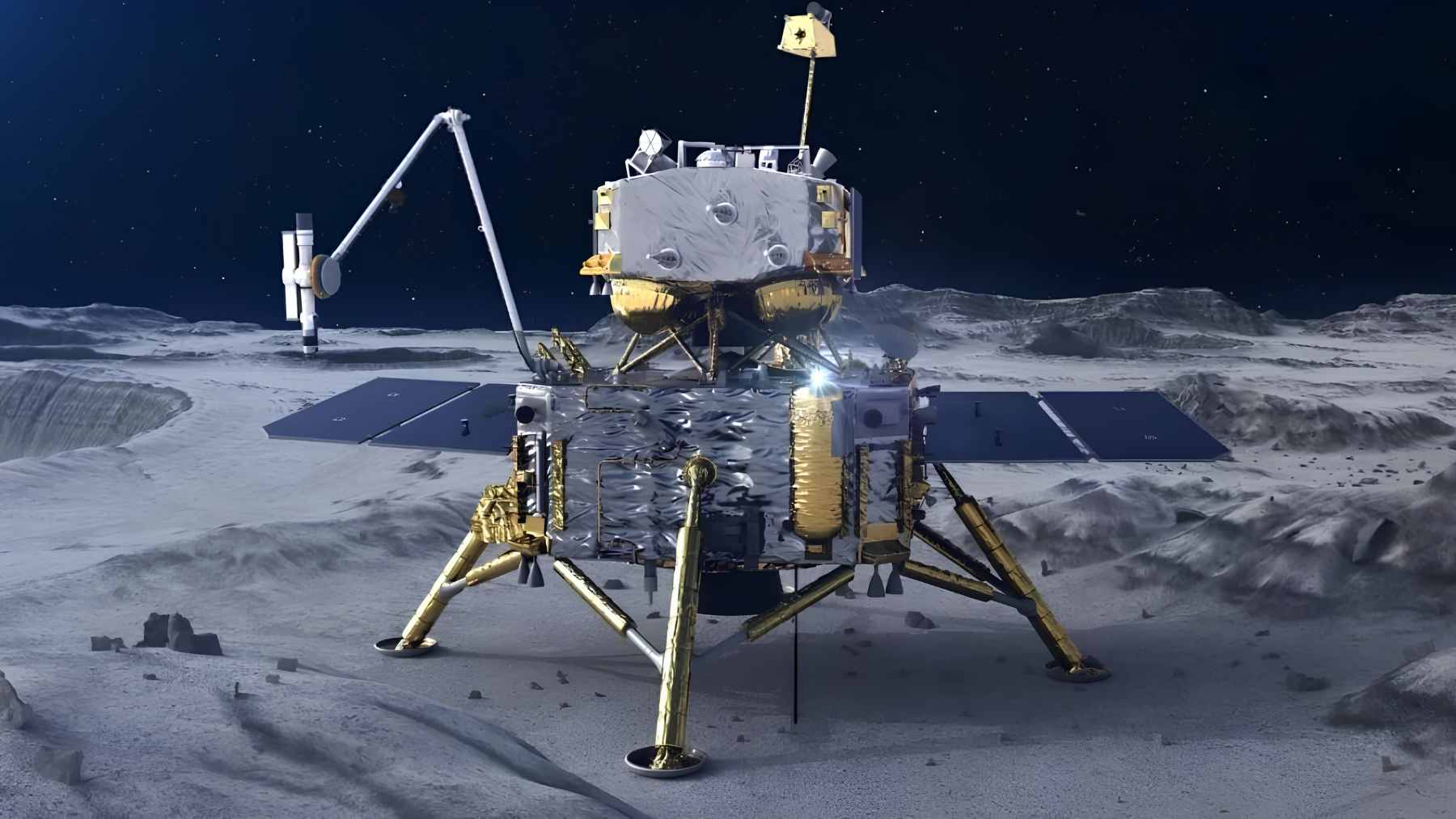
Two newly confirmed minerals pulled from China’s Chang’e-5 lunar samples are not just a win for planetary science. They are also a timely reminder that the metals powering electric cars, wind turbines, and modern defense systems are tied to messy supply chains and very real environmental costs.
The minerals are tiny, measured in micrometers, but the signal is big. As demand for rare earth elements keeps climbing, governments and companies are looking everywhere for options, including beyond Earth, while regulators face a new question: how do you protect environments you cannot even breathe in?
A discovery measured in micrometers
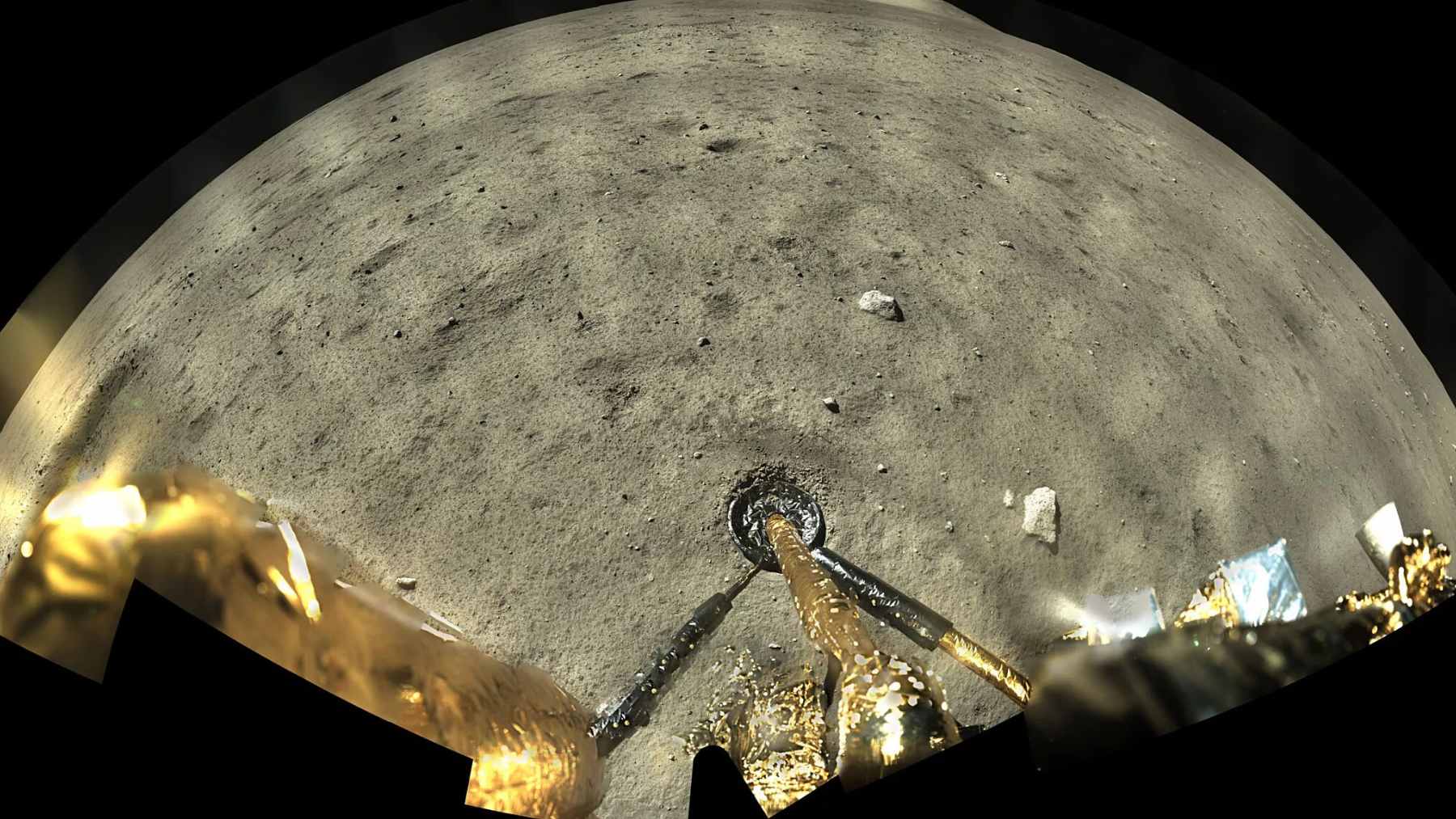
China’s space agency says researchers found two rare-earth phosphate minerals in Chang’e-5 soil. They are Magnesiochangesite-(Y) and Changesite-(Ce), and the International Mineralogical Association approved them through its Commission on New Minerals, Nomenclature and Classification.
The science is as delicate as it sounds. Xinhua reported grain sizes of roughly 2 to 30 micrometers for magnesiochangesite-(Y), with changesite-(Ce) tied to both mission samples and a lunar meteorite. One researcher described the work bluntly, saying “we had to hold our breath throughout” to avoid losing a “lunar treasure.”
On paper, these minerals look like dry chemistry. Magnesiochangesite-(Y) has an ideal formula of (Ca8Y)Mg(PO4)7, while Changesite-(Ce) is listed as (Ca8Ce)Fe(PO4)7 in the CNMNC newsletter. In practical terms, that is a rare-earth-rich fingerprint inside Moon dust.
Rare earths and the real-world environmental bill
Rare earths are not a niche curiosity anymore. The International Energy Agency says demand for magnet rare earth elements has doubled since 2015 and, under current policy settings, is set to grow by about a third by 2030 as electrification accelerates.
That growth shows up in everyday life, from the EV in the driveway to that summer electric bill you wish would chill out.
The longer-term math is not relaxing, either. In the IEA’s Net Zero by 2050 scenario, demand for rare earth elements doubles by 2040, alongside big increases for other transition materials. This is why every new data point about rare earth chemistry, even from the Moon, gets attention from industry.
But the environmental tab is hard to ignore. Research syntheses of rare earth production describe impacts tied to energy use, chemical processing, and waste streams, and broader assessments of energy-transition materials warn that mining and refining are water and chemical-intensive and can add to climate and pollution pressures.
If more rare earths are needed, the question becomes where they come from and how much damage is tolerated.
Strategic minerals now sit at the center of defense and business
Rare earths are not only about clean energy. The U.S. Geological Survey notes that rare earth elements show up in defense applications including components of jet engines, missile guidance systems, satellites, and communication systems. That reality turns “green tech” minerals into national security inputs almost overnight.
Supply risk is also part of the story. A USGS update on the 2025 U.S. critical minerals list stated that in 2024 the United States imported 80% of the rare earth elements it used, underscoring how exposed downstream industries can be.
This is why policy talk about “resilience” quickly becomes business talk about investment, processing capacity, and long contracts.
Companies are already positioning for that shift. For example, Reuters reported that Solvay planned a permanent magnet plant in France aimed at meeting a large share of European demand, explicitly framed around reducing dependence on external suppliers.
These moves will not eliminate mining, but they can change where value is added and where environmental rules bite.
Space is not a pollution loophole
It is tempting to imagine the Moon as a pressure valve for Earth’s mining footprint. The reality is more complicated, and space law quietly says so. The UN Office for Outer Space Affairs explains that the Outer Space Treaty calls on states to avoid “harmful contamination” of celestial bodies and also adverse changes in Earth’s environment from extraterrestrial matter.
Planetary protection agencies treat that as more than a slogan. ESA links the treaty language to operational requirements and international guidelines that aim to prevent forward contamination of other worlds and protect Earth during sample return.
Even with no mining on the table today, more missions and more material moving between worlds means more environmental governance, not less.
One detail from China’s reporting hints at why this matters. Xinhua quoted researchers calling changesite-type minerals a “fingerprint mineral,” useful for distinguishing lunar material from other sources, and China’s space agency said the new minerals have “no identical mineral counterparts found on Earth.”
That is exciting science, but it also underlines the need for careful handling as sample-return and commercial ambitions grow side by side.
The official CNMNC newsletter was published on European Journal of Mineralogy.