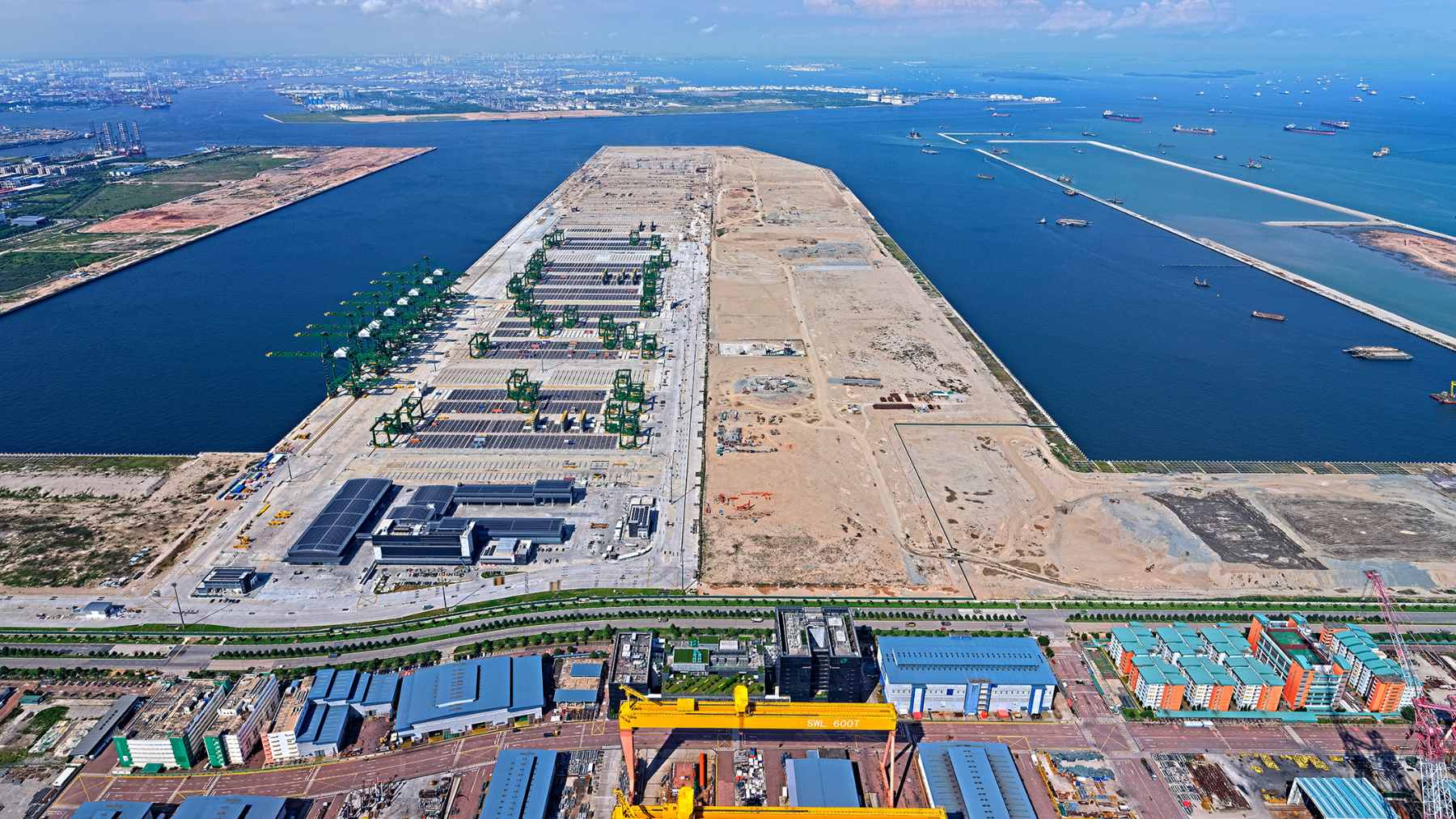
On Singapore’s western coast, hundreds of hollow concrete “caissons” are being lowered into the sea like building blocks. In Tuas Port Phase 2 alone, 227 of these 10-story structures form about 5.5 miles of seawall for a terminal expansion designed for the age of mega ships and nonstop logistics.
The pitch is bigger than cranes and concrete. Singapore is positioning Tuas as a “smarter and greener” port that leans on electrified equipment, automation, and digital control systems, with PSA aiming for net-zero emissions at Tuas by 2050.
The real question is whether that climate promise can keep up with the sheer scale of land reclamation and global trade the port is built to serve.
Ten-story boxes in the sea
The engineering centerpiece is easy to picture once you know what a caisson is. Singapore’s Maritime and Port Authority (MPA) describes Phase 2 construction as an 8.6-km (5.3-mile) wharf structure made with 227 caissons fabricated on site, tied to the largest reclamation phase at 387 hectares.
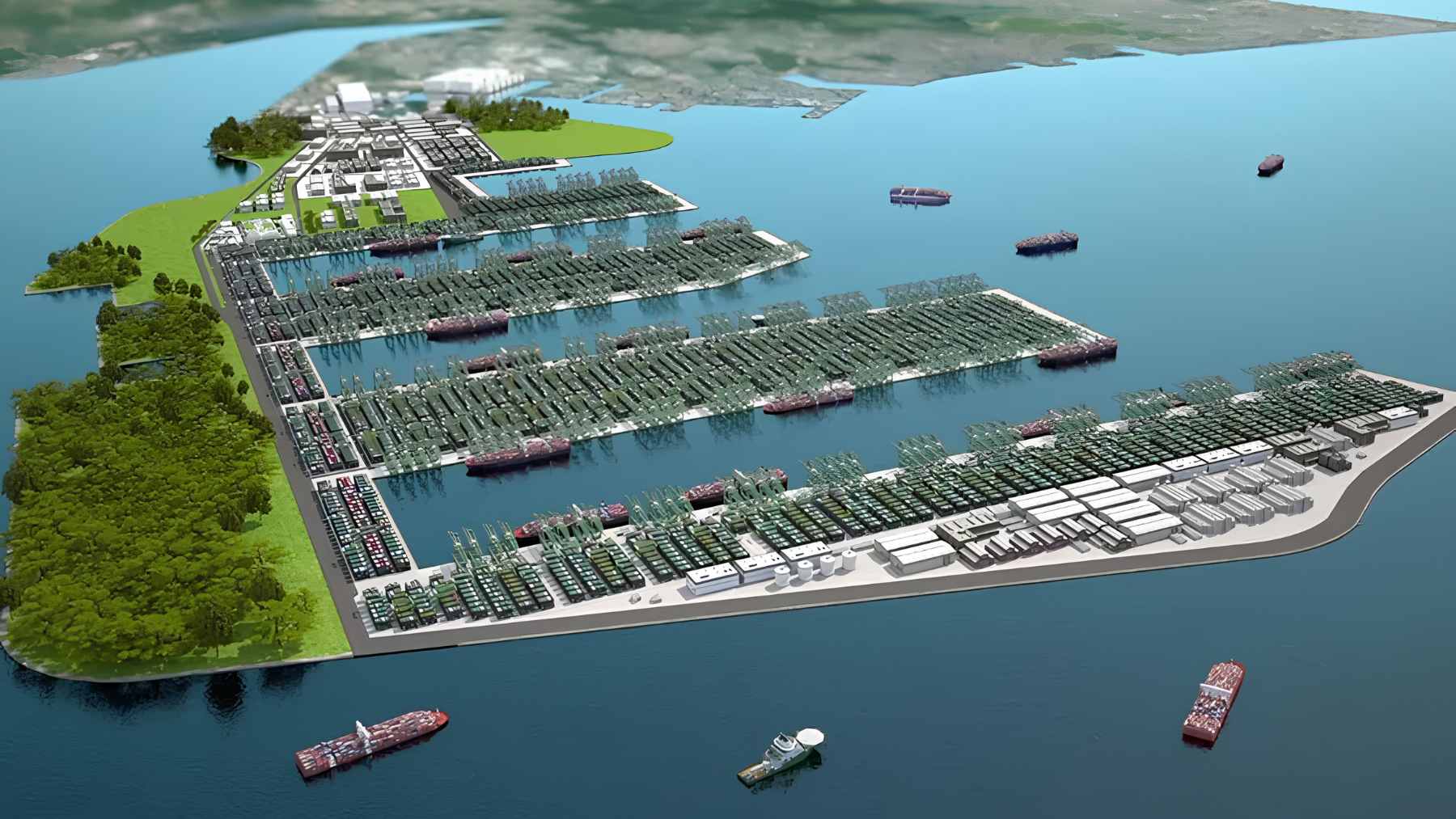
Those numbers matter because they are the foundation for a much bigger end state. When fully completed in the 2040s, Tuas Port is planned to cover about 3,300 acres with 66 berths and 16 miles of quay, with the headline capacity of up to 65 million TEUs a year.
A business bet on faster, cleaner throughput
For Singapore, Tuas is about consolidation and competitiveness as much as it is about concrete. MPA has said container operations are expected to move from Tanjong Pagar, Keppel, and Brani to Tuas by 2027, with Pasir Panjang consolidated by the 2040s.
In practical terms, the bet is that a single, highly automated complex reduces friction in the system. MPA has pointed to digitized reporting and clearance through its Maritime Single Window, and it has framed Tuas as physically and digitally integrated with the wider supply chain so cargo can flow with fewer bottlenecks.
Automation becomes the default setting
Tuas is being designed around remote operations and electrified machines, not just bigger berths.
Singapore’s transport ministry said the terminal will use electrified automated yard cranes and automated guided vehicles (AGVs) to move containers between yard and wharf, managed remotely from a control center, and supported by a private 5G network for 5G enabled AGVs and cranes.
The tech stack is also turning into a research project. A*STAR said PSA and its Institute of High Performance Computing signed a collaboration to develop large-scale fleet management for AGVs so the vehicles can move containers efficiently and securely as operations scale toward the 65 million TEU design capacity.
The green promise and the power reality
Singapore’s own documents attach hard climate targets to the project. The Ministry of Transport says PSA aims for Tuas Port to achieve net zero emissions by 2050, and it estimates electrified equipment and vehicles like AGVs cut carbon emissions by about 50% compared with diesel prime movers.
But electrification is only half the story because electricity still has to come from somewhere, and ports draw a lot of it.
Singapore says PSA plans to use a smart grid management system and green buildings, including a maintenance base administrative building certified as a Green Mark Platinum Super-Low Energy Building that uses 58% less energy than similar buildings and generates enough solar energy to offset its electricity use.
That is the same logic most households know from chasing a lower electric bill, just at industrial scale.
Reclamation reshapes the coastline and the seabed
The environmental stakes show up in the construction methods, not just the emissions targets. MPA notes Phase 1 involved soil improvement works across 1,023 acres including 726 acres of newly reclaimed land, plus seabed deepening to cater for larger ships, and Phase 2 adds another 956 acres of reclamation tied to the new seawall.
MPA has also highlighted attempts to be smarter about materials. In a 2018 media release, it said Phase II would use technologies such as E-cranes and reclaimer barges to maximize the use of dredged materials for filling above sea level, which can reduce the need to source new fill.
Still, dredging by definition removes sediments from the bottom of water bodies, and the ecological impact depends on where it happens, how it is managed, and how carefully the site is monitored.
Ports are now security infrastructure, too
Tuas is not only a business asset and climate test case. It is also critical infrastructure, and MPA’s own Phase 2 launch announcement in 2019 paired the port update with plans to replace its patrol vessels with seven next generation patrol craft with enhanced navigation, surveillance, and response capabilities for incidents including oil spills.
As the port becomes more automated, the attack surface shifts from fences to networks. In April 2026, MPA and PSA launched an Expression of Interest for autonomous inter-gateway container feeder vessel operations within Singapore’s port, and it explicitly lists cybersecurity among the key considerations alongside navigational safety and system redundancy.
The official statement was published on Maritime and Port Authority of Singapore.