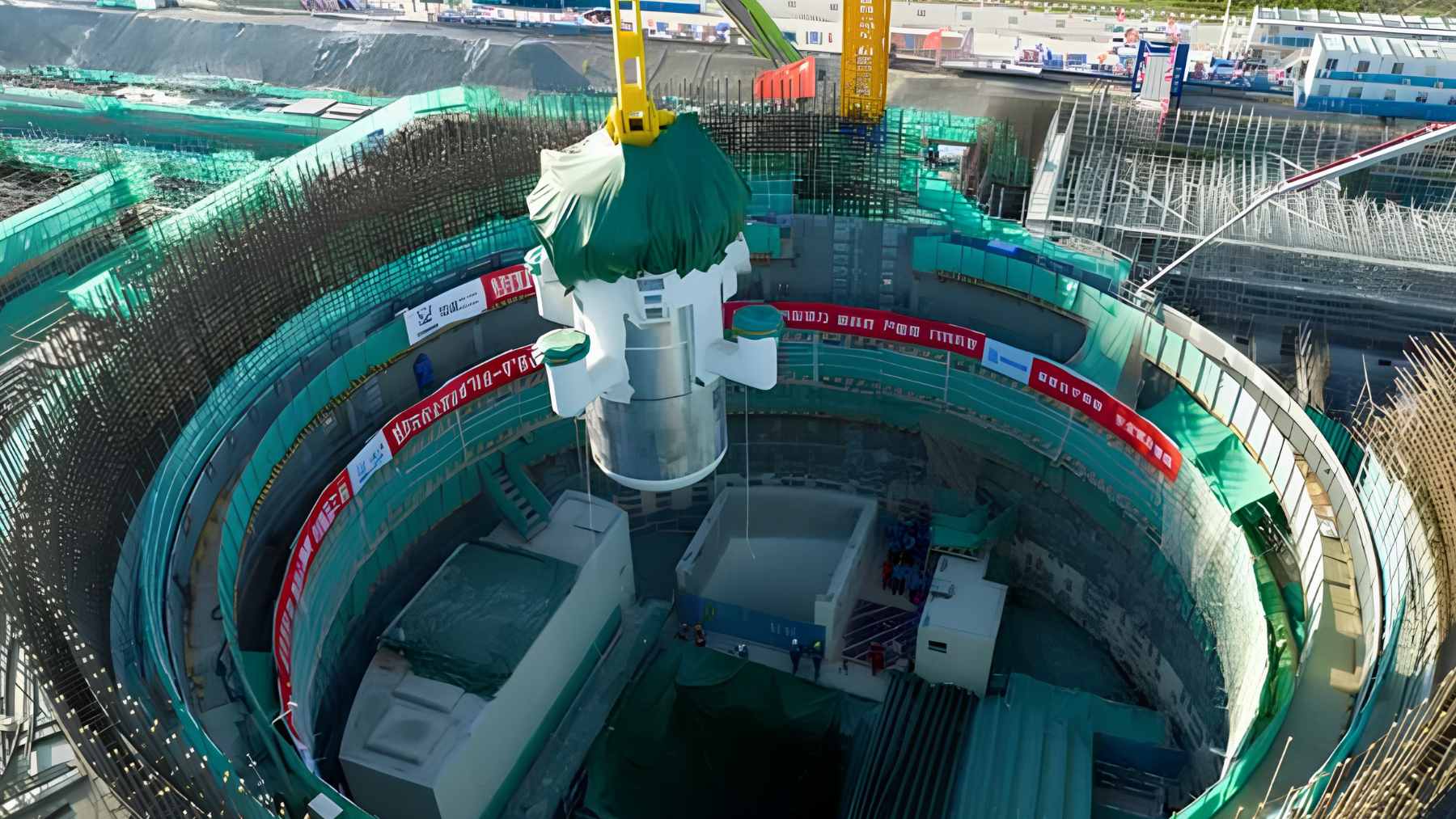
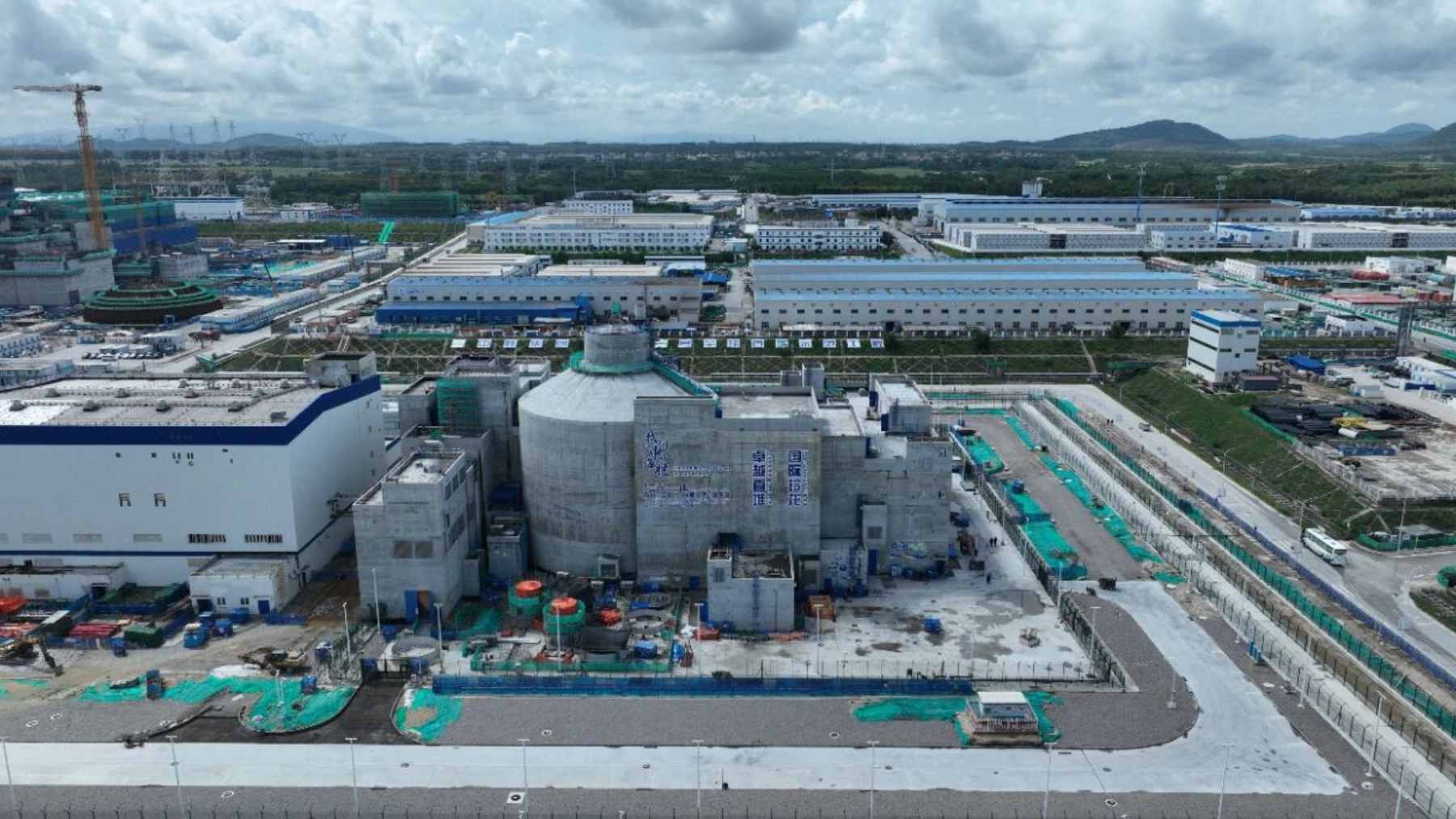
China’s Linglong One is small enough to make a giant industry feel suddenly compact. Built at the Changjiang nuclear power site on Hainan Island, the ACP100 is a 125 MWe small modular reactor designed to produce round-the-clock power without the smokestack emissions of coal or gas.
There is one important caution, however. Although some reports have described the reactor as already switched on, official IAEA data still shows no first criticality, no first grid connection, and no commercial operation date as of May 20, 2026. In other words, China appears to be very close to the finish line, not clearly past it.
A nuclear plant in miniature
Small modular reactors are not just normal reactors squeezed into a smaller box. The idea is to build key parts in a more standardized way, move them to the site, and add capacity in smaller steps instead of betting everything on one massive plant.
Once operational, CNNC says Linglong One will generate 1 billion kilowatt-hours of electricity per year, enough to meet the needs of 526,000 homes in Hainan. The company also estimates it could cut carbon dioxide emissions by about 880,000 tons a year, roughly the effect of planting 7.5 million trees.
Why Hainan matters
An island grid cares about practical things, not just big climate goals. Stable electricity can mean fewer diesel backups, less noise, fewer fumes, and a cleaner way to keep lights, hotels, ports, and air conditioners running through long, hot summers.
CNNC says the ACP100 is designed for more than electricity. It can also support heating, industrial steam production, and seawater desalination, which could make a big difference in places where clean power and clean water are both under pressure.
Safety is the hard question
Every nuclear pitch lives or dies on safety. Linglong One uses an integrated pressurized water reactor design and passive safety features, meaning key protections are meant to rely more on natural forces and less on powered pumps or fast human intervention during an emergency.
CNNC says the ACP100 passed an IAEA safety review in 2016, making it the first small reactor of its kind to do so.
The company also says the design was shaped by experience from earlier projects and lessons from Fukushima, which is exactly the kind of history that still weighs heavily on public trust.
China is ahead, but not alone
Construction at Changjiang began in July 2021, and CNNC says the reactor completed its primary circuit cold functional test in October 2025. That test checked whether major systems and pipelines were properly installed and ready for the next stages, including hot testing, fuel loading, and commercial operation.
Reuters reported in December 2025 that an official with CNNC’s research arm expected Linglong One to start commercial operation in the first half of 2026.
Canada is also moving forward with Ontario Power Generation applying in March 2026 for a license to operate a BWRX-300 small modular reactor at Darlington, but that process still requires a regulatory decision after a public hearing.
What could change
If Linglong One works safely and economically, it could open a different path for nuclear power. Islands, remote regions, industrial parks, and developing economies could look at smaller reactors as a steady partner to solar and wind, especially when clouds roll in or the wind drops.
But there are catches. Reuters noted that backers see factory-built SMRs as a way to save costs, while questions remain over whether their electricity can really compete with larger reactors. Waste management, public acceptance, and regulation are not made tiny just because the reactor is smaller.
In the end, Linglong One is a test of whether nuclear energy can become more like repeatable industrial equipment and less like a once-in-a-generation megaproject.
The official statement was published on China National Nuclear Corporation.